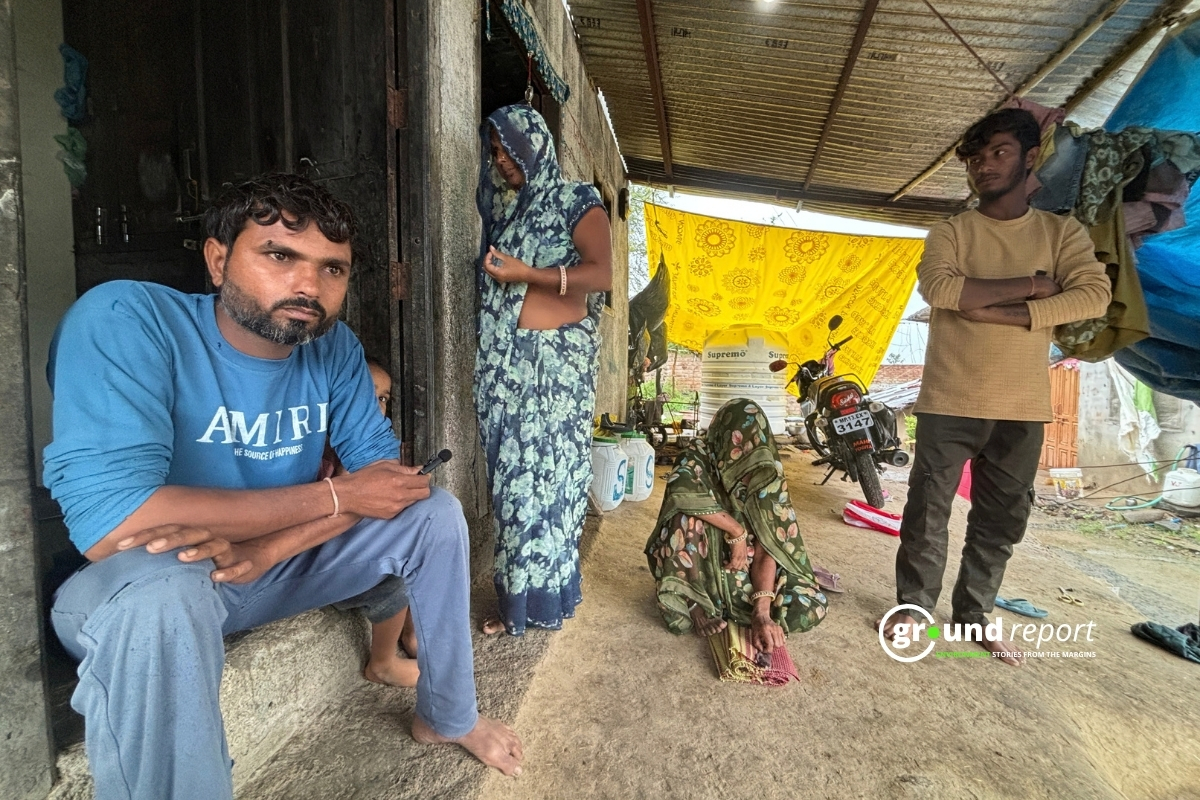
Nandudi Khadia was sitting outside her home in Dhanpura village, under the Petlawad block of the Jhabua district, with around 15 types of seeds. These included two types of pigeon pea, more than one variety of wheat, two types of chickpeas and maize, along with seeds of several grains, millets, pulses, and vegetables. Khadia, from the Bhil tribe, cultivates these seeds on her two-bigha plot of land.
She does not use chemical fertilisers or any other chemicals to grow them.
“If we used fertiliser from the market, we would fall sick, and we would also have to spend money on buying it,” Khadia said.
She explained that hybrid seeds have to be purchased from the market every time, whereas cultivating indigenous seeds requires more effort but does not require spending money on seeds.
At least 6,000 women like her are involved in conserving indigenous seeds or cultivating them across different villages of Jhabua. Around two decades ago, these women became associated with the Sampark Social Organization, a grassroots NGO working to empower tribal communities through sustainable, community-led initiatives.
Because of concerns over hybrid seeds, neighbouring villages also began collecting their own indigenous varieties.
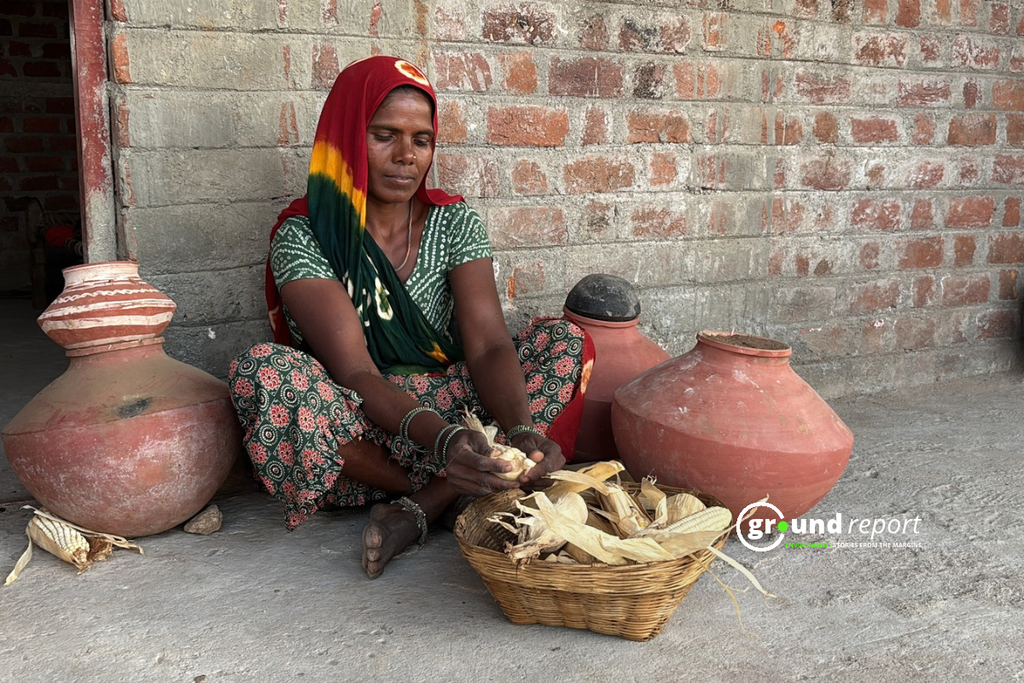
Twenty years ago, these women bought seeds from Sampark. Today, the organisation and other villagers buy indigenous seeds from them.
After the Green Revolution, India’s seed industry expanded rapidly. As hybrid seeds entered the market, indigenous seeds gradually disappeared. However, rural communities complain that these seeds lack taste and are dependent on chemicals. Experts believe that although hybrid seeds may have increased production in the country, their nutritional value has declined.
They advocate expanding efforts such as those in Jhabua in response to a changing climate and extreme weather events.
The Beginning
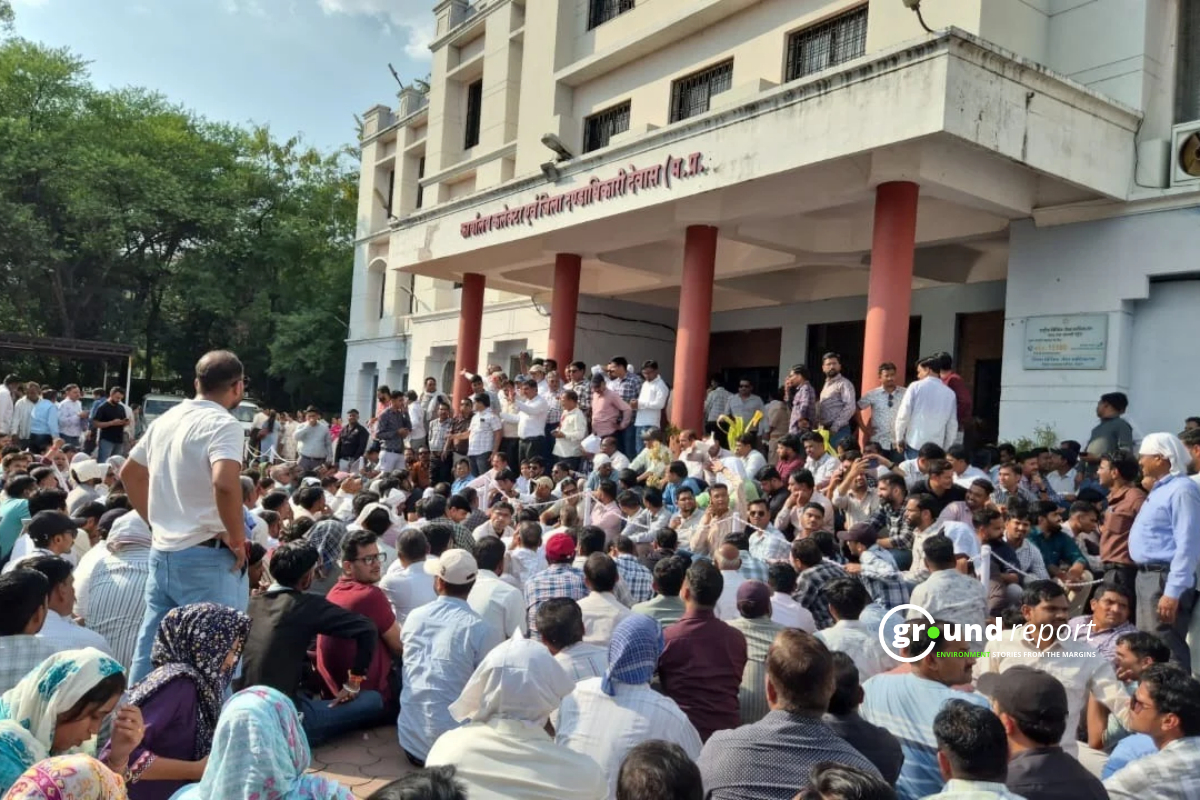
In 2002, Bt cotton was recognised in India as the country’s first genetically modified (GM) crop. Nilesh Desai, founder and director of Sampark, was among those who openly opposed GM crops.
“At that time, farmers in Jhabua were rapidly adopting Bt cotton,” Desai said. “But when I read articles related to GM crops, I realised that this would be dangerous for farmers and nature in the coming years.”
Even with the opposition, asking farmers to not plant these seeds wasn’t a viable solution. So, they began looking for other community-driven initiatives.
They asked school children to bring seeds from their homes in a bag. Most of the seeds they collected during this exercise were hybrid seeds. But there were also some indigenous seeds. The organisation then contacted the parents from whose homes these indigenous seeds had come.
They also collected indigenous seeds from Rama and other blocks outside Petlawad. In this way, the first seed bank—a type of gene bank where seeds of different crops and trees are stored—was established on the premises of the Sampark social organisation near Petlawad.
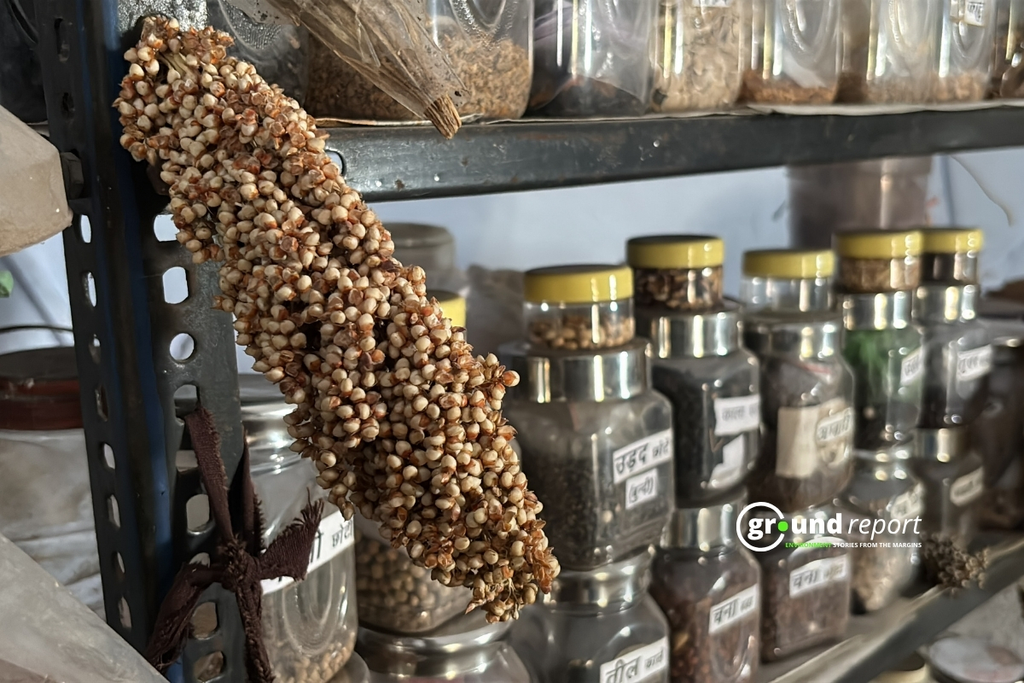
Its purpose is to conserve genetic resources and their diversity so that scientists, plant breeders and farmers around the world can use them. A community seed bank preserves local crop varieties and the knowledge associated with them.
The organisation is part of the Bharat Beej Swaraj Manch, a coalition of organisations working on seeds. As a result, the organisation has also collected indigenous seeds by participating in seed festivals held in different parts of the country.
Today, Sampark’s seed bank has seeds from 600 varieties.
How Are Seeds Conserved
Sampark began training “Beej Sakhis” — women who grow, produce and conserve these seeds at the village level, helping keep them in active use, as the point of the initiative was beyond simply collecting and storing indigenous seeds.
In addition, “Beej Savers” and “Beej Users” are also part of the conservation network. Their respective roles are to save and use seeds without chemicals.
Beej Sakhis such as Khadia collect and conserve these seeds at the village level. They save a portion of their harvest to use as seed. “If someone in the village needs a small quantity of seed, I simply give it to them. If they need more, I charge them according to the market price,” Khadia said while explaining how these seeds are exchanged.
In other words, conservation is decentralised: seeds are being stored not only at Sampark’s premises but also in villages.
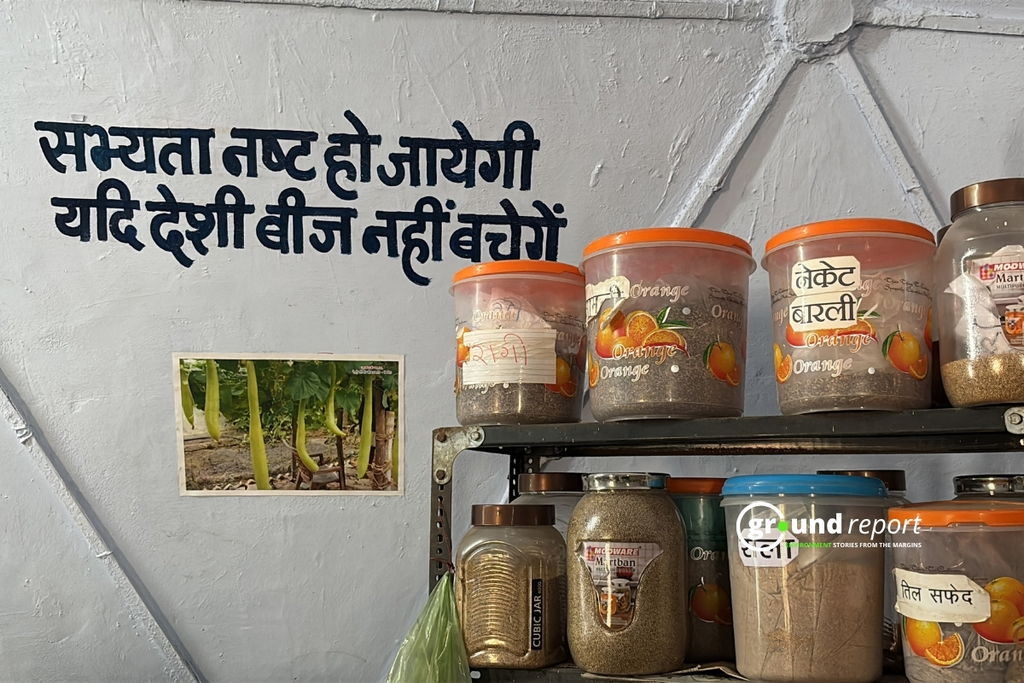
The system for obtaining seeds here is very straightforward. If someone takes one kilogram of seed, they have to return one and a half kilograms from their harvest. In this way, the seed bank does not deplete, and farming continues as well.
Baddo Munia of Rangpura said that 10 years ago she spent at least Rs 35,000 every year on seeds, fertilisers and chemicals. She doesn’t purchase seeds anymore and uses fertiliser made from cow dung, ash and tree bark. That Rs 35,000 is now her savings.
Seed Market, Costs and Nutrition
The main objective of India’s Green Revolution in the 1960s was to introduce high-yielding varieties (HYVs) of crops to increase grain production and reduce hunger, malnutrition and poverty. Following this, hybrid seeds expanded across the country.
The estimated size of India’s seed market was Rs 79,498 crore in 2025. With growing demand for high-yielding hybrid seeds for maize, rice, cotton and vegetables, the market is projected to grow to Rs 1,85,840 crore by 2034.
Hybrid seeds are generally produced by cross-pollinating two varieties. They are bred for traits such as higher yields and resistance to diseases or pests. Indigenous seeds, on the other hand, are seeds from locally grown crops that have been cultivated in a particular area for many years. They are pollinated naturally.
In the agricultural year 2024–25, India recorded foodgrain production of 357.73 million metric tonnes (MMT). This was 25.43 million metric tonnes higher than in 2023–24.
Dr G.V. Ramanjaneyulu, executive director of the Hyderabad-based Centre for Sustainable Agriculture, said that after the Green Revolution, India placed greater emphasis on production but not on nutrition.
According to a study, over the past 50 years (1960–2010), the concentration of essential and beneficial nutrients in both rice and wheat declined. For example, the amount of zinc (Zn) and iron (Fe) in rice grains declined by 33% and 27%, respectively. In wheat grains, these nutrients declined by 30% and 19%, respectively.
Dr Ramanjaneyulu said, “Traditionally, when farmers selected indigenous varieties, they selected them for good root systems. If the root system is better, the roots spread over a greater distance and can obtain nutrients and moisture from further away. Now, the root system is much smaller.”
According to him, conservation of these seeds is therefore important from a nutritional perspective as well.
Munia described this nutritional benefit in her own words. Sometimes she cooks chawli (Vigna unguiculata), sometimes okra and sometimes pigeon peas, eating different vegetables in turn. And Munia doesn’t need to buy these from the market.
Struggle For Market
Desai said that although there is now considerable emphasis on organic farming, enough work has still not been done to conserve indigenous seeds.
However, the central government provides a one-time assistance of Rs 50 lakh for establishing community seed banks under the National Food Security and Nutrition Mission (NFSNM).
At the same time, under a joint work plan between the Alliance Bioversity-CIAT and the National Agricultural Research System (NARS) of the Indian Council of Agricultural Research (ICAR), around 50 community seed banks have been established across India. More than 4,000 traditional varieties of over 25 crops are being conserved through these banks.
However, the problem faced by these women, including those associated with Sampark, is that they still do not have a market where they can sell their seeds. In other words, they have collected and conserved these seeds primarily for their own food needs but have never been able to make a profit by selling them in the market.
Two decades ago, seed fairs were the main way of moving these seeds from one place to another. They continue to serve that role even today.
Desai said his organisation is using networks such as the Bharat Beej Swaraj Manch to expand the reach of these seeds. However, he said the situation could improve significantly if the government helped create a market for indigenous seeds.
Support Us To Sustain Independent Environmental Journalism In India.
More Ground Reports
He Was Married as a Child, Now Manish Dangi Helps Stop It for Others
Despite The Ban, How Gutkha Became MP’s Most Common Household Habit