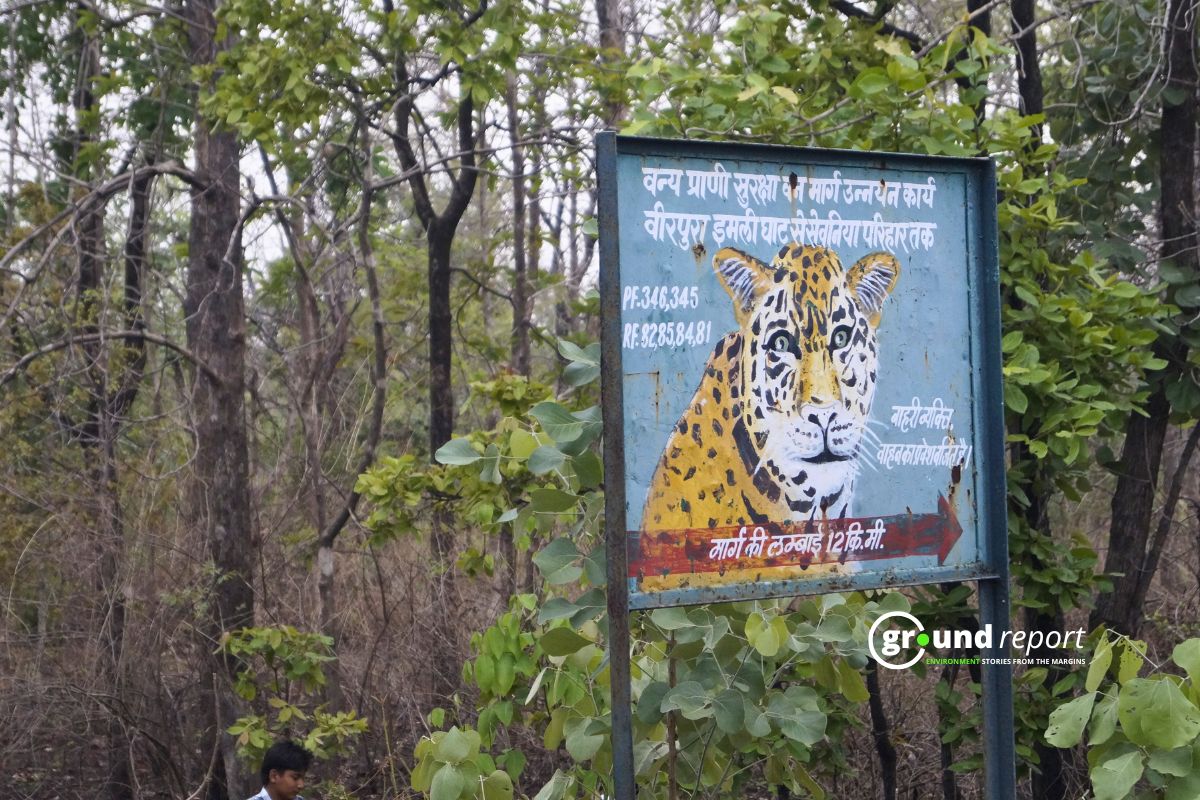
The camera traps set in Balaghat’s forests, in central India, captured 18 individual tigers and 27 leopards breeding, territorial, and at home in a territorial forest division—a forest area managed mainly for timber and land.
A new report by WWF-India and the Madhya Pradesh Forest Department, “Status of Large Carnivores and Wild Hoof Species in the North and South Balaghat Forest Divisions,” documents the changes in the North and South Balaghat Forest Divisions.
Madhya Pradesh has the most tigers in India, with 785. But nearly 40 percent of India’s tigers live in just 11 percent of its reserves. Kanha Tiger Reserve, which borders Balaghat, is home to 105 tigers. Pench holds 77. Balaghat connects with Kanha Tiger Reserve and the Pench Tiger Reserve (Madhya Pradesh/Maharashtra), roughly 9,200 square kilometers of land wedged between the two reserves in Madhya Pradesh.
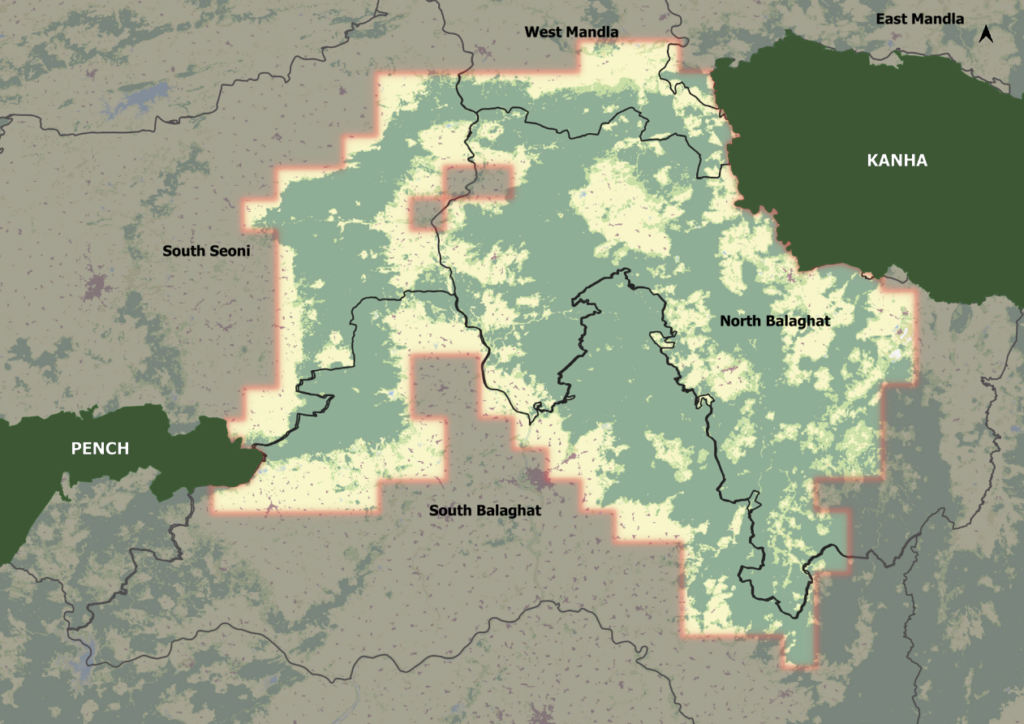
Balaghat has long been valued as a movement corridor, a stretch of forest that allows tigers to travel between Kanha and Pench Tiger Reserves, maintaining genetic diversity across populations.
In November 2021, researchers deployed 71 camera traps across 215 square kilometers in the Lalbarra and Katangi ranges of South Balaghat for 25 days. The cameras captured 262 tiger images and 154 leopard images.
Researchers identified 18 individual tigers and 27 individual leopards. Twelve of the tigers were photographed on multiple occasions. Breeding was confirmed at two locations. The report said “territory establishment by tigers,” reinforcing Balaghat’s role as “a functioning tiger and leopard habitat rather than merely a habitat corridor.”
The tiger density was estimated at 3.72 individuals per 100 square kilometers. The leopard density was 6.67 per 100 square kilometers. The numbers are low compared to tiger reserves, but significant for a forest with no protected status. The survey also recorded 24 mammal species in total, including dholes, wolves, sloth bears, gaur, sambar, and chital.
“Wildlife will not be protected only within protected areas,” Subharanjan Sen, Principal Chief Conservator of Forests, Madhya Pradesh, told Ground Report. “It must be protected across the entire forest landscape.”
Tigers are breeding in Balaghat’s territorial forests, with no protected area status and no dedicated conservation funding. They have come from Kanha and Pench tiger reserves, pushed out by overcrowding. India’s conservation system was not designed for this. It will have to decide, quickly, whether it can adapt.
Crowded Tiger Reserves
According to the 2022 All India Tiger Estimation report by the National Tiger Conservation Authority and the Wildlife Institute of India, Pench holds 77 tigers, and Kanha holds 105.
Kanha’s core holds 105 tigers across 940 square kilometers, roughly 11 tigers per 100 square kilometers. Pench’s core holds 77 tigers across 411 square kilometers, roughly 18 per 100 square kilometers. The 2018 NTCA report puts the carrying capacity of this forest type at 6 to 10.
Mandar Pingle, Deputy Director of the Satpura Foundation, said the movement of tigers into Balaghat follows a natural pattern driven by overcrowding in core areas of tiger reserves.
“Younger tigers are generally pushed out of excellent tiger habitats,” Pingle told Ground Report. “They either get into the buffer areas of the tiger reserve, or they go into the territorial forest divisions—that is, the corridors.”
Pingle said that these corridors are supposed to be temporary areas. Tigers would use these forests for certain durations and move ahead, quite like “stepping stones.” He argued that “these stepping stones have to be converted into wildlife sanctuaries.”
Tiger populations in many reserves of Central India and the Eastern Ghats—which include reserves like Kanha, Bandhavgarh, Pench, and Tadoba—grew from 1,033 in 2018 to 1,161 in 2022, according to the 2022 All India Tiger Estimation report. That is 12% growth in 4 years across some of the most crowded reserves in India.
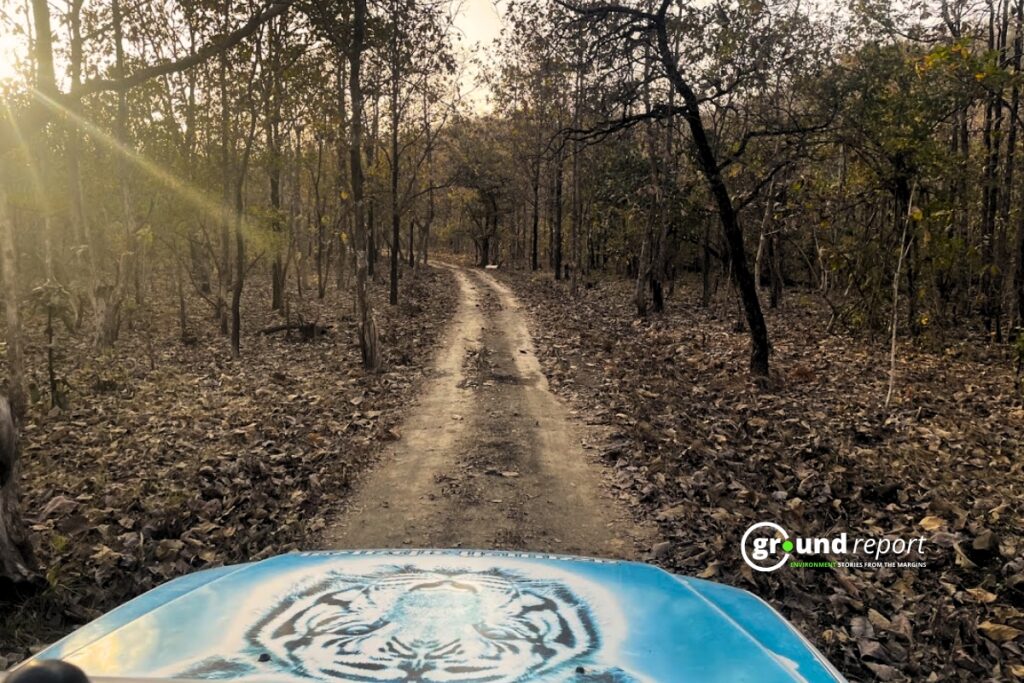
Between 2014 and 2018, tiger numbers in Madhya Pradesh rose by 71 percent and in Maharashtra by 64 percent.
“Around 35 percent of India’s wild tigers now live outside the protected area network,” Kedar Girish Gore, Director of The Corbett Foundation, told Ground Report.
R. Sreenivasa Murthy, an Indian Forest Service officer who led the revival of tigers in Panna Tiger Reserve, said, “Where habitat features are better, tigers start staying,” he told Ground Report. “That movement corridor has now converted into a metapopulation.”
Tigers have been moving and breeding outside reserves across India for years. “You go north, south, east, or west—anywhere you will see corridors where tigers are breeding and moving from one area to another,” he said. “A tiger from Chandrapur traveled more than 600 kilometers to Sambhaji Nagar. Another went from Maharashtra all the way to Odisha. Nothing is surprising about a tiger moving long distances.”
What Is In Balaghat
Kedar Girish Gore, Director of The Corbett Foundation, told Ground Report, “it [Balaghat] not only connects Kanha and Pench but also offers crucial connectivity with Achanakmar Tiger Reserve in Chhattisgarh and Nawegaon-Nagzira Tiger Reserve in Maharashtra.”
“Balaghat is an important area for large carnivores, especially tigers and leopards,” said Dr. Deepti Gupta, Conservation Science Specialist at WWF-India.
The WWF report found that in some parts of Balaghat, “densities of chital and sambar are still comparable or higher than numbers in some of the protected areas in central India, such as Sanjay-Dubri Tiger Reserve, Veerangna Durgawati Tiger Reserve, and Guru Ghasidas National Park.” In Balaghat, chital is the most common prey animal, followed by wild pig. Sambar and gaur are scarce.
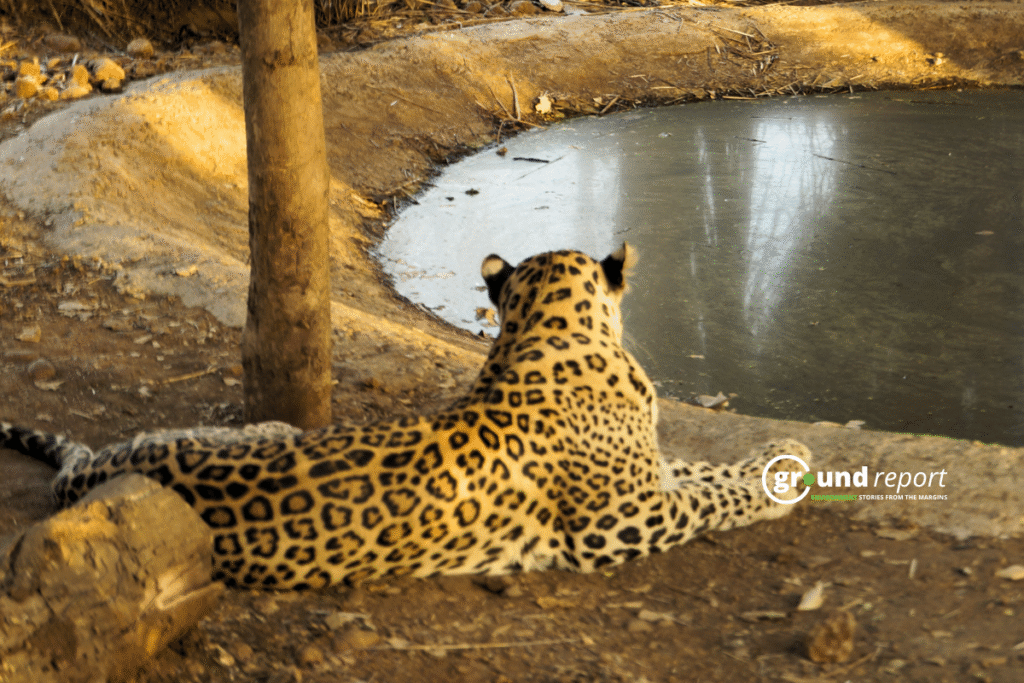
Animals, like tigers, prefer to hunt sambar and chital, which are scarce across both divisions. Kanha has 40 chital per square km. South Balaghat has 14. North has just 4; that gap is what pushes tigers towards cattle as well. A separate unpublished study by WWF-India found that more than 50 percent of tigers’ diets in the Kanha-Pench corridor consisted of livestock.
Pingle said the shift to livestock is predictable once tigers leave protected areas. “Once tigers move outside protected areas… cattle(s) are easily available. They are easy prey—they do not have the wild instincts to run away once they see a predator. That is the difference between cattle and wild prey,” he said. He added that the problem compounds over generations. “Once the new generation of tigers gets used to cattle, they prefer it over any wild prey.”
The Threats
The report now warns that four converging pressures are growing faster than the protection can keep pace.
Roads and railways cut directly through the forest. The National Highway NH-543 runs 77 kilometers through the division. A railway line connecting Jabalpur, Balaghat, and Gondia via Nainpur fragments movement further. The report calls for site-specific mitigation measures aligned with the Wildlife Institute of India (WII) guidelines whenever infrastructure projects come up for forest clearance.
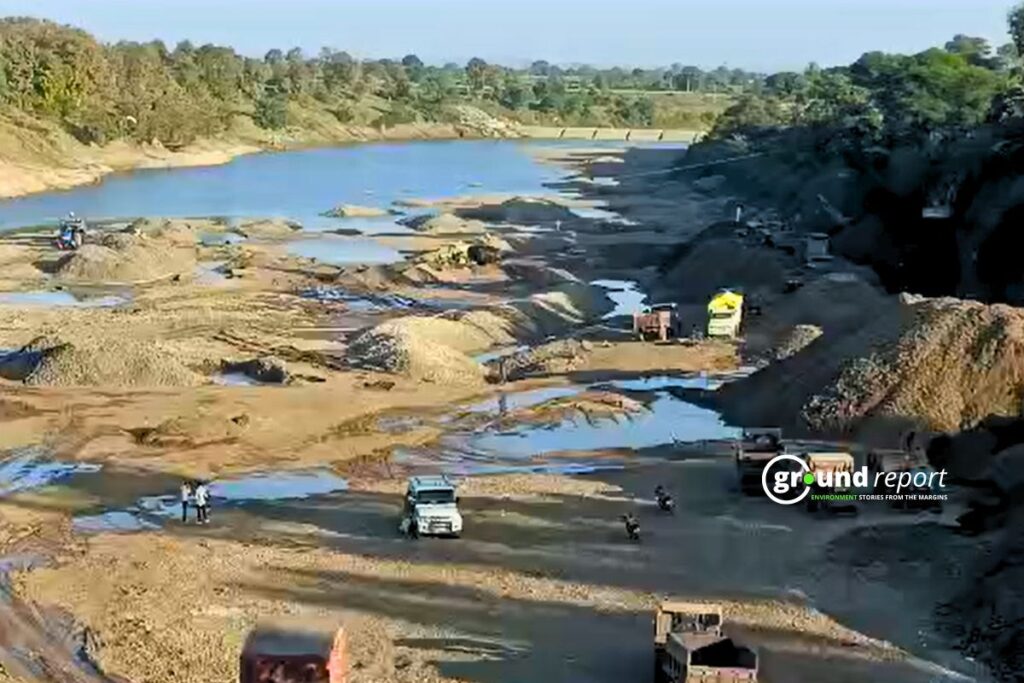
Balaghat hosts the Malanjkhand copper mine, the largest single copper deposit in India, and the Bharveli manganese mine, the largest underground manganese mine in Asia, both adjacent to forest land. The report recommends banning ore transport between sunset and sunrise and halting new mining block allocations in critical wildlife zones.
Invasive plants, particularly lantana, are suppressing native grasses and shrinking habitat quality for prey species. Forest fires compound the damage. The report calls for fire hotspot mapping, community-based early warning systems, and invasive species removal as part of a broader habitat restoration effort.
Challenges in non-protected area habitats
Outside the reserves, tigers walk into farm fields, electric fences, and people. Between November 2025 and February 2026, eight tigers died in and around Bandhavgarh. Four were electrocuted by illegal live wires that farmers had strung around their crops.
Madhya Pradesh recorded 55 tiger deaths in 2023 — the highest of any state in India. Out of 166 tiger deaths nationally that year, 60 percent happened outside protected areas.
Murthy pointed to a poaching incident in Balaghat about a year and a half ago that officials tried to hide. “The forest guards tried to put it under the carpet,” he said. “Even the DFO was charge-sheeted for negligence for not taking the case to court.”
Territorial forests like Balaghat absorb tigers that overflow from crowded reserves. But they need the same protection, staff, and prey recovery that reserves receive.
The Bridging the Gap 2024 management effectiveness report found that 20 tiger reserves in India did not have enough anti-poaching staff. In ten reserves, staffing had fallen by at least 40 percent.
“There is no trained manpower at the field level,” Murthy said. “Even at headquarters, there is a shortage. A trained officer and an untrained officer—the difference in their vision shows over time. And that difference can cost lives.”
“This [territorial forest status] limits the financial resources needed to manage and monitor wildlife populations,” Gupta said. The report recommends that Balaghat be designated a priority region under the National Tiger Conservation Authority’s Tigers Outside Tiger Reserves program, which would channel dedicated funding toward protection infrastructure and staff capacity.
Murthy said a formal boundary means nothing without the people who live inside it. “The moment you declare a protected area, restrictions come,” he said. “You have to first ask, are the people living there ready for it? If a tiger enters a village, there must be an immediate rescue unit in place. And if there is conflict, compensation must reach people on time.”
The Madhya Pradesh State Wildlife Board in May 2025 approved the Sonewani Conservation Reserve, 163 square kilometers within South Balaghat, as a formal protected zone. The report urges that its management plan be built with local communities, whose livelihoods depend on the same forests that tigers now call home.
Pingle said Balaghat is a test of whether India’s tiger conservation model can evolve beyond its reserve boundaries. “We cannot have isolated national parks or tiger reserves. We have to ensure that these corridors survive and that tiger reserves are well connected,” he said. “There is no other way out.”
Support Us To Sustain Independent Environmental Journalism In India.
More Ground Reports
He Was Married as a Child, Now Manish Dangi Helps Stop It for Others
Despite The Ban, How Gutkha Became MP’s Most Common Household Habit