Finance Minister Nirmala Sitharaman presented the Union Budget 2026-27 in Parliament today. This was her ninth consecutive budget speech. She said the Modi Government has maintained economic stability, fiscal discipline, sustained growth, and moderate inflation.
India faces a climate crisis. Heatwaves kill people. Floods destroy homes. Droughts ruin farms. Air pollution chokes cities. These disasters happen more often now.
Yet, Nirmala Sitharaman did not mention “climate change” even once in her speech. She announced many green energy programs and tax breaks for renewable energy. But the budget has no direct plans to protect people from heat waves, droughts, floods, or landslides.
MoEFCC budget increased by 8%
The government allocated Rs 3,759.46 crore to the Ministry of Environment, Forests and Climate Change for 2026-27. This is an 8 per cent increase from Rs 3,481.61 crore the previous year.
Last year, the ministry received Rs 3,412.82 crore. The pattern shows consistent yearly increases of 8-9 per cent.
Where the money goes
The budget tells a mixed story. Some programs received more money. Others got less.
The Control of Pollution programme received Rs 1,091 crore, down 16 per cent from last year’s Rs 1,300 crore. This program funds Pollution Control Boards and the National Clean Air Programme (NCAP). The cut comes even as India battles severe air pollution in major cities.
The Central Pollution Control Board received Rs 123 crore, up 5.9 per cent from Rs 116.2 crore last year.
Some wildlife programs saw big increases. Project Tiger and Elephant received Rs 290 crore compared to Rs 153.04 crore in last year’s revised allocation. The National Mission for Green India got Rs 212.5 crore, up from Rs 95.7 crore last year.
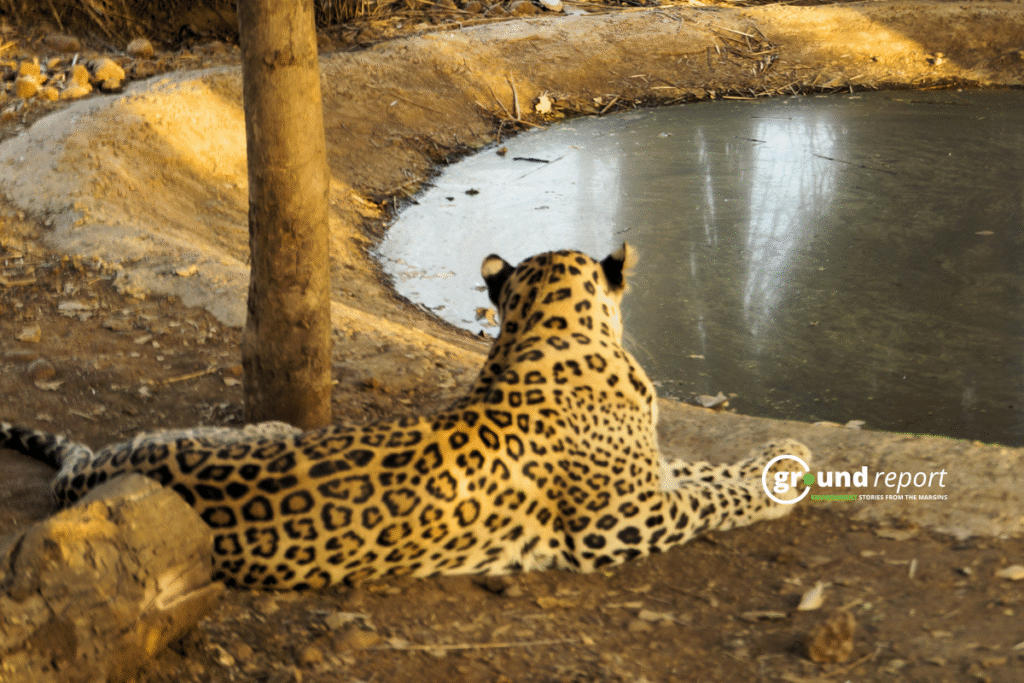
Mandar Pingle, Deputy Director of Satpuda Foundation, called the Rs 290 crore allocation insufficient. “In Maharashtra’s Vidarbha alone, 9,800 tiger corridor villages need Rs 2,450 crore annually. Add Rs 25 crore yearly for compensation when people die in animal attacks. This budget is nothing but peanuts,” he said.
Central sector schemes and projects received Rs 1,307 crore, down from Rs 1,451.52 crore last year. Other Central sector expenditure got Rs 636.5 crore, up from Rs 586.83 crore.
The ministry’s capital expenditure increased from Rs 174.39 crore (Revised 2025-26) to Rs 222.80 crore (Budget 2026-27). This capital budget is allocated across three main categories: Capital Outlay on Forestry and Wild Life (Rs 83.90 crore), Capital Outlay on Other Scientific and Environmental Research (Rs 119.88 crore), and Capital Outlay on Other General Economic Services (Rs 19.02 crore).
The majority of this capital expenditure (neary Rs 162 crore, or 73%) goes to strengthening establishment infrastructure of attached and subordinate offices. The largest allocations include the Botanical Survey of India (Rs 73.85 crore), Regional Offices (Rs 29.20 crore), Zoological Survey of India (Rs 29.55 crore), National Zoological Park (Rs 18.30 crore), and the National Green Tribunal (Rs 11.03 crore). These offices handle environmental monitoring, research, and regulatory functions.
This budget covers renewable energy, forest protection, clean air programs, and climate action. But energy experts say the government missed a big opportunity.
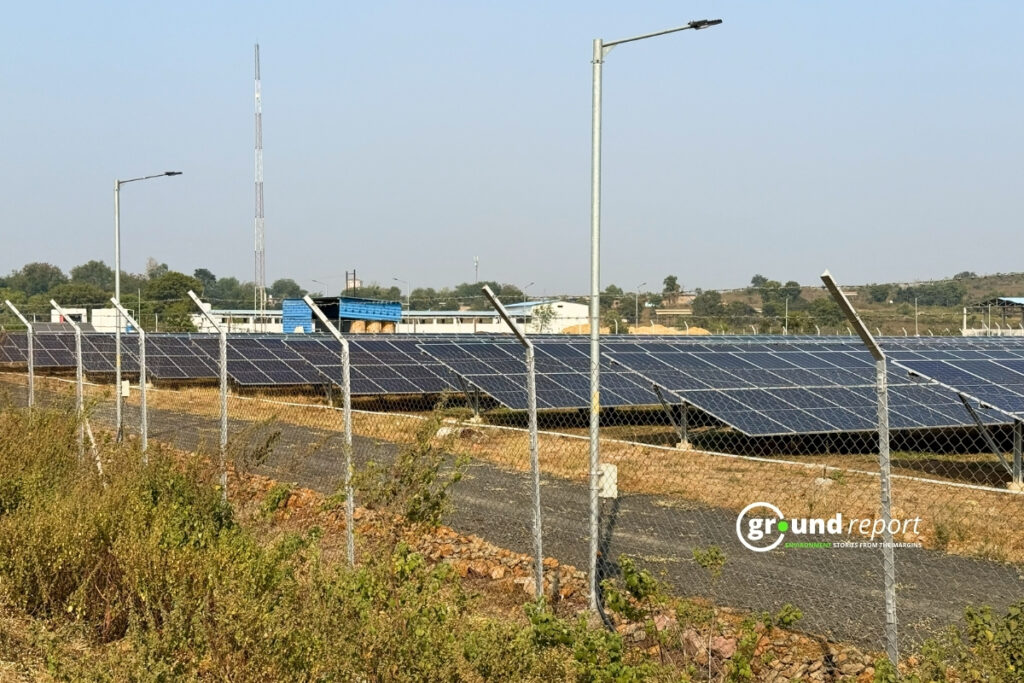
Duttatreya Das, Energy Analyst, Asia at Ember, expressed disappointment over the lack of major renewable energy announcements.
“The Budget delivered no big-ticket announcements for renewables,” he said. The government extended duty exemptions and supported critical minerals and manufacturing reforms. These steps will quietly strengthen clean energy supply chains, Das noted.
However, he pointed to what was missing. “Additional capital subsidies could have unlocked the potential of PLI-led manufacturing, particularly in upstream solar and energy storage,” Das explained.
While Das focused on industrial gaps, Harjeet Singh, climate activist and founding director of Satat Sampada Climate Foundation, pointed to a bigger problem, the budget ignores people facing climate disasters.
“With this budget, India has decisively shifted focus to the ‘nuts and bolts’ of the energy transition, securing battery ecosystems and critical minerals to boost green manufacturing. But while we are building a strong green industry, we are leaving the human strategy fragile,” Singh said.
He explained that the budget has money for green industries but nothing to protect farmers from droughts, coastal communities from floods, or people from heat waves. “General development cannot substitute for specific protection against climate shocks,” Singh added.
Abinash Mohanty, climate expert at IPE Global, backed this up with numbers.
“The Union Budget 2026 remains a fill-in-the-blank when it comes to climate adaptation,” he said.
Climate-related disasters cost India over 3% of GDP every year. More than 80% of Indians face growing climate risks from heat waves, floods, and droughts. Yet the budget has no clear plan for heat action, flood protection, or climate-resilient farming, Mohanty explained.
Despite this gap, the budget includes several environmental initiatives. Let’s see what the government announced for India’s environment.
Important points
Finance Minister Nirmala Sitharaman announced that Odisha, Kerala, Andhra Pradesh, and Tamil Nadu will establish dedicated rare earth corridors to boost mineral extraction and processing.
Finance Minister Nirmala Sitharaman said India’s disease burden is shifting toward non-communicable diseases. The Budget proposes Biopharma Shakti, with ₹10,000 crore over five years to boost biotech and pharma. The government will strengthen the Central Drug Standard Control Organisation to meet global standards.
The Budget supports establishing rare earth corridors in Odisha, Kerala, Andhra Pradesh, and Tamil Nadu. Rare earth minerals are critical for electric vehicles, wind turbines, and solar technology.
Finance Minister Nirmala Sitharaman announced ecologically sustainable trails in multiple regions. The government will develop mountain trails in Himachal Pradesh, Uttarakhand, and Jammu and Kashmir to protect fragile Himalayan ecosystems.
The government will establish turtle trails in Odisha and Kerala to protect endangered sea turtle nesting sites and promote coastal eco-tourism.
FM Sitharaman announced that India will host the first Global Big Cat Summit in 2026, in which heads of government and ministers from 95 countries will participate.
Finance Minister Nirmala Sitharaman announced plans to create 500 reservoirs and Amrut Sarovars (sacred ponds) to boost fisheries.
Finance Minister Nirmala Sitharaman announced the establishment of NIMHANS 2.0 to improve mental health treatment, especially in North India.
Finance Minister Nirmala Sitharaman announced the provision of 4,000 electric buses for the Northeast under Mission Purvodaya.
The government allocated ₹20,000 crore for carbon capture and utilization in steel, cement, and other high-emission industries to reduce carbon footprint.
India wants to lead the world on climate. But the country also needs to grow its economy and provide cheap energy to its people. This budget attempts to balance both needs, supporting critical mineral supply chains and carbon capture while maintaining fiscal discipline.
The real test starts now. The government must deliver on these promises. Climate change will not wait for next year’s budget.
This article has been updated with expert’s comment.
Support us to keep independent environmental journalism alive in India.
Keep Reading
Elephants Are Back in MP After a Century, But Can They Stay?
Solar Energy – A Paradigm Shift in Wildlife Conservation
Stay connected with Ground Report for underreported environmental stories.