When the United Nations announced the winners of the World Summit on the Information Society (WSIS) Prizes 2026 in Geneva, the Department of Telecommunications’ Samriddh Gram initiative emerged as the global winner in the Enabling Environment category.
Union Communications Minister Jyotiraditya Scindia hailed it as a global model for rural digital transformation.
At the centre of this recognition was Umri, a village in Madhya Pradesh’s Guna district, where the country’s first Samriddhi Kendra was inaugurated on 15 March 2026.
The centre was conceived as a “phygital” hub—combining physical infrastructure with digital services. Operating from the village panchayat building and connected through the BharatNet optical fibre network, it promised to bring telemedicine, banking, agricultural services and other government facilities under one roof.
But beyond the international award and official claims, how well was the model working on the ground? Were villagers really receiving all these services at one place? Were the people running the centre financially secure? And if the model still had gaps, what exactly earned it global recognition?
Ground Report visited Umri to find out.
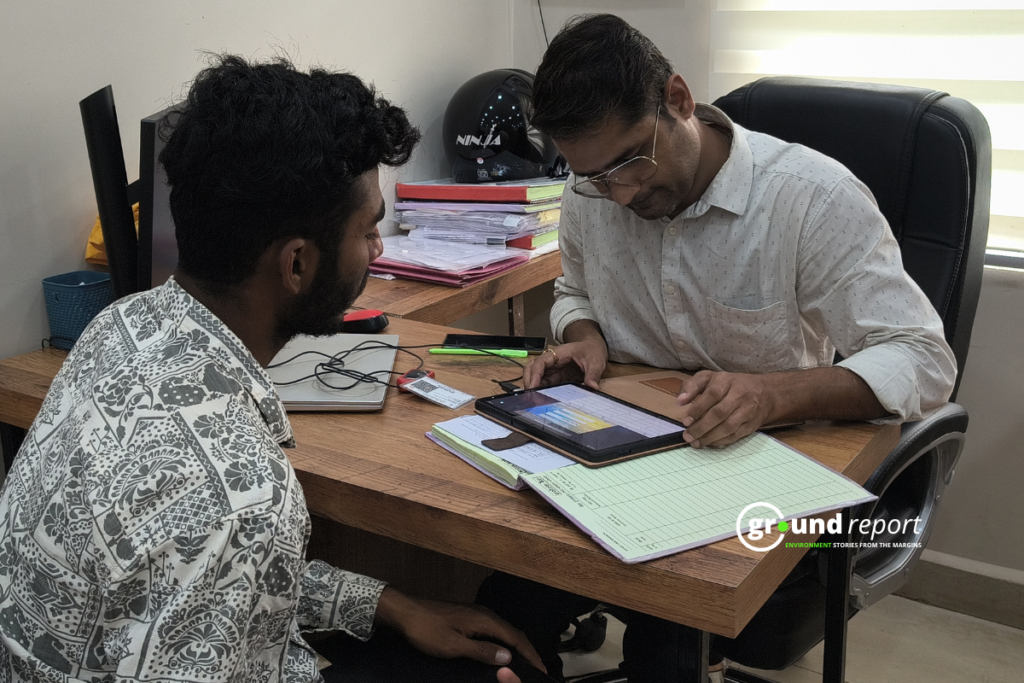
Still not fully staffed by government officials
According to a Press Information Bureau (PIB) release issued by the Department of Telecommunications, the Samriddhi Kendra was designed as a one-stop service hub, reducing the need for villagers to travel repeatedly to district headquarters.
The vision extended beyond digital infrastructure. Officials from different government departments were also expected to hold regular sittings at the centre so that villagers could resolve government-related work locally.
That is yet to happen consistently.
One villager, who requested anonymity, said he had been visiting the centre for the past ten days to resolve a land-related issue but had not once found the patwari responsible for his area.
Vipul Yashwa, Senior Project Officer at the Digital Empowerment Foundation (DEF), acknowledged that patwaris don’t visit the centre regularly yet.
He said tehsildars visited the centre from time to time, while scientists from the Krishi Vigyan Kendra (KVK) also conducted sessions there. DEF, he added, was in discussions with government departments to expand the range of services. Once those arrangements were in place, patwaris would also begin holding regular sittings because the entire gram panchayat had now been brought under the Samriddhi Kendra model.
The Digital Empowerment Foundation serves as the programme’s field implementation and community mobilisation partner.
Digital entrepreneurship—or economic insecurity?
Another key pillar of the Samriddhi Kendra model is its business structure.
Rather than employing young people on fixed salaries, the model describes them as rural entrepreneurs who earn income by providing digital and technical services.
According to Yashwa, this makes the model financially self-sustaining because earnings are linked directly to the services provided.
But for those working at the centre, the arrangement also means there is no guaranteed income.
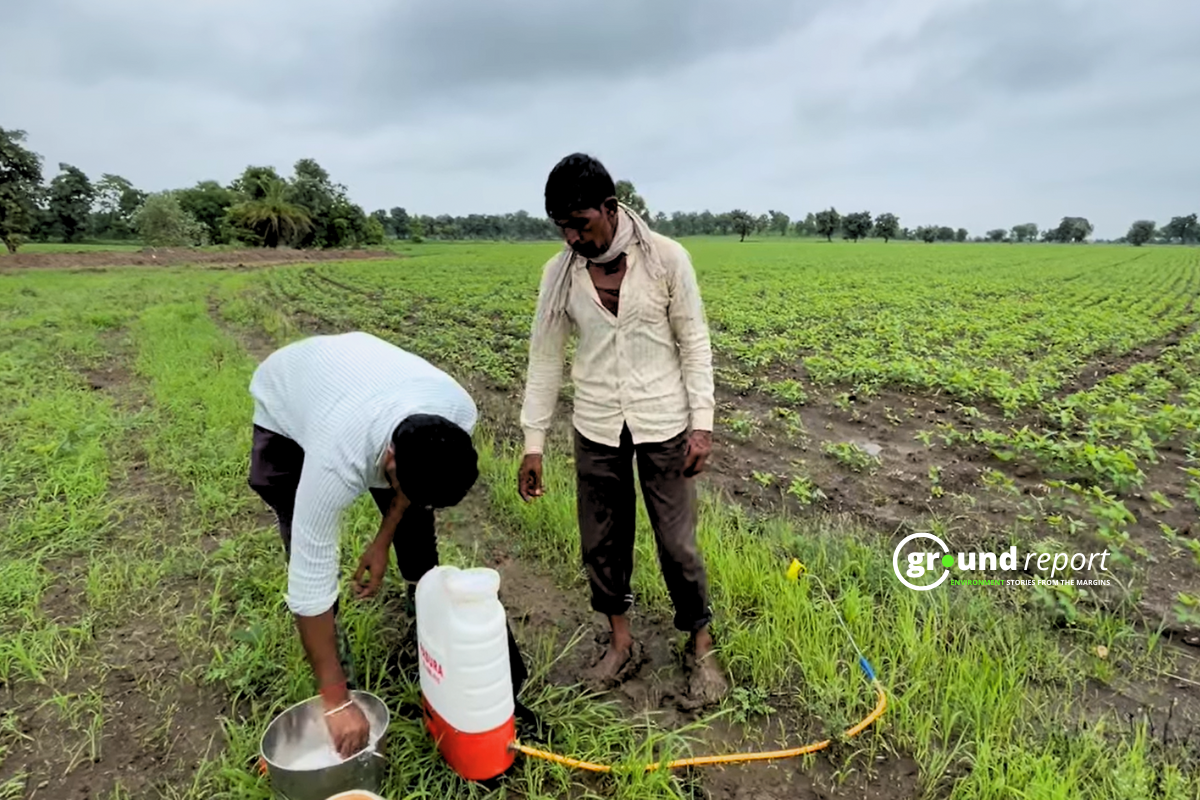
Deepak Dhakad, who operates agricultural drones through the Samriddhi Kendra, sprays pesticides on farmers’ fields. Farmers pay ₹200 per acre for the service, but Dhakad receives only ₹100. The remaining half goes to the Samriddhi Kendra.
Asked what he would earn if bad weather or a poor agricultural season meant there was no demand for drone spraying, Dhakad replied simply, “nothing.”
The Samriddhi Kendra may describe rural youth as entrepreneurs, but in practice their earnings remain entirely dependent on market demand, with no financial safety net.
How did it win the global award?
Yashwa said the Digital Empowerment Foundation and the Department of Telecommunications jointly ran a large campaign to encourage people to vote for the Samriddh Gram initiative. The WSIS Prize is decided through public voting.
According to him, everyone associated with the project contributed to the effort.
“Our organisation mobilised votes, while the department used its government network. Everyone connected with the project worked to gather as many votes as possible. It was this collective effort that helped us win the Global Winner award,” he said.
His account suggests that alongside the project’s achievements, a coordinated institutional campaign also played an important role in securing the international recognition.
BSNL provides technical support
Reliable internet connectivity is central to the Samriddhi Kendra model.
Yashwa said Bharat Sanchar Nigam Limited (BSNL) provides technical support under the BharatNet project.
Even when fibre cuts or network failures occur, he said, a formal grievance redressal mechanism and service-level agreements (SLAs) ensure that technical faults are addressed quickly and downtime remains minimal.
The promise and the reality
The Samriddhi Kendra in Umri represents an ambitious attempt to deliver digital public services to rural India. It has also received international recognition as a model for digital governance.
Ground Report’s visit, however, found that some core elements of the model remain works in progress.
Regular government services are still not consistently available. Patwaris, one of the officials villagers most frequently need, have yet to begin regular sittings. At the same time, many of the young people delivering services at the centre continue to depend on uncertain, commission-based earnings.
Whether the Samriddhi Kendra evolves into a sustainable model for rural development may depend not only on digital infrastructure but also on stronger administrative participation and greater economic security for those expected to run it.
Ultimately, the success of Digital India will be measured not by awards or policy documents, but by whether such initiatives make everyday government services easier and more reliable for the people they are meant to serve.
Support Us To Sustain Independent Environmental Journalism In India.
More Ground Reports
He Was Married as a Child, Now Manish Dangi Helps Stop It for Others
Despite The Ban, How Gutkha Became MP’s Most Common Household Habit