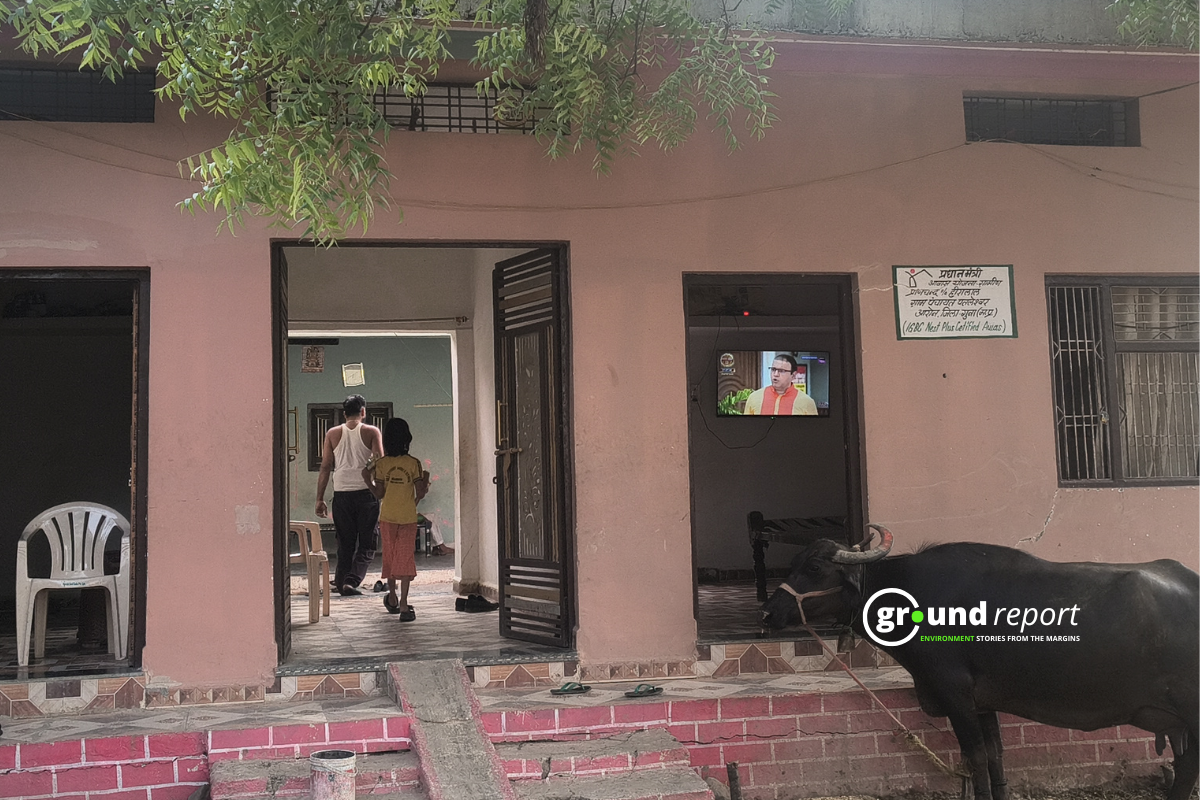
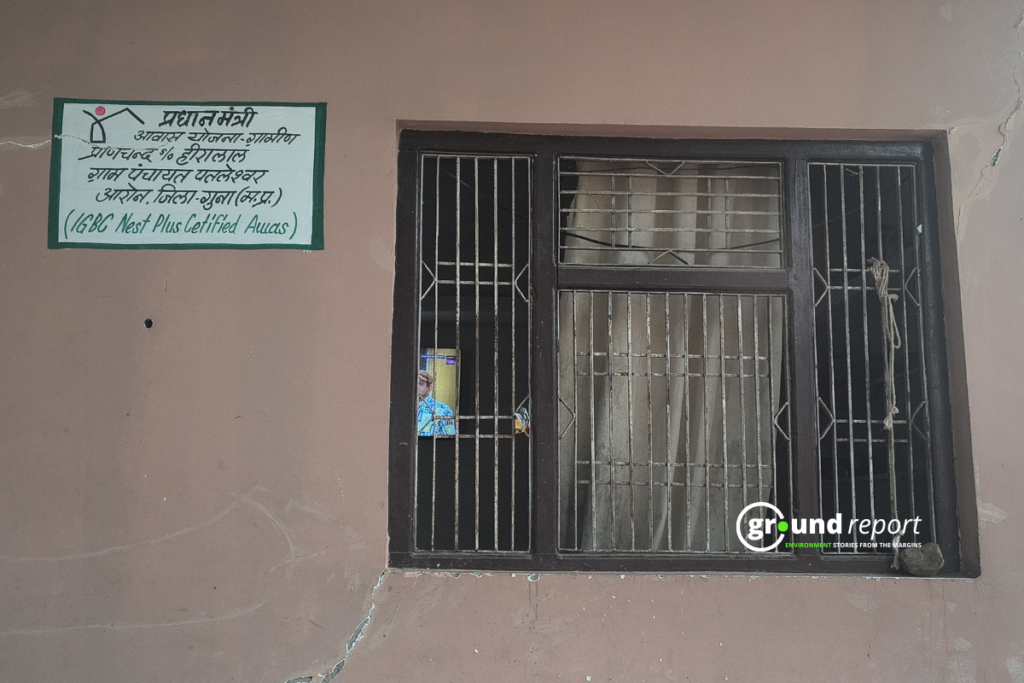
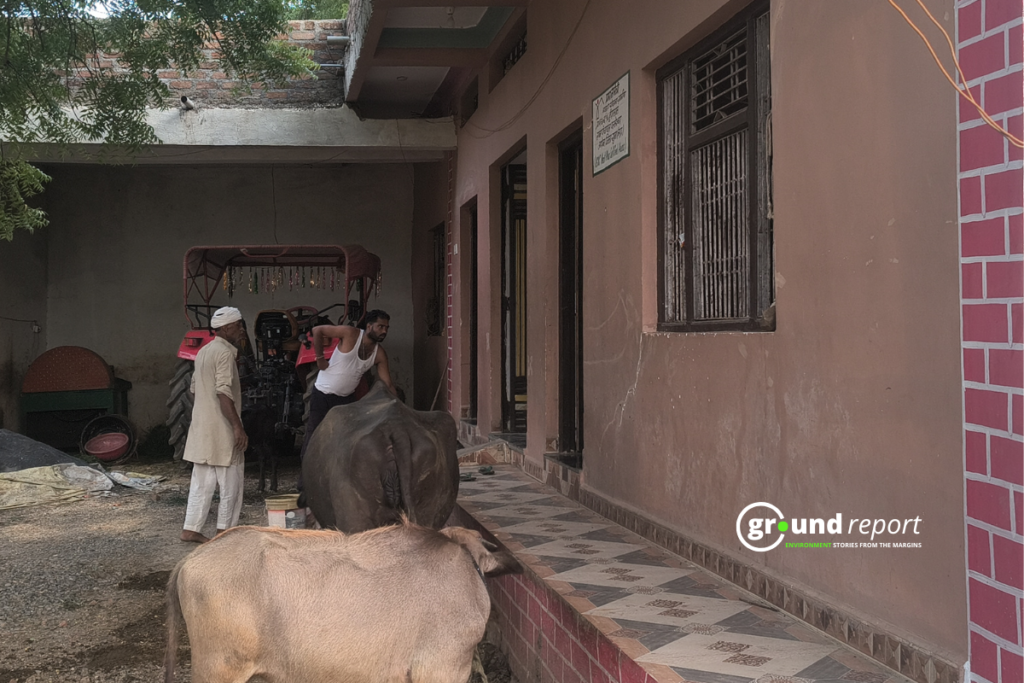
At first glance, Pranchand Rao’s house looks like any other home built under the Pradhan Mantri Awas Yojana (PMAY-G). The scheme’s name is painted on the front wall. A tractor stands in the courtyard, cattle tied nearby, and a tube well serves the household.
A closer look reveals the differences. Rainwater from the roof flows into a harvesting system. Large windows allow natural light and cross-ventilation, reducing the need for electricity during the day. Fruit and vegetable plants surround the house.
Inside the courtyard hangs a ‘Nest Plus Silver’ certificate issued by the Indian Green Building Council (IGBC). Awarded in January 2026, it made Rao’s home the country’s first certified Green PM Awas.
The recognition, however, came at a cost. Acting on the advice of local officials, Rao spent more than ₹10,000 from his own pocket to obtain the certification. Officials acknowledge the fee is expensive, but no government scheme reimbursed it. Months later, Rao still said he has not seen any benefit from the certificate.
What makes it a ‘green’ house?
The Hyderabad-based Indian Green Building Council certifies environmentally sustainable buildings through several rating systems. Rao’s house received the IGBC Nest Plus Silver rating, designed for individual rural and urban homes with a built-up area of up to 300 square metres.
To qualify, houses must meet standards such as natural lighting, cross-ventilation, rainwater harvesting and waste management. A home needs at least 50 credit points to earn the Silver rating.
Rao’s house meets many of these requirements. During the day, natural light eliminates the need for electric lighting, while windows keep the house ventilated. A rainwater harvesting system channels rooftop runoff underground, and the family grows vegetables and fruit around the house.
The homeowner paid for everything
Rao’s son, Sunil Kumar Bharadwaj, said the family received ₹1.5 lakh under PMAY-G but spent another ₹3.5 lakh of their own money to complete the house.
After construction, officials from the Janpad Panchayat encouraged the family to seek green certification.
Rajesh Sharma, a sub-engineer with Aron Janpad Panchayat, said Guna Zila Panchayat CEO Abhishek Dubey launched the initiative to promote environmentally friendly rural housing.
To meet IGBC standards, Rao installed a rainwater harvesting system and painted the roof white, spending nearly ₹50,000 more from his own pocket.
The certification cost another ₹10,000, plus 18 percent GST, bringing the total to ₹11,800.
According to Sharma, the payment came directly from Rao’s bank account because the certificate is issued to the homeowner rather than the government department.
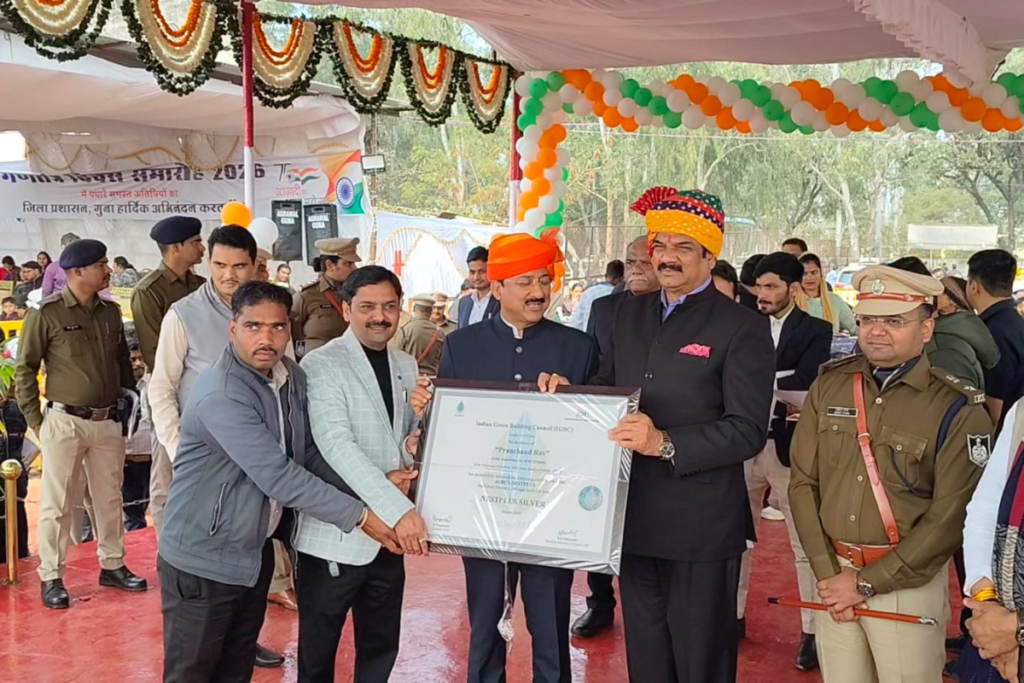
After the application was submitted, inspectors physically verified the house and conducted a video inspection before the IGBC approved the certification.
Limited awareness
Neither Rao’s family nor the Janpad Panchayat officials knew that the certificate remains valid for only three years and requires renewal.
Patleshwar Gram Panchayat secretary Devendra Yadav said officials selected Rao’s house because it already had features such as good ventilation, surrounding vegetation and space for rainwater harvesting.
He said efforts to encourage other villagers to build similar homes have had little success.
“Most people say they cannot afford the additional expense,” he said.
As a result, Patleshwar still has only one certified Green PM Awas.
Benefits remain uncertain
According to IGBC, certified green buildings may qualify for incentives such as lower property tax, concessional home loan interest rates and additional floor area ratio (FAR) in urban areas.
However, most of these benefits do not apply to houses built under PMAY-G.
Under Rural Development Ministry rules, beneficiaries cannot sell or mortgage their houses for five years. Rural homes also fall under gram panchayats, where property taxes are generally minimal or absent.
As a result, many of the financial incentives available to urban green buildings remain out of reach for rural beneficiaries.
When asked whether the certification justified the additional cost, Sharma said the certificate could help beneficiaries access incentives if governments introduced them in future. He also said officials hoped to connect such houses with solar energy systems over time.
He admitted, however, that the certification fee was too high and should be reduced.
Rao does not regret paying for the certification. But he said he still does not know what it has brought him.
Ground Report asked the Indian Green Building Council whether PMAY-G beneficiaries should pay for certification, whether they are required to maintain the certification standards, and what happens if they do not renew the certificate after three years.
The council had not responded by the time this report was published.
Support Us To Sustain Independent Environmental Journalism In India.
More Ground Reports
He Was Married as a Child, Now Manish Dangi Helps Stop It for Others
Despite The Ban, How Gutkha Became MP’s Most Common Household Habit
Stay Connected With Ground Report For Underreported