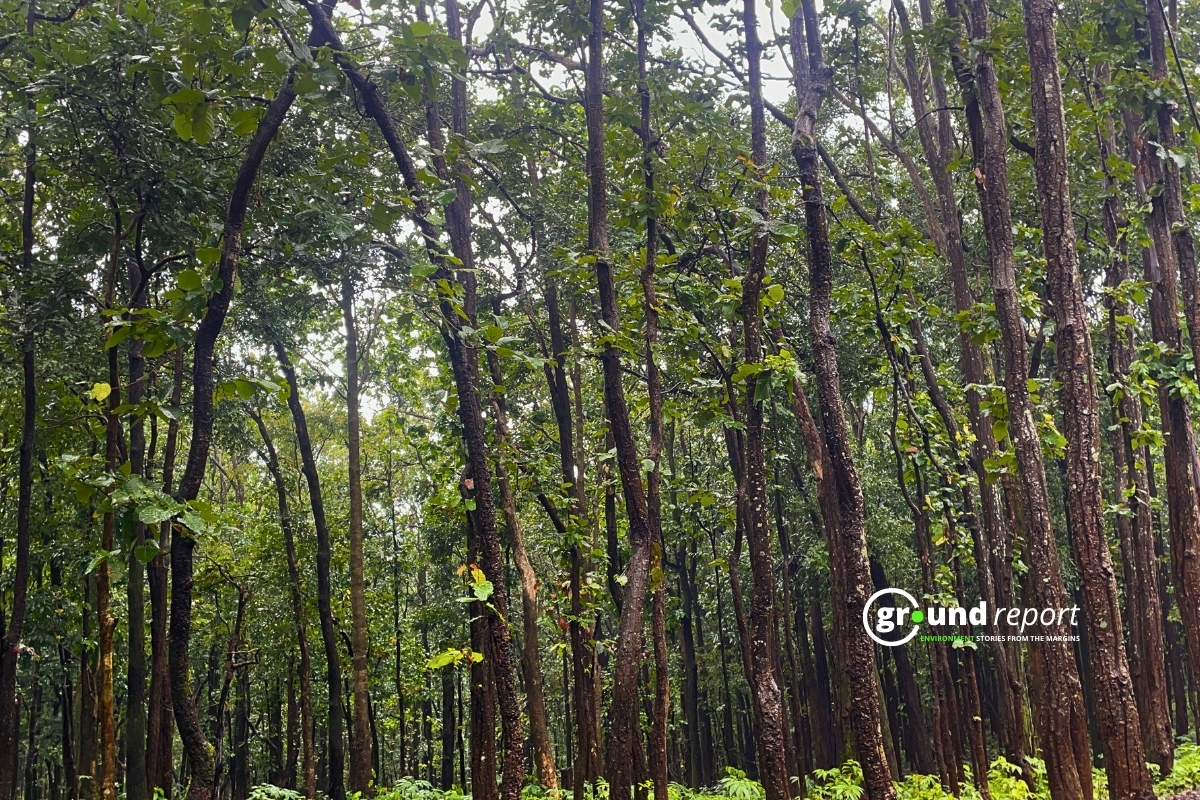
हिंदी में पढ़ें | Sometime around 4 or 5 in the morning, Kunwarvati Bai and Lalli Bai walked into the sal forest near Chauradadar village in Madhya Pradesh’s Dindori district, carrying buckets in their hands. Fine brown sawdust lay scattered beneath the trees. At first glance, it looked like ordinary wood dust. But it was an unmistakable sign that the sal heartwood borer (Hoplocerambyx spinicornis) had already reached inside the trunks.
The forest, part of the Karanjia range, was in the middle of a battle against the destructive beetle.
Kunwarvati Bai said, “No matter how green a tree looks from outside, its death has already begun inside.”
The insect had spread beyond the Karanjia forest range into Dindori and other nearby forest areas. The forest department was now working with local tribal communities to bring it under control.
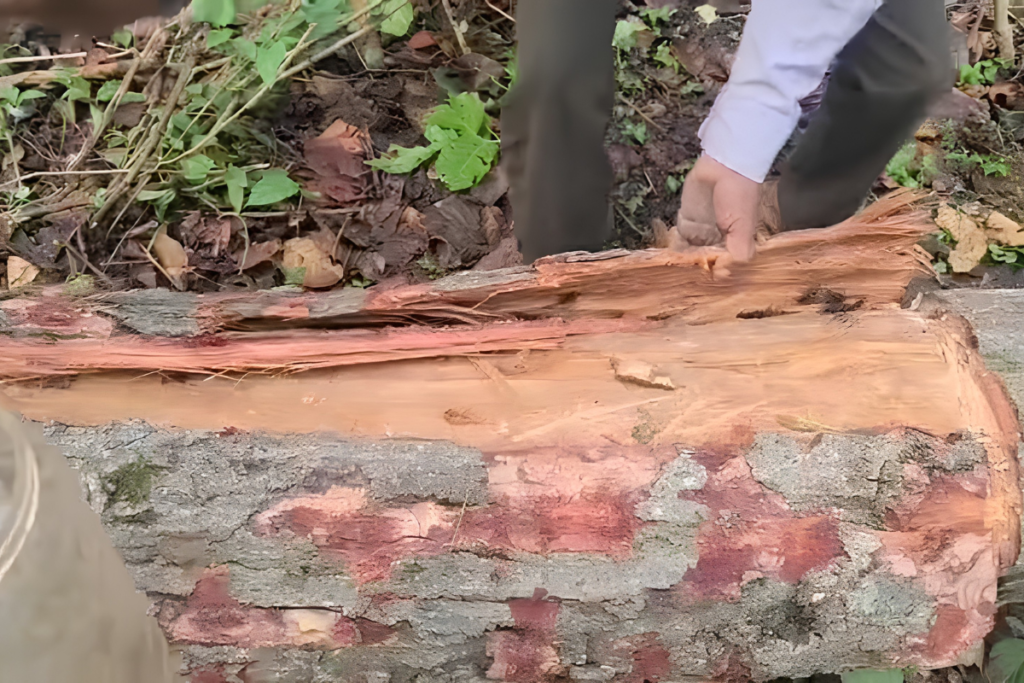
To trap the beetles, forest officials are using the “trap tree” method. They cut down a healthy sal tree about 60–90 cm in diameter and chop it into 2–3 metre-long logs. Workers then roughen the bark near the cut ends to create small crevices where the beetles can hide. Drawn by the smell of the fresh sap—the liquid that oozes from a freshly cut tree—the beetles gather on the logs to feed. After feeding, they become sluggish, making it easier for workers to collect and kill them.
The infestation has become so serious that the Madhya Pradesh government has asked the Centre for permission to cut about 150,000 sal trees to stop the beetles from spreading. Experts say that if the outbreak is not controlled soon, even healthy trees could be affected. Many villagers, however, say the forest department acted too late and blame its negligence for letting the problem grow.
Two Rupees for One Insect
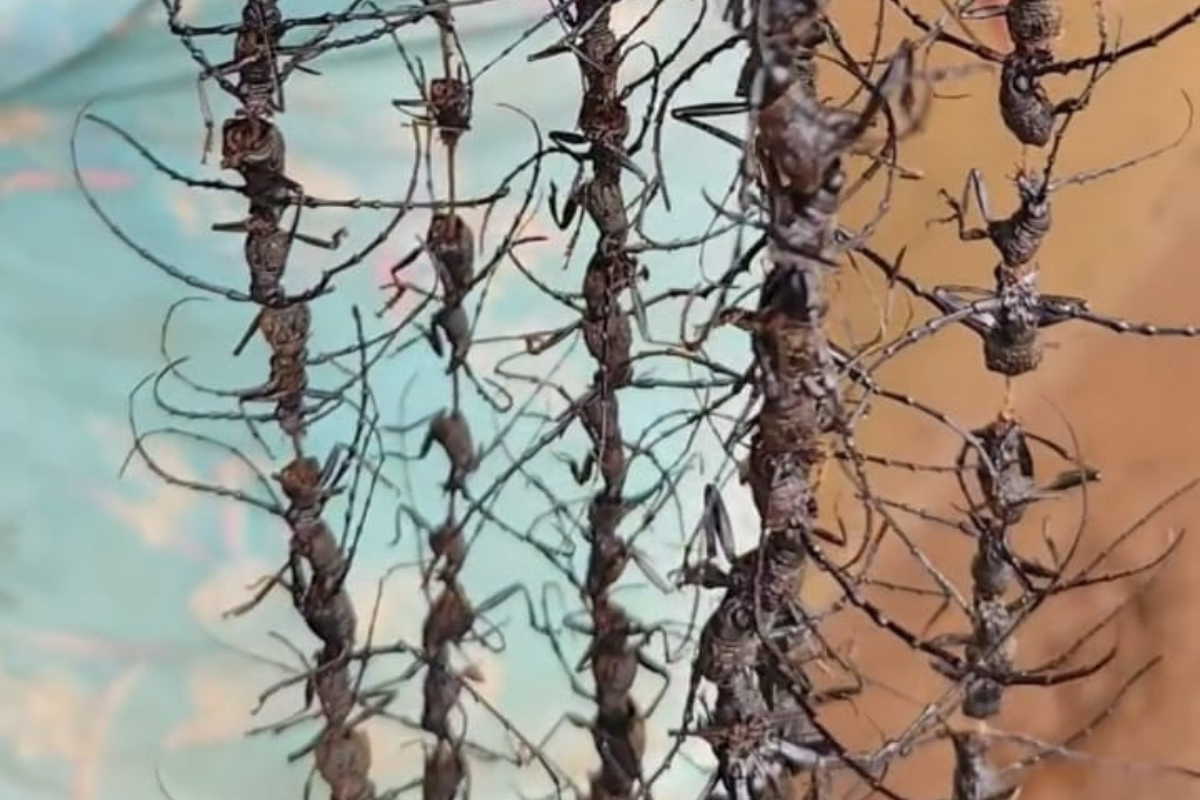
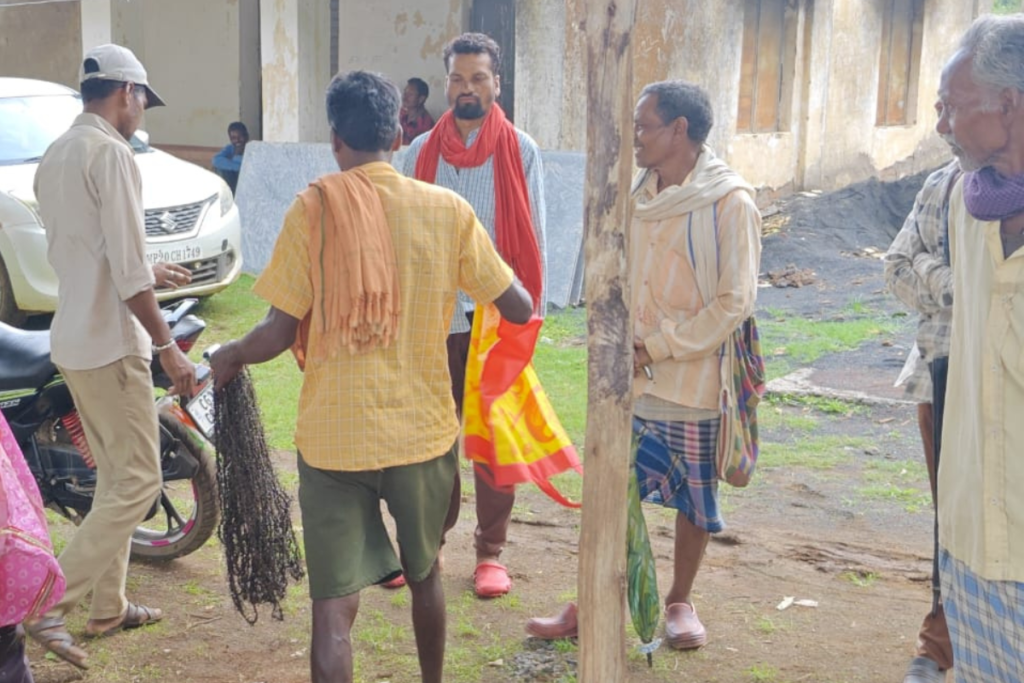
Kunwarvati pulled the sluggish black sal borer insects from the trap trees the forest department had cut down. She separated the insects’ heads from their bodies and strung them into garlands of 100. These garlands formed the basis of payment.
The forest department paid tribal workers ₹2 for every beetle they caught. It set up five collection centres in Kharidih, Chauradadar, Kabir, Jagatpur and Karanjia, where villagers brought the beetles they had collected. The money was then transferred directly to their bank accounts.
Sukhnandan Baiga worked alongside them, filling a bucket with insects. He said, “If the village and the forest department don’t come together, saving such a large forest will be difficult.”
This dark brown or black insect, about the size of a human finger, was considered one of the biggest threats to Indian forests. Its first recorded attack on sal trees dated back to 1899. Since then, Indian sal forests have faced at least 20 major outbreaks.
Madhya Pradesh saw an epidemic-scale attack between 1996 and 2001. During that period, trap tree operations killed 65,000 insects. But over those five years, workers still had to cut down 15,90,065 trees in total.
The insect bored into sal trunks, lived inside them, and bred there. It could also infect other species, including sheesham (Dalbergia sissoo), deodar (Cedrus deodara), rubber trees, and fruit trees like apple.
The sal borer usually attacks weak or damaged trees. But it could infect healthy trees too.
According to Surendra Jatav, Sub-Divisional Officer with the Dindori forest department, officials had bought 14,17,915 beetles from villagers by 21 July 2026. Tribal workers were paid 29.4 lakh rupees for collecting them. But even this great effort was not enough to stop the infestation, and millions of trees still faced being cut down.
The forest department said the sal heartwood borer had spread across 30,487 hectares of sal forest in Dindori. It had attacked about 1,47,784 sal trees. To stop the beetles from spreading to healthy forests, the state government sought permission from the central government to cut down the affected trees.
Near Sontirath village in the former Karanjia forest range, workers marked square signs on sal trees. Sukal Baiga stood beside one tree and looked out at dozens of others.
The 70-year-old Baiga tribal elder said, “Right now the insect is inside the tree. Once it comes out after the rains, it will climb onto healthy trees too.”
Around 35 workers had spent days identifying infected trees with Sukal. These were people who normally cared for the forest. Now they were deciding which trees could no longer be saved.
Officials said the marking work had continued since November 2025. By December 2025, workers had identified 3,113 infected trees across just three hectares. The full area to be marked covered 119.25 hectares. The work could take another month to finish.
Ignored Warnings and Growing Infection
The Tropical Forest Research Institute (TFRI) had warned in its annual report that the infection was spreading rapidly through these forests.
The report found that 39,572 sal trees were affected by the heartwood borer in 2012–13. By 2014–15, that number had risen to 87,427 trees, across different stages of infestation.
In the Dindori forest division alone, the number of affected trees jumped from 699 in 2012 to 6,139 in 2013, and then to 29,382 in 2014.
The infestation continued to spread through the East and West Karanjia and South Samalpur forest ranges in Dindori. It also reached the Baihar range in North Balaghat, the Mowai, Motnala and Bichhiya ranges in East Mandla, parts of the Kanha Tiger Reserve, and the Satpura Tiger Reserve.
Dr. Neelu Singh, acting director and scientist at TFRI Jabalpur, said, “Early scientific surveys already found worrying levels of infection at several sites in the sal forests of Dindori and Amarkantak.”
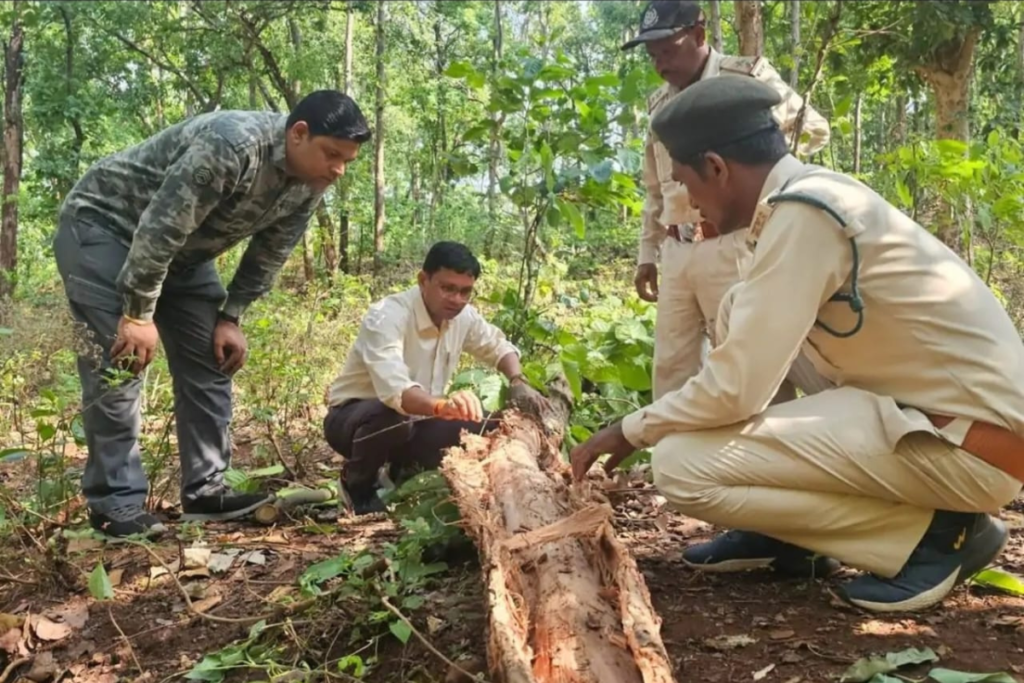
TFRI researchers studied the larvae, sawdust, and insects found in affected trunks. They tried to understand how temperature, rainfall, and humidity influenced the insect’s spread. The scientists stressed the need for regular monitoring, timely detection, and scientific management.
Mahendra Marawi, a social worker from Dindori, believed that proper monitoring and early action could have limited the damage.
Did Humidity Spread the Insect?
Singh said that sustained heavy rainfall and prolonged humidity created favourable conditions for the sal borer to spread quickly.
Dr. C. Mohan, senior scientist at the State Forest Research Institute (SFRI) in Jabalpur, agreed with her. He said the sal borer bred rapidly when humidity stayed above 80 percent, and temperatures ranged between 25 and 28 degrees Celsius.
TFRI submitted an initial report on this to the then Principal Chief Conservator of Forests, V.N. Ambade, last November and December. Detailed marking, scientific monitoring, and trap tree operations began after that.
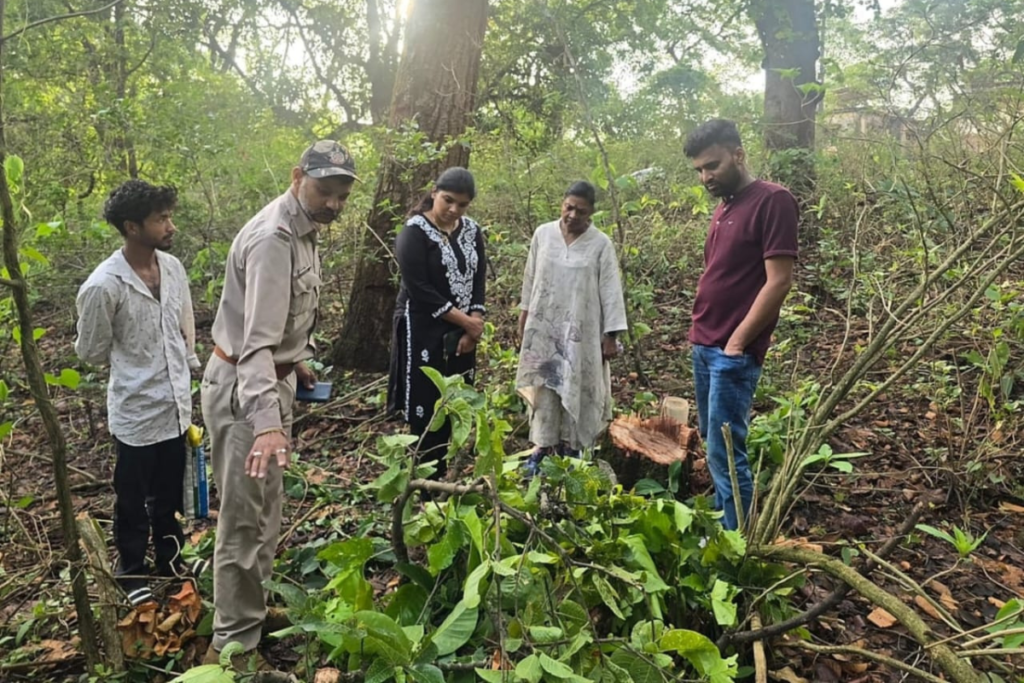
Mohan added, “This insect first attacks sal trees that are injured or leaking resin. That’s why infection has been recorded more often in forests near roads and areas with human activity.”
Asked about solutions, Mohan said, “To reduce the damage, frontline forest workers need regular training, and the scientific monitoring system needs to be strengthened.”
Not Limited to Dindori
The sal forest in Amarkantak district, about 70 kilometres from Dindori, faced the same crisis. According to Dr. Neelu Singh, around 24,000 sal trees were affected there.
Trap tree operations were underway in Amarkantak too. By 21 July 2026, workers had caught around 15,000 sal borer insects. Of these, around 6,000 had been destroyed.
But TFRI scientists warned that the crisis was not limited to Madhya Pradesh. Similar reports came in from the sal forests of Chilpi, Gariaband, and Narayanpur in Chhattisgarh. The entire sal landscape of central India now faced a shared ecological challenge.
“The Forest Is Changing”
Forest covered 40.45 percent of Dindori district. Of this, 80,263 hectares were sal forest, including 76,230.60 hectares of dense sal forest and 4,032.42 hectares of open sal forest. These forests supported the livelihoods of the Baiga and Gond communities.
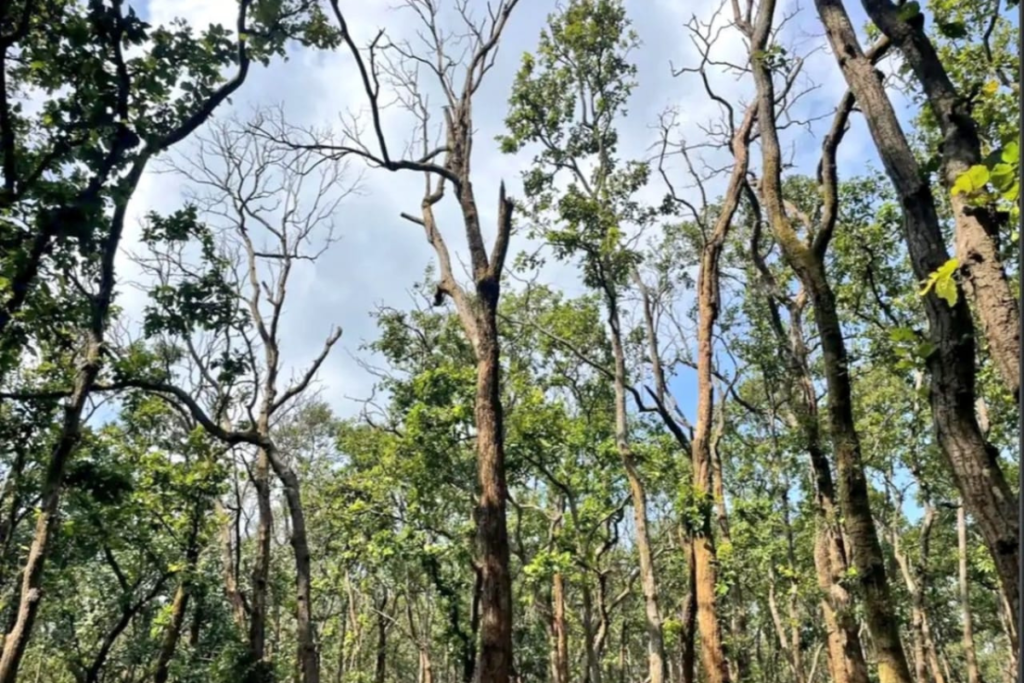
Vishnu Marawi of Chauradadar village said, “This insect is more dangerous than Corona [virus]. Corona took human lives. This is killing our entire forest.”
Mattu Marawi added, “Four or five years ago, the insect appeared on a few trees. Now the whole forest looks like it’s changing. The forest survives; only then does our life survive.”
Ashok Solanki, Divisional Forest Officer of Dindori, said, “Last year, only 5,000 to 6,000 infected trees were marked for felling. This year, that number has risen to one and a half lakh.” He said the current outbreak matched a natural 30-year cycle last seen in 1997-98.
The forest department planned to remove severely infected trees and then protect natural regeneration in the area. The forest could take 20 to 30 years to return to its original state.
Bharti Thakre, Divisional Forest Officer (DFO) of the production forest division, said, “Felling is expected to begin by September, once permission arrives from the central government.”
The department estimated that the affected area would yield 46,390 cubic metres of timber and 43,940 cubic metres of firewood. Felling and transport costs were expected to run between 8 and 10 crore rupees. Officials estimated the wood could fetch 1,600 to 1,700 crore rupees through e-auction.
But experts said this was not simply an economic question. R.L.S. Paraste, a retired additional divisional forest officer, said, “Complete elimination of the sal borer is not possible. But scientific management, regular monitoring, and long-term micro-planning can effectively control its spread.”
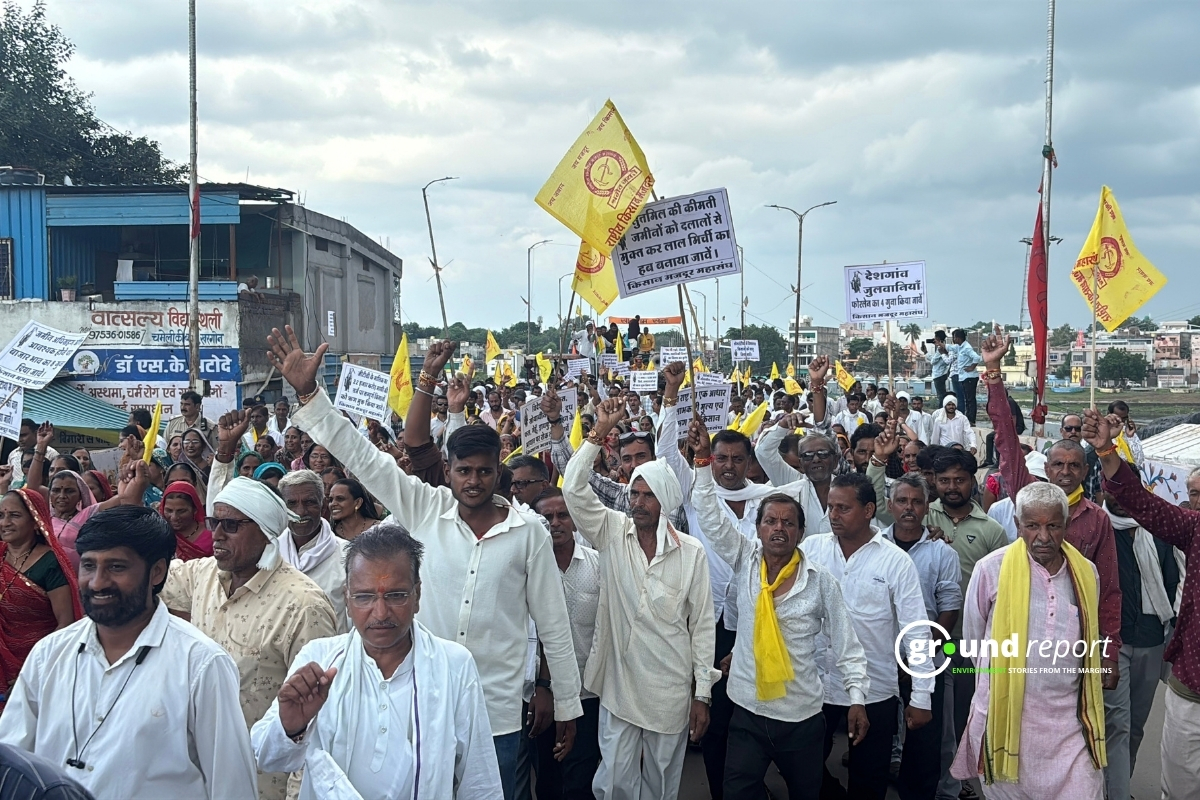
The forests of Dindori and Amarkantak now stood at a turning point. Axes echoed on one side. Garlands of insects hung from tribal hands on the other. Scientific management posed one challenge. A centuries-old forest stood on the other side. Time would tell whether this fight became only a story of losing one and a half lakh trees, or whether science, community, and forest management came together to save the sal forests of central India from this tragedy.
Support Us To Sustain Independent Environmental Journalism In India.
More Ground Reports
He Was Married as a Child, Now Manish Dangi Helps Stop It for Others
Despite The Ban, How Gutkha Became MP’s Most Common Household Habit
Stay Connected With Ground Report For Underreported
Author
Support Ground Report to keep independent environmental journalism alive in India
We believe climate change should be the basis of current discourse, and our stories attempt to reflect the same.
Connect With Us
Send your feedback at greport2018@gmail.com
Newsletter
Subscribe our weekly free newsletter on Substack to get tailored content directly to your inbox.
When you pay, you ensure that we are able to produce on-ground underreported environmental stories and keep them free-to-read for those who can’t pay. In exchange, you get exclusive benefits.
Your support amplifies voices too often overlooked, thank you for being part of the movement.