

Uttarakhand Chief Minister Pushkar Singh Dhami suspended tree felling for a highway project through Dehradun’s Saat Mod forest on Saturday, days after residents wept, sang and gathered around trunks to stop bulldozers from clearing one of the city’s last green corridors.
Dhami announced the pause on social media platform X. He said the government would resume work only after fresh talks with residents, environmentalists and other stakeholders. “Development remains a priority,” he wrote, “but it cannot come at the cost of public sentiment, environmental concerns and local interests.”
Saat Mod, meaning “Seven Bends,” is a stretch of National Highway 7 between Bhaniyawala and Rishikesh. Its sal trees form part of an elephant corridor and shelter deer, monkeys and dozens of bird species. For many in Dehradun, it is one of the last substantial green buffers left as the Doon Valley urbanizes.
Project Behind the Dispute
The National Highways Authority of India is widening the 20-kilometer Bhaniyawala–Jolly Grant–Rishikesh road from two lanes to four or six. The Hybrid Annuity Mode project costs roughly ₹743 crore. In a statement, NHAI said the existing road carries about 18,456 vehicles a day, a figure it expects to climb with tourism, airport traffic and the Char Dham pilgrimage.
The widening will affect 4,369 trees. NHAI plans to fell 3,605 and transplant 754. The agency has also built in a 3.5-kilometer elephant underpass, along with box and pipe culverts, based on advice from the Uttarakhand Forest Department, WWF-India and the Wildlife Institute of India.
Saurabh Singh, project director for NHAI’s Dehradun unit, defended the design in a July 10 statement. “Elephant underpasses, box culverts, pipe culverts, and other scientific wildlife mitigation measures have been integrated into the project design to ensure safe movement of elephants and other wildlife while also significantly reducing wildlife roadkills,” he said.
Protests, Arrests and a Black Harela
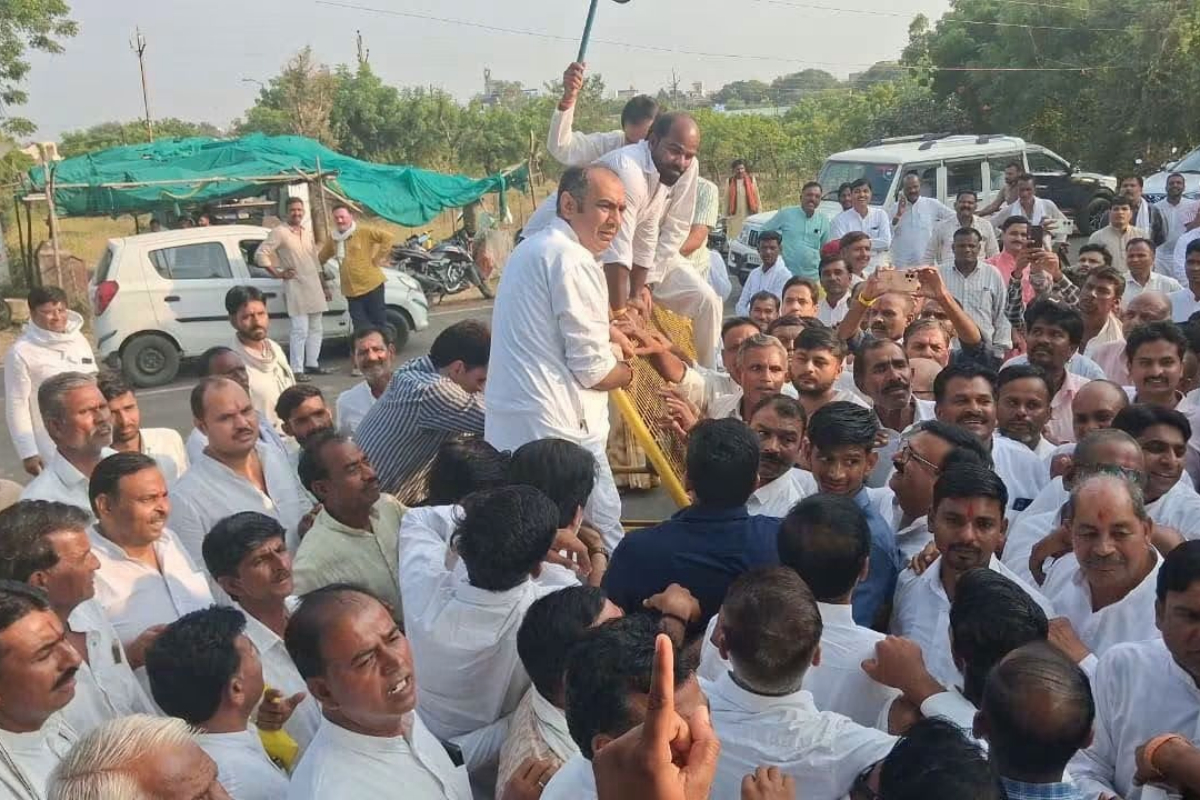
Opposition built through July. On July 15, activists marked Kala Harela — a dark twist on Harela, the state’s traditional tree-planting festival — at Saat Mod instead of holding plantation drives. Protesters sang, hugged trees and blocked construction equipment.
More than a dozen people were detained, including Uttarakhand Kranti Dal members Parmila Rawat, Saumya Chaudhary and Nandini Arya, who runs two libraries in Bageshwar. Members of the Uttarakhand Mahila Manch and Uttarakhand Insaaniyat Manch also joined the demonstrations.
Devanash Sharma, 17, a resident of Ghamuwala near Bhaniyawala, has protested since it began. “Amid soaring temperatures, we fear the road widening through the Shivalik forests because it will only increase pollution of every kind,” he said.
Omini, 27, a protester from Pauri, said the felling was proceeding without proper review. “None of the trees were inspected for nests, reptiles or other wildlife to ensure that no living creatures would be harmed,” she said. “The movement of JCBs and felled trees is also obstructing elephants’ access to the Chandrabhaga river, which lies across the road and serves as a drinking water source.”
Babita, a mother who brought her two-and-a-half-year-old daughter to the protest, said sal trees take a century or two to grow but only minutes to cut down. She said she wanted her daughter to learn early how to fight for her rights.
A Legal Fight Still Unresolved
Environmental activist Reenu Paul filed a public interest litigation challenging the project’s impact on the elephant corridor. In January, the Uttarakhand High Court in Nainital closed the case and told all parties to wait for the Supreme Court to rule on similar matters, including Anita Kandwal vs. State of Uttarakhand. The court later clarified that an interim stay on felling, imposed in March, had never been extended — meaning no order currently blocked the work.
Paul, the petitioner in the case, told Down To Earth that the NHAI misread the court’s position and began felling trees anyway. She has since filed a contempt application with the Supreme Court, which she expects to hear this week.
Dehradun-based civil engineer and activist Ashish Garg submitted an alternative widening proposal to NHAI, which rejected it. He took the plan to court, where he says judges asked him to develop it further, though he notes only the government can produce a full project report involving multiple agencies.
Why Transplanting Trees Rarely Works
Much of the public distrust traces back to 2022, when the Sahastradhara Road widening felled about 2,200 trees and transplanted more than 900. Most of the transplants died. The relocation site near the Rajiv Gandhi International Cricket Stadium in Dehradun’s Raipur area is now known locally as a “tree graveyard.”
Dehradun-based activist Anoop Nautiyal, citing a right-to-information reply reported by Down To Earth, said more than 46,000 hectares of forest land have been diverted for roads, mining and other projects in Uttarakhand over the past 25 years — nearly five hectares a day. Dehradun district, he said, accounts for about 47 percent of that diversion despite covering only 6 percent of the state’s land.
For now, the chainsaws at Saat Mod are silent. NHAI’s mitigation plans, the state’s shaky transplant record and a pending Supreme Court hearing all still hang over the project. Whether the pause leads to a redesign or simply delays the inevitable will shape how Uttarakhand builds its roads — and how many of its forests survive the building.
Support Us To Sustain Independent Environmental Journalism In India.
More Ground Reports
He Was Married as a Child, Now Manish Dangi Helps Stop It for Others
Despite The Ban, How Gutkha Became MP’s Most Common Household Habit