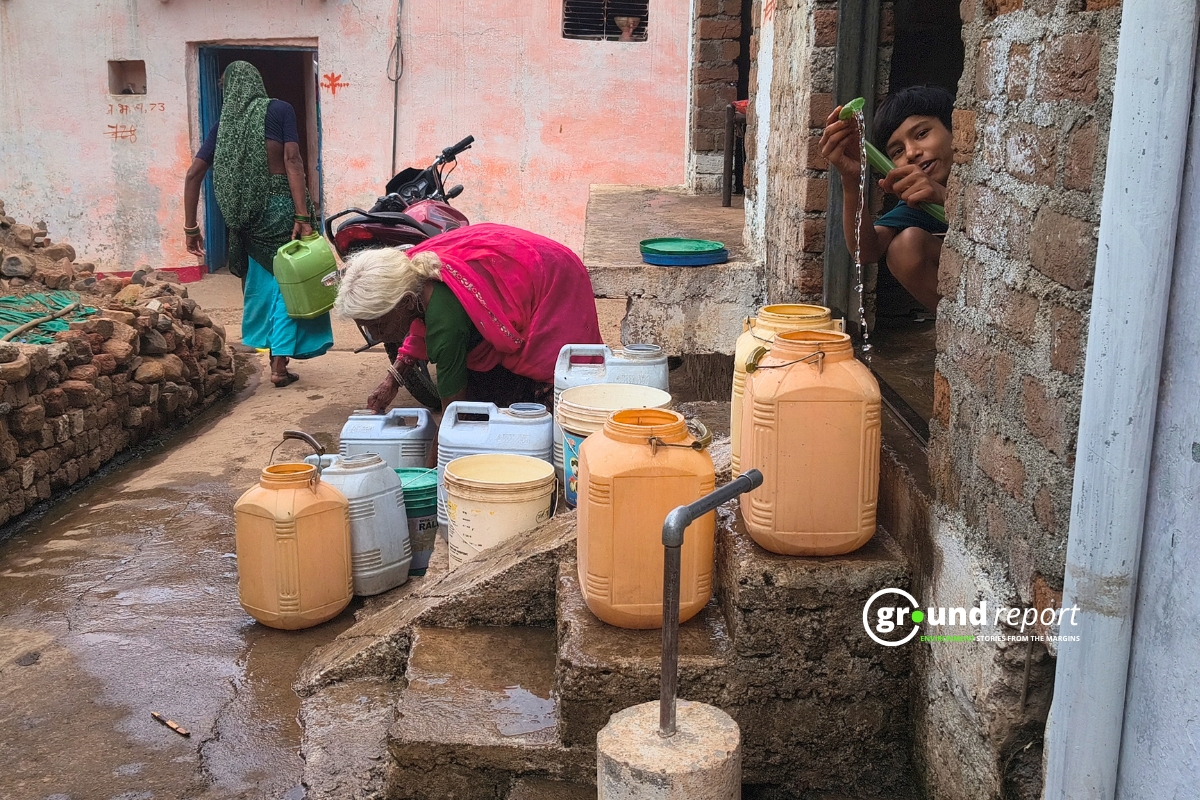
हिंदी में पढ़ें: In the Rajgarh district of Madhya Pradesh, Jal Jeevan Mission carried a dream with the slogan ‘A tap in every home, water for every household’. The taps were installed, and the pipes were laid, but a new crisis stood at the door. Where water reached, bills followed. And where bills followed, disputes followed.
The data from Jal Nigam showed that five major janpad panchayats in the district had water tax arrears of ₹14.37 crore. Bills worth ₹15 crore had been generated in total, but only ₹61 lakh had been recovered—basically, four rupees for every hundred billed.
Of the district’s 1,313 villages, around 400 still lacked a regular water supply, as acknowledged in Jal Nigam’s own progress report. Thousands of tap connections were on record without a constant water supply.
Ground Report had earlier covered Kundibe village in the Bhopal division, declared the first village to receive “24-hour tap water”. Within a year, supply had to be cut to two hours a day because the gram panchayat could not bear the water-tax burden. And now there were more such cases. Most panchayats in Rajgarh district were passing through the same ordeal.
A Plea to the Collector
Durgalal Kirar, sarpanch of Limboda gram panchayat in Rajgarh janpad, wrote a complaint letter to Collector Girish Kumar Mishra in November 2025. He requested that government officials collect payments directly from villagers and provide tap connections. They said the panchayat should be kept out of the process.
In the letter, he noted that the village had around 300 tap connections, but three illegal connections had been given to individual households.
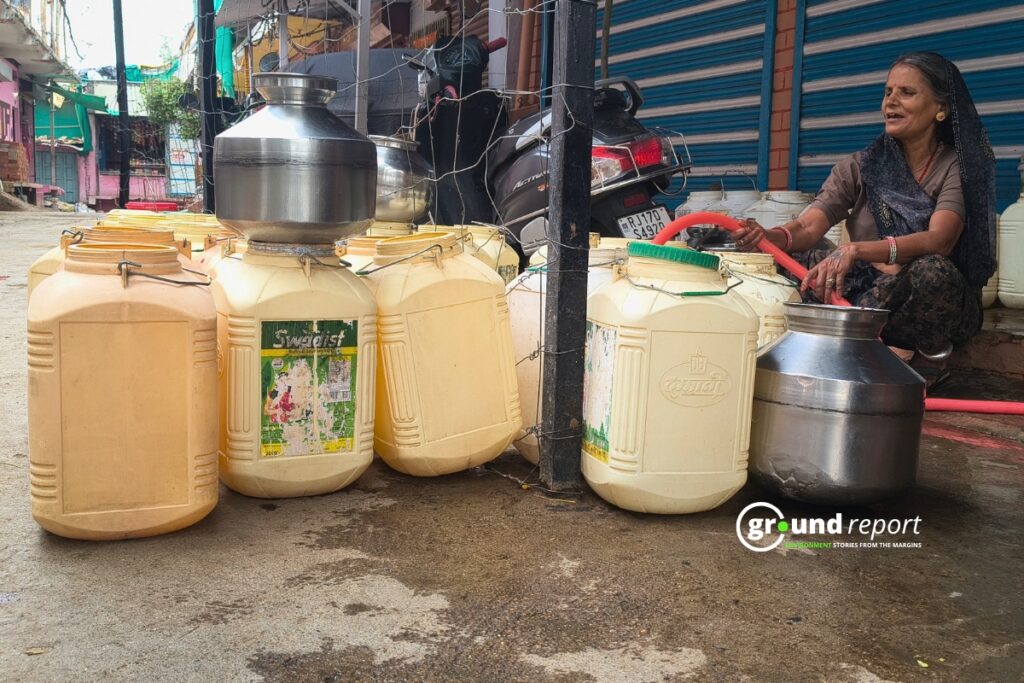
“We were promised a 24-hour water supply but received water for only half an hour,” Kirar said. “Initially, our monthly bill was ₹14,000. Then the department stopped issuing bills for a year. Now, it has suddenly handed us a monthly bill of ₹30,000 and claims we owe ₹9 lakh in arrears.”
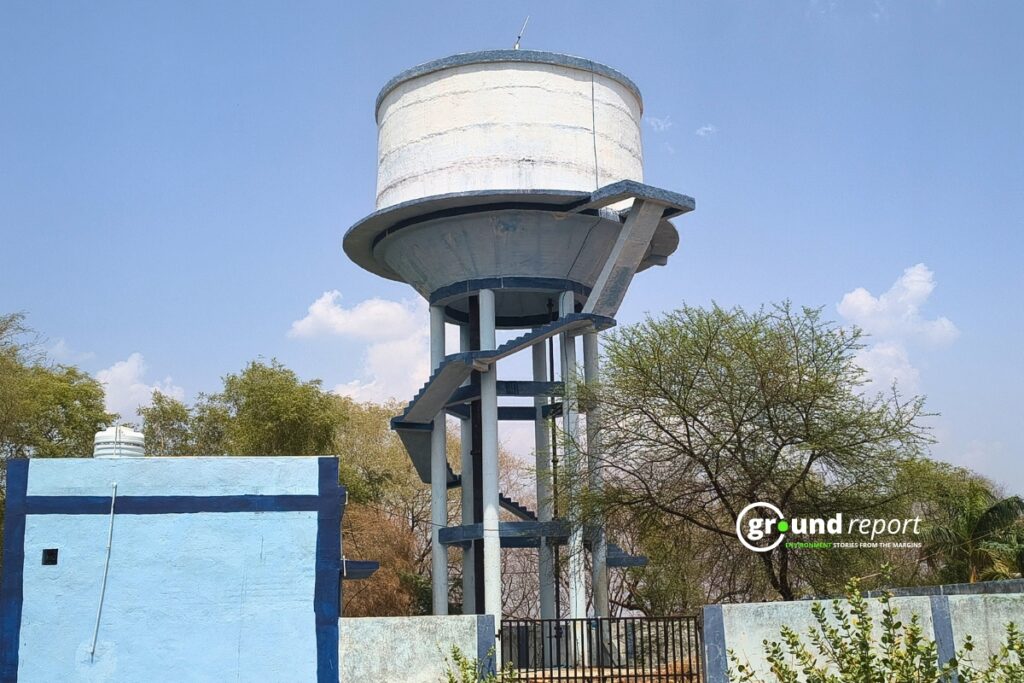
The panchayat had already paid ₹3 lakh, and ₹6 lakh remained outstanding. Frustrated by the erratic water supply, villagers had removed the taps and installed motors. Disputes broke out whenever officials asked them to pay.
“Whenever they visited the village to recover dues or remove illegal connections, residents used the Chief Minister’s Helpline (181) against them,” Kamal Singh, secretary, Gram Panchayat Limboda, said.
“If the panchayat withheld any certificate or benefit to enforce payment, villagers filed complaints that were often unfounded, leading to disputes. The Water Tax Committee provided no support to the gram panchayat. The entire burden of recovering dues had been placed on the panchayat alone,” Singh added.
“If We Don’t Get Water, Why Should We Pay?”
Dharmendra Singh, secretary of the Phulkhedi gram panchayat, said he faced an arrear of ₹6–7 lakh.
“Villagers openly ask, ‘Why should we pay when we do not get enough water?’ We have informed the Water Corporation (Jal Nigam), but they have not responded either. Instead, we are told to ‘manage the situation ourselves.’”
The village had around 300 connections, with roughly ₹2,800 outstanding per connection.
The situation in the Bhojpur gram panchayat of Khilchipur Janpad was even more startling. Sarpanch Kailash said the village had 700 families but 1,100 tap connections on record. A written demand to remove illegal connections went unanswered. The panchayat carried an arrear of ₹3.5 lakh.
Jal Nigam’s Response: “Panchayats Are Not Serious”
When Jal Nigam General Manager Umakant Chaudhary was questioned about these serious allegations and the crore-rupee arrears, he placed the entire responsibility on the gram panchayats. Chaudhary stated: “Recovering this ₹14.37 crore arrear is the panchayats’ job — they are simply not doing it seriously.”
The scale of this systemic failure was visible in Jal Nigam’s own janpad-wise figures. According to official departmental data, gram panchayats under the five main janpad panchayats collectively owed more than ₹14.37 crore.
According to Jal Nigam’s official data, the picture becomes even clearer:
| Janpad | Arrear (₹ crore) |
| Biaora | 3.80 |
| Rajgarh | 3.20 |
| Khilchipur | 2.90 |
| Jirapur | 2.35 |
| Sarangpur | 2.12 |
| Total arrear | 14.37 |
| Total billed | 15.00 |
| Recovered | 0.61 |
| Recovery rate | < 4% |
In response to allegations of illegal connections at Limboda, a Jal Nigam team visited the site and removed the illegal tap connection.
Regarding the Bhojpur gram panchayat, he argued that the panchayat itself had failed to appoint an operator.
“We had been supplying water there continuously for the past four to five months, but the panchayat did not hire an operator. Because of this lapse, the water supply had to be suspended for 15 days,” Chaudhary said. “After prolonged negotiations, the panchayat agreed to use a private operator from L&T, but it has still not appointed its own independent operator.”
Before the conversation with the GM could go further, he cited a busy schedule and requested an in-person meeting.
The Policy Dimension
Amid these facts and contradictions emerging from the ground, the policy threads of this crisis found mention in the official guidelines of the National Institute of Rural Development and Panchayati Raj (NIRDPR).
According to pages 2, 3, and 6 of that report, the government’s investment covered only the one-time creation of infrastructure, and the 15th Finance Commission grant was merely a ‘critical gap’. fund” – limited financial support. That is to say, electricity bills and day-to-day maintenance costs were inevitably met through water tax collection.
Pages 8 and 9 of the guidelines also acknowledged that going door-to-door each month for collection was an additional clerical burden for staff-starved panchayats; instead, the water tax should be bundled with the house tax and collected annually in a single payment.
The guidelines further clarified that when villagers refused to pay, gram panchayats had the statutory right to withhold certificates or benefits issued at the panchayat level until the annual water tax was paid.
It was the gap between these policy claims and ground reality that was currently pushing the entire JJM model in Rajgarh district toward financial crisis.
Rajgarh’s water crisis was not just about unpaid bills. It reflected a deeper flaw in the system. Pipelines were laid, but little thought was given to who would operate them, maintain them, or recover the costs.
Jal Nigam said the panchayats had to collect the money. Panchayats said they could not collect payments without a reliable water supply. Villagers asked why they should pay for water that rarely reached their homes. As the blame shifted from one institution to another, more than 400 villages remained caught in the middle. Water remained irregular. Bills remained unpaid. And over ₹14 crore in dues continued to pile up.
Support Us To Sustain Independent Environmental Journalism In India.
More Ground Reports
He Was Married as a Child, Now Manish Dangi Helps Stop It for Others
Despite The Ban, How Gutkha Became MP’s Most Common Household Habit