
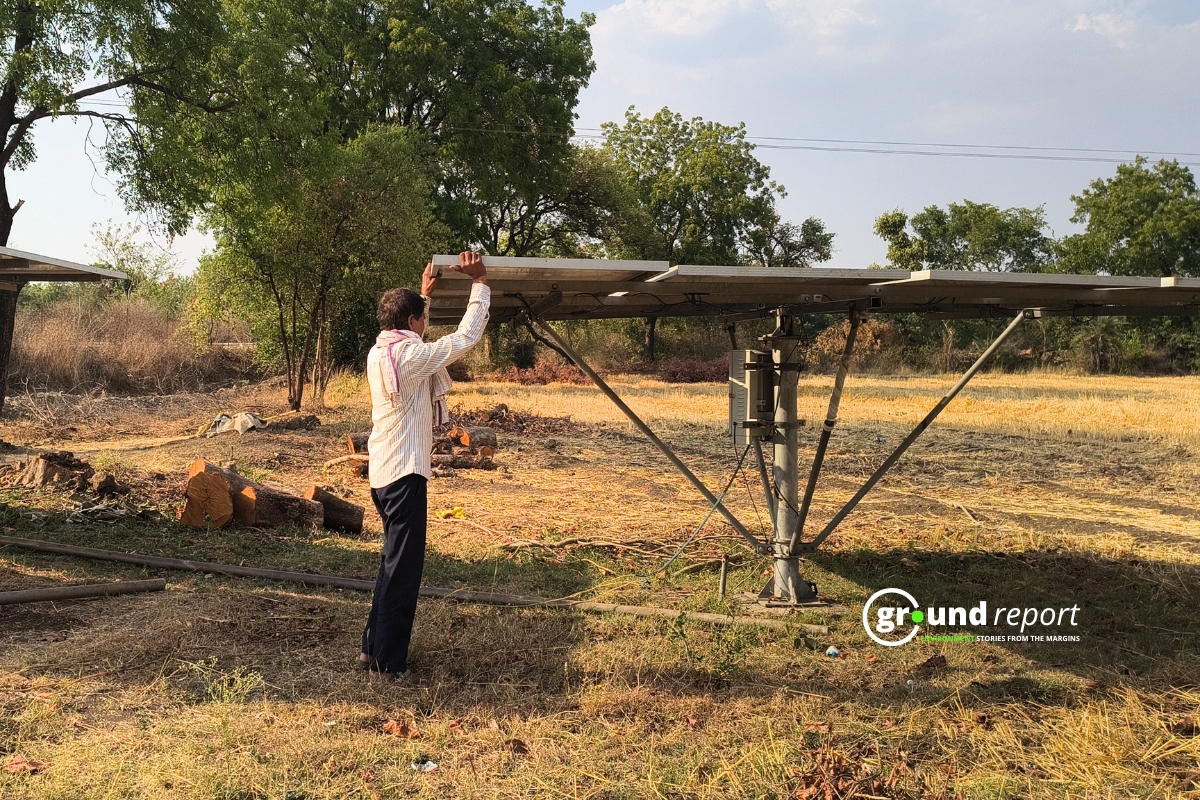
हिंदी में पढ़ें । Premnnarayan Sharma’s farm in Sundarheda village, Rajgarh district of Madhya Pradesh, sits right next to a canal. Water from the Kushalpura Dam travels through a network of canals worth crores of rupees and reaches the edge of his fields. He pays between 100 to 200 rupees per bigha for that canal water. Then he pays another 4,000 rupees every year in electricity bills just to pump that water from the canal edge to the rest of his field.
And even that arrangement rarely works the way it should.
“When the irrigation department runs the canal, the electricity is cut. And when there is electricity, the canal is shut,” Sharma says. The result lands directly on his crops.
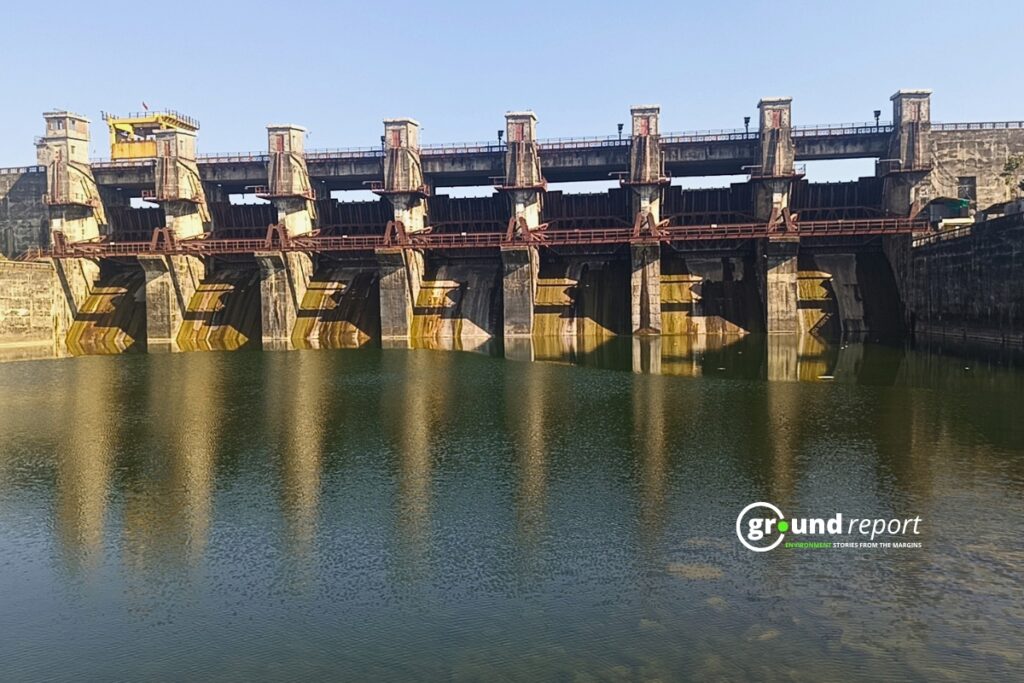
This is not just one farmer’s problem. Across Rajgarh district — where massive dam-canal projects like Mohanpura, Kundaliyan, Kushalpura and Mundla have laid an enormous irrigation network — thousands of farmers remain dependent on conventional electricity and diesel pumps. And at the centre of this situation sits a question that nobody seems to be asking: when canal water is already reaching the edge of a farmer’s field, why can’t a surface water solar pump be installed to lift it?
The Pump That Nobody Talks About
India has made a significant push for solar-powered irrigation. Under the PM KUSUM scheme, the central government had installed over 8.4 lakh solar pumps across the country by June 2025. Madhya Pradesh announced plans to connect 52,000 farmers to solar pumps.
But there is a fundamental limitation in how this scheme has been designed and implemented on the ground. Its focus has been almost entirely on submersible pumps — devices installed in borewells to pull water from underground.
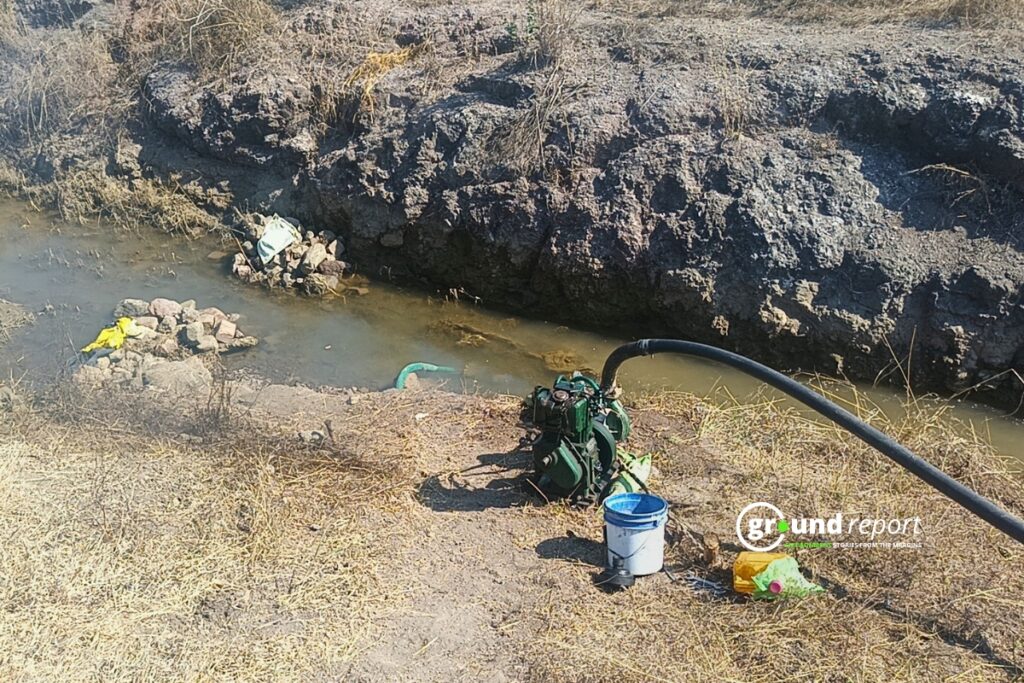
Solar pumps actually come in two types. The first is the submersible pump, which is lowered into a borewell or tubewell to extract groundwater. The second is the surface water pump, which lifts water available at the surface — from canals, ponds, rivers or dams — and sends it to the fields. In places where the water table is less than 15 metres deep, or where canal and pond water is already accessible, a surface pump is both the smarter and cheaper option.
In Rajgarh and across Madhya Pradesh’s canal-irrigated regions, this second option has been almost entirely ignored.
Detailed information was sought from the Ministry of New and Renewable Energy (MNRE) about PM-KUSUM scheme (Component-B) in Madhya Pradesh via Right To Information, The application asked: How many applications were received for surface and submersible solar pumps at the district and block level the response stated that separate data for surface water solar pumps and submersible solar pumps is not available, even though there is a provision for installing surface water solar pumps under the KUSUM scheme.
359 Kilometres of Canals, and Still More Electricity Connections
The scale of government irrigation infrastructure in Rajgarh is considerable. Official records from the Water Resources Division show that the district has canal irrigation running through 41 projects — two medium and 39 small tanks — covering a total length of 259 kilometres. An additional 100 kilometres of canals fall under the Narsinghgarh Water Resources Department. All together, the district has canal irrigation capacity covering more than 31,500 hectares of command area.
Despite this, demand for agricultural electricity connections has been rising sharply. Data from the Rajgarh Electricity Department shows that the district had 95,210 electricity connections in 2020. By 2026, that number had climbed to 1,37,270 — an increase of over 42,000 new agricultural connections in just six years, with more than 18,000 new connections added in 2026 alone.
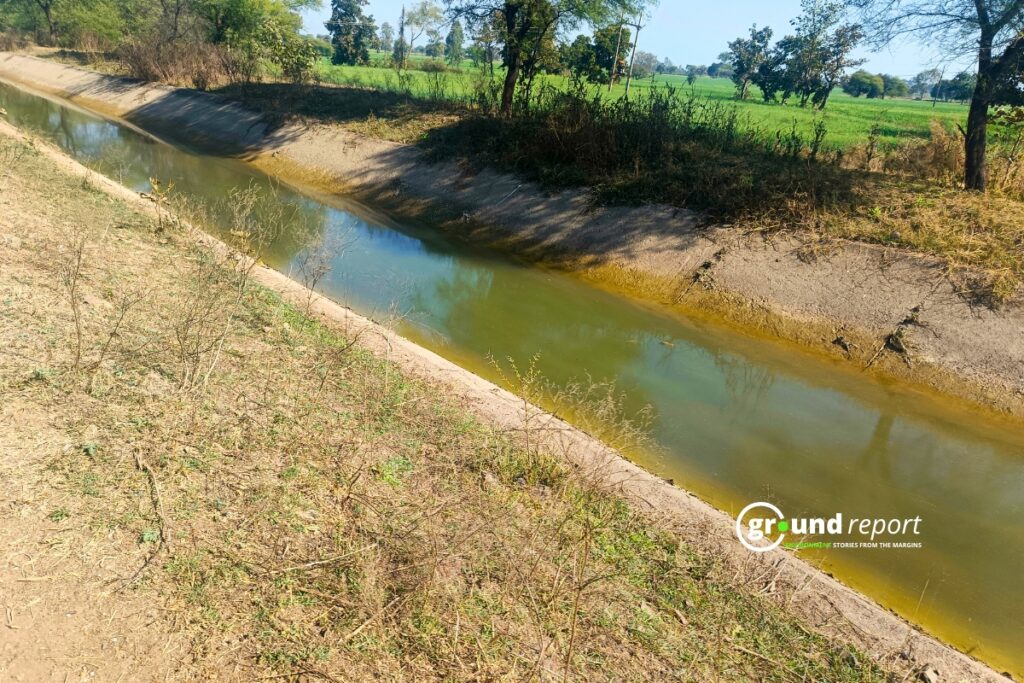
The question this raises is obvious: if canals, dams and pipelines are already in place, why is electricity demand going up?
The answer lies in a technical gap that farmers like Mahesh Sondhiya of Malyahedi village understand intimately. His farm receives water directly through Mohanpura Dam’s modern pressurised pipeline system. But he is still forced to run an electric pump. “The pressure from the pressurised pipeline is not enough to push water to the higher parts of the field, or to run drip and sprinkler systems,” he explains. “So we still have to use a pump to lift the water further.”
This is precisely the gap where a surface water solar pump could step in.
Solar Numbers Tell the Story
The data from Madhya Pradesh Urja Vikas Nigam’s portal makes for uncomfortable reading. In Rajgarh district, solar pump installations have been declining rather than growing:
- Phase 1 (2017–2019): 173 solar pumps installed
- Phase 2 (2020–2021): 124 solar pumps
- Phase 3 (2022): Only 23 solar pumps
- KUSUM Portal (2023–2025): Just 1 registered
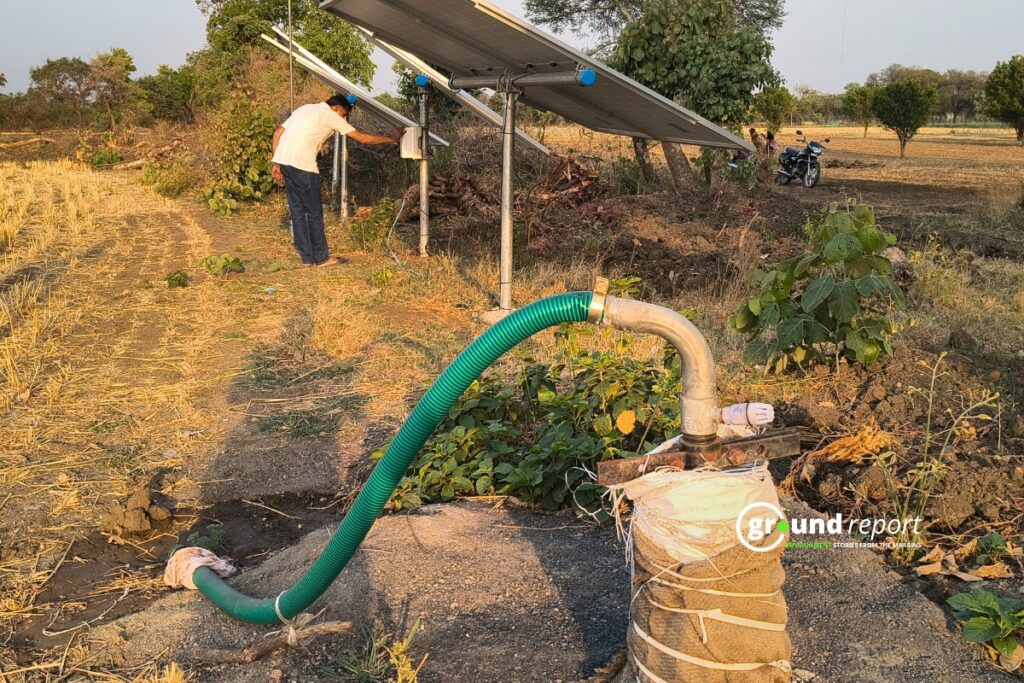
And across all these phases, the overwhelming majority of pumps installed were submersible — designed to draw groundwater. Surface water pumps for canals or ponds are virtually absent from the record.
This is the central irony of the situation. On one side, the government spent crores of rupees building a canal network to bring water to farmers’ fields. On the other side, it launched a solar pump scheme to reduce dependence on electricity and diesel. But the two schemes were never connected to each other.
The Groundwater Crisis Nobody Wants to Address
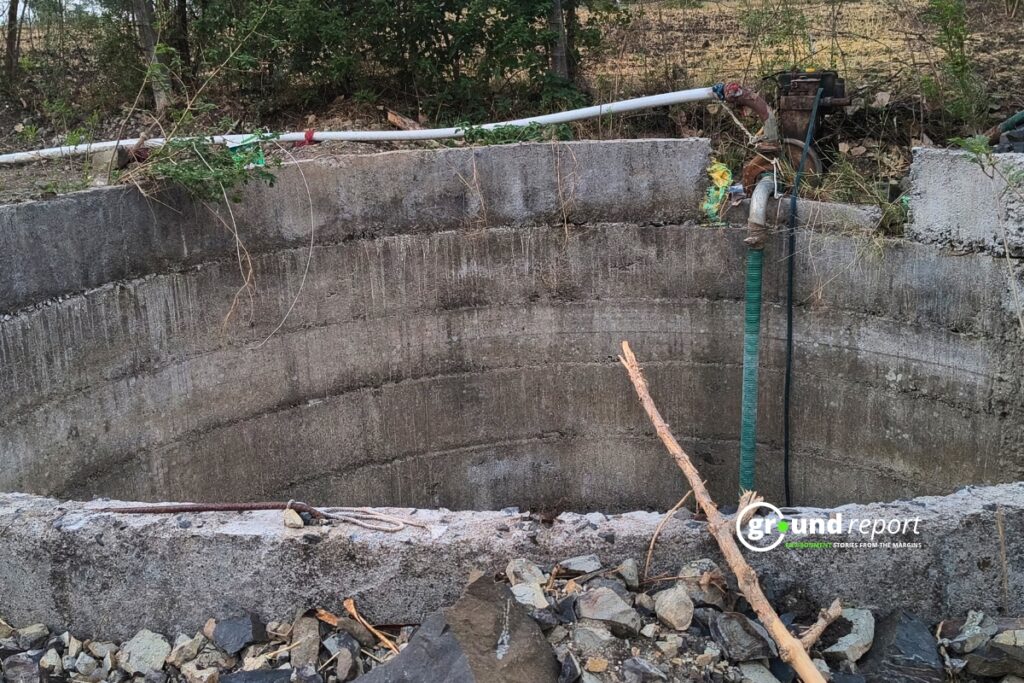
There is another dimension to this story that makes the policy gap even more alarming.
A report from the Central Ground Water Board dated December 18, 2025 classifies the Rajgarh, Jierapur, Biaora and Khilchipur blocks of Rajgarh district as “semi-critical” in terms of groundwater status. The Narsinghgarh block has been categorised as “critical.” And Sarangpur block has already reached “over-exploited” status.
The ground beneath farmers’ feet is running dry.
India extracts more groundwater than the United States and China combined, and agriculture drives the bulk of that extraction. Policy researchers have repeatedly warned that freely available solar energy — when used to run submersible pumps — can actually accelerate groundwater depletion because there is no cost to discourage overuse. One study found that off-grid solar pumps waste two-thirds of the energy they generate, and that most solar pumps “never get switched off.”
A senior official from the Jal Shakti Ministry has put the problem plainly: “The dream of micro-irrigation must be based on surface water. The groundwater simply does not exist in sufficient quantity to support the 70 million hectare target for micro-irrigation.”
In a district like Rajgarh, where the groundwater table is already under stress, installing solar pumps to draw more groundwater is not just unnecessary — it is actively harmful. The canal water is right there. The sun shines reliably through the irrigation season. The technology to connect the two exists. What is missing is the policy will to do it.
Farmers Who Found Their Own Way
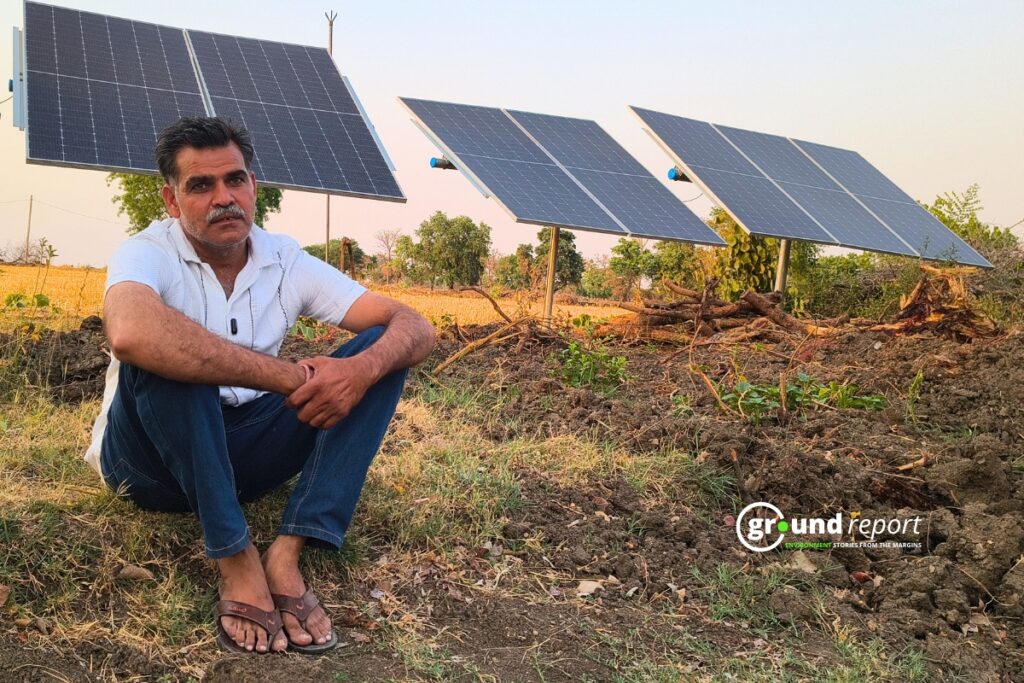
Ashok Sharma of Khimkhedi village received a subsidised submersible solar pump under the government scheme. He recalls that when he first decided to install it, his neighbours laughed at him. Today, his motor runs from 7 in the morning to 7 in the evening — no electricity bills, no diesel. “But,” he admits, “I want to register for a second pump for my other land, and the portal just won’t open.”
His neighbour Vishnu Prasad Yadav grew tired of waiting for the government subsidy altogether. “After applying, it takes six months. I didn’t want to lose the rabi season. A private company installed it in three days.” He says this season he harvested around 50 quintals of wheat.
Both farmers found ways to break free from the electricity-diesel trap. But neither of them found the most natural solution available to them — a solar pump designed to lift water from the canal that runs beside their fields.
The Economic Burden Farmers Carry
The financial cost of this policy gap falls on the farmer’s shoulders every single season. In Rajgarh district, the average irrigation expense per rabi season looks roughly like this:
- Electricity bill: Rs 4,000 to Rs 6,000
- Initial cost of getting dam water to the field: Rs 5,000 to Rs 9,000
- Water tax (jalkar): Rs 100 to Rs 300 per bigha
The cumulative burden is visible in the official records. According to Rajgarh Irrigation Department data, farmers in just four areas — Rajgarh, Biaora, Khilchipur and Jierapur — have outstanding dues of Rs 7 crore 98 lakh 63 thousand rupees. And this figure does not even include the Mohanpura, Kundaliyan, Parvati and Narsinghgarh project areas.
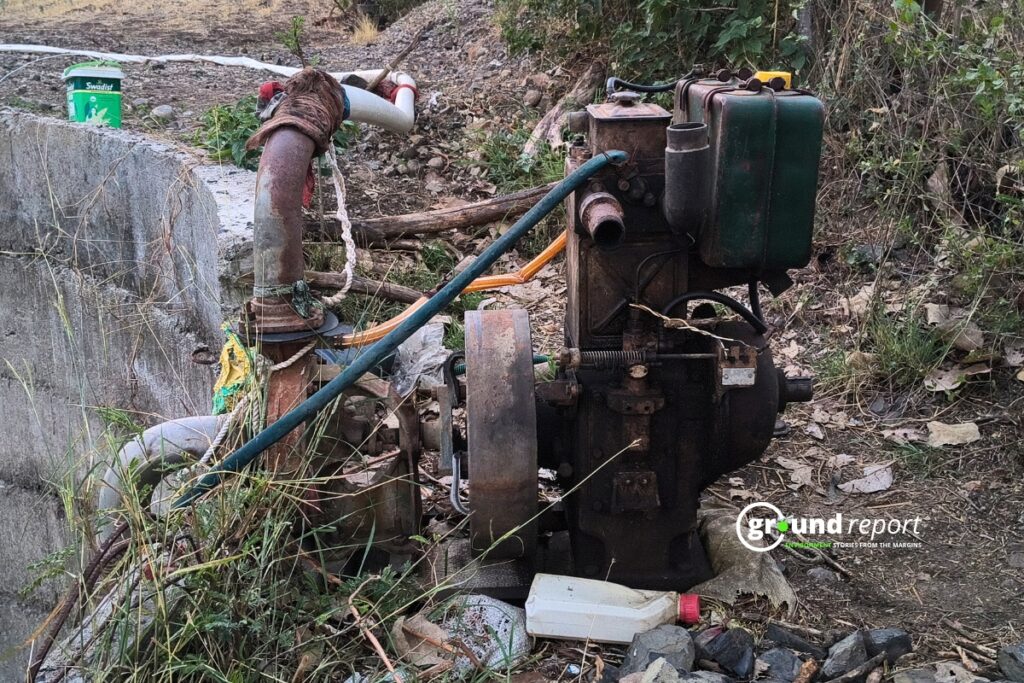
Farmer Mohan Singh puts it starkly: “Only about 40 percent of farmers pay the water tax on time. Sixty percent cannot. The unpaid amounts keep growing, with penalties and interest piling on top.”
The irony is sharp. Under PM KUSUM, the central and state governments together cover 60 percent of the total solar pump cost. Another 30 percent comes as a loan. The farmer needs to contribute only 10 percent from their own pocket. A single one-time investment of that 10 percent, in a surface water solar pump, could free a farmer from annual electricity bills permanently. But for that to happen, the surface pump has to first be offered as an option.
“We Didn’t Even Know This Was Possible”
The awareness gap is as wide as the policy gap.
Hemraj Ruhela, a farmer from Amritpura gram panchayat in the command area of Mundla Dam, says: “Farmers here still depend entirely on electric and diesel pumps. We don’t even know which portal to apply on for solar pumps, or how much subsidy is available.”
Mahendra Singh from Ralaiti village, who irrigates his fields using the Kushalpura Dam canal, says: “We irrigate from the canal, but we know nothing about solar pumps or any scheme for them.”
This is startling, because these are the very farmers whose fields the government canal network was built to serve. If they had known that solar pumps could be used to lift canal water — not just groundwater — the situation might look very different today.
A Blind Spot in Policy
To be fair, PM KUSUM’s guidelines do technically allow for surface water pumps. The scheme does not explicitly prohibit them. But in actual implementation, the entire machinery — state portals, district-level officers, awareness campaigns — has been oriented towards submersible pumps and borewell irrigation.
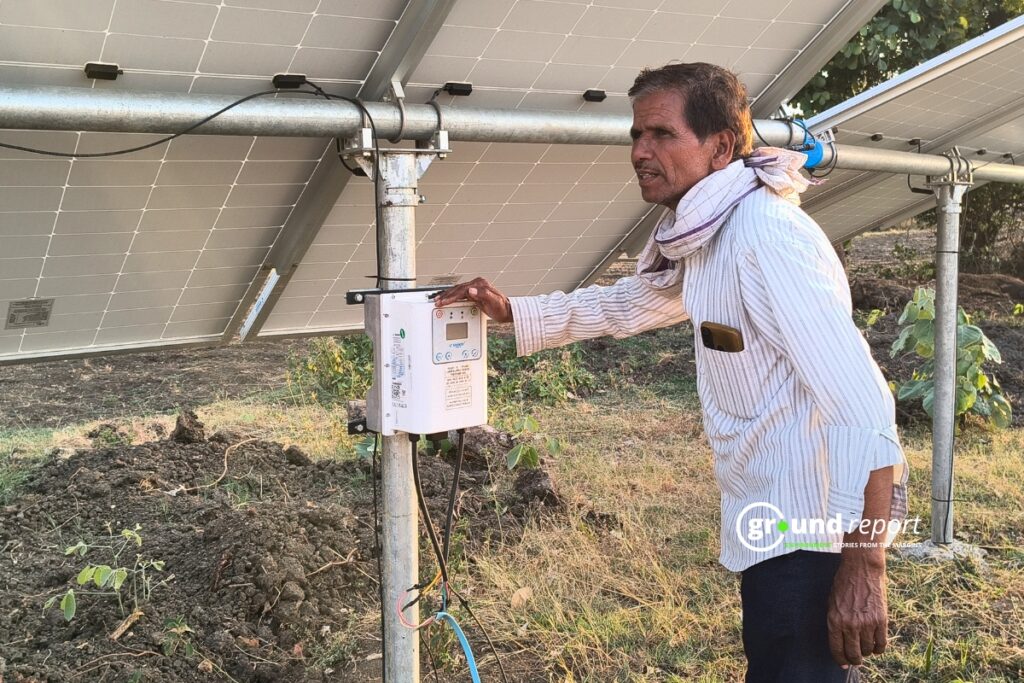
The result is a collision of good intentions. The irrigation department spent billions to bring water to farmers’ fields. The energy department launched a scheme to cut farmers’ energy costs. But nobody sat the two departments down together to ask: in canal-irrigated areas, should we be using solar energy to lift surface water instead of drawing more from the ground?
Deputy Manager of Ganeshpura Solar Plant, Amaresh Singh, points to another obstacle: “When we collected feedback from farmers, we found that many had their solar motors stolen from their fields. Several farmers take temporary electricity connections during the crop season because of theft concerns. Unless security and full awareness are ensured, farmers will not adopt this technology wholeheartedly.”
What the Fix Looks Like
The solution, as it turns out, is not complicated.
Wherever surface water is available — canals, ponds, dams — solar pump schemes like PM KUSUM should actively prioritise surface water pumps over submersible ones. The guidelines already permit this. What is needed is a deliberate policy shift at the implementation level.
Three major benefits would follow. First, farmers would be freed from annual electricity and diesel costs — permanently, after a one-time investment. Second, groundwater extraction would fall in exactly the districts — like Rajgarh’s over-exploited Sarangpur block — where it is most urgently needed. Third, the government’s massive investment in canal infrastructure would finally be used to its full potential.
For this to happen, the irrigation department and the energy department need to sit at the same table. In command areas where canal water is available, installing submersible pumps should be discouraged or made ineligible. The solar portal needs to function reliably and the application process needs to be simplified. Farmers need to be told clearly — in their own languages, at the block and village level — that surface water solar pumps exist, that they are eligible for the same subsidies, and that this option is available to them.
When Mahesh Sondhiya of Malyahedi asked about solar pumps, the department told him that farmers with temporary electricity connections would be given priority. The logic was: whoever needs more electricity should be switched to solar first. Fair enough. But the solar being offered was still for pulling groundwater — not for lifting the canal water that was already at the edge of his field.
A Story Bigger Than Rajgarh
Rajgarh’s story is not unique to Rajgarh. Across Madhya Pradesh, and across India wherever large dam-canal irrigation systems exist, the same picture plays out. Governments have spent enormous sums to build canals and bring water to fields. They have also launched solar schemes to reduce farmers’ energy burdens. But the two have rarely been designed to work together.
The farmer sits in the middle — paying electricity bills on one side, paying water taxes on the other, and watching both burdens grow year after year.
The Prime Minister has urged farmers to adopt solar pumps. That appeal makes complete sense. But it will only be meaningful when surface water solar pumps receive the same prominence in implementation that submersible pumps currently enjoy. In canal-irrigated areas, installing yet another submersible pump is not a solution. It is a missed opportunity at best, and an acceleration of the groundwater crisis at worst.
The canal is there. The sun is there. The technology is there. The subsidy structure is already in place.
What is missing is the decision to connect them.
This report is based on official data from farmers, the Irrigation Department, and the Electricity Department of Rajgarh district.
Support Us To Sustain Independent Environmental Journalism In India.
More On Solar Energy
Indore’s First Green Bond Funded Solar Plant Is Live, Why Are Other Cities Still Waiting?
How Solar Solutions Are Helping Protect Crops from Wild Animals
Two Years Later, in India’s First Solar City, Sanchi
Stay Connected With Ground Report For Underreported Environmental Stories.
Author
Support Ground Report to keep independent environmental journalism alive in India
We believe climate change should be the basis of current discourse, and our stories attempt to reflect the same.
Connect With Us
Send your feedback at greport2018@gmail.com
Newsletter
Subscribe our weekly free newsletter on Substack to get tailored content directly to your inbox.
When you pay, you ensure that we are able to produce on-ground underreported environmental stories and keep them free-to-read for those who can’t pay. In exchange, you get exclusive benefits.
Your support amplifies voices too often overlooked, thank you for being part of the movement.