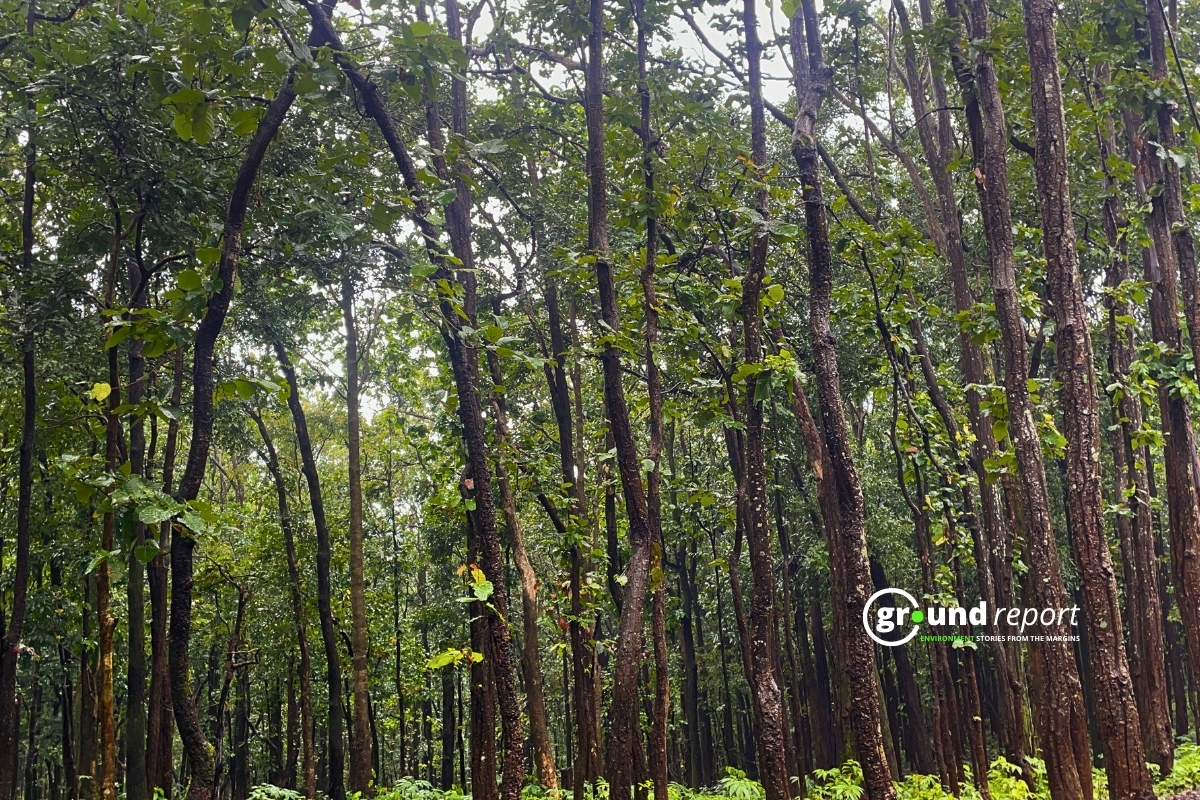
In Ghodakheda village of Rajgarh district, Madhya Pradesh, Brajmohan Dangi owned nine bighas of land. He grew oranges on four bighas and had worked on this crop for the past ten years.
“I ordered 400 saplings at 32 rupees each,” he said. “With great effort, the plants on one bigha became ready to bear fruit. But just as the fruit was about to arrive, trouble arrived with it.”
In 2025, a caterpillar infestation made the fruit fall from the trees before it ripened, he said. In 2024, heavy rain rotted the crop while it was still on the trees.
Dangi spent about 15,000 rupees every year on the orchard’s upkeep, fertiliser, and pesticide. But his last good harvest came in 2023, when he earned about 76,000 rupees. Since then, the costs continued, but the income stopped.
Many farmers in the district lacked proper technical knowledge. They followed the advice of private fertiliser and seed shopkeepers instead and sprayed expensive, often incorrect, pesticides. As a result, they wasted money, and the caterpillars survived anyway. The caterpillar grew fast. It devoured the orange trees’ new shoots, green leaves, and flowers.
Why the Crisis Suddenly Deepened
An orange plant began bearing fruit four years after careful cultivation, he said, but its true fruiting season arrives after seven years. The “mrig bahar” or “monsoon bloom” is in July and August, and the crop matures between late February and April.
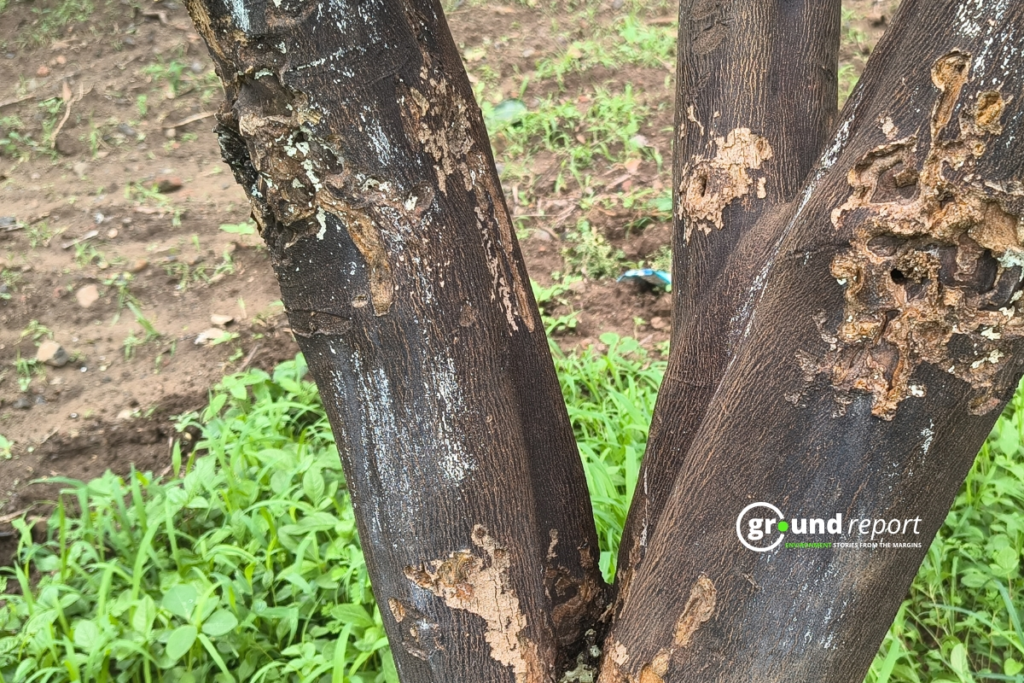
In the early stage, the lemon butterfly lays its eggs under the leaves. These eggs later become caterpillars, which eat the tender leaves and sometimes strip an entire plant bare.
Dr Lal Singh, a horticulture scientist at the Krishi Vigyan Kendra (KVK) in Rajgarh, linked the problem to erratic weather. “Favourable weather matters a great deal for the orange plant,” he said. “Heat in summer, cold in winter, and rain during the monsoon. But when heat persists through the rainy season too; the caterpillar infestation grows worse.”
Dr Singh explained that the caterpillar attacked hardest in orchards where heavy rain or waterlogging suddenly broke the plants’ natural water stress, causing tender new leaves to sprout. That was why orchards like Dangi’s became targets.
The Math of the Damage
Madhya Pradesh is the country’s leading orange-producing state. According to the Union Agriculture Ministry’s latest horticulture advance estimates, the state accounts for about 32 per cent of the country’s total orange production, producing 2.214 million metric tonnes of oranges every year.
According to Invest Madhya Pradesh’s ODOP dashboard data, the Rajgarh district alone contributed 11 to 12 per cent of this output.
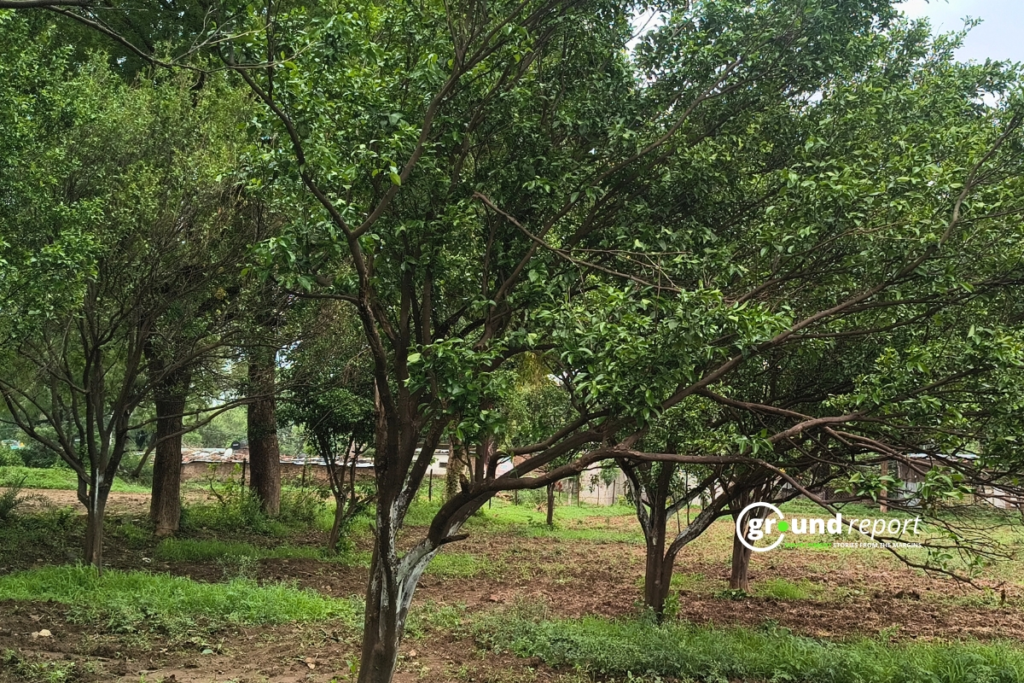
The Rajgarh district horticulture department said the district produced about 298,000 metric tonnes of oranges annually across roughly 21,000 hectares.
By comparison, Agar-Malwa (30-35 percent share) and the Chhindwara-Pandhurna cluster (25-28 percent share) held the first and second positions in the state, while Rajgarh ranked third. This meant Rajgarh formed the backbone of the state’s orange trade, and a crisis there could impact the market and supply chain directly.
A scientific analysis of research on orange farming in Madhya Pradesh found that sudden weather changes, including temperature fluctuations, frost, and irregular rainfall, ranked among the biggest challenges facing orange farmers.
There is another problem. A value chain report from the Ministry of Food Processing Industries (MoFPI) found that farmers lost 25 to 30 per cent of their crop after harvest due to a severe shortage of infrastructure and cold storage. This meant that even the fruit that survived the caterpillars and the rain to stay on the tree often went to waste for lack of storage.
What Could Farmers Do?
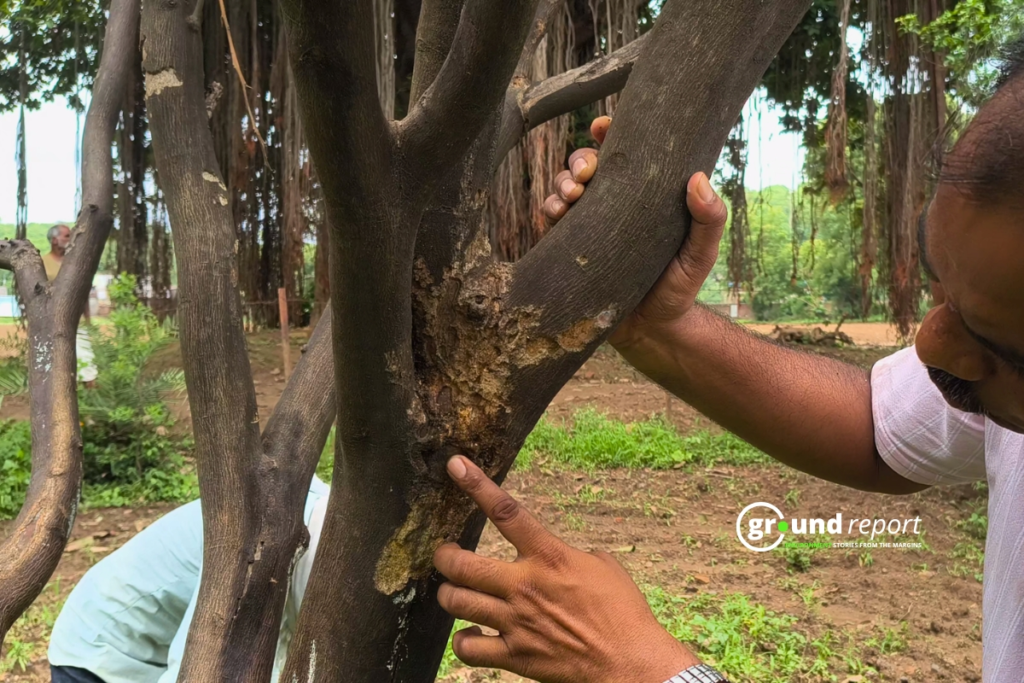
Given the severity of the situation, Dr Lal Singh issued clear technical advice for farmers. To protect against the caterpillar, he recommended mixing 2 ml of chlormequat chloride (50% SL) per litre of water and spraying it twice, 15 days apart.
Alongside this, he advised mixing 8 ml of paclobutrazol to 10 litres of water. Apply the mixture to the soil around the root zone to stop excessive vegetative growth and speed up flowering.
For nutrition, he recommended giving each plant 30-40 kg of well-rotted cow dung manure (or 20 kg of vermicompost), 1.5 kg of DAP, and 500 grams of muriate of potash, along with 100 grams each of zinc and manganese sulphate and 30-50 grams of copper sulphate-boron.
Farmers should mix this manure into the soil at a depth of 25-30 cm around the tree’s canopy spread, not near the trunk, he said, applying half the quantity in June-July and the rest in October-November.
Dr Singh said the ideal temperature for oranges was 25-30 degrees Celsius. When temperatures rise above 30-35 degrees, he advised farmers to maintain soil moisture through drip or sprinkler irrigation so the plants would not suffer shock.
“If I get the right medicine and the right advice at the right time, my orchard might turn green again,” Dangi said. His hope, in truth, belonged to thousands of orange farmers across Rajgarh: that scientific advice would reach the fields on time, that facilities like cold storage would grow, and that their orchards would bear fruit again despite the weather’s blows.
Support Us To Sustain Independent Environmental Journalism In India.
More Ground Reports
He Was Married as a Child, Now Manish Dangi Helps Stop It for Others
Despite The Ban, How Gutkha Became MP’s Most Common Household Habit