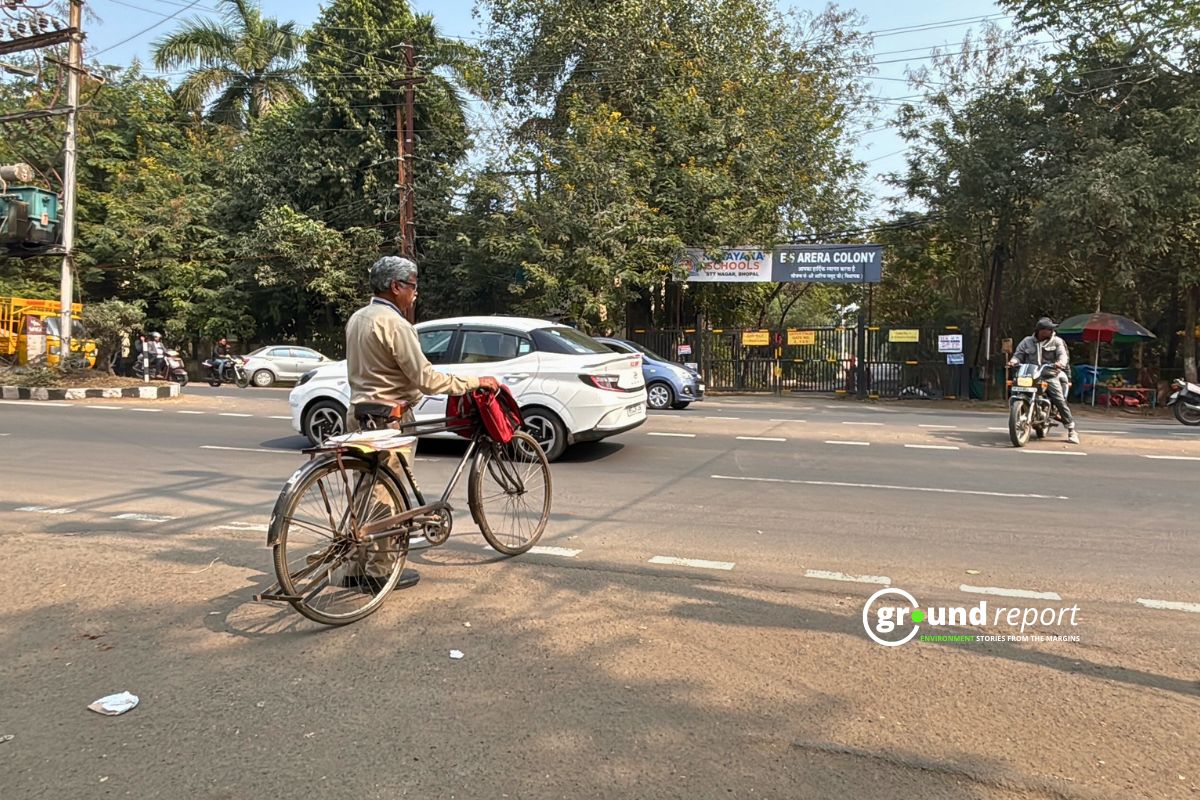
हिंदी में पढ़ें । Shiv Kumar Pathak wakes up at 6 every morning. By 7:30, he is on his bicycle, riding 16 kilometres from his home in Kajlikheda to the post office in Ravishankarnagar, Bhopal. He does this every single day. Then he spends the rest of the morning cycling another 10 kilometres to deliver mail. By the time he gets home, he has covered nearly 40 kilometres on two wheels.
“I love cycling,” Pathak says simply. “It just feels right.”
People smile when they see him. He reminds them of another era, when postmen on bicycles were a common sight on Indian streets, when the roads still had space for them. That space is shrinking fast.
Pathak is one of the many people in Bhopal who commutes daily by bicycle to work. For him, cycling is his primary mode of transportation. He believes that widening roads are reducing the space available for bicycles, making it increasingly difficult for him to ride.
Pathak, like many other cyclists, expresses a sense of insecurity, citing the difficulties they face while commuting. Meanwhile, experts advocate for the development of dedicated bicycle networks and appeal to preserve the cycling culture in smaller cities.
Cycle: not a luxury but the Only Option
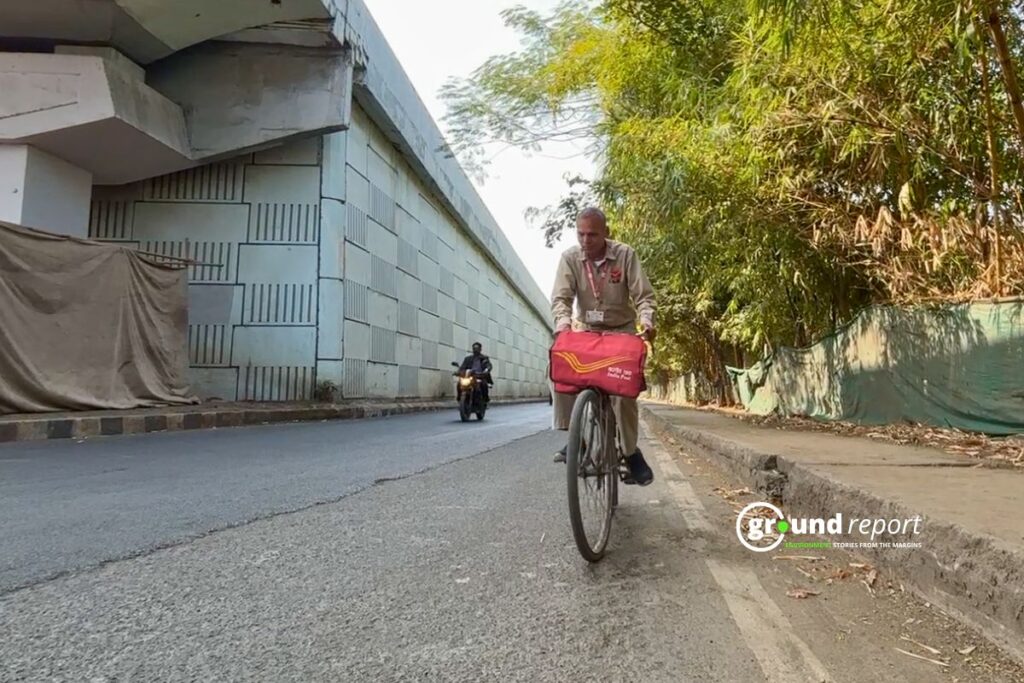
A cycle is not a luxury. For many, It is the only option.
Pathak is not alone. Mohan Lal Chigharia rides his bicycle more than 12.5 kilometres every day from Shahjahanabad to Kolar, where he works as a domestic help in a bungalow. He has done the math.
“I earn ₹10,000 a month,” he says. “If I take a motorcycle, I’ll spend over ₹3,000 on petrol alone. That’s too much.”
For millions of Indians, cycling is not a fitness trend or a weekend hobby. It is the most practical way to get to work. According to the 2011 Census, over 36% of India’s working population walks or cycles to their workplace. In rural areas, that figure is 58.1%. Even in cities, nearly half 48.9% still rely on their feet or a cycle.
In Madhya Pradesh, 15.15% of workers cycle to work. In Bhopal specifically, 10.64% do. Compare that to just 1.5% who use a car. Cycling is not a fringe activity here. It is mainstream.
And yet, the people who depend on it every day feel increasingly invisible.
Wider Roads, Less Space
Thirty years ago, Girdhri Lal Kevat, another postman at the same Bhopal office, lived six kilometres away in Ashoka Garden. He remembers the old single-lane roads where postmen would ride side by side, chatting as they went. It was slow and easy.
Now the roads are double-lane. And somehow, cycling has become harder.
“At every signal, I’m scared a big vehicle will hit me from behind,” Kevat says.
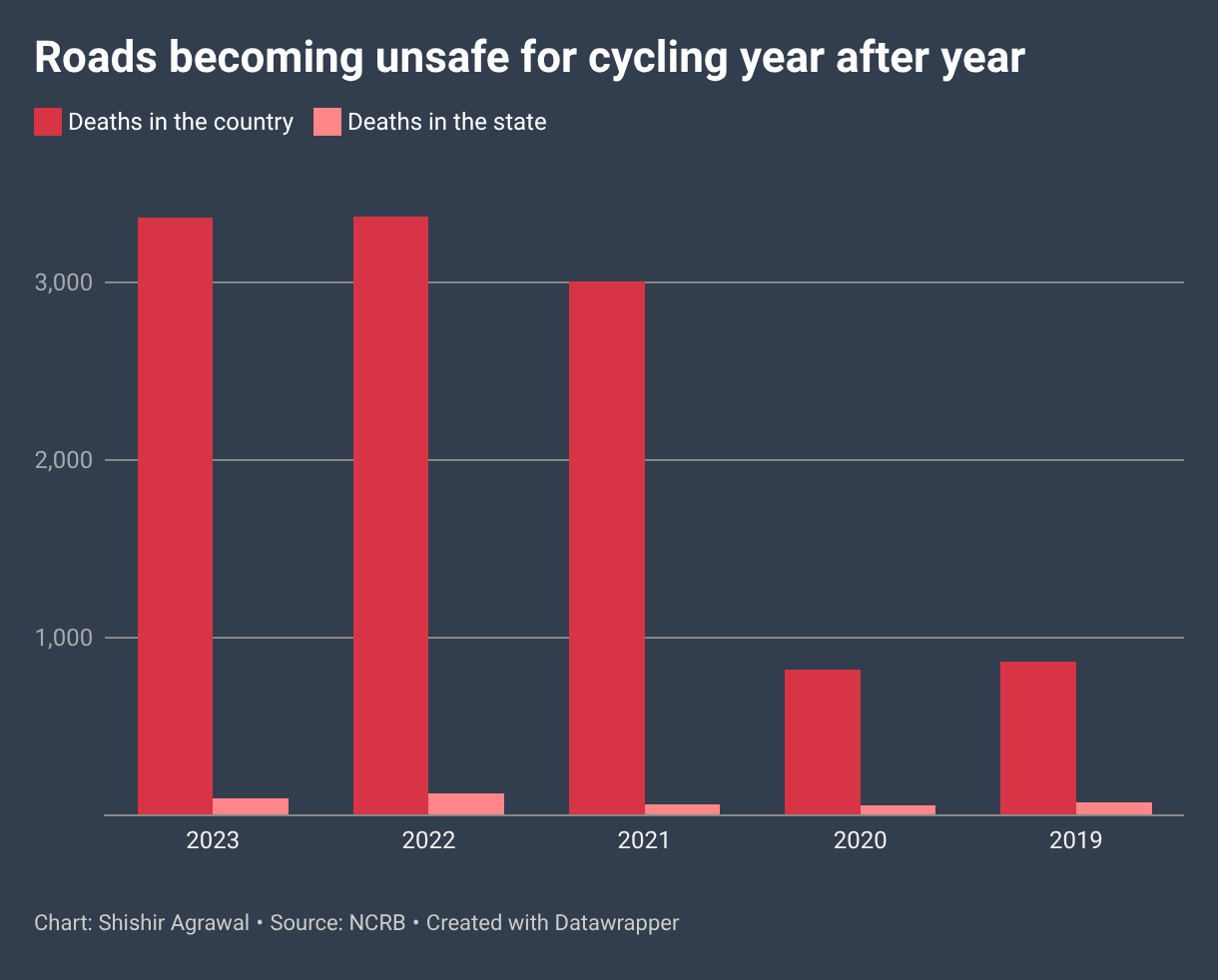
His fear is not irrational. Between 2021 and 2023, 34 cyclists were injured in road accidents in Bhopal and four were killed. At the state level, the numbers are far more alarming. In 2019, 76 cyclists died in Madhya Pradesh. By 2022, that number had jumped to 126. Nationally, cyclist deaths rose from 868 in 2019 to 3,367 in 2023, nearly a fourfold increase in just four years.
Both Pathak and Chigharia have their own accident stories. Broken bones, close calls, near-misses with trucks. They tell these stories without drama, just as facts of daily life.
Pathak also mentions insecurity and inconvenience. The roads in the area where he delivers mail are in poor condition. He says this increases the cost of bicycle maintenance.
According to the draft Bhopal Development Plan 2031, the total length of roads within the city’s urban limits is 637.42 km. However, work is continuously underway to build new roads and renovate old ones.
Meanwhile, Bhopal’s Additional DCP (Traffic) confirmed last year that the city’s vehicle count grows by 1 to 1.5 lakh every year. More cars, more motorcycles, more SUVs, all on roads that were never designed to hold them.
The Cycle Lane That Became a Parking Lot
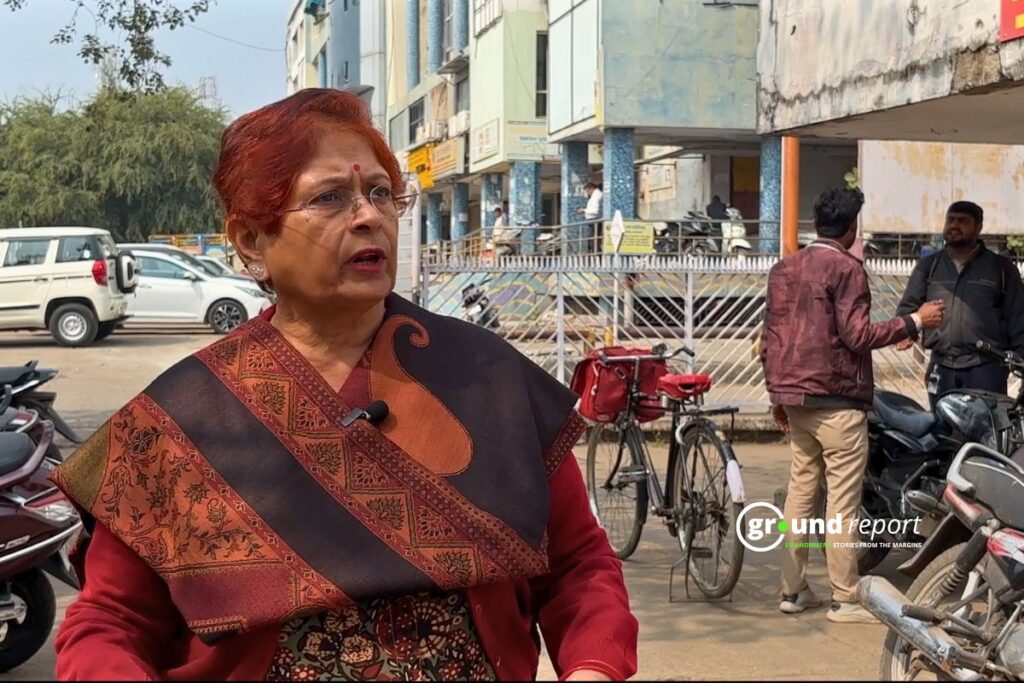
Ask Saluja about cycling in Bhopal, and she pauses before answering. She works at the Ravishankarnagar post office as an insurance agent and financial advisor. Her husband bought an expensive bicycle a while back, excited to ride.
It has not moved since.
“Where will he ride?” she asks. “There’s no space.”
Under Bhopal’s Smart City Programme, the city built 12 kilometres of dedicated cycle lanes across two stretches, installed 50 docking stations, and placed 500 public bicycles for shared use. The cost? Over ₹3 crore.
When this reporter visited in February 2026, both lanes told the same story: potholes, illegal food stalls, handcarts, and rows of parked cars. The bicycles themselves had been removed from the docking stations in November 2025, after the contract with the operating company expired.
“They don’t even consider cyclists as people,” Saluja says, her tone sharp. “Otherwise, they would have left some space for them.”
She is not wrong. Bhopal’s own Development Plan 2031 draft acknowledges that cycle lanes in the city are “insufficient, non-functional, and not connected to any important destination.” The plan lists the absence of footpaths and a proper cycling network as a significant gap.
Whereas according to the National Urban Transport Policy 2014, there should be footpaths and separate lanes for bicycles throughout the city so that the commuters have the confidence that if they wish, they can complete their entire journey on foot or by bicycle.
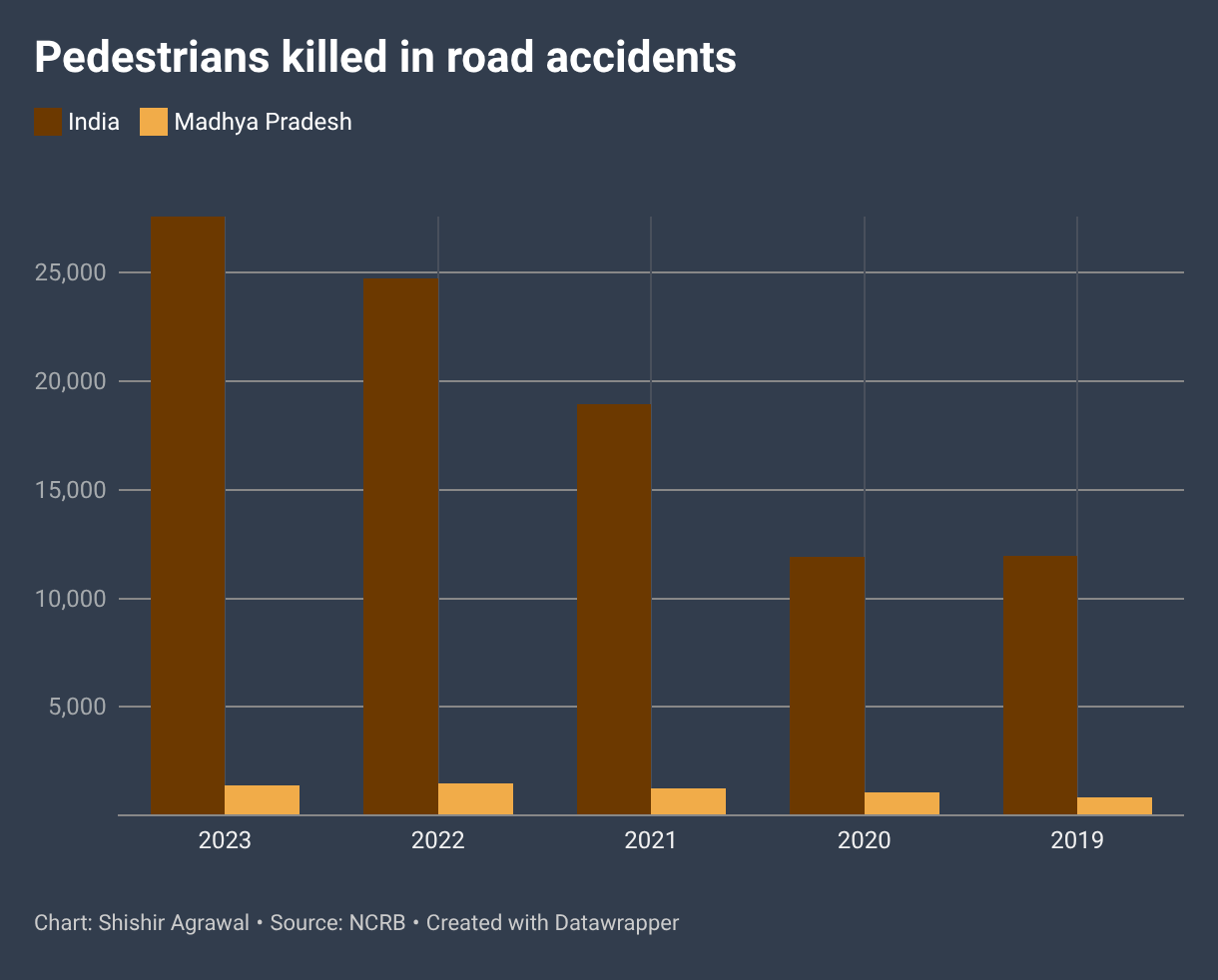
The Pedestrians Are Suffering Too
The problem does not stop with cyclists. Durga Salve has walked the same streets in Bhopal’s Barah Number for 25 years. She works as domestic help across multiple housing colonies, Trilanga, Akashganga, and others. On an average day, she covers 20 kilometres on foot.
“Earlier, the roads were smaller but there were fewer vehicles,” she says. “There were trees on the sides, so even in summer it was manageable.”
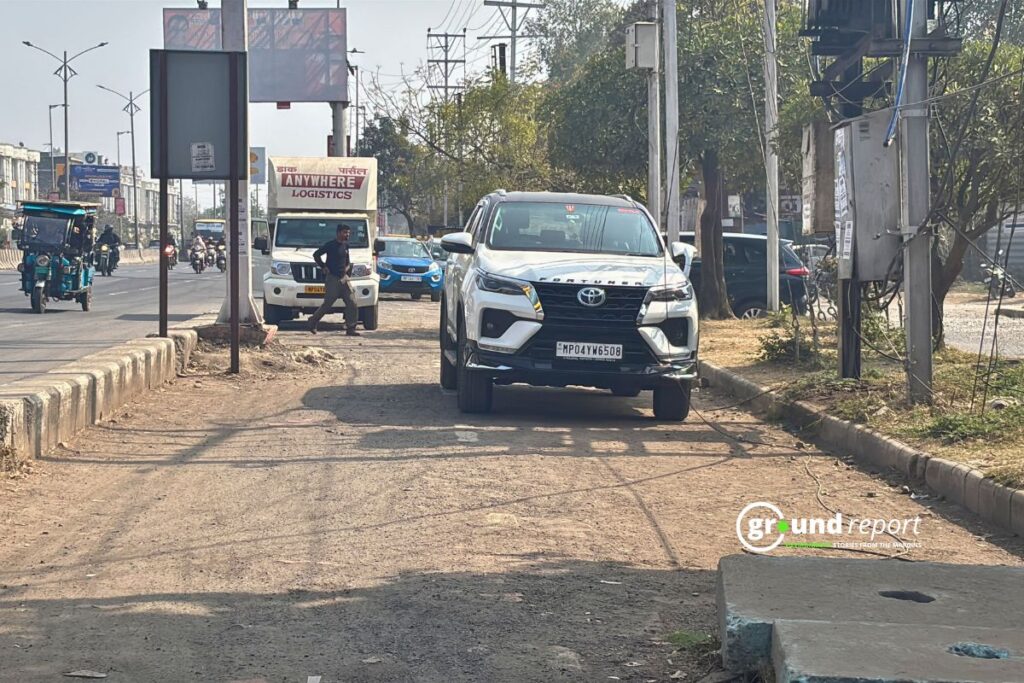
Now the trees are gone, the traffic is heavier, and the footpaths, where they exist at all, are routinely occupied by parked bikes or makeshift stalls.
“Walking feels unsafe now,” she says. “But I have no choice.”
In November 2025, Madhya Pradesh’s High Court took note of the worsening condition of the state’s roads. Chief Justice Sanjay Sachdeva and Justice Vinay Saraf stated plainly: “Poor road conditions are not just an inconvenience, they are a serious threat to people’s safety.”
The Government Is Building. Just Not for Them
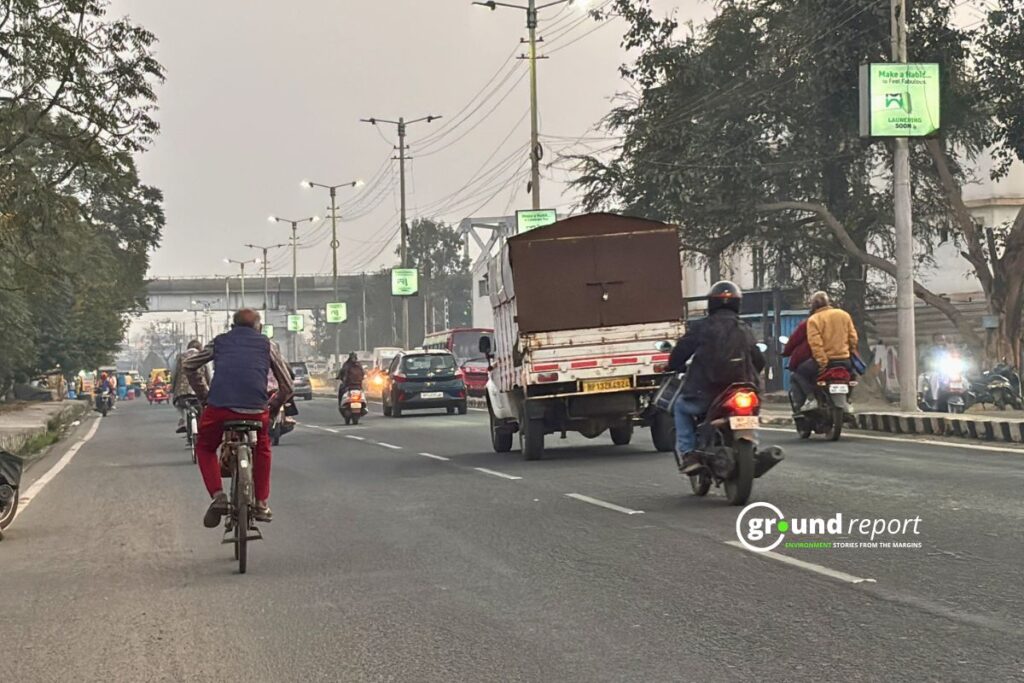
Between April and November 2025, Madhya Pradesh constructed 78 kilometres of new roads, national highways, state highways, and district roads. The state’s latest economic survey mentions six projects to ease traffic congestion and eight new transport initiatives.
Not one of them mentions cycling.
The Central Government’s PM e-Bus Seva, launched in August 2023, is rolling out 972 electric buses across eight cities in Madhya Pradesh, including 195 in Bhopal. Prime Minister Narendra Modi called it a scheme that would “redefine urban mobility.”
India’s own National Urban Transport Policy, 2014, says that cycling should be actively promoted because it improves the reach and effectiveness of public transport.
But at most bus stops in Bhopal, the public cycle-sharing docking stations stand empty. The bicycles are gone.
The story is no different in Satna, the other Madhya Pradesh city to receive Smart City status. Its cycle track, built at a cost of ₹5.5 crore is in the same condition as Bhopal’s.
A Culture Worth Saving
Dr Rahul Tiwari, Assistant Professor at the Department of Planning and Architecture at MANIT Bhopal, says the situation is serious but not irreversible.
“In Tier-2 cities, cycling and walking are still the dominant modes of transport,” he points out. A 2021 survey found that 32% of Bhopal’s residents still cycle or walk to their destinations, compared to 26% who use motorcycles and just 7% who drive cars. The gap between motorised and non-motorised commuters is smaller than most people assume.
The problem, Dr Tiwari says, is one of perception and planning. “Urban planners and the public are both focused entirely on cars and motorised vehicles. Cyclists are simply not factored in.”
His prescription is clear: build a separate, connected cycling network. Not a lane here and a lane there, but an integrated system that actually takes people where they need to go. And do it before the culture disappears entirely.
“Tier-2 and Tier-3 cities still have a cycling culture,” he says. “It needs to be nurtured with the right infrastructure, or it will be lost.”
Still Pedalling
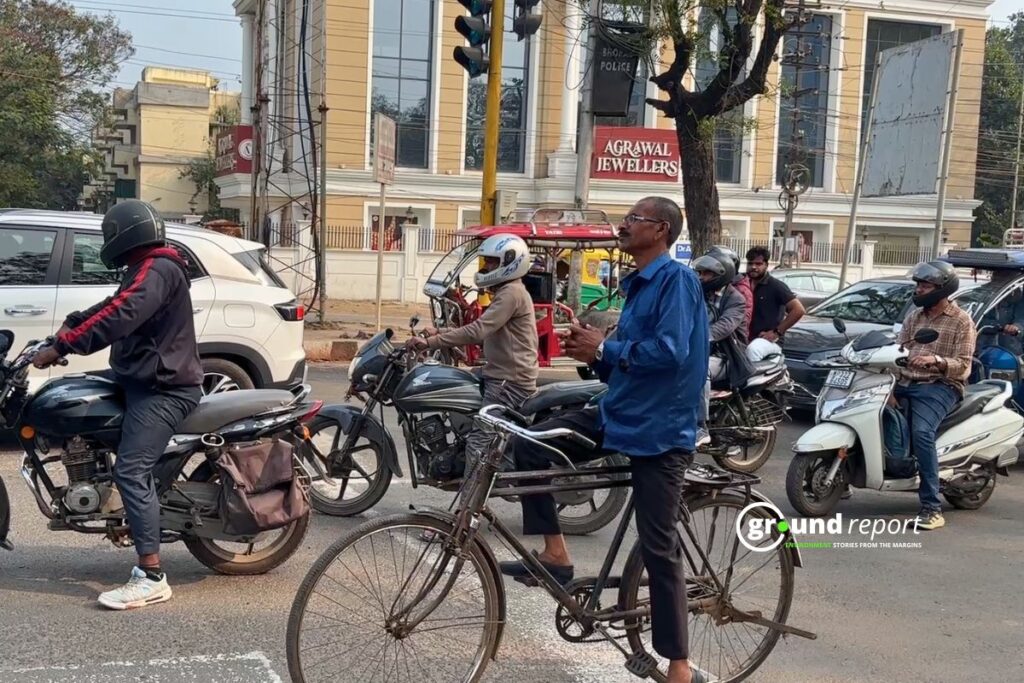
Both Shiv Kumar Pathak and Girdhri Lal Kevat have families who worry about them. Kevat’s sons have told him more than once: “Don’t come home on that cycle.”
Neither man has listened.
They will keep riding until they retire, they say. But they are asking for something simple in return: a little space on the road. A lane that is actually usable. Roads that don’t shake their cycles apart. Traffic that doesn’t treat them as obstacles.
Pathak pedals through Bhopal’s streets every morning, past the new road being widened outside this reporter’s window, four lanes, no footpath, no cycle lane.
He waves at the construction workers as he passes. They wave back.
The road will be ready soon. There just won’t be room for him on it.
More Ground Reports
What does Ramsar status actually change for Bihar’s wetlands?
MP Poshan Aahar Closures Put Rural Women’s Livelihoods at Risk
Support Us To Sustain Independent Environmental Journalism In India.
Author
Support Ground Report to keep independent environmental journalism alive in India
We believe climate change should be the basis of current discourse, and our stories attempt to reflect the same.
Connect With Us
Send your feedback at greport2018@gmail.com
Newsletter
Subscribe our weekly free newsletter on Substack to get tailored content directly to your inbox.
When you pay, you ensure that we are able to produce on-ground underreported environmental stories and keep them free-to-read for those who can’t pay. In exchange, you get exclusive benefits.
Your support amplifies voices too often overlooked, thank you for being part of the movement.