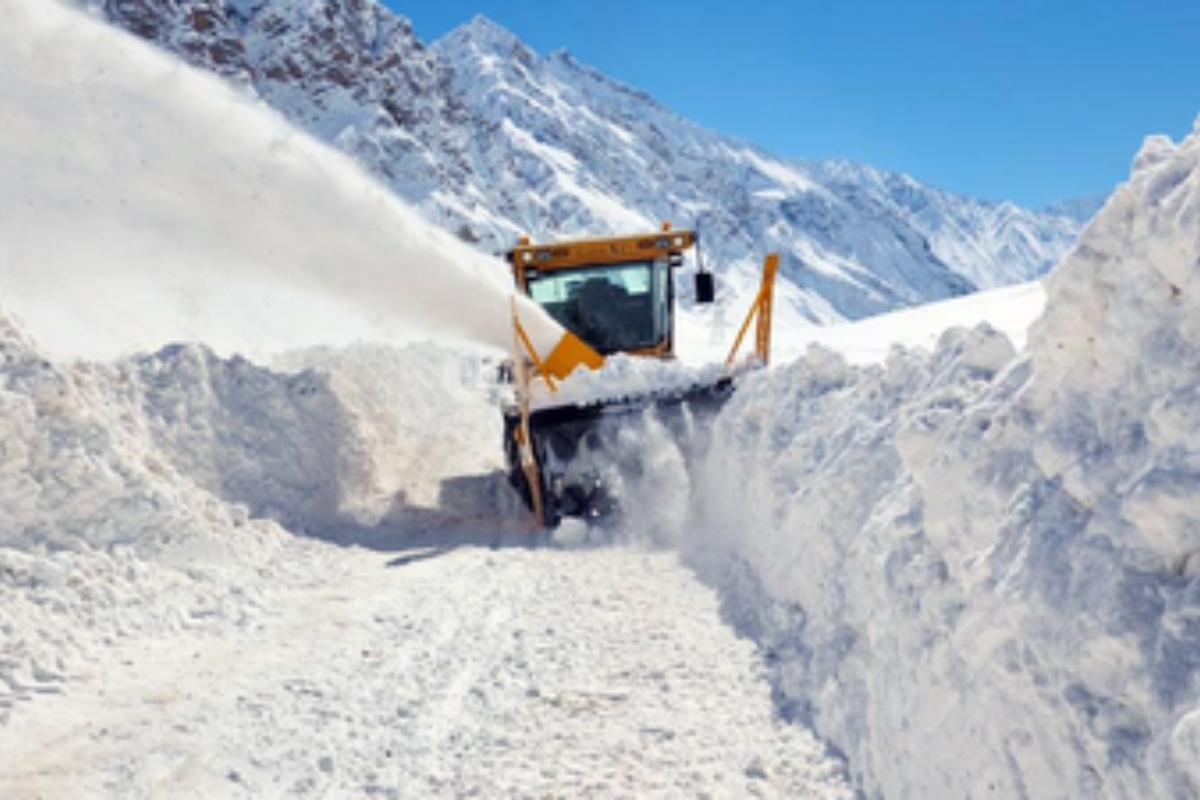
The Srinagar-Leh highway has been closed for vehicular movement after an avalanche hit the Zojila Pass on Sunday 26th April in Ladakh, it remain shut on Tuesday 28th April 2026. Traffic will be allowed once the road is cleared of avalanche debris.
Three drivers trapped after the avalanche struck Zojila have been rescued safely, while damaged vehicles have been retrieved and placed back on the road, the officials said.
The avalanche struck on Sunday near Shaitani Nallah in the Drass sector, where multiple vehicles, including two tankers moving from Sonamarg towards Kargil, were hit and pushed off the road. Teams from UTDRF Kargil, Police Station Drass, and volunteers carried out the operation and evacuated the drivers safely, officials said, adding that the vehicles affected in the incident have now been brought out of the snow.
When Highway Will Open Again?
Srinagar Leh highway remain shut on 28 April 2026. Road clearance work is underway. Will update once highway is open.
While the Srinagar–Leh highway continues to remain closed, clearance operations are underway to restore traffic movement along the route, which remains vulnerable to snow hazards during this period. Six people were killed, and 5 others were injured in another avalanche on the Zojila Pass on March 27.
The Zojila Pass on the Srinagar-Leh highway is the most treacherous stretch of the highway, and several accidents resulting in loss of precious human lives have occurred in this stretch of the highway during the last 70 years. In order to make the highway an all-weather road and bypass the Zojila Pass, a tunnel is presently being laid across the Zojila Pass.
The Zojila Pass tunnel is an under-construction Himalayan tunnel under the Zojila Pass between Sonamarg in Ganderbal district of Jammu and Kashmir and Drass in Kargil district of Ladakh. It is 9.5 m wide, 7.57 m high and 14.2 km long, a horseshoe-shaped single-tube, two-lane road tunnel at the height of around 12,000 feet above sea level. Together with the adjacent Z-Morh Tunnel, this geostrategically important tunnel on the NH1 Srinagar-Leh Highway will provide year-round weather-proof connectivity to Ladakh from the rest of the country.
More Ground Reports
What does Ramsar status actually change for Bihar’s wetlands?
MP Poshan Aahar Closures Put Rural Women’s Livelihoods at Risk