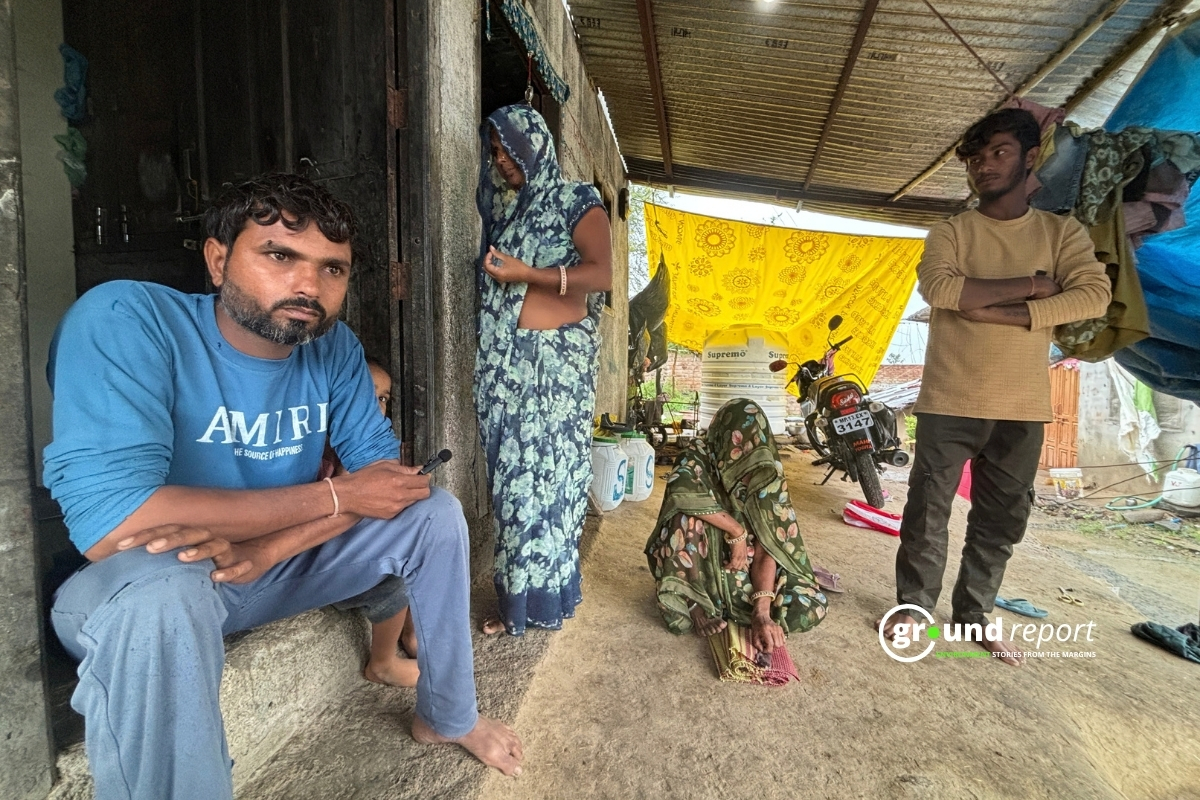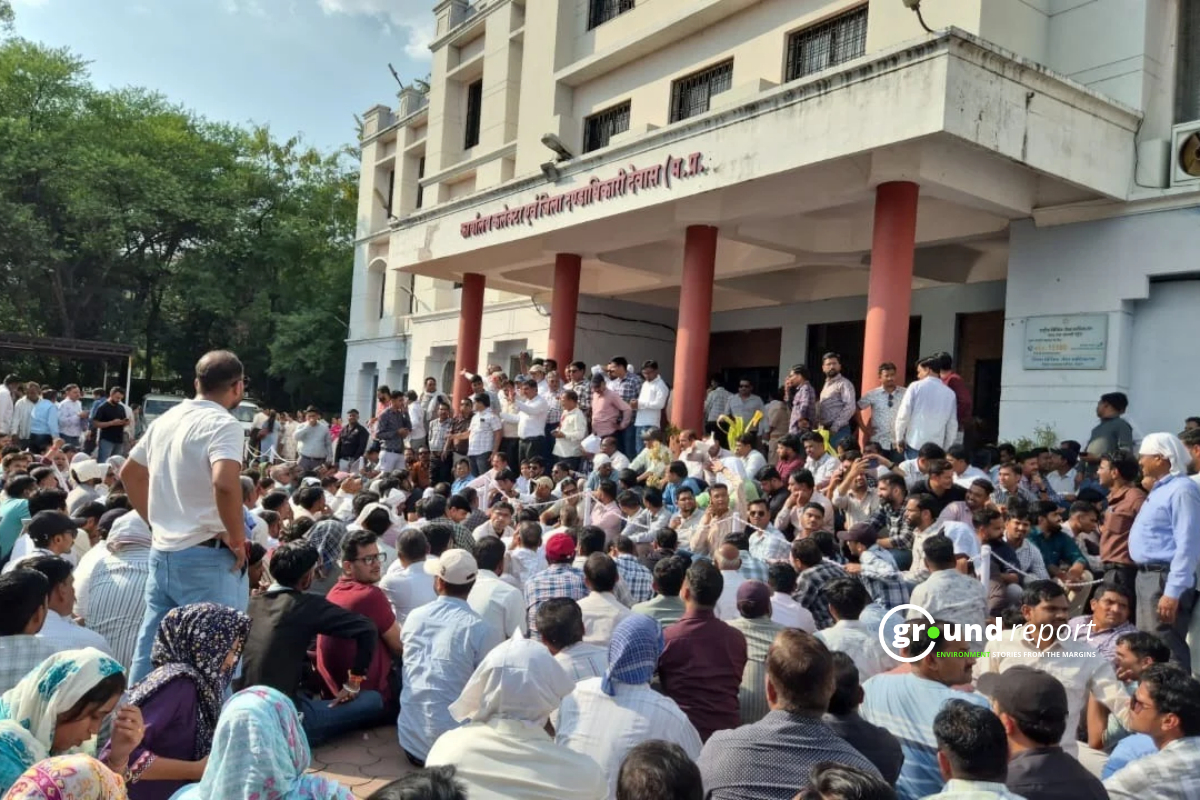
In several divisions of Madhya Pradesh—including Indore, Ujjain, Bhopal, and Narmadapuram—the government began procuring wheat at the minimum support price (MSP) only on April 10. Farmers in other regions must wait until April 15.
The procurement typically began by mid-March. And this season, thousands of farmers who harvested their crops weeks ago have been left waiting. The state government had initially set April 1 as the start date. Officials later pushed it back, citing a shortage of gunny bags (traditionally storage sacks) linked to disruptions in the petrochemical supply chain during the Iran conflict.
A supply chain bottleneck
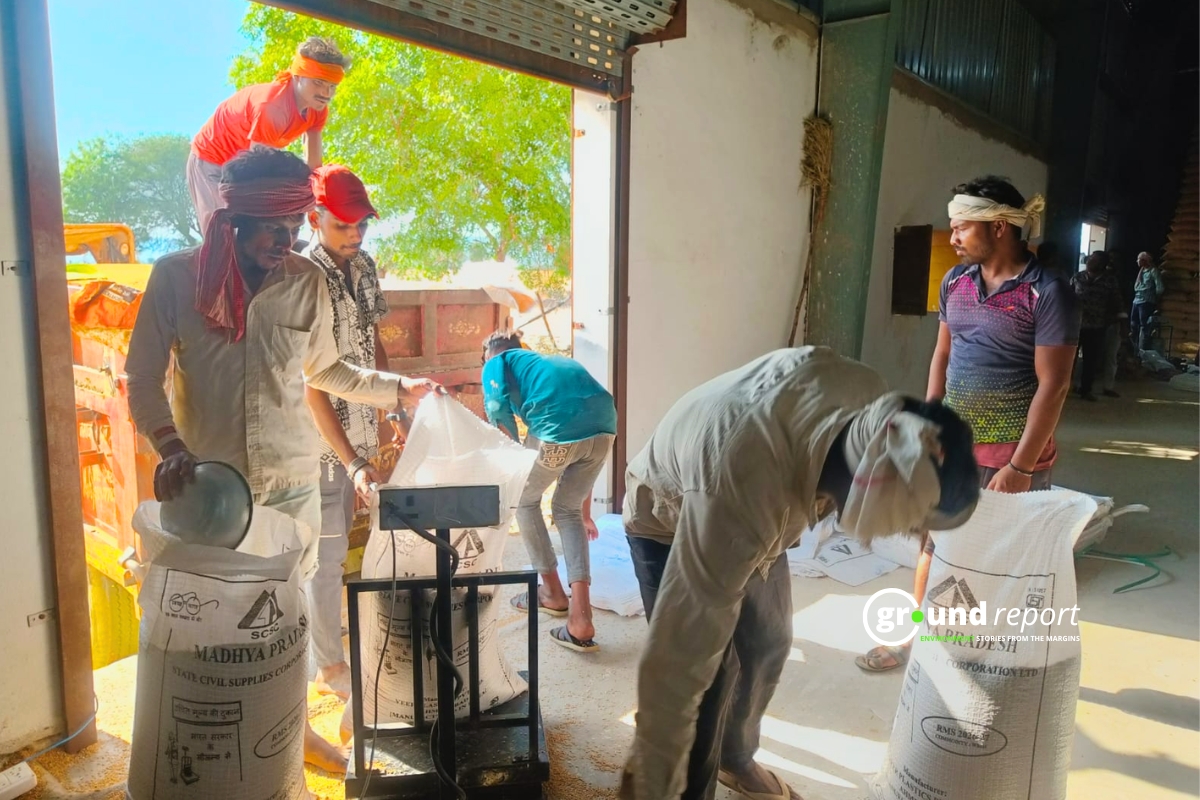
At procurement centers, farmers arrive with their wheat in tractor trolleys. Officials weigh the grain, pack it into gunny bags, and store it in warehouses (both private and government) for distribution through the Public Distribution System.
India primarily uses two types of storage bags: jute bags, which hold 50.5 kg, and polyethylene (PE) bags, which hold slightly less. While jute bags remain standard, PE bag production depends on petrochemical inputs — now under strain.
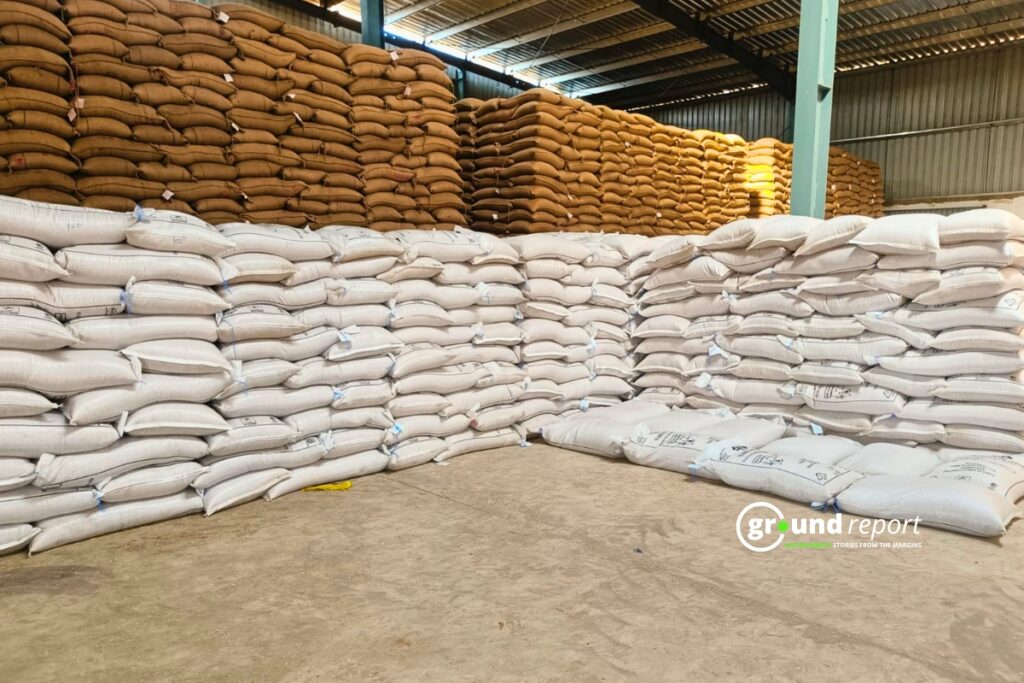
According to information given on April 5 by the Additional Chief Secretary of Food and Civil Supplies, the state is expected to procure 78 lakh metric tons of wheat. For this, 3 lakh 12 thousand bales of gunny bags will be required. He said, “Sufficient stock of gunny bags required to start wheat procurement in the state is available.”
On 5th April, the additional chief secretary of Food and Civil Supplies estimated they [the state] would procure 78 lakh metric tons of wheat this year, requiring more than 3 lakh bales of gunny bags. He said, “Sufficient stock of gunny bags… in the state is available.”
However, the State Civil Supplies Corporation Limited had only 1 lakh 20 thousand jute bags in inventory till the first week of April, i.e., only one-third of the requirement.
Despite this gap, officials maintain that supplies remain adequate. The state has floated tenders for both new and used bags and says it is coordinating with central agencies and suppliers. The managing director of MP State Civil Supplies Corporation, Anurag Verma, said, “We are in the process of acquiring additional jute and high-density polyethylene (HDPE) bags. We have issued tenders for new and used bags.”
The state chief minister, Dr. Mohan Yadav, said on Sunday, April 5, “We have maintained continuous contact with the central government, the jute commissioner, and other bag-supplying agencies for the supply of gunny bags.”
Shortages on the ground
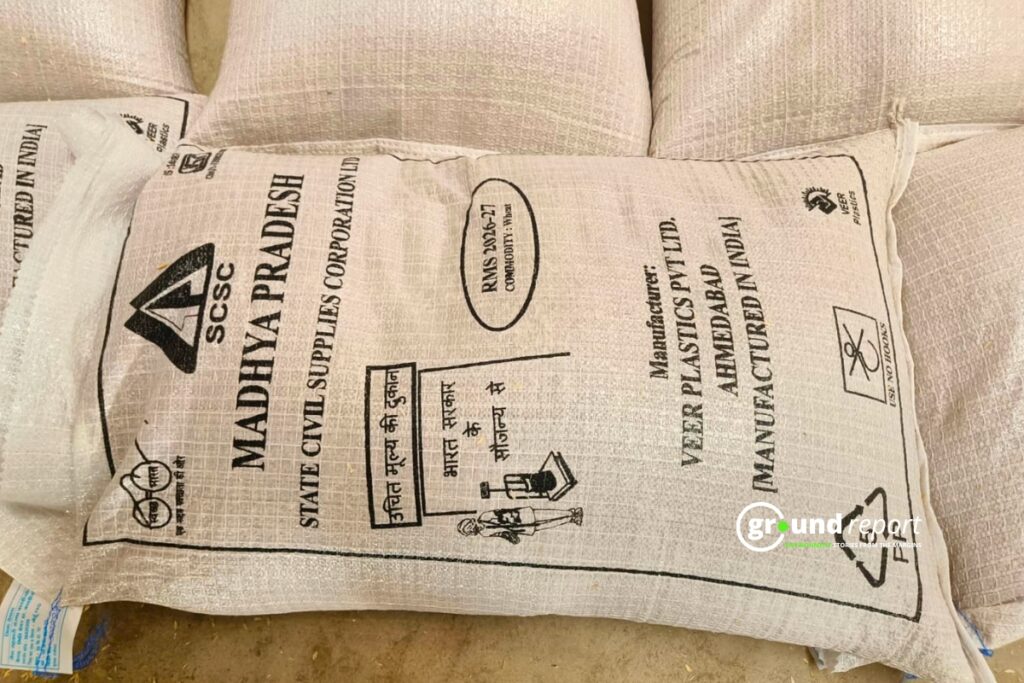
At procurement centers, however, operators describe a different reality. Abhishek Yadav, an operator at the Maa Bhawani wheat procurement center in Ichhawar, Sehore district, told Ground Report that the government has supplied PE bags instead of jute this year and only in limited quantities.
“We have enough bags for about two weeks,” he said. “But weighing will continue for about two months.”
He also pointed to practical problems. Jute bags allow airflow and make stacking easier, reducing the risk of spoilage. Plastic bags do neither.
In Kannod, Dewas District, another operator, Vipul, has enough for just three days of operations at the current demand. He received 30 bales of gunny bags, with each bale containing 500 bags. He needs 10 bales per day. “If we don’t get gunny bags, we will have to stop weighing,” he said.
Delayed Procurement
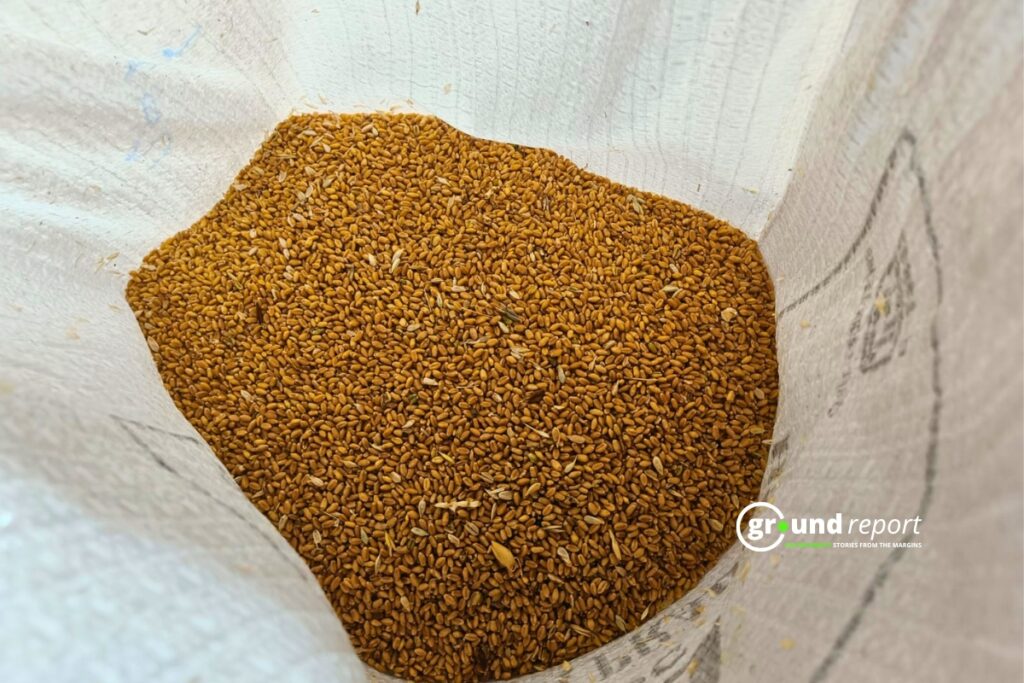
The State Congress president, Jitu Patwari, accused the government of mismanagement, citing not only the late start but also technical glitches at procurement centers. He posted on X,
“In Madhya Pradesh, the BJP government has already started wheat procurement so late, and even after that, on the very first day of procurement today, the server is down. Locks are hanging on many support procurement centers, due to which many farmer brothers are unable to sell their wheat.
First, the sham of gunny bags, and now technical trickery.
Today, due to the government’s policy and intent, all farmer brothers are having to sell their wheat at a loss of 400 to 500 rupees per quintal.”
More than 19 lakh farmers have registered for procurement this season. The MSP for wheat stands at ₹2,625 per quintal, with an additional ₹40 bonus from the state.
But without timely procurement, many farmers have turned to private traders. Balram Patidar, a farmer in the Sehore district, needed immediate cash to cover diesel, electricity, labour, and harvesting costs. He sold more than half his crop at ₹2,000 per quintal — far below MSP.
“Out of my total produce of 25 quintals, I sold 14 quintals in the mandi at ₹2000 per quintal,” he said. “If procurement had started on time, I would have earned ₹600 more per quintal,” he said.
A difficult season ahead
Nilesh Jain, from Ashta, harvested his crop on March 20 and stored it in the open due to a lack of facilities. On March 30, rain and strong winds partially damaged his harvest. He says that if the rain had been heavier, the crop could have been completely spoiled.
“Small farmers do not have arrangements to store crops for long periods,” he said. “That is why timely government procurement is necessary.”
The state chief minister, Dr. Yadav, said, “It [the state] has been decided to first procure wheat from small farmers at MSP, after which procurement will be done from medium and large farmers.”
More Ground Reports
What does Ramsar status actually change for Bihar’s wetlands?
MP Poshan Aahar Closures Put Rural Women’s Livelihoods at Risk
Support Us To Sustain Independent Environmental Journalism In India.
Author
Support Ground Report to keep independent environmental journalism alive in India
We believe climate change should be the basis of current discourse, and our stories attempt to reflect the same.
Connect With Us
Send your feedback at greport2018@gmail.com
Newsletter
Subscribe our weekly free newsletter on Substack to get tailored content directly to your inbox.
When you pay, you ensure that we are able to produce on-ground underreported environmental stories and keep them free-to-read for those who can’t pay. In exchange, you get exclusive benefits.
Your support amplifies voices too often overlooked, thank you for being part of the movement.