The India Meteorological Department (IMD) issued its updated seasonal outlook on March 31, 2026, covering the hot weather season from April to June. The forecast warns of above-normal heatwave days across parts of east, central, and northwest India, with significant risks to public health, agriculture, water resources, and power infrastructure.
For Madhya Pradesh, the month of April marks the beginning of intense summer. Temperatures rise continuously through the month as surface pressure drops and dry westerly winds strengthen during afternoon hours, according to IMD Bhopal’s forecast.
According to its press release, IMD uses a multi-model ensemble approach drawing on coupled global climate models to prepare its seasonal outlooks. For the April to June season, it projects normal to below-normal maximum temperatures over many parts of the country, but central and eastern India, including parts of MP, face above-normal maximum temperatures.
“For April, the southwest part of MP, particularly the Ujjain and Indore divisions, is expected to experience more heatwave days than normal. Their typical number is around five, and we are expecting them to exceed that. The extreme northeast region, where we have denser areas, may also experience more days than normal,” Arun Sharma, Scientist-D and Forecasting Officer at the Meteorological Centre, Bhopal, told Ground Report.
On the El Niño front—a periodic warming of eastern Pacific Ocean waters that occurs every two to seven years—IMD notes that the probability of it developing increases gradually after June. El Niño years historically bring hotter and drier conditions to central India, making the second half of 2026 a period to watch.
MP’s Own Records Show Why Warning Is Serious
The regional Meteorological Centre‘s Nagpur city-by-city April data for 15 stations shows that several cities in Madhya Pradesh do not need an above-normal anomaly to cross dangerous temperatures. Their averages are already there.
Khandwa averages 40.3 degrees Celsius in April, the highest mean maximum in the state, with humidity dropping as low as 14 percent. Hoshangabad was officially renamed Narmadapuram in 2022, and Khajuraho both average above 40 degrees, and Khajuraho holds the state’s all-time April record at 46.9 degrees Celsius, set in 1993.
On April 18, 2025, Ujjain recorded 48.8 degrees Celsius, the highest April temperature in its recorded history. Gwalior touched 45.2 degrees in 2022, while even Chhindwara, the coolest major station, reached 44.4 degrees in 2019.
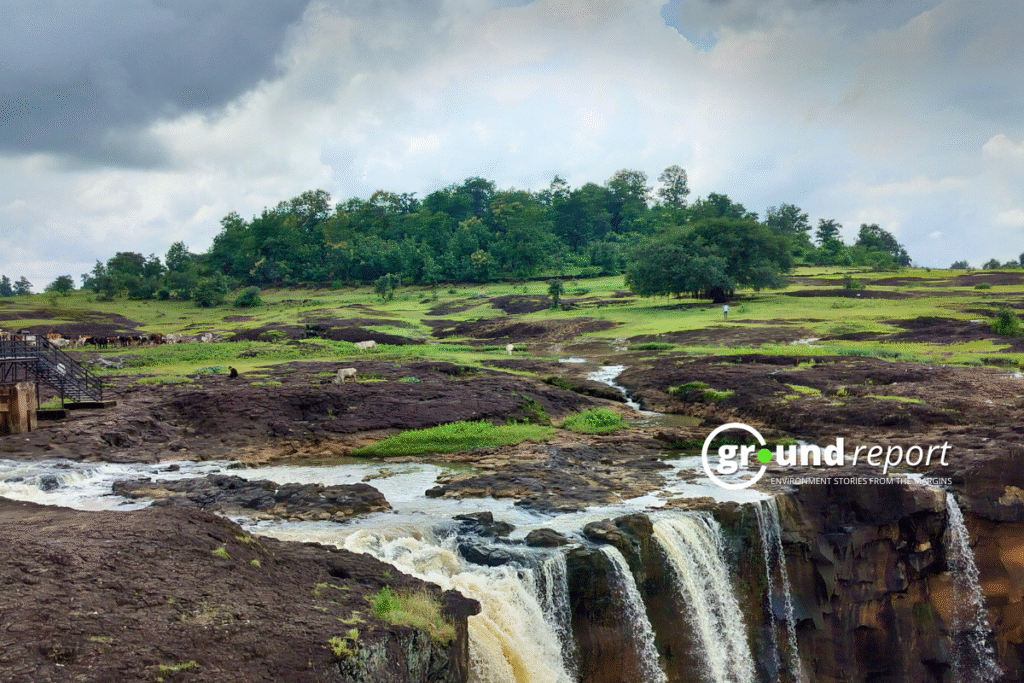
“The reason Ujjain reached 48.8 degrees Celsius was a strong anticyclonic circulation sitting over central India, Rajasthan, MP, Uttar Pradesh, and Gujarat, projecting heat at the surface level. That kind of large-scale condition is not what we are expecting this April,” said Sharma.
April rainfall has also become more unpredictable, according to data from the Regional Meteorological Centre, Nagpur. Seoni recorded 100.8 mm in April 2023 against a monthly average of just 15.5 mm. Hoshangabad received 50.1 mm in April 2024 compared to an average of 4.6 mm. Cities including Guna, Sagar, and Satna average nearly two thunderstorm days in April, adding storm risk alongside heat.
Sharma said this rainfall and the moderation in temperatures share the same cause: active western disturbances. These extratropical storms from the Mediterranean are currently keeping temperatures in check.
“Because of rainfall activity continuing in our state, temperatures are not at their highest, just in the range of minus 1.5 to plus 1.5 from normal,” he said.
Farmers and Crops Face Direct Threat
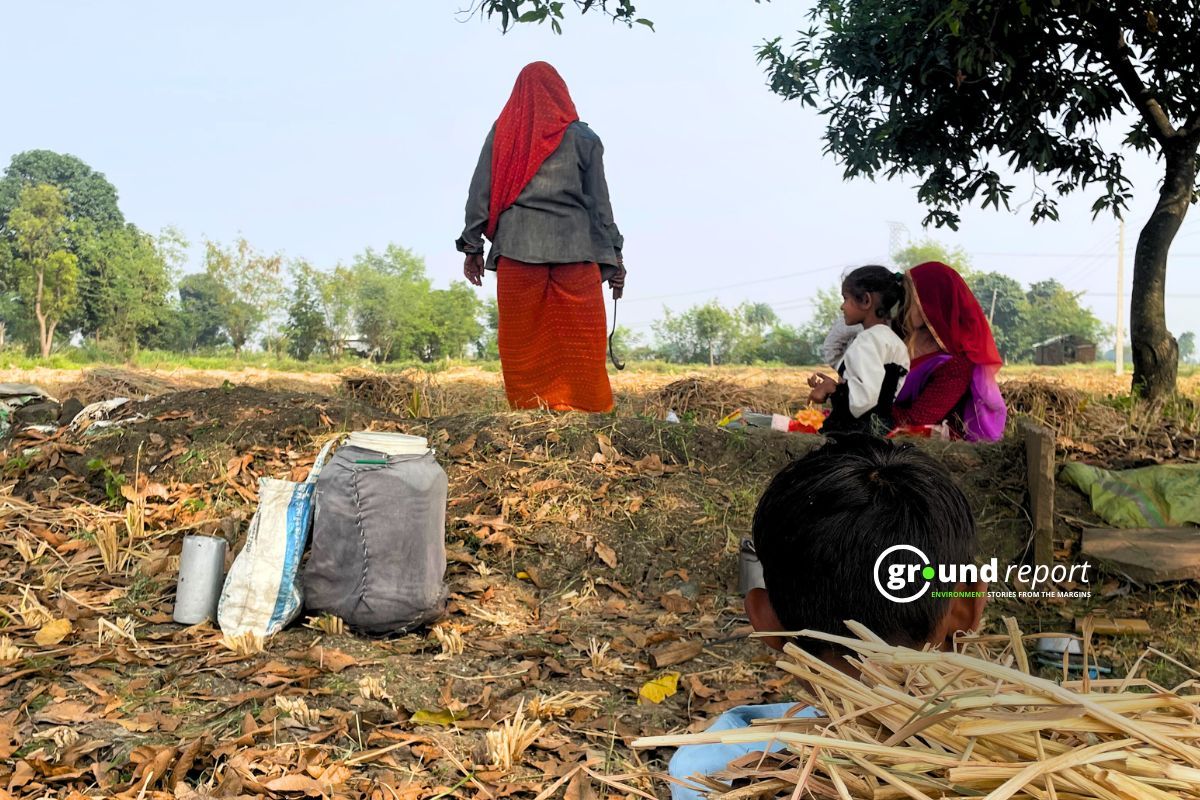
The IMD outlook contains specific agricultural warnings that directly affect MP. Late-sown wheat, mustard, and barley face terminal heat stress, leading to shriveled grains and reduced productivity.
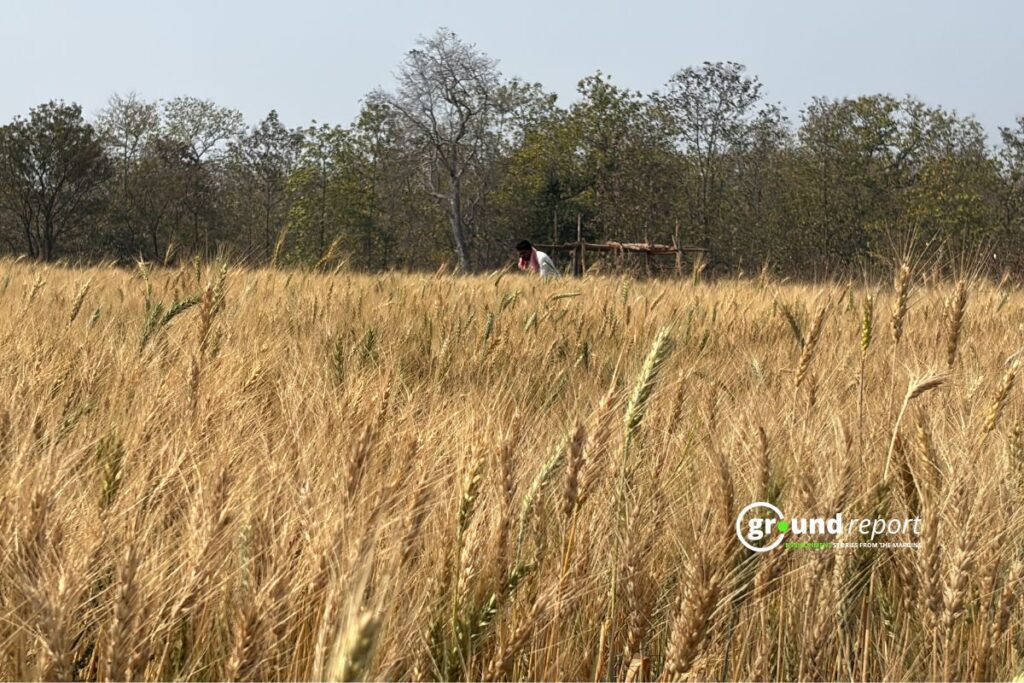
IMD advises farmers to complete wheat and mustard harvesting at the earliest. Light and frequent irrigation is recommended during flowering and grain-filling stages. Foliar spray of potassium nitrate can help crops manage heat stress. Field operations should be avoided during peak afternoon hours, and mulching is advised to conserve soil moisture.
Risk to People
Beyond agriculture, IMD warns that elevated temperatures will stress power demand, water resources, and essential services.
“If the temperature reaches more than 40 degrees, it will directly affect humans. We will issue precautionary advisories whenever temperatures reach that level,” said Sharma.
The department urges the public to stay hydrated, avoid outdoor exposure during peak afternoon hours, and take particular care of the elderly, children, outdoor workers, and those with existing health conditions.
Support Us To Sustain Independent Environmental Journalism In India.
Keep Reading
Highway Halt Puts Kashmir’s Fruit Economy at Risk
Railway line expansion plan put Kashmir’s apple orchards at risk
Warmer winters in Kashmir raise concerns over apple and crop yields
Stay Connected With Ground Report For Underreported Environmental Stories.