In her ninth consecutive Union Budget speech, Finance Minister Nirmala Sitharaman announced major funding increases for wildlife conservation and revealed India will host the first-ever Global Big Cat Summit with 95 range countries.
The Ministry of Environment, Forest and Climate Change received Rs 3,436.7 crore, a seven to eight percent increase from last year. The budget allocated Rs 290 crore for Project Tiger and Elephant, nearly double the Rs 153.04 crore from last year. The National Mission for Green India got Rs 212.5 crore, up from Rs 95.7 crore.
Experts Question Funding Adequacy
Wildlife conservationists welcomed the increase but warned it remains grossly insufficient for ground realities. Dr. Anish Andheria, President of the Wildlife Conservation Trust, said the funds should be viewed only as catalytic.
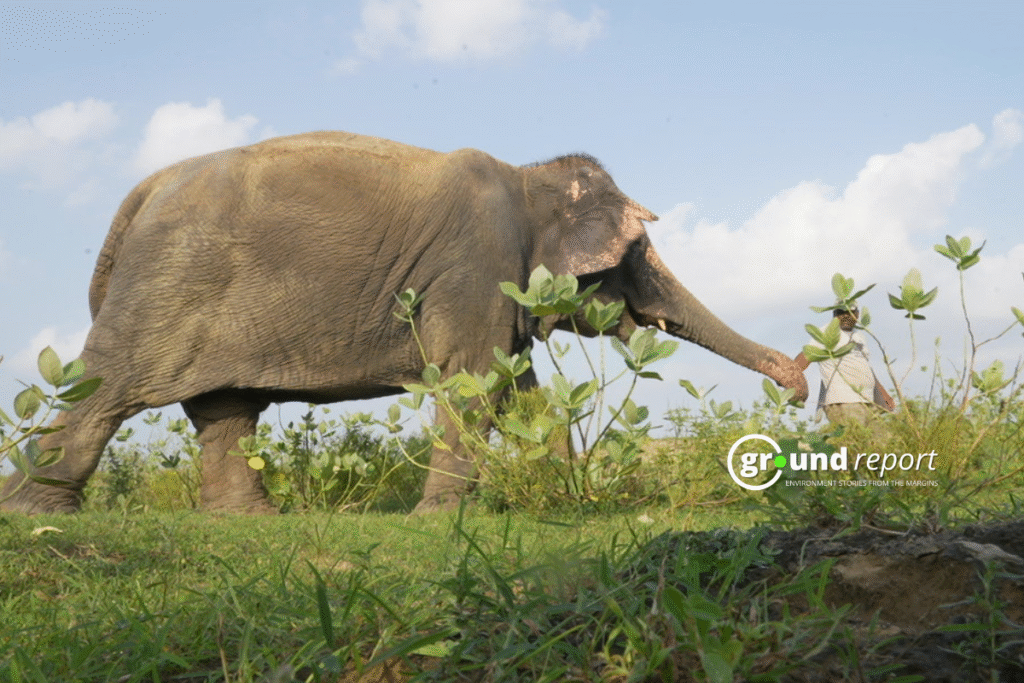
Andheria emphasized that managing human-elephant conflict requires substantially larger state investments, particularly in Madhya Pradesh, Chhattisgarh, and Maharashtra where elephant populations have surged after more than 150 years.
“These funds must mobilize at least ten times more resources from states, philanthropists, and the corporate sector. Without such scaling, a serious gap will persist between the scale of the challenge and resources available,” he said.
Mandar Pingle, Deputy Director of Satpuda Foundation, which works on wildlife conservation in central Indian landscapes, provided specific calculations.
“In Maharashtra’s Vidarbha alone, 9,800 tiger corridor villages need Rs 2,450 crore annually under the Dr. Shyama Prasad Mukherjee Jan Yojana. Add Rs 25 crore yearly for compensation when people die in animal attacks. This budget is nothing but peanuts,” he said.
Rising Conflict Demands Greater Investment
According to an RTI obtained by Ground Report, between 2018 and 2022, between 2020 and 2024, wild animal attacks in Madhya Pradesh killed 395 people, injured 5,804, and claimed 72,627 cattle. Between 2018 and 2022, tiger attacks alone killed 18 people in the state.
Madhya Pradesh has seen elephant numbers jump from seven in 2017 to 97 in 2025, a 1,285 percent increase. Over the past five years, 27 people have died in elephant attacks across the state. In neighboring Maharashtra, the elephant population rose 950 percent to 63.
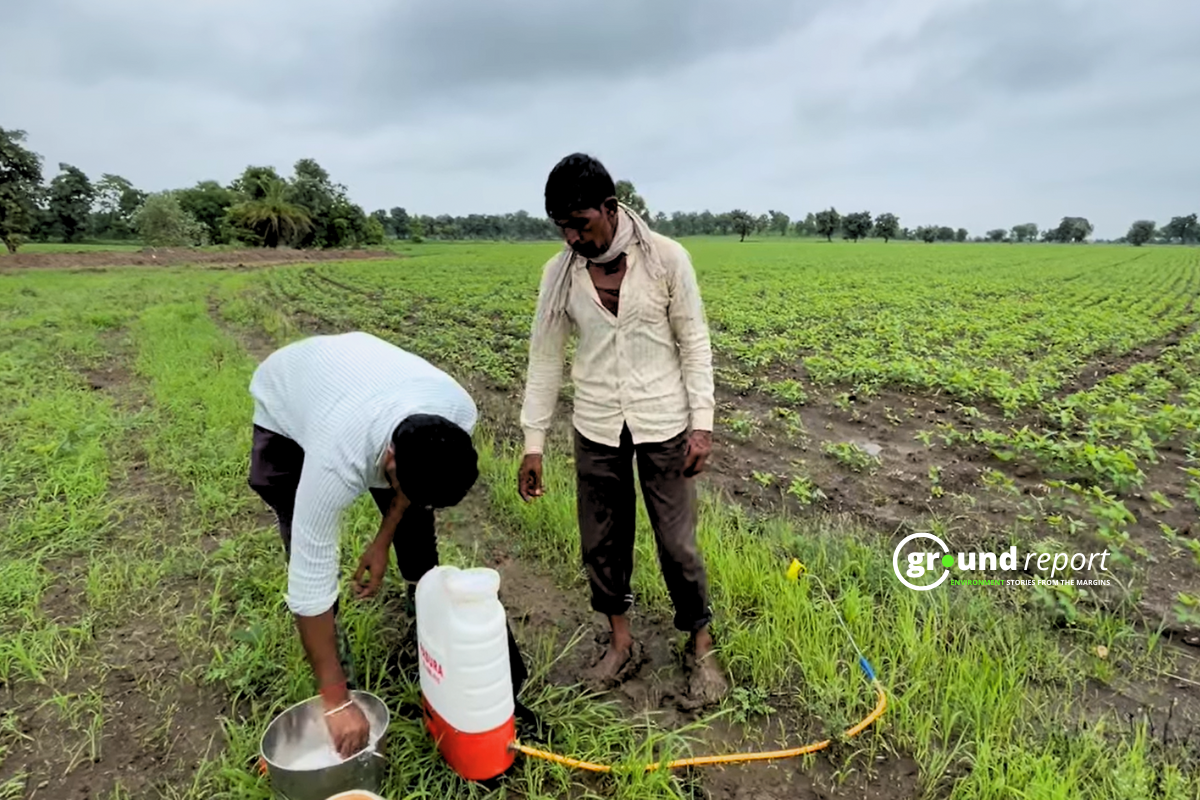
Ground Report spoke to Jitendra Dahrawal in November near Pench Tiger Reserve. He left his job to farm his family’s 30-acre land in Madhya Pradesh. A tiger roared while 25 laborers worked. They fled and never returned.
Dahrawal now manages with five helpers instead of 30. He lost three dogs to leopards and sold his livestock. “Whatever we are doing, we are doing for our safety,” he said.
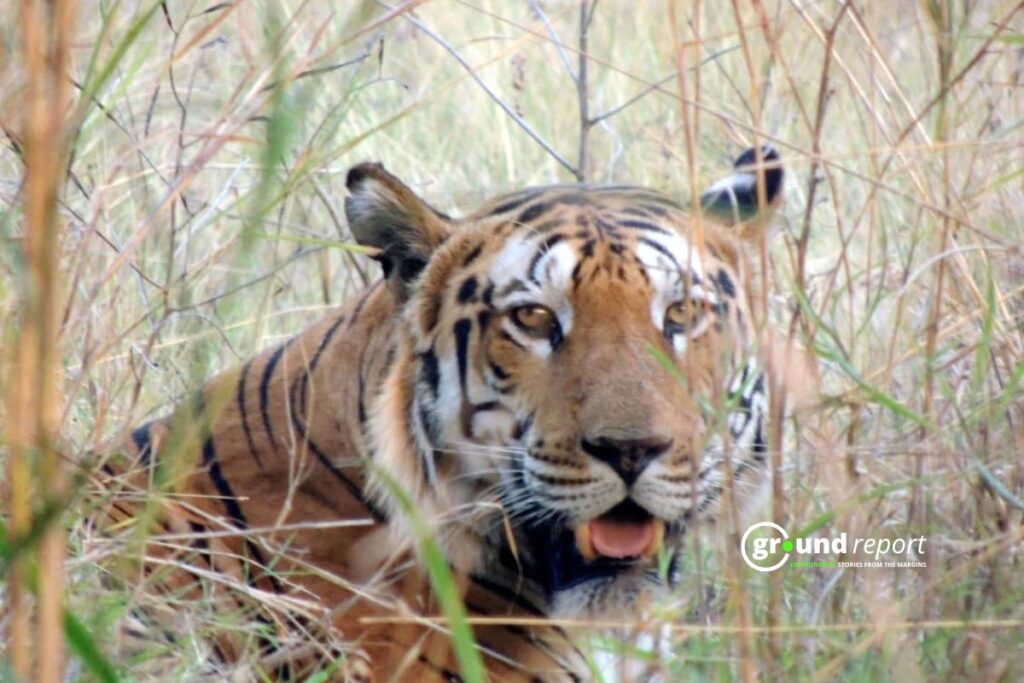
Andheria highlighted broader threats. “India’s wildlife faces severe threats from habitat loss, unmitigated linear infrastructure growth, and rapid corridor degradation. Rising conflict between people and large mammals such as elephants, tigers, leopards, and gaur, along with retaliatory electrocution by local communities, is pushing several species toward sharp decline,” he said.
He stressed that wildlife is a concurrent subject requiring joint action. “States must invest much greater funds and support long-term research to arrest ecosystem decline. Without well-funded, forward-looking state action, increases in central budget will have limited impact,” Andheria said.
Merged Projects Raise Implementation Concerns
The government merged Project Tiger and Project Elephant under a single budget head. Pingle noted that nearly Rs 50-60 crore was previously diverted from Project Tiger for Project Cheetah. “They are not willing to spend more money. They don’t seem to have any desire to create separate new heads for different species. No such political willpower is visible in this budget,” he said.
“We have the Great Indian Bustard, Lesser Florican, and even hyenas. The Western Ghats and Northeast India are biodiversity hotspots. These areas are affected by pollution, but the overall allocation to the Environment Ministry only increased by about seven or eight percent,” he said.
Infrastructure Gaps Persist
Pingle said the Railways and Transport Ministry refuse to allocate funds for wildlife mitigation structures. “Corridors and simple barriers for wild animals, where they should spend, they can’t even achieve that within a year,” he said.
On enforcement, Pingle noted systemic failures. “On the ground, the department always catches traffickers. But these people are released very quickly. Conviction rates are always very low. Without proper investigative cells and resources for evidence collection, this won’t change,” he said.
The ministry’s capital expenditure increased from Rs 174.39 crore to Rs 222.80 crore. However, nearly Rs 162 crore goes to strengthen infrastructure of attached offices including the Botanical Survey of India and the Zoological Survey of India.
Support us to sustain independent environmental journalism in India.
Keep Reading
Story of Mala Nimbalkar: Rag Picker to Manager of MRF centre in Bhopal
In Bhopal’s Idgah Hills, Who is Segregating Our Plastic Waste?