
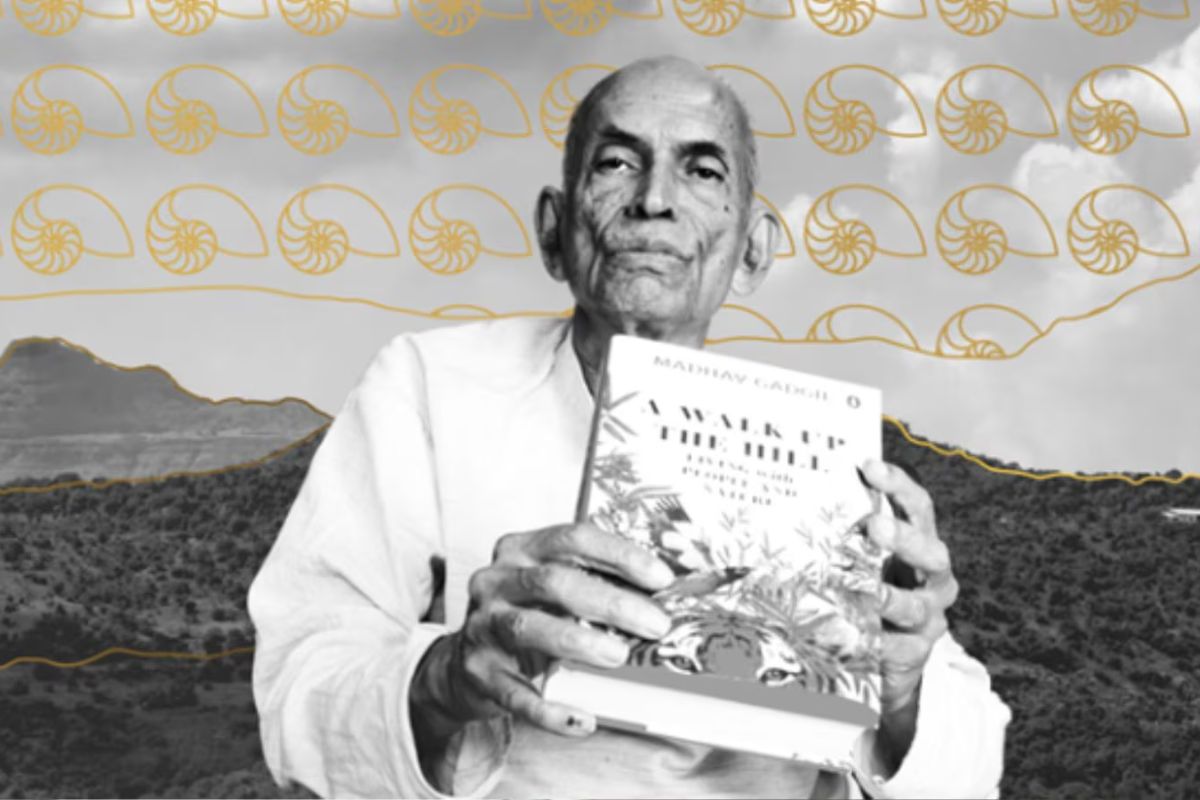
Madhav Gadgil, a towering figure in India’s environmental conservation movement, passed away late Tuesday night at his residence in Pune following a brief illness. He was 82. His son, Siddhartha Gadgil, confirmed the news on Thursday.
The cremation ceremony was scheduled for Thursday afternoon at Vaikuntha crematorium in Pune, where colleagues, admirers and family members gathered to pay their final respects.
Gadgil died on January 6, 2026, at his home in Pune, the city where he was born and spent much of his life. He had been ill briefly before his death.
His passing comes less than two years after his wife, Sulochana Gadgil, a noted monsoon scientist, died in July 2025.
Who Was Madhav Gadgil
Born on May 24, 1942, in Pune, Gadgil came from an influential family. His father, Dhananjay Gadgil, was a Cambridge-educated economist who served as Deputy Chairman of the Planning Commission and authored the Gadgil Formula.
Gadgil earned his bachelor’s degree in zoology from Fergusson College in 1963. He completed his master’s degree in zoology from Harvard University in 1965, followed by a PhD in biology from Harvard in 1969.
He returned to India in 1971 and joined the Agharkar Research Institute in Pune. In 1973, he moved to the Indian Institute of Science in Bengaluru, where he served for 31 years. He established the Centre for Ecological Sciences during his tenure and retired as chairman in 2004.
Gadgil served on the Scientific Advisory Council to the Prime Minister from 1986 to 1990. He held positions on the National Council of Educational Research and Training, the National Tiger Conservation Authority, and the National Advisory Council from 2010 to 2012.
In 2010, the government appointed him chairman of the Western Ghats Ecology Expert Panel. The panel became widely known as the Gadgil Commission. The 2011 report called for strict environmental safeguards in the ecologically fragile Western Ghats mountain range. The recommendations sparked intense debate across six states but remain largely unimplemented.
“Wildlife cannot be placed above human lives,” Gadgil once said, reflecting his philosophy that conservation must include local communities rather than exclude them.
He was a key architect of India’s Biological Diversity Act and contributed to implementing the Forest Rights Act. His research spanned population biology, conservation biology, human ecology and ecological history.
In 1986, Gadgil helped establish India’s first biosphere reserve, the Nilgiri Biosphere Reserve. He conducted extensive field work across the Western Ghats, trekking through forests and living among tribal communities.
Why His Work Mattered
Gadgil warned repeatedly that unchecked infrastructure development in the Western Ghats would lead to disaster. His predictions proved accurate as the region faced increasing floods and landslides in recent years.
The United Nations Environment Programme named him one of six “Champions of the Earth” for 2024, its highest environmental honour.
“In a scientific career that has spanned six decades, Gadgil has always considered himself a ‘people’s scientist,'” the UNEP statement said.
He received the Padma Shri and Padma Bhushan, two of India’s highest civilian honours, for his contributions to science and environmental conservation.
Gadgil’s approach to environmentalism emphasized community involvement. He worked directly with tribal groups, farmers, herders and fisherfolk, conducting both basic and applied research.
He also served as a visiting professor for human biology at Stanford University, bringing his community-centered conservation philosophy to international audiences.
Gadgil’s influence extended beyond policy and academia. He shaped grassroots environmental movements across India and inspired generations of environmental thinkers and activists.
His work protected marginalized communities while promoting ecosystem conservation. He influenced policymaking at the highest levels of government while maintaining connections to local communities on the ground.
India’s environmental movement has lost one of its founding voices, but Gadgil’s vision of community-led conservation continues to shape ecological discourse nationwide.
Support us to keep independent environmental journalism alive in India.
Keep Reading
Small Wild Cats in Big Trouble: India’s First National Report Released
After Tragedy, Families Face Delays in Tiger Attack Compensation
Stay connected with Ground Report for underreported environmental stories.