AI Summary
Key Takeaways
- Delhi’s air quality worsened by 29 percent in December despite farm fires ending, challenging assumptions about pollution sources.
- Key drivers of Delhi air pollution include vehicles, industries, and household fuels rather than just seasonal farm fires.
- Stagnant winter weather traps pollutants, exacerbating air quality issues across the NCR region.
- To combat pollution, experts recommend comprehensive measures like upgrading transport, emissions control, and better waste management practices.
- Long-term trends show a slight annual decrease in PM2.5 levels, but December saw a significant spike, highlighting ongoing challenges.
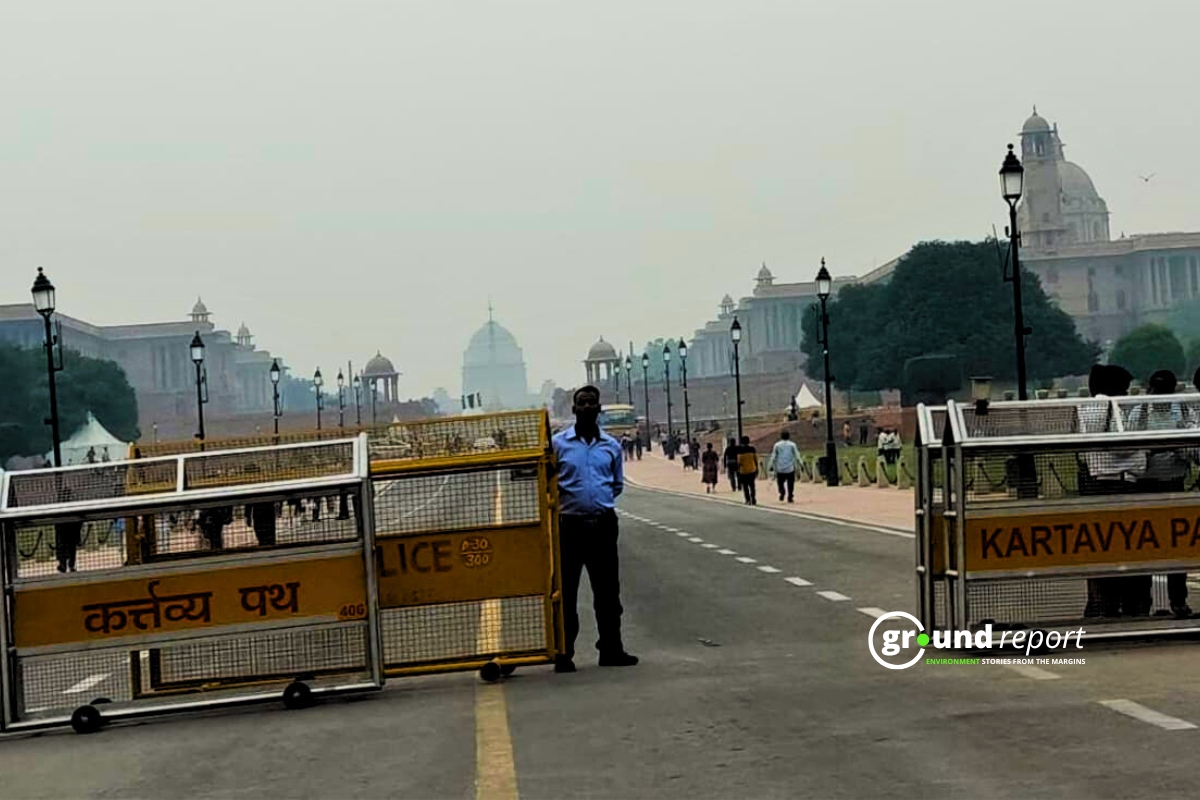
Delhi’s air quality deteriorated sharply in December even as farm fires disappeared, contradicting the common belief that stubble burning drives the capital’s winter pollution crisis.
A new analysis by the Centre for Science and Environment released Wednesday shows pollution levels jumped 29 percent in December compared to October and November, when thousands of farm fires burned across northern states. During the same period, farm fire contribution to Delhi’s pollution plummeted from 4.2 percent to just 0.2 percent.
The findings challenge the narrative that seasonal farm fires are the main culprit behind Delhi’s toxic winter air. Instead, the study points to year-round sources like vehicles, industries, and household fuels as the primary drivers of the region’s smog.
“These findings reveal a concerning reality: Delhi’s winter pollution does not dissipate once stubble burning ends; instead, it intensifies. Despite the farm-fire contribution to PM2.5 levels dropping sharply in December, the average PM2.5 levels have actually increased,” said Anumita Roychowdhury, Executive Director-Research and Advocacy at CSE.
What Changed Between October, December?
The numbers tell a stark story. During October and November, when farm fires burned across northern states, average PM2.5 levels stood at 163 micrograms per cubic meter. Farm fires contributed about 4.2 percent to the total pollution during this period.
In December, after the farm fires ended, the picture changed dramatically. Average PM2.5 concentration rose to 210 micrograms per cubic meter. This represents a 29 percent increase over the previous period. Yet farm fire contribution dropped to just 0.2 percent.
Delhi recorded three severe air quality days during the stubble burning phase. The worst day saw the Air Quality Index reach 428 on November 11. In December, the city experienced five severe air quality days. On December 14, the AQI surged to 461, the season’s worst reading.
Who Else Is Affected?
The pollution crisis extends beyond Delhi. Cities across the NCR recorded sharp increases in PM2.5 levels during December.
Noida saw the steepest surge with a 38 percent increase. Ballabhgarh recorded a 32 percent rise. Baghpat experienced a 31 percent increase. Delhi itself saw pollution levels climb by 29 percent.
“The build-up of pollution was felt across various urban centres in the NCR. While some towns saw marginal declines, most cities recorded a sharp rise in PM2.5 levels,” said Sharanjeet Kaur, deputy programme manager at Urban Lab, CSE.
During a severe smog episode between December 12 and 15, Noida recorded the highest PM2.5 concentration at 352 micrograms per cubic meter. Delhi followed with 343 micrograms per cubic meter over three days. Even smaller towns like Baghpat remained engulfed in dense smog with levels averaging 312 micrograms per cubic meter.
Where Does Pollution Come From?
The study used data from the Decision Support System developed by the Indian Institute of Tropical Meteorology. The findings reveal a complex picture of pollution sources.
“During this period, local sources within Delhi accounted for only about 35 percent of the total PM2.5. The remaining 65 percent originated from neighbouring NCR districts and regions further away,” said Shambhavi Shukla, programme manager at the Clean Air programme, CSE.
Within Delhi’s local contribution, vehicles emerge as the dominant source. Transport accounts for nearly half of all local emissions at 46 percent. Industries contribute 22 percent. Household-level emissions from cooking and heating account for 11 percent. Construction, waste burning, and road dust make up the remaining share.
Why Don’t Pollutants Disperse?
Winter weather conditions trap pollutants close to the ground. Stagnant meteorology prevents the dispersion of emissions. Low temperatures, weak winds, and shallow mixing heights all contribute to this problem.
“This regional spike is driven by local emission sources and exacerbated by stagnant winter meteorology, which prevents the dispersion of pollutants,” Sharanjeet Kaur explained.
The study also highlights the role of secondary particles. These form when gases from vehicles, industries, and other sources react in the atmosphere. They do not come directly from any single source.
Data shows that directly emitted primary particles account for only 39 percent of pollution. The remaining 61 percent consists of secondary particles formed through atmospheric chemical reactions. These particles form when precursor gases like sulfur dioxide, nitrogen oxides, ammonia, and volatile organic compounds react in the air.
Winter conditions accelerate these reactions. Gases convert into particles up to 1.6 times faster than primary particles are emitted. These secondary particles are typically finer and more persistent. They penetrate deeper into the lungs and pose greater health risks.
What About Long-Term Trends?
The analysis reveals mixed progress on air quality. On an annual average basis, PM2.5 concentrations declined by about seven percent in 2025 compared to 2024. Levels fell from 105 micrograms per cubic meter to 97 micrograms per cubic meter.
Month-wise analysis shows PM2.5 levels declined in most months. However, three months recorded increases. April saw a 10 percent rise. August recorded a 13 percent increase. December experienced a 24 percent jump.
The most significant improvements came during May, June, July, and September. Excessive and prolonged rainfall during monsoon and pre-monsoon periods helped clean the atmosphere. Rain washed away suspended particles and limited dust resuspension.
What Needs to Happen Now?
Roychowdhury stressed the need for comprehensive action. “While managing farm fires is important, air quality goals cannot be met without aggressive, year-round action against urban and regional emission sources for a zero emissions transition.”
The study proposes several key measures. These include meeting electrification targets for all vehicle segments. Cities need to scrap and replace older vehicles. Public transport must be scaled up with better last-mile connectivity and infrastructure for walking and cycling.
Personal vehicle use needs restraint through parking caps, pricing mechanisms, and congestion taxes. Industries must switch to cleaner fuels with stringent emissions control. Power plants must meet emission standards.
Waste management requires a complete overhaul. Cities must segregate waste, remediate legacy waste, and promote recycling to stop open burning. Construction waste needs recycling with strict dust control measures.
Households need access to clean fuels for cooking and heating. Farm fires must be eliminated by decomposing or ploughing straw back into soil. Bio-methanation of straw can provide fuel while increasing farmer incomes.
“The smog is sustained by a combination of local emissions, regional inflows, and secondary aerosol formation, requiring coordinated airshed-level action alongside aggressive control of local sources,” Roychowdhury said.
The analysis is based on real-time data from air quality monitoring stations in Delhi-NCR. Farm fire contribution estimates come from the Ministry of Earth Science’s System of Air Quality and Weather Forecasting and Research. The Decision Support System developed by IITM provided source contribution and chemical composition data.
Support us to keep independent environmental journalism alive in India.
Keep Reading
Small Wild Cats in Big Trouble: India’s First National Report Released
After Tragedy, Families Face Delays in Tiger Attack Compensation
Stay connected with Ground Report for underreported environmental stories.
Author
Support Ground Report to keep independent environmental journalism alive in India
We believe climate change should be the basis of current discourse, and our stories attempt to reflect the same.
Connect With Us
Send your feedback at greport2018@gmail.com
Newsletter
Subscribe our weekly free newsletter on Substack to get tailored content directly to your inbox.
When you pay, you ensure that we are able to produce on-ground underreported environmental stories and keep them free-to-read for those who can’t pay. In exchange, you get exclusive benefits.
Your support amplifies voices too often overlooked, thank you for being part of the movement.