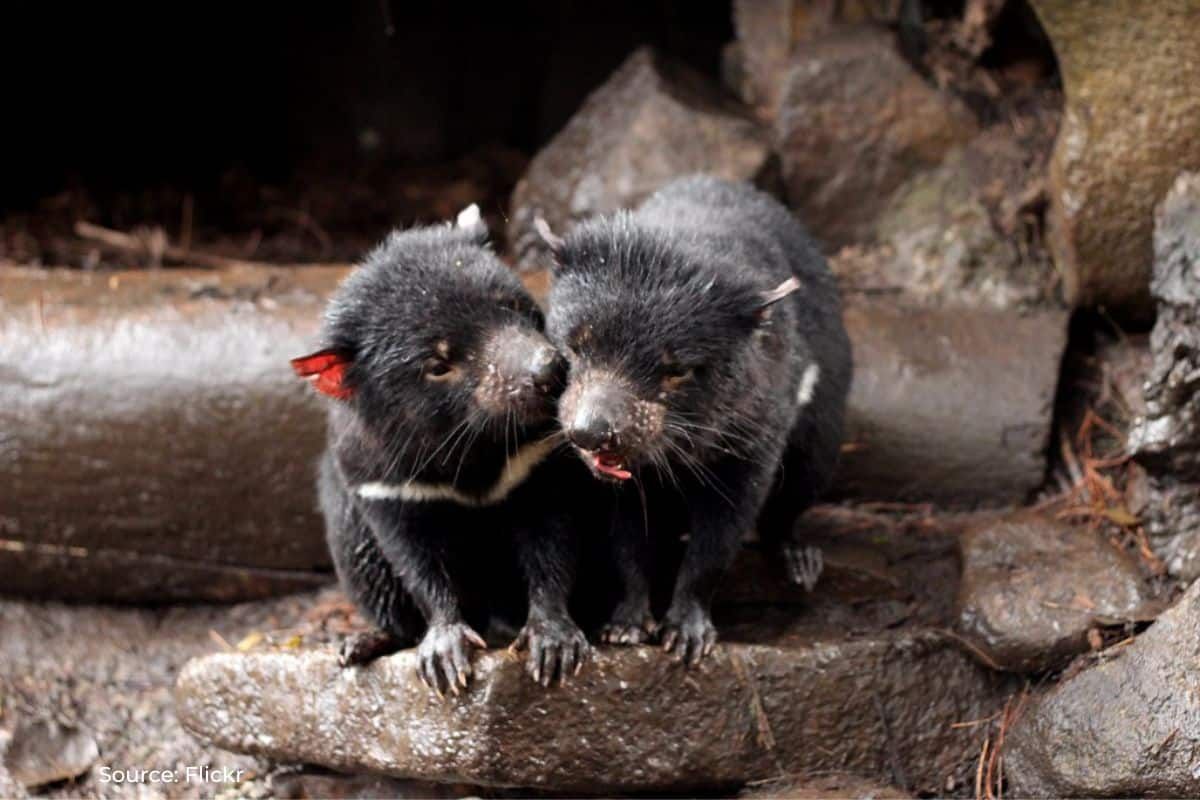
Scientists around the world have been eager to understand why and how a deadly transmissible cancer known as DFT1 has decimated populations of the Tasmanian devil, an endangered species of marsupial, in recent decades.
A recent study published in the journal Science sheds light on the genetic details of how these diseases arose, evolved and spread in the Tasmanian devil, providing insight into possible future impacts on this species.
The study analyzed 78 sequenced DFT1 and 41 DFT2 genomes (both Tasmanian devil facial tumours) and revealed that DFT1 first arose in 1986, while DFT2 is much more recent, appearing in 2011.
Furthermore, DFT2 has rates of mutating faster than DFT1 in all classes of disease variants, mutating about three times faster. However, the selective nature of these mutations is still unknown, raising concerns about the potential impact of DFT2 on the Tasmanian devil population.
The researchers emphasize the need for more studies to predict how these cancers will continue to evolve and affect the Tasmanian devil population. The study findings highlight the importance of understanding the genetic makeup of diseases affecting endangered species to inform conservation strategies.
Devilish diseases
Tasmanian devils, the carnivorous marsupials found on the island of Tasmania in southeastern Australia, are battling two communicable cancers known as devil facial tumour 1 (DFT1) and devil facial tumour 2 (DFT2). Both types of cancer are transmitted through bites and have caused the loss of 60-70% of the devil population in the last 10 years.
Although researchers have known about these cancers, little has been known about their evolution. A team of scientists led by disease ecologist Rodrigo Hamede of the University of Tasmania in Hobart have assembled a reference Tasmanian devil genome and compared it to DNA sequenced from 78 DFT1 and 41 DFT2 tumours to investigate their origins and mutations.
The results reveal that DFT1, which has spread across most of Tasmania, emerged in 1986 and the first case was detected in a female devil around a decade later.
This female demon is believed to have been a superspreader who passed her tumour cells to at least six other demons, leading to the emergence of six major DFT1 variants. By contrast, DFT2 emerged in 2011 and the first case was detected in a male devil three years later.
Unlike DFT1, DFT2 is found only in a small region of the island and mutates around three times faster, possibly due to faster tumour cell division. The researchers question whether these mutations are selected or not.
DFT2 cancer growth threatens devil population
The rapid growth of DFT2 could shorten the window in which facial cancers are not contagious, leading to more infections that spread faster, giving cancer a competitive advantage over less transmissible types.
While previous research has shown that Tasmanian devil populations are becoming more resistant, the recent emergence of DFT2 is concerning, as it leaves the devil vulnerable, particularly in regions where both tumours exist.
This could result in local population drops or as yet unknown selection in the host population. The researchers urge more studies to understand the evolution of cancers and how they will spread through Tasmanian devil populations, noting that this is an ongoing evolutionary process that they are witnessing in action.
Keep Reading
Part 1: Cloudburst in Ganderbal’s Padabal village & unfulfilled promises
India braces for intense 2024 monsoon amid recent deadly weather trends
Support us to keep independent environmental journalism alive in India.
Follow Ground Report on X, Instagram and Facebook for environmental and underreported stories from the margins. Give us feedback on our email id greport2018@gmail.com.
Don’t forget to Subscribe to our weekly newsletter, Join our community on WhatsApp, and Follow our YouTube Channel for video stories.
Support Ground Report to keep independent environmental journalism alive in India
We believe climate change should be the basis of current discourse, and our stories attempt to reflect the same.
Connect With Us
Send your feedback at greport2018@gmail.com
Newsletter
Subscribe our weekly free newsletter on Substack to get tailored content directly to your inbox.
When you pay, you ensure that we are able to produce on-ground underreported environmental stories and keep them free-to-read for those who can’t pay. In exchange, you get exclusive benefits.
Your support amplifies voices too often overlooked, thank you for being part of the movement.