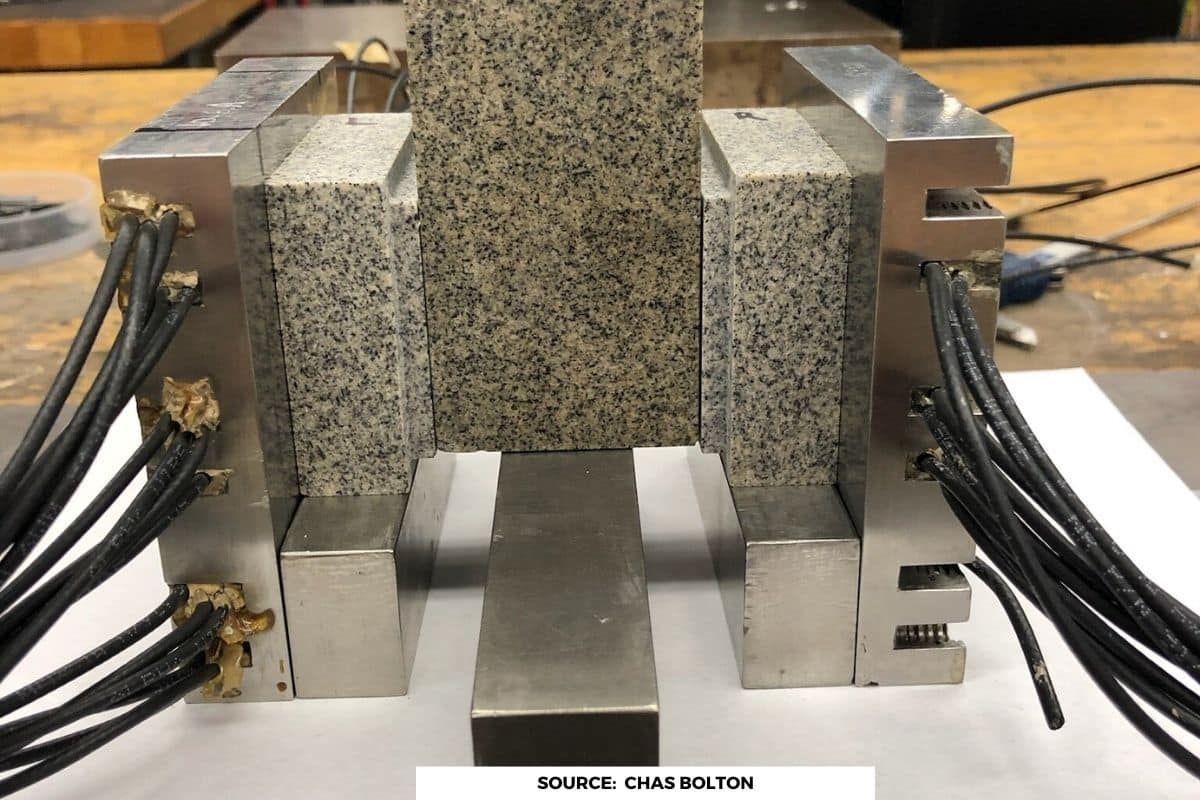
Scientists at The University of Texas at Austin have made a breakthrough in earthquake prediction research. They have successfully identified a pattern of “foreshock” tremors in a laboratory setting, which could potentially allow for the forecasting of future earthquakes. This research has been published in the journal Nature Communications.
Lab-made earthquakes reveal Early-warning Tremors
The team, led by researcher Chas Bolton, created their own earthquakes in the lab and searched for patterns in the seismic “noise” that occurred before these quakes. They discovered a pattern of tremors that increased in strength and frequency as the lab-created earthquake approached. This pattern was not found for slower or weaker earthquakes, indicating that the tremors are connected to the main shock.
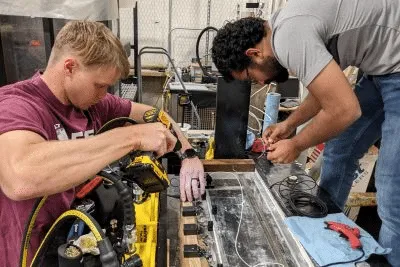
Bolton and his team conducted their experiments on a miniature, lab-made fault at Penn State. Despite its small size (only two inches long), the fault revealed significant patterns that could be applied to real-world scenarios.
The next step for the team is to replicate these results in real-world settings. Bolton plans to start this work in Texas, using measurements from the state’s seismological network, TexNet. He will also be conducting experiments on a larger, 3-foot-long artificial fault at the University of Texas Institute for Geophysics (UTIG). These experiments will help improve understanding of how the tremor pattern might occur in nature.
For a long time, scientists have been searching for clues that could help signal an impending earthquake. Bolton implemented an approach that involved creating his own earthquakes in the lab and searching for patterns in the seismic “noise” that preceded the quakes.
Uncover Earthquake precursor Patterns
Bolton and his collaborators conducted measurements of earthquake cycles on a miniature lab-made fault at Penn State. The fault, only two inches in length, is significantly smaller than actual ones. However, their experiments uncovered a pattern of intensifying tremors coinciding closer together as the lab earthquake came closer. They did not find such a pattern for slower or weaker earthquakes.
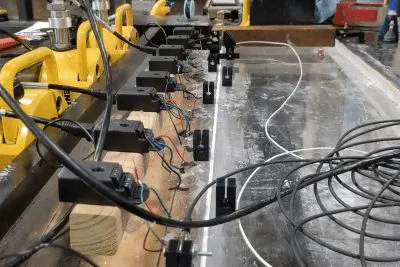
Detecting such patterns won’t be easy on faults that are hundreds of miles long and reach deep into the Earth. Still, the findings spotlight why it’s so important to wire up real-world faults with seismic monitors that can detect subtle changes in the Earth, said co-author and UTIG Director Demian Saffer.
“If we really want to detect these precursory phenomena, we need sensors and long-term observatories that can monitor these creaks and groans to tell us how the fault is behaving in the lead-up to failure,” he said.
The findings highlight the importance of equipping real-world faults with seismic monitors that can detect subtle changes in the Earth. Co-author and UTIG Director Demian Saffer emphasized the need for sensors and long-term observatories to monitor these precursory phenomena.
Bolton expects results from his TexNet research, where he will be analyzing tremor sequences in Texas associated with earthquakes greater than magnitude 5, within a year.
ALSO READ
- Saffron Is More Expensive Than Before Due To Climate Change
- #Explained ‘Naula’: Ancient Way To Conserve Water
- Bhutan: First Carbon Negative Country
- ISRO in Space Tourism: Might not be good for Ozone layer
Follow Ground Report for Climate Change and Under-Reported issues in India. Connect with us on Facebook, Twitter, Koo App, Instagram, Whatsapp and YouTube. Write us on GReport2018@gmail.com.