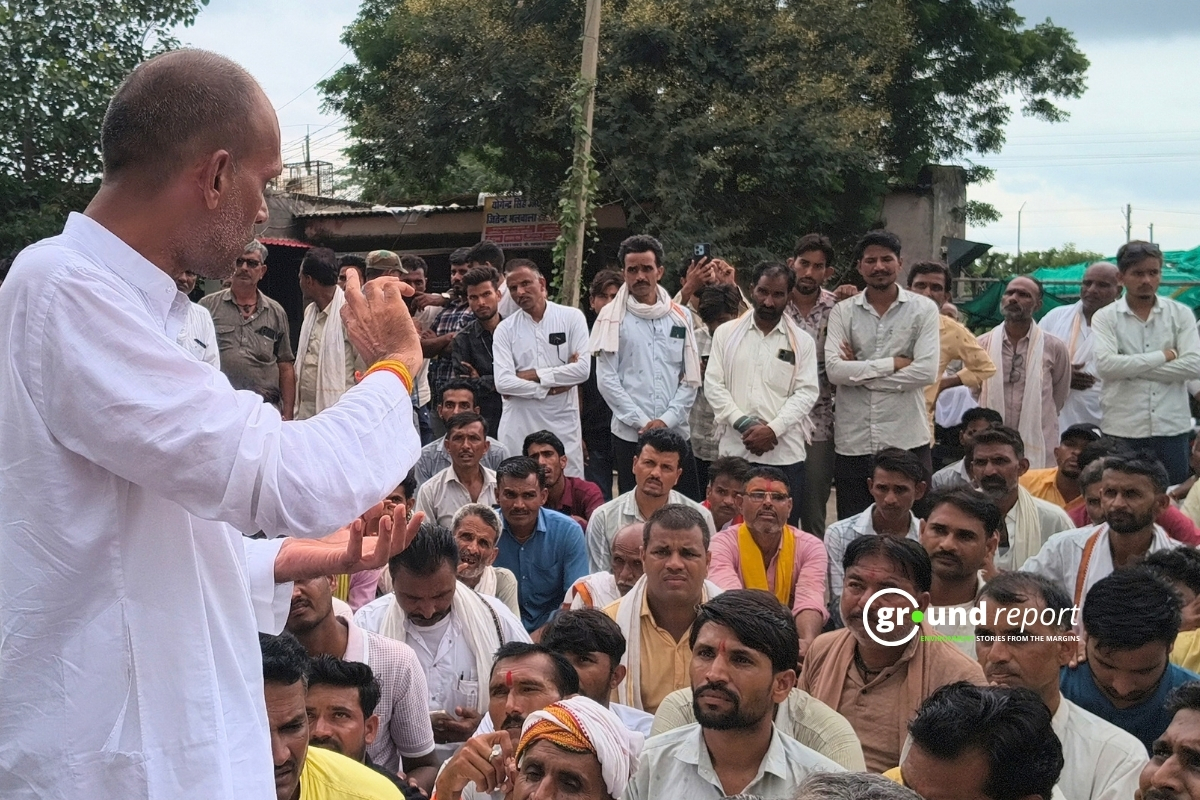
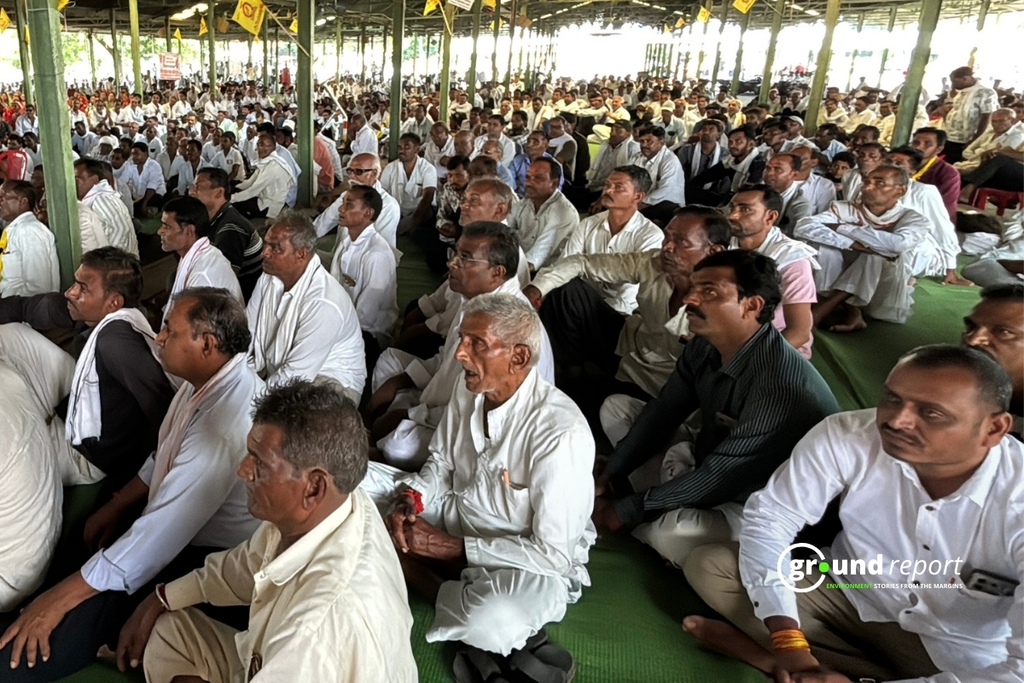
More than 1,000 farmers gathered at the Agricultural Produce Market Committee (APMC) in Khargone on September 16, demanding higher cotton prices, four-times compensation for land acquired for a road project and action against agricultural irregularities.
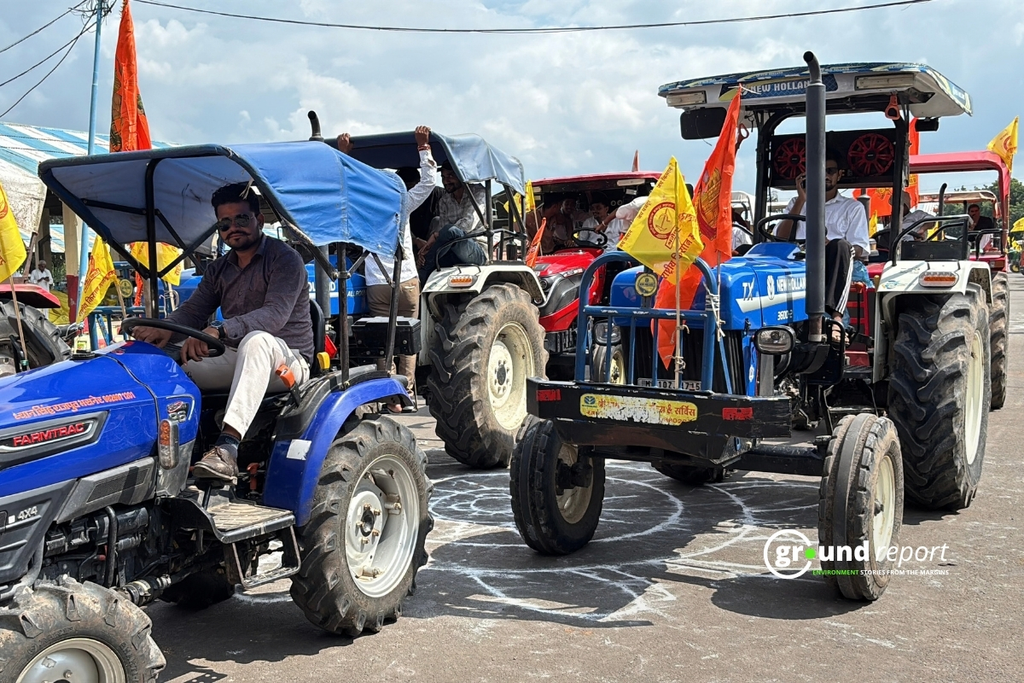
Farmers from across the district, under the banner of the Rashtriya Kisan Mazdoor Mahasangh, held block-level meetings a week earlier before gathering in Khargone to submit a memorandum to the collector. They also held a tractor rally from the mandi to the collectorate.
The demands included a higher Minimum Support Price (MSP) for cotton, action against the Cotton Corporation of India (CCI) for rejecting cotton on quality grounds, four-times compensation for land acquired for the Deshgaon-Jhulwania road project, and action over substandard seeds and difficulties with e-tokens.
Demand to Increase Cotton MSP
In May 2026, the central government announced an MSP of ₹8,267 per quintal for medium-staple cotton and ₹8,667 for long-staple cotton for the 2026–27 kharif season.
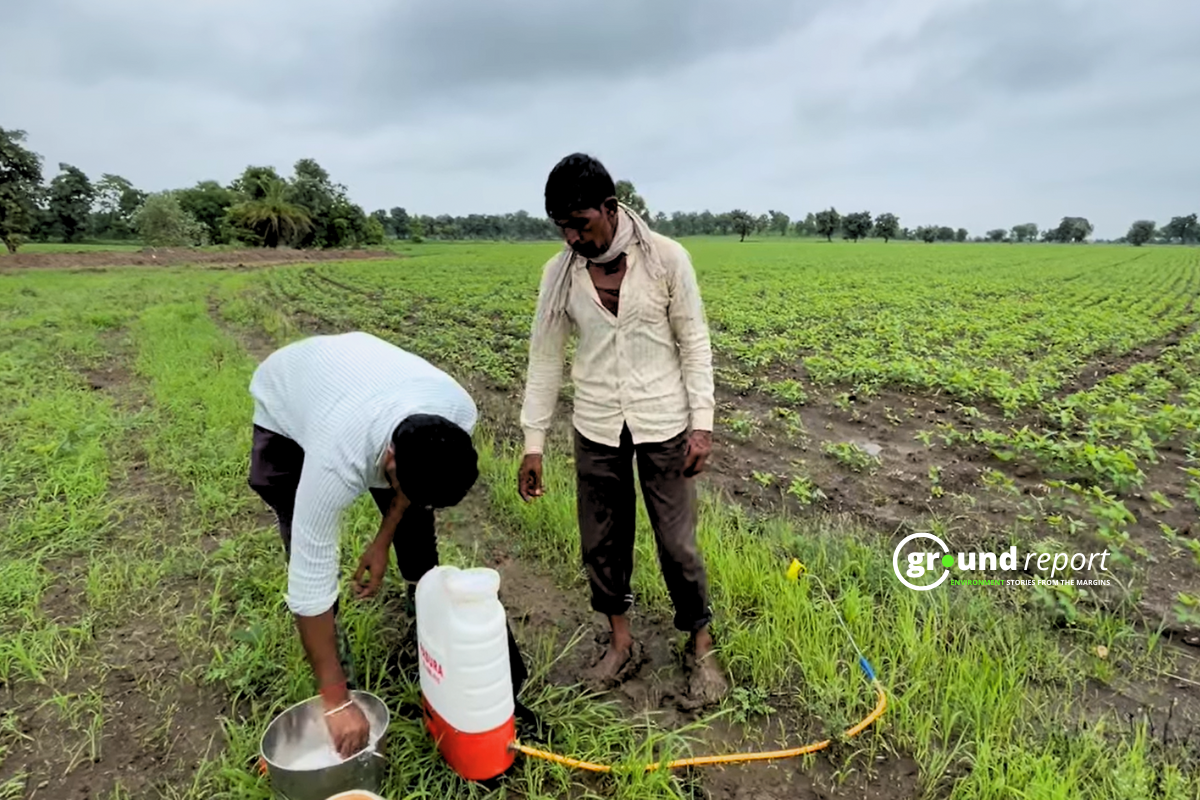
Shankarlal Yadav from Ghughariya Khedi in Gogawan tehsil cultivates cotton on 18 acres. He said cultivation now costs ₹35,000–40,000 per acre, with fertiliser alone rising from ₹1,300 to as much as ₹2,400.
With inadequate rainfall early in the season followed by unexpected rain, he expects a yield of only 5–6 quintals per acre. Even at MSP, he estimates his profit at around ₹15,000 per acre.
Shankarlal said MSP should be linked to production costs and follow the recommendation of the M.S. Swaminathan Commission, which proposed a price 50% above the average cost of production.
He also alleged that the CCI rejects cotton for excessive moisture, forcing farmers to sell to private traders at lower prices. The government currently permits CCI procurement only up to 12% moisture.
Demand for Four-Times Land Compensation
In June, the central government approved the ₹4,415.60-crore Betul-Khandwa-Vadodara corridor, including the widening of the 108.64-km Deshgaon-Jhulwania road from two lanes to four.
Five acres of Shankarlal’s land are to be acquired. He said the land’s market value is around ₹1.5 crore per acre, while its valuation for acquisition is ₹6.88 lakh per acre, on which he is being offered about ₹13.74 lakh per acre under the existing compensation formula.
The land also contains four tube wells, two wells and seven 90-mm pipelines.
Farmers said they were not opposed to the road but wanted four times compensation. They referred to an April 22, 2026, Madhya Pradesh Cabinet decision providing four-times compensation when agricultural land is acquired for projects.
Rameshwar Gurjar, Khargone district president of the Rashtriya Kisan Mazdoor Mahasangh, said farmers should also receive replacement land, along with guarantees for their children’s education and healthcare.
Action Against Substandard Seeds
Keshav Yadav of Durgapur village in Kasrawad tehsil bought chilli seedlings from a local nursery and planted them on 2.5 acres. The plants dried up within days.
Ganpat Yadav spent ₹55,000 on seedlings for three acres and said the entire investment was lost after the plants dried up.
Several farmers had reported similar problems with chilli seedlings from Adwait Nursery in Mangrul. Khargone Deputy Director of Horticulture K.K. Girwal had earlier assured them that a scientific survey would be conducted.
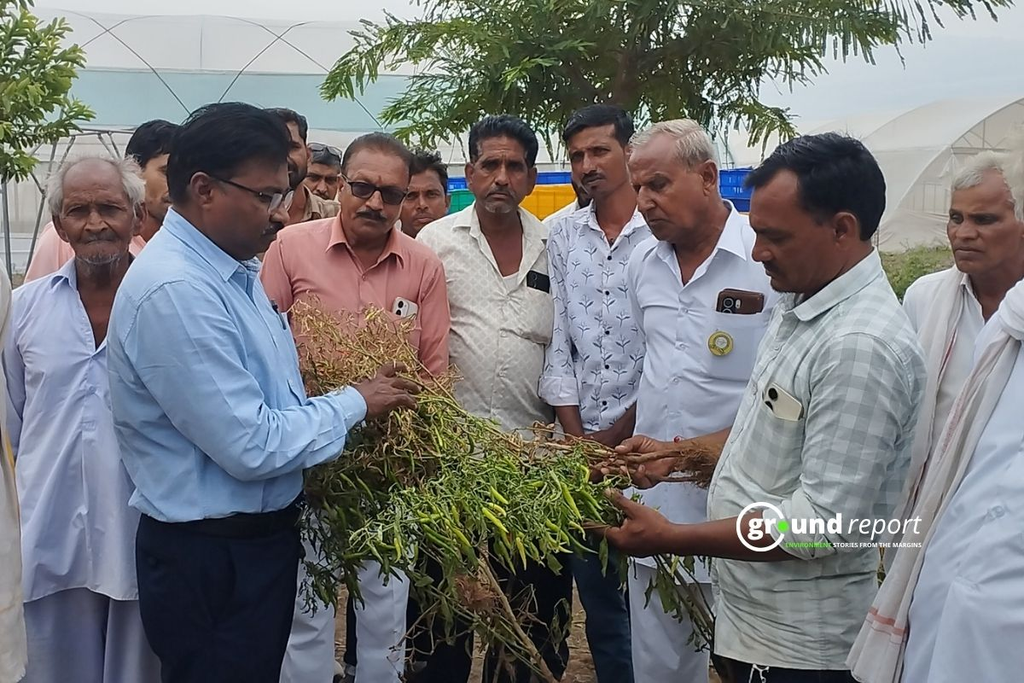
But Keshav said no scientist had visited his fields even by the day of the protest.
Farmers demanded action against the nursery and the company associated with it. They also alleged that substandard cotton seeds were being sold across the district.
In an investigation published in June, we found that herbicide-tolerant cotton seeds were being illegally sold in Madhya Pradesh under the name “5G” without regulatory approval.
Farmers alleged that officials were aware of the sales but had not acted. They demanded action against illegal seeds, a ban on their sale and information on prohibited varieties so farmers could avoid purchasing them.
Farmer leaders also criticised the ongoing India-US trade deal and demanded that it be scrapped. They called for the permanent abolition of systems such as e-tokens.
After the meeting, farmers marched to the collectorate in a tractor rally and submitted their memorandum.
They said their satyagraha would continue until their demands were accepted.
Support Us To Sustain Independent Environmental Journalism In India.
More Ground Reports
He Was Married as a Child, Now Manish Dangi Helps Stop It for Others
Despite The Ban, How Gutkha Became MP’s Most Common Household Habit