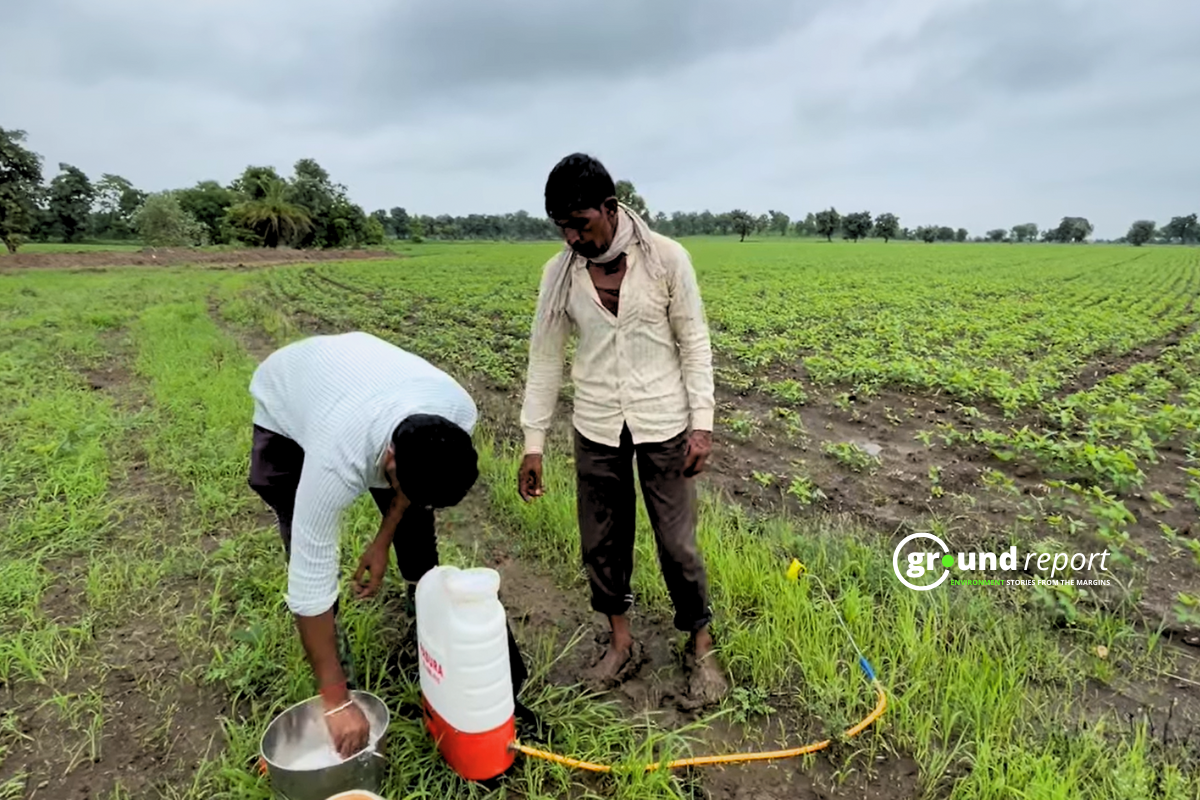

In March 2019, Radheshyam Yaduvanshi installed a solar pump on his farm in Basaniya Keer village in the Narmadapuram district of Madhya Pradesh. Yaduvanshi hoped for a reliable electricity source to irrigate his moong (green gram) and wheat crops.
Yaduvanshi installed a 5-horsepower (HP) solar pump manufactured by Dynamech under the government’s solar-pump programme—PM-KUSUM‘s Component B implemented alongside a state scheme.
The pump worked without any major problems, giving him the dependable irrigation he had hoped for. Encouraged by the experience, Yaduvanshi installed another one in September 2020, a 7-HP solar pump manufactured by Shakti Pumps, this time on his brother’s farm.
But over the years, the pumps faced repeated problems, from thefts, damaged panels, a failed controller, and long battles with companies and government officials over repairs and compensation.
The trouble started in May 2022, before his moong harvest. Yaduvanshi had gone home for dinner when a sudden flicker of light caught the workers’ eyes near the solar panels on the farm. They thought Yaduvanshi had come back. They called him, only to realise that thieves were trying to steal the panels.
As workers rushed towards the panels, Yaduvanshi joined them; the thieves noticed them and fled but managed to take several dismantled panels, though one was dropped and broke. Yaduvanshi filed a complaint at the police station and submitted a copy to the state’s Energy Department. An official helped him pursue the matter, and the company eventually replaced the panels.
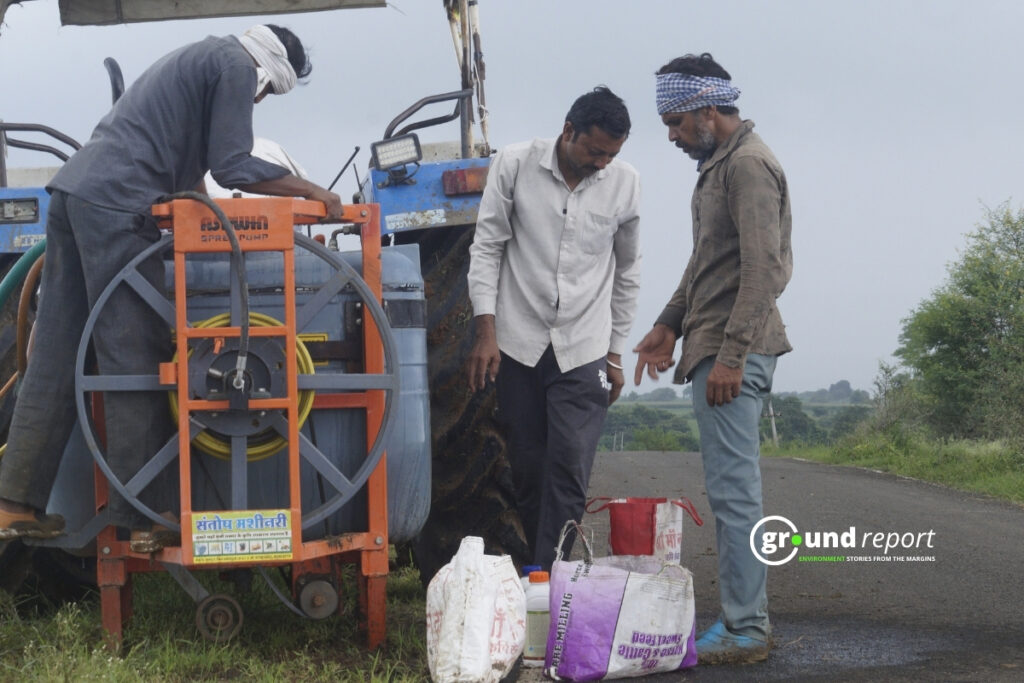
Speaking to this correspondent, Yaduvanshi said that his second system was damaged in 2025 when lightning struck near the panels. The cells on the panels developed marks, and the controller stopped working. The company eventually replaced the controller, but only after the officials pushed them. Then, in February 2026, thieves stole the cables connected to his panels.
Now, repeated thefts and damage have left both solar systems effectively out of use. The older Dynamech system has been non-functional for about a year. Yaduvanshi has complained to the Energy Department, submitted applications to the district administration, and raised the issue at a public hearing. He also tried calling a toll-free number but said the line is no longer available.
When Yaduvanshi installed the systems, he said he did not consider theft a serious risk, as he was told that the pumps had technology that could help trace thieves. But today, both his solar pumps lie idle. To keep irrigating his fields, Yaduvanshi installed a transformer and returned to depending on electricity from the grid.
Yaduvanshi’s experience may be an extreme case, with both his solar systems affected by theft and natural damage. But it highlights the broader problems with maintenance, technical assistance, theft, and compensation.
To farmers like Yaduvanshi, the scheme had promised irrigation without dependence on an unreliable electricity supply. Seven years later, his experience has been far more complicated.
Theft and Safeguards
Praharsh Patel, a faculty member at IIT Gandhinagar, conducted research examining the links between water, energy, food, and carbon. His fieldwork in Gujarat involved interviews with farmers, policymakers, and technical staff across 22 sites.
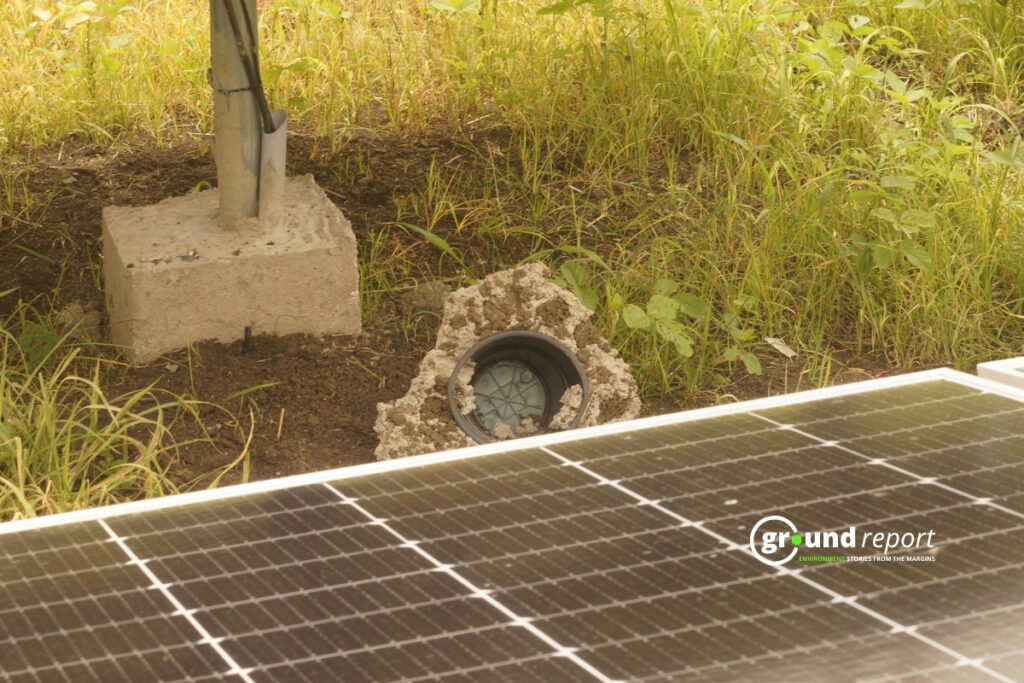
In one South Gujarat village, Patel recalled a farmer’s response: “Why are you even coming? It’s just a roof. It’s not even any solar thing because all the cables are lost.” Thieves stole the cables rather than the panels. But without cables, panels are useless.
“There is an active scrap market for copper for quick cash but not for solar panels,” Patel said.
In our reporting, we found several theft cases in Madhya Pradesh. A farmer, Sudhir Kasanya, in Kothari, Sehore district, had panels damaged in the fields. He wasn’t compensated, so he decided to dismantle the panels to take them home after the harvest season.
In June 2026, Vidisha farmer Jagat Singh Dangi installed a 5 HP solar pump with the help of a 90% subsidy. But within about two weeks, thieves stole around 150 feet of cable. Dangi filed a police complaint and contacted the company. He was told the system was insured and that losses would be compensated, but more than two months later, he was still waiting for a response. He plans to install CCTV cameras for additional security.
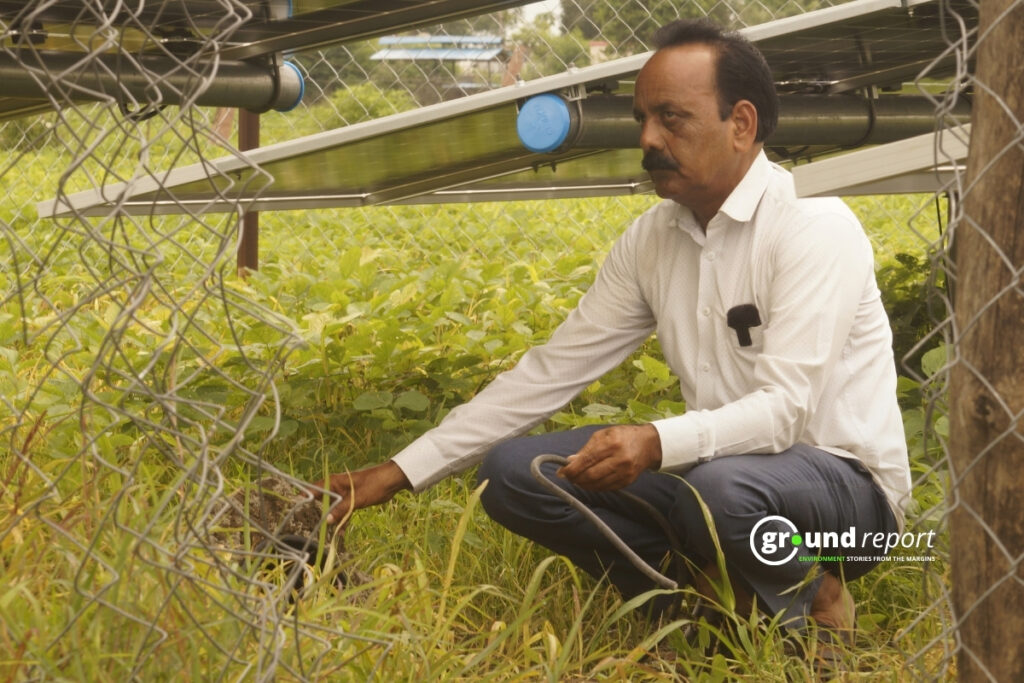
Under the scheme, solar pumps are insured for five years, which covers both theft and damage caused by natural calamities.
Sachin Chauhan, area sales manager at Shakti Pumps, said farmers using the company’s pumps can register an insurance complaint through its toll-free number. For theft claims, they are asked to provide photographs or show the site through a video call and submit the complaint and other documents. The company then processes the insurance claim. Chauhan said claims generally need to be initiated within seven days; delays can increase the chances of rejection.
Apart from the insurance, Chauhan said, companies also use physical measures like anti-theft nuts/bolts on solar panel structures. He added that the design, with fasteners, can require lifting two or three panels together, making theft more difficult.
Despite these safeguards, or because of them, Chauhan said cables are among the most commonly stolen parts, though pump motors, drives and controllers can also be targeted. But, he said, theft cases are not widespread; barely 2-3% of all pump owners report theft.
A Right to Information (RTI) response from Madhya Pradesh Urja Vikas Nigam Limited (MPUVNL) recorded 41 theft complaints involving solar pumps installed on farmers’ fields under the scheme since 2019. Most districts listed in the document reported no theft complaints, but Balaghat reported 22, followed by Morena with five and Seoni with three.
Kamlesh Gehlot, who handles PM-KUSUM-B in MPUVNL, said the contractor handles theft and insurance claims. So, exact claims and compensation fulfilment are difficult to determine; the RTI response said so too.
Theft as an Adoption Challenge
Since the solar pump scheme began in 2017, Madhya Pradesh has sanctioned 59,400 standalone solar pumps, of which 28,193 were installed—about 44.6% of the sanctioned pumps and 2.3% of the 11.69 lakh pumps installed nationwide, as of August 31, 2026. In Phase I, 14,000 pumps were installed; under Phase II, another 6,787; and Phase III data is yet to be made public. However, the state targets installing 4 lakh pumps over the next two years.
Patel, who studied solar irrigation adoption in Gujarat, said the lacklustre response to solar pumps in Madhya Pradesh cannot be understood without looking at the ecosystem around the solar industry.
Gujarat installed fewer solar pumps in absolute terms but has completed 100% of its sanctioned installations, while MP installed less than half of its sanctioned pumps. Gujarat’s advantage, Patel said, lies in its ecosystem. The state has hundreds of empanelled operations-and-maintenance operators, creating local capacity to install, supply, and maintain solar equipment.
“Once there is a critical mass, the supplier of the solar panels also has the last-mile connectivity to supply and maintain,” Patel said.
States such as Haryana, Maharashtra, and Rajasthan have received large allocations and achieved high installation rates.
Gehlot said the government looks to accelerate installations under the current phase. He said demand–supply gaps in the previous phases had affected implementation, and the government seeks to address these bottlenecks in the current phase to meet its installation targets.
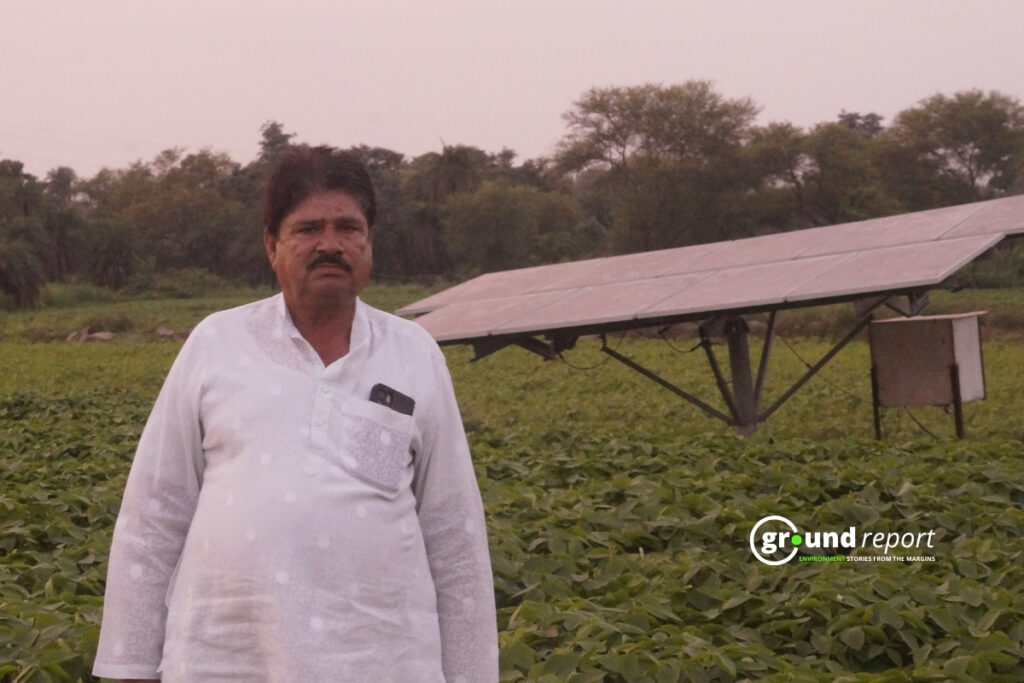
While not widespread, theft can pose an adoption challenge.
A 2025 paper by Rohtash Kumar and colleagues, published in the Asian Journal of Agricultural Extension, Economics & Sociology, surveyed 240 farmers in Haryana and Rajasthan, with over 3 lakh installed solar pumps.
They found that the fear of solar panel theft scored 72.22 out of 100 among both adopters and non-adopters in Haryana and 61.11 among adopters and 63.33 among non-adopters in Rajasthan.
Among adopters, major concerns included poor after-sales service, a lack of quality standards for solar equipment, high initial investment, inadequate subsidies, and a lack of demonstrations or follow-up support. Non-adopters were particularly constrained by high system costs, lack of credit, limited awareness, and difficulty accessing spare parts and repairs.
Portable Solar as a Solution
Jai Singh Chauhan, a farmer in Sidhi district, said, “I did not opt for fixed solar panels because there was a fear of theft, vandalism, and the panels being broken.”
Chauhan spent more than Rs 3 lakh of his own money to get a mobile solar system. The decision also suited his farmland, which is spread across fragmented plots. He said the same system can supply electricity to a home or even power small enterprises such as a flour or dal (beans) mill.
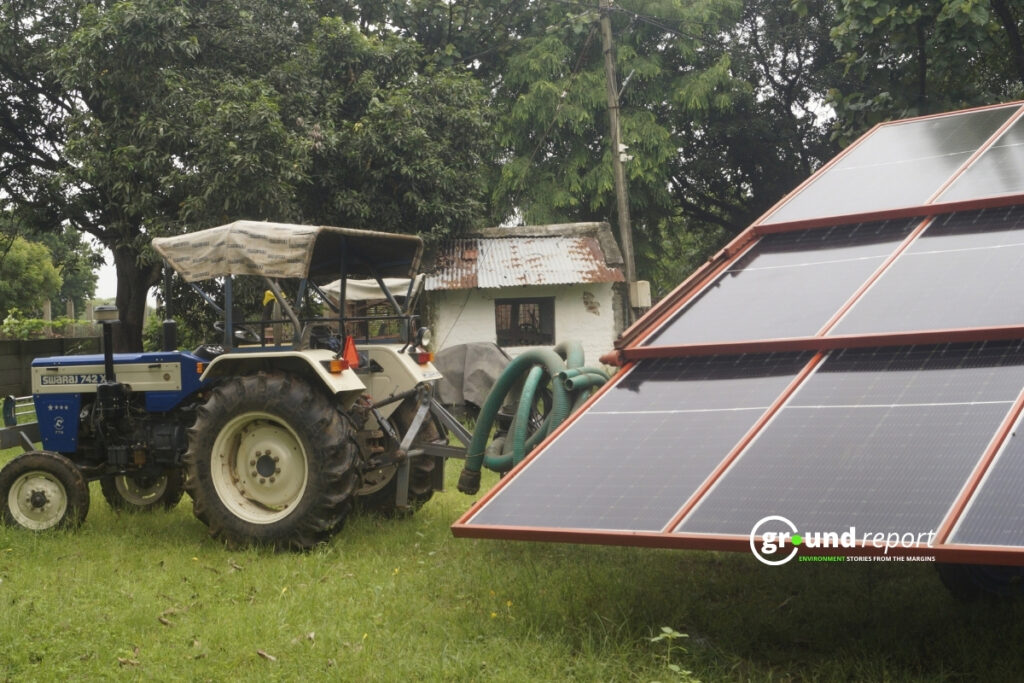
Like Chauhan, almost all farmers we interviewed had considered mobile solar panels as a safety measure. But, as Yaduvanshi said, “dismantling is a complicated process” and comes “with a risk of damage”. On top of that, government financing is available for fixed panels, but not for mobile systems.
Patel’s research in Gujarat also explored whether farmers connected to the same feeder could pool their solar installations at a common location while retaining their individual share in the system. Such an arrangement could make the installations easier for the community to monitor and protect while creating a shared community asset. The study said that this could “eliminate theft and operational challenges”.
Vandana Chatterjee, additional executive engineer at MPUVNL in Bhopal, said that at present the scheme focuses on off-grid solar-powered irrigation. Once installed, farmers are free to do what they wish with the system, but the government has not considered any portable solar plans.
Patel pointed to another advantage of portable solar systems: they can make better use of available solar energy. “The biggest challenge that we have with off-grid [systems] is the underutilisation of capital,” he said.
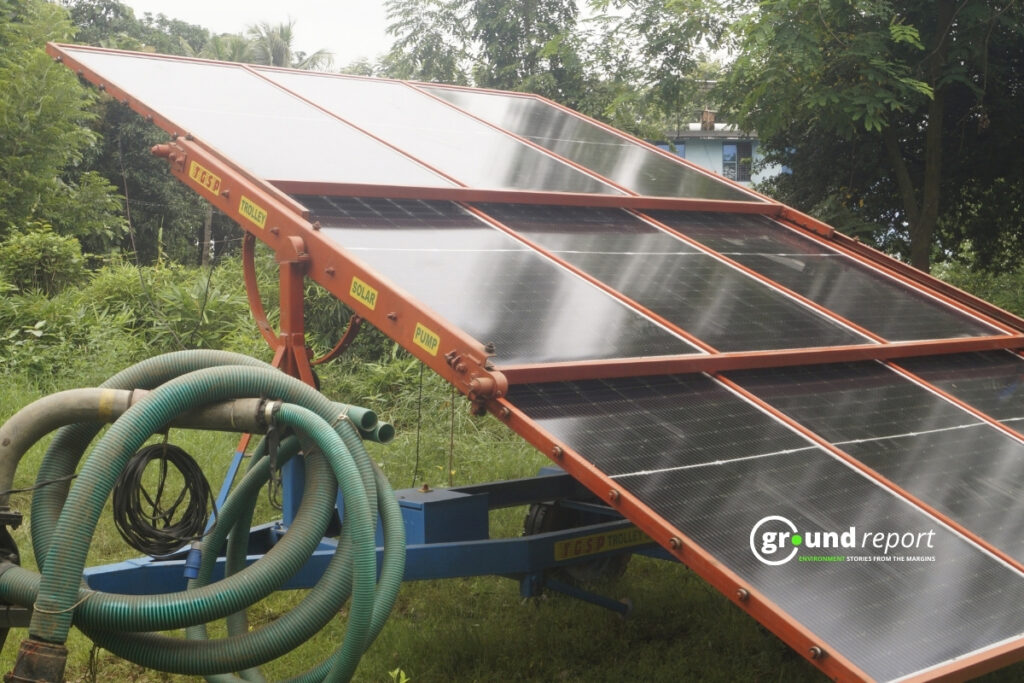
A solar pump system could generate electricity for around 300 days. It is used for irrigation for only about 100 days. Patel said he supports any policy that makes greater use of the electricity generated. He argued that instead of using off-grid solar only for irrigation, it could be promoted as decentralised, multipurpose energy, including for domestic and farm machinery needs.
Yaduvanshi, like other farmers, did not hesitate to point out the benefits of solar pumps. But for him, those benefits are undermined by the realities of the system supporting them. A portable trolley system can address some of these challenges, but without a subsidy, it costs three to four times as much as a solar pump, putting it beyond the reach of most farmers.
Kasanya said the government should either adapt the scheme to ground realities or provide technical support to ensure that farmers can use the technology smoothly.
Note: This story was produced with support from Internews’ Earth Journalism Network.
Support Us To Sustain Independent Environmental Journalism In India.
More Ground Reports
He Was Married as a Child, Now Manish Dangi Helps Stop It for Others
Despite The Ban, How Gutkha Became MP’s Most Common Household Habit