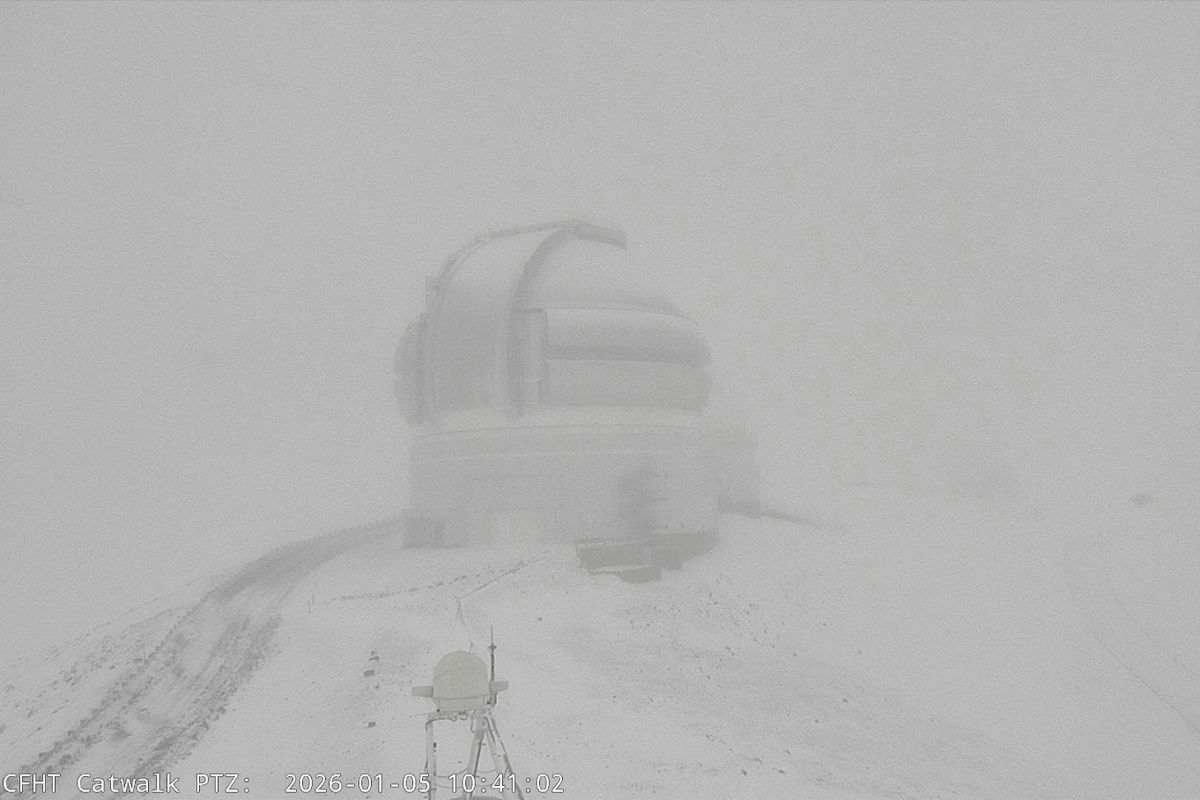
Snow coated the roads on Mauna Kea, a dormant volcano on Hawaii’s Big Island Monday, as a storm known as a Kona Low dumped inches of snow across higher elevations.
More than 10 inches of snow and wind chills in the 20s were recorded at the summits. The National Weather Service issued Winter Storm Warnings for the Big Island summits through midnight Wednesday, marking an unusual weather event that closed roads and disrupted operations at some of the world’s most powerful telescopes.
Will Ahue, a meteorologist at the National Weather Service’s Honolulu office, said around 2 to 3 feet of snow fell on the peaks, though these measurements remain unofficial.
What Caused The Snow
The snow resulted from a Kona Low, a storm system that developed over the islands. The low-pressure system positioned itself northwest of Kauai and drifted slowly south, bringing several days of heavy rain to most of the state and significant snow to the highest peaks.
“It always snows in Hawaii every winter,” Ahue said. “The only impact to people is the people who need to go up to the observatories, and they can’t drive and go up there because they can’t see anything.”
The Kona Low brought persistent winds from the southeast, causing the heaviest rainfall on the southeast-to-south-facing mountain slopes of the Big Island and Maui. The storm system was expected to weaken and move west of Hawaii by midweek.
Where The Snow Fell
Mauna Kea stands as Hawaii’s highest point at more than 13,000 feet above sea level. Its neighbor, Mauna Loa, the world’s largest active volcano, also received heavy snowfall. Both peaks rise to nearly 14,000 feet, comparable to mountain peaks in Colorado and California.
Ahue explained that snow most likely falls on Mauna Kea and Mauna Loa because they tower above other Hawaiian summits. Maui’s Haleakala, the next highest peak at roughly 10,000 feet, receives snow less frequently.
Video footage from the Mauna Kea Science Reserve showed blinding driving conditions as crews made their way down the volcano. The Science Reserve, managed by the University of Hawaii, houses some of the most powerful telescopes in the world. Timelapse video captured snow blanketing Mauna Loa’s summit as the storm moved through.
How It Affected Operations
The road to Mauna Kea’s summit above the visitor center remained closed until further notice. Observatory staff could not access facilities due to dangerous driving conditions and poor visibility.
On Tuesday, forecasters downgraded the winter storm warning to a winter weather advisory for elevations above 11,000 feet. Ahue said he started seeing some clouds clearing on the mountain through webcams, suggesting conditions were improving.
When Snow Returns To Hawaii
Winter snow on Hawaii’s highest peaks occurs annually, though the amount varies. The elevation of Mauna Kea and Mauna Loa ensures that cold temperatures at their summits can support snowfall when moisture-laden storm systems pass through.
The current Kona Low represents a typical winter weather pattern for the islands, bringing rain to lower elevations while dropping snow on the highest peaks. The system follows predictable meteorological patterns that affect Hawaii during winter months.
Meanwhile, the rest of the state experienced days of heavy rain. The southeast-to-south-facing mountain slopes bore the brunt of the precipitation as winds pushed moisture against these surfaces.
Fresh snow surrounded observatories on top of Mauna Kea, creating striking visual contrasts between the white-capped peaks and the tropical landscape below. The Mauna Kea Weather Center documented the conditions through photographs and weather data.
The winter weather advisory remained in effect for summit areas as authorities monitored conditions and planned for road reopening once visibility and road conditions improved sufficiently for safe travel.
Support us to keep independent environmental journalism alive in India.
Keep Reading
Small Wild Cats in Big Trouble: India’s First National Report Released
After Tragedy, Families Face Delays in Tiger Attack Compensation
Stay connected with Ground Report for underreported environmental stories.