The India Meteorological Department issued its first long-range forecast for the 2026 southwest monsoon on April 13. The department said total rainfall between June and September will be around 92 percent of the Long Period Average, or LPA. The LPA is based on data from 1971 to 2020 and stands at about 870 millimetres. This year, the country is likely to get around 800 millimetres of rain, give or take 5 percent.
Mrutyunjay Mohapatra, Director General of Meteorology at IMD, said this puts the forecast in the “below normal” category. IMD calls anything between 90 and 95 percent of the LPA as below-normal. The chance of very low rainfall, below 90 percent, is 35 percent, more than double the usual 16 percent. The chance of a normal monsoon is only 27 percent, against the usual 33 percent.
Most of India will get less rain than normal this season. Places that may still see normal to good rain include Ladakh, Arunachal Pradesh, parts of the northeast, and some areas in Chhattisgarh, Andhra Pradesh, Telangana and Tamil Nadu.
For Madhya Pradesh, the situation looks worse than most other states. IMD Bhopal scientist Divya Surendran said most districts in the state have a 35 to 50 percent chance of below-normal rainfall.
Areas like Indore, Ujjain, Gwalior, Chambal, Jabalpur, Rewa, Shahdol, Sagar, and Narmadapuram are expected to get less rain than normal. Only areas near Bhopal-Vidisha, Seoni-Balaghat and the Khargone-Khandwa border may see near-normal rain.
The state’s normal rainfall is 37.3 inches. This year, total rain is expected to be between 30 and 32 inches.
How MP Compares to Other States
Despite this, MP’s situation is less dire than that of many other states that will face. Dr. Ved Prakash Singh, Director of Meteorological Centre Bhopal, said the reasons lie in the current Pacific conditions.
“The La Niña situation is currently weak. El Niño conditions can develop in the second half of the monsoon, the August-September period, which is not good for rainfall. That is why rainfall is likely to remain around 94 to 95 percent,” he said.
In simple terms, MP is at the less severe end of a bad national forecast, affected, but not the hardest hit.
July Fine, But August-September Is Worry
One clear signal from IMD is that the monsoon will arrive later than usual this year. Dr. Prakash said it will not follow the usual June 10 to 15 timeline.
“The monsoon onset, which people expect around June 10 to 15, will likely begin around June 20,” he said. “Between June 20 and 30, the monsoon will cover the entire state.”
This delayed arrival compresses the sowing window for Kharif crops and reduces the buffer time farmers have to prepare fields after the first rains.
Dr. Prakash was clear that the concern is not with the entire monsoon season equally. July is expected to pass without major problems. The real challenge will come in the second half.
“There is no problem with rainfall in July. But if El Niño conditions develop by September, there will be a rainfall problem,” he said. “For rice crops especially, farmers will have to rely on their own irrigation sources. From August to September, at least once or twice, instead of depending on rain, farmers will need to use artificial irrigation.”
This is an important warning for paddy farmers in MP, who depend on steady September rain for their crop to finish growing.
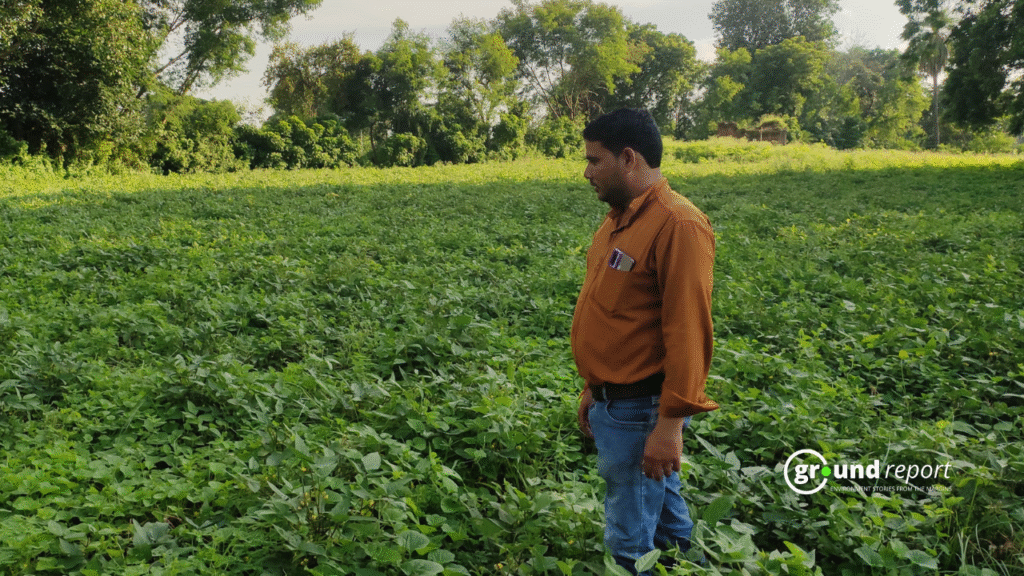
Dr. Prakash also placed the 2026 forecast in the context of the state’s recent rainfall history, offering some reassurance alongside the caution. “Only twice has rainfall been below normal in MP in recent years. Most of the time, rainfall has been above normal,” he said.
He specifically pointed to 2016 and 2019 as the two years when the state recorded below-normal rainfall between 92 and 95 percent. In contrast, the past three years saw rainfall of 106 to 108 percent of normal.
IMD’s own annual data supports this. West MP received 1,095.6 mm against a normal of 877.3 mm in the 2025 southwest monsoon season, a departure of 25 percent above normal. East MP received 1,219.4 mm against a normal of 1,043.4 mm, a departure of 17 percent. In 2025, MP’s total monsoon rainfall stood at 121 percent of normal, 15 percent above the forecast estimate.
Looking at the last decade, 2017 was the driest year with only 29.9 inches against a normal of 37.3 inches. The wettest year was 2019 with 53 inches.
El Niño: Primary Risk Factor
The main reason behind this year’s weak forecast is El Niño. Right now, weak La Niña conditions in the Pacific are fading toward neutral. IMD’s forecast system expects El Niño to develop during the monsoon season, with its effects showing up after June.
Mohapatra said that between 1951 and 2023, there were 16 El Niño years, and in nine of them, India saw very low monsoon rainfall. Since 1980, around 70 percent of El Niño years have come with a poor monsoon.
Climate scientist and former IMD Director General K J Ramesh highlighted that El Niño is not the only factor. “We also forget that there is another major driver for monsoon rainfall, which is global warming. We have been observing excess moisture being added to the monsoon rainfall since 2000,” he told Down To Earth.
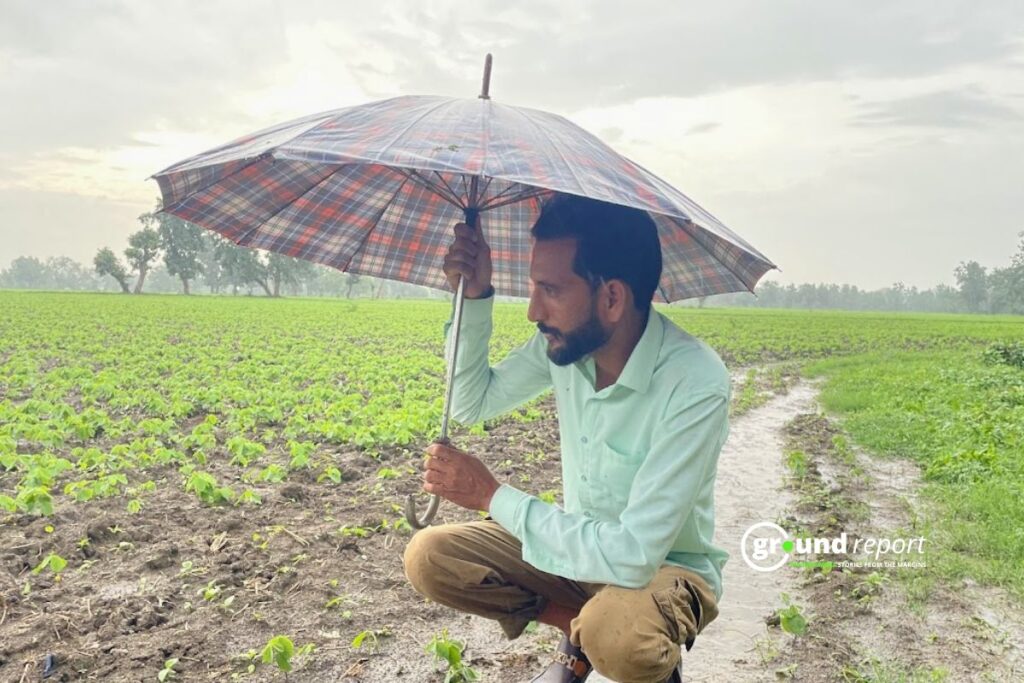
Two factors could partly balance out El Niño’s effect. The Indian Ocean Dipole, or IOD, is expected to turn positive toward the end of the monsoon, which usually means better rainfall over India. Also, snow cover over the northern hemisphere and Eurasia from January to March 2026 was slightly below normal, a sign that has historically been linked to stronger monsoons.
Private forecaster Skymet, which gave its forecast on April 6, put rainfall at 94 percent of LPA, slightly better than IMD but still below normal. Skymet also warned that the second half of the monsoon could be especially unpredictable.
What Farmers Must Prepare For
About 60 percent of India’s farmers depend fully on the monsoon for Kharif crops. In MP, the back-to-back good monsoons had pushed soybean output up by two quintals per hectare and kept enough water for wheat.
This year, farmers should not expect the same. Dr. Prakash’s advice is clear: plan for dry spells in August and September, arrange irrigation alternatives in advance, and do not delay sowing if the monsoon arrives on time around June 20.
IMD will release its updated forecast in the last week of May 2026, with more detail for central India and individual areas. Until then, the broad picture is clear: 2026 will need more careful water planning than the past two years did.
More Ground Reports
What does Ramsar status actually change for Bihar’s wetlands?
MP Poshan Aahar Closures Put Rural Women’s Livelihoods at Risk