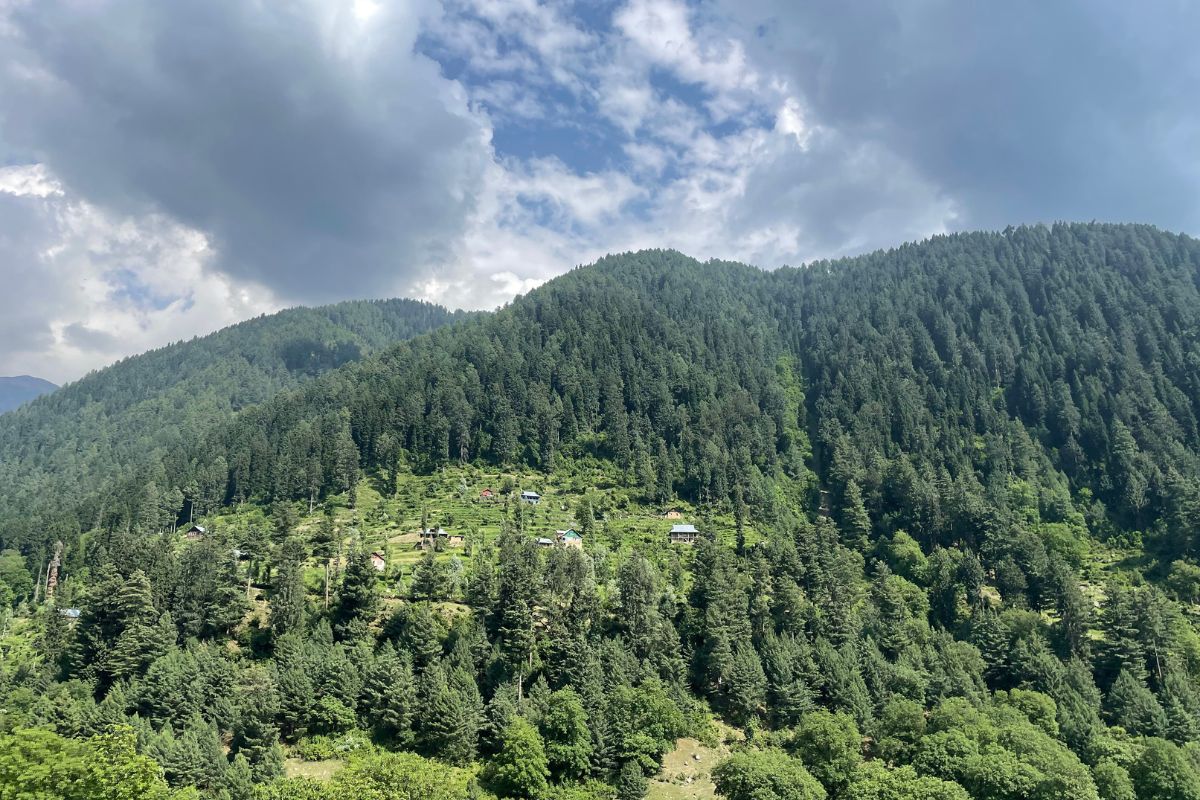
The 20-day Chillai Khurd, also known as the mild cold period, began last week, arriving quietly after the 40-day Chillai Kalan, the harshest stretch of Kashmir’s winter. The cold that was supposed to define February has not come. Instead, clear skies, dry afternoons, and temperatures closer to spring have settled across the Valley. The 10-day Chillai Bachha, or baby cold, is due to follow. But this year, there is little cold left to name.
As per the statement of IMD Srinagar, daytime temperatures across the Valley have climbed 3 to 8.5 degrees Celsius above normal. Srinagar reached 18 degrees Celsius on Sunday, against a seasonal average of 10.4 degrees. Ski resort Gulmarg recorded a maximum of 10 degrees, where the norm for this period is 1.5 degrees. Snowfall, which usually blankets Srinagar and lower elevations through winter, has largely not come.
When Did February Forget to Be Cold?
India Meteorological Department (MeT) Director Mukhtar Ahmad said the dry pattern is unlikely to break soon. “As of now, there would be no major Western Disturbance,” Ahmad told Ground Report. “Early melting of snow in upper reaches and glaciers means early high discharge in rivers and streams”.
The department has forecast dry weather until at least February 25. No significant precipitation is expected before the end of the month. Ahmad said river flows may rise temporarily in March and April as early melt feeds water bodies. “But as summer approaches, the water level will come down, particularly if there is no major precipitation in the form of rain,” he said.
Sonam Lotus, Climatologist and Director of the Meteorological Centre in Leh, said the deficit is not limited to Kashmir. The entire western Himalayan region from Jammu and Kashmir and Ladakh to Himachal Pradesh and Uttarakhand, has recorded well below-normal snowfall since November.
“This winter, right from November to February till date, the whole western Himalayas witnessed large deficit snowfall,” Lotus said. “The temperature is rising fast mainly because of the clear sky.”
He described the impact on glaciers in terms that require no scientific background. “It is like early ageing. If humans start getting old as young adults, it is not a good sign. The same is with glaciers,” Lotus said. He warned that while early meltwater may keep rivers running normally through spring, “in the long run, the water bodies will run dry and will be scarce once the farming activity starts.”
What happens when winter melts too soon
Riyaz Ahmad Mir, a geologist at the National Institute of Hydrology in Jammu, agrees with that trajectory, and takes it further. Where Lotus flags the timing problem, Mir focuses on what happens when the early water runs out. Reduced snowfall, he said, strips glaciers of their insulating cover, causing “earlier exposure of glacier ice in the year.”
“Because a large portion of meltwater is released earlier than normal, water availability during peak summer months may decline,” Mir said. “This can place stress on irrigation during the sowing period, reduce drinking water supply, and lead to decreased groundwater recharge.”
Ahmad does not dispute the long-term risk but offers a more measured near-term view, the early melt will temporarily push river discharge higher in March and April. The divergence is one of timing. All three agree that a dry summer without significant precipitation would confirm the worst of what Lotus and Mir describe.
The warm spell has already triggered early blooming in parts of the Valley. If western disturbances return in March with a late frost during the flowering phase, it could damage blossoms and fruit-bearing trees. Lotus specifically warned that “faster melting of glaciers would mean early blooming almonds and apples, affecting their overall production.”
A study by researchers at the University of Kashmir and Aligarh Muslim University found that between 1981 and 2005, mean snowfall depth in Kashmir fell steadily, with the sharpest decline in winter months. Climate experts, including Lotus, have cited data showing Jammu and Kashmir has recorded a 1.2 degrees Celsius rise in temperature over the past hundred years above the global average of 0.8 to 0.9 degrees for the same period.
Support Us To Sustain Independent Environmental Journalism In India.
Keep Reading
Highway Halt Puts Kashmir’s Fruit Economy at Risk
Railway line expansion plan put Kashmir’s apple orchards at risk
Warmer winters in Kashmir raise concerns over apple and crop yields