The National Green Tribunal’s Central Zone Bench in Bhopal issued a major order on January 7, 2026, declaring air pollution in Madhya Pradesh cities a severe environmental and public health crisis. The tribunal formed a high-level committee to assess the situation and submit recommendations within six weeks.
The order came in response to an application filed by Rashid Noor Khan, represented by advocate Harshwardhan Tiwari. The case highlights what the tribunal called systematic failures in controlling air pollution across the state’s major urban centers.
How Bad Is the Pollution
Eight cities in Madhya Pradesh, Bhopal, Indore, Gwalior, Jabalpur, Ujjain, Dewas, Sagar, and Singrauli, have been declared “non-attainment cities” by the Central Pollution Control Board. These cities have failed to meet National Ambient Air Quality Standards for PM10 and PM2.5 particles for more than five consecutive years.
The pollution levels paint a grim picture. Bhopal’s annual average PM10 concentration ranges from 130 to 190 micrograms per cubic meter, more than double the permitted limit of 60. PM2.5 levels reach 80 to 100 micrograms per cubic meter against the permissible 40. As per the NGT order, these readings prove “persistent statutory non-compliance.”
Real-time air quality data shows Bhopal’s Air Quality Index reaches around 287 during daytime and exceeds 300 at night. The tribunal noted that the city “experiences continuous haze and diminished visibility” with readings placing it in the “Very Poor–Severe” category on most winter days.
What’s Causing the Crisis
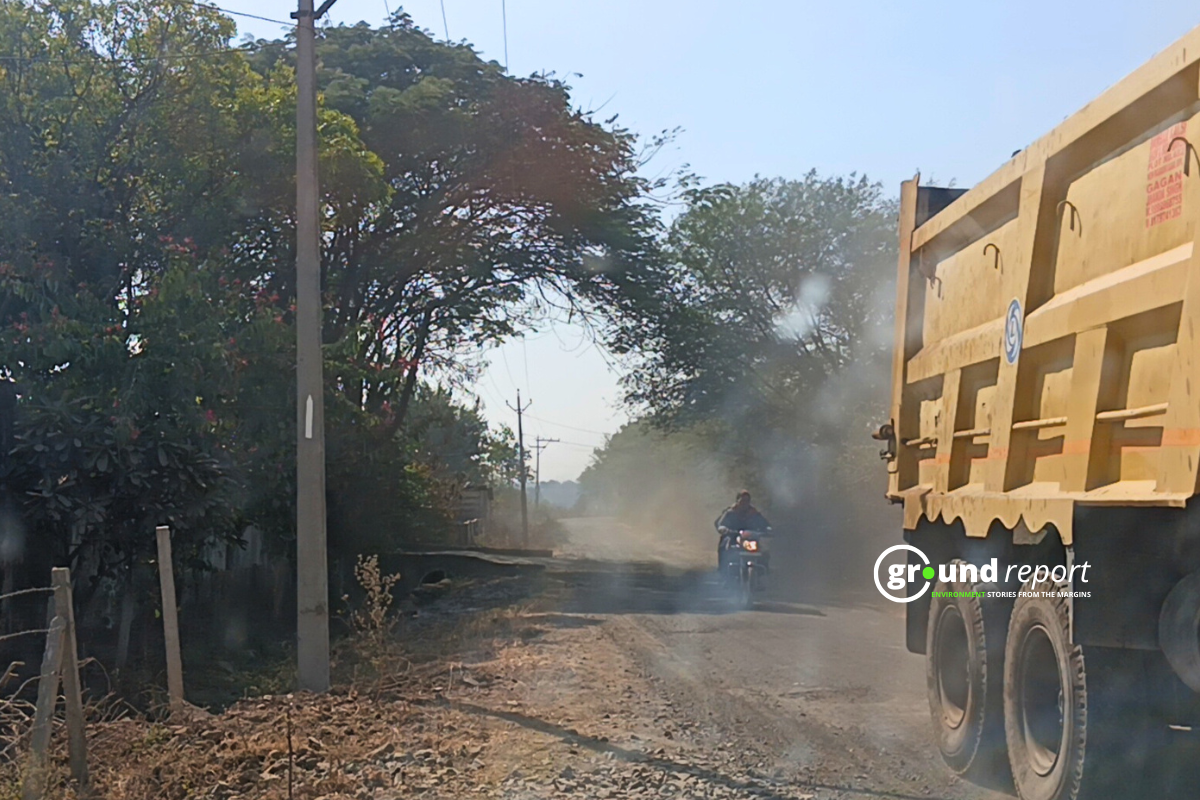
The tribunal identified multiple pollution sources. Stubble burning remains widespread in adjoining districts, with over 31,000 incidents reported in early 2025. Construction sites lack basic dust control measures. More than 13 lakh vehicles operate in Bhopal, many without valid pollution certificates. Open waste burning and landfill fires at Bhanpur add toxic smoke to the mix.
Bhopal’s geography worsens the problem. The city’s basin-like topography and winter inversion trap pollutants, leading to nighttime AQI levels exceeding 300-330. Visibility drops below 500 meters, causing widespread respiratory distress among residents.
The NGT criticized the state government for failing to adopt effective pollution control mechanisms. While Delhi-NCR follows a Graded Response Action Plan under Supreme Court directions, Madhya Pradesh has not implemented any comparable system. The tribunal stated this omission “violates the spirit” of Supreme Court directions and “defeats the national objective” of achieving air quality standards.
Who Will Fix It
The tribunal formed a joint committee comprising seven members. These include the Principal Secretary of Environment, representatives from the Ministry of Environment and the state pollution control board, officials from urban development and transport departments, and Dr. Ravi Prakash Mishra, former Additional Director of the Central Pollution Control Board.
The committee must submit a detailed factual and action-taken report within six weeks. The Madhya Pradesh Pollution Control Board will serve as the nodal agency for coordination.
The order requires the state to formulate a comprehensive Graded Response Action Plan similar to Delhi’s model. This plan must regulate pollution in all eight non-attainment cities. The state must also prepare a district-wise action matrix identifying all major pollution sources and assigning specific responsibilities and timelines to concerned departments.
The next hearing is scheduled for March 18, 2026. The tribunal’s intervention represents a significant judicial step toward establishing accountability in air pollution control. State authorities now face pressure to demonstrate concrete action plans and enforcement mechanisms to address what the tribunal called a chronic environmental crisis.
Support us to keep independent environmental journalism alive in India.
Keep Reading
Small Wild Cats in Big Trouble: India’s First National Report Released
After Tragedy, Families Face Delays in Tiger Attack Compensation
Stay connected with Ground Report for underreported environmental stories.