Shark Tank India, the reality show where aspiring entrepreneurs pitch their ideas to a panel of investors, is back with its third season. The show has seen some innovative and unique products and services, ranging from organic cosmetics to smart water purifiers. But one of the most surprising and impressive pitches came from Anish Malpani, the founder of Without (Ashaya), a brand that makes sunglasses from recycled chip packets.
He pondered two key thoughts: how to harness chip packets to create something impactful and how to positively impact the lives of the ragpickers collecting those very packets.
Driven by his determination to make a difference, he embarked on a journey to launch a startup named Without (Ashaya).
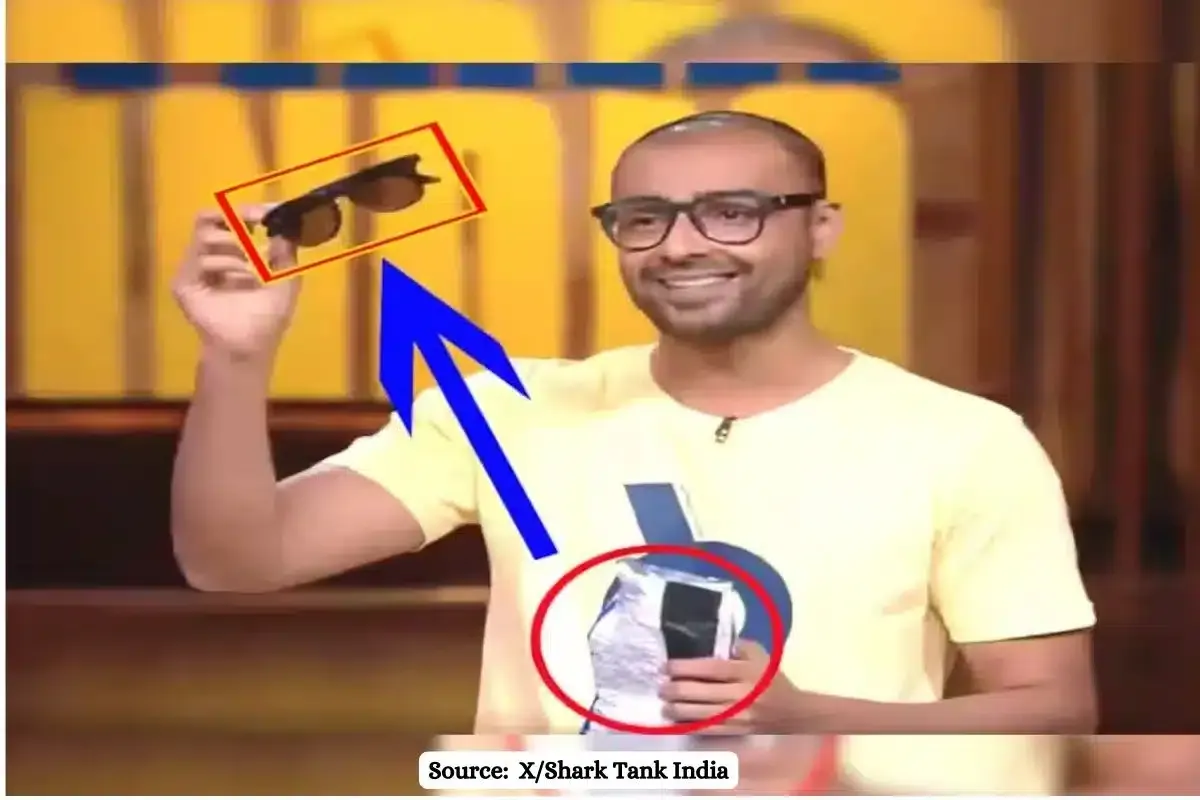
Stepping onto the Shark Tank India 3 stage, he nonchalantly snacked on chips, capturing the attention of the investors. Brandishing a pair of sunglasses, he boldly declared, “Behold, the world’s first sunglasses crafted from chip packets.” Intrigued, Shark Anupam Mital remarked, “Fascinating,” while Radhika Gupta queried whether this groundbreaking technology was a global first or an Indian innovation. Confidently, he affirmed his brand’s pioneering status on a global scale.
“This is the inaugural line of sunglasses crafted entirely from recycled chip packets,” he proclaimed, unveiling his brand to the panel. Aman Gupta, visibly impressed, commended the entrepreneur’s products.
Pitcher Anish Malpani proceeded to narrate to the Sharks the humble beginnings of his venture in Pune back in 2021, starting with just two desks, two chairs, a stirrer, and a solitary packet of chips. “He asserted that they fashioned his brand’s sunglasses from 100% recycled materials.”
Are potato chip bags recyclable?
Recycling facilities do not recycle potato chip bags because manufacturers make them from a combination of plastic and aluminium foil, making it difficult to separate and process them. Most recycling facilities reject chip packets because processing them requires special equipment and techniques. Furthermore, food residue often contaminates chip packets, decreasing their quality and value.
According to a report by the Central Pollution Control Board, India generated 3.3 million metric tons of plastic waste in 2018-19, of which 40% remained uncollected and littered the environment. Chip packets are one of the most common items found in landfills and oceans, as they are consumed widely and discarded frequently. A study by the Indian Institute of Technology estimated that India consumes about 15 billion packets of chips every year, which translates to 67,000 tons of plastic waste.
Chip packets are not only harmful to the environment but also to human and animal health. Toxic chemicals can be leached into the soil and water by them, marine life and birds can ingest them, and this can cause choking, starvation, and poisoning. They can also enter the human food chain through bioaccumulation, and pose risks of cancer, hormonal disruption, and reproductive disorders.
The Environmental Protection Agency conducted a study that shows only 9% of the plastic waste generated in 2018 was recycled, while 75% went to landfills, and incineration processes accounted for 16%. The University of California conducted another study, estimating that 8 million metric tons of plastic enter the ocean every year.
How Without (Ashaya) is doing this
Without (Ashaya) is a social enterprise that aims to solve the problem of chip packet waste by transforming it into fashionable and functional eyewear. The startup collects chip packets from various sources, such as schools, colleges, offices, and restaurants, and cleans them thoroughly. Then, they use a proprietary process to fuse the chip packets and cut them into frames. The frames are then fitted with lenses and hinges, and voila, a pair of sunglasses is ready.
The startup claims that each pair of sunglasses it produces prevents 20 chip packets from going to waste. In addition, the startup employs local women by involving them in the collection and cleaning process. They also price the sunglasses at an affordable rate of Rs. 999 per pair and come in various colours and styles.
Keep Reading
India’s rising semi-conductor industry: Vedanta-Foxconn Investment in Gujarat
How do you get a deal on Shark Tank India?
What is an e-passport, how to apply for it?
How many Sharks are killed every year?
Follow Ground Report for Environmental News From India. Connect with us on Facebook, Twitter, Koo App, Instagram, Whatsapp and YouTube. Write us on GReport2018@gmail.com and subscribe our free newsletter.
Don’t forget to check out our climate glossary, it helps in learning difficult environmental terms in simple language.