
An average person living in an Indian city inhales nearly three grams of plastic particles over their lifetime, researchers have discovered. That amount equals the weight of a small plastic bottle entering the lungs breath by breath.
The finding comes from the first study measuring inhalable microplastics at human breathing height in India’s busiest urban markets. Scientists collected air samples between November 2022 and March 2023 from Delhi, Kolkata, Mumbai, and Chennai.
“This research points to the anthropogenic plastic dust, caused by weathering of clothes and tyres, products that are a part of urban life,” Abhishek Biswas, researcher at the Environmental Nanoscience Laboratory at the Indian Institute of Science Education and Research Kolkata, who led the study told Mongabay India.
The research team included scientists from the All India Institute of Medical Sciences Kalyani, the Institute of Mathematical Sciences Chennai, and Homi Bhabha National Institute Mumbai. They published their findings in the journal Environment International.
What Makes These Particles Dangerous
Inhalable microplastics measure less than 10 microns in size. That makes them 500 times smaller than typical airborne microplastics. At this tiny scale, they can penetrate the nasal cavity and lodge deep inside the lungs.
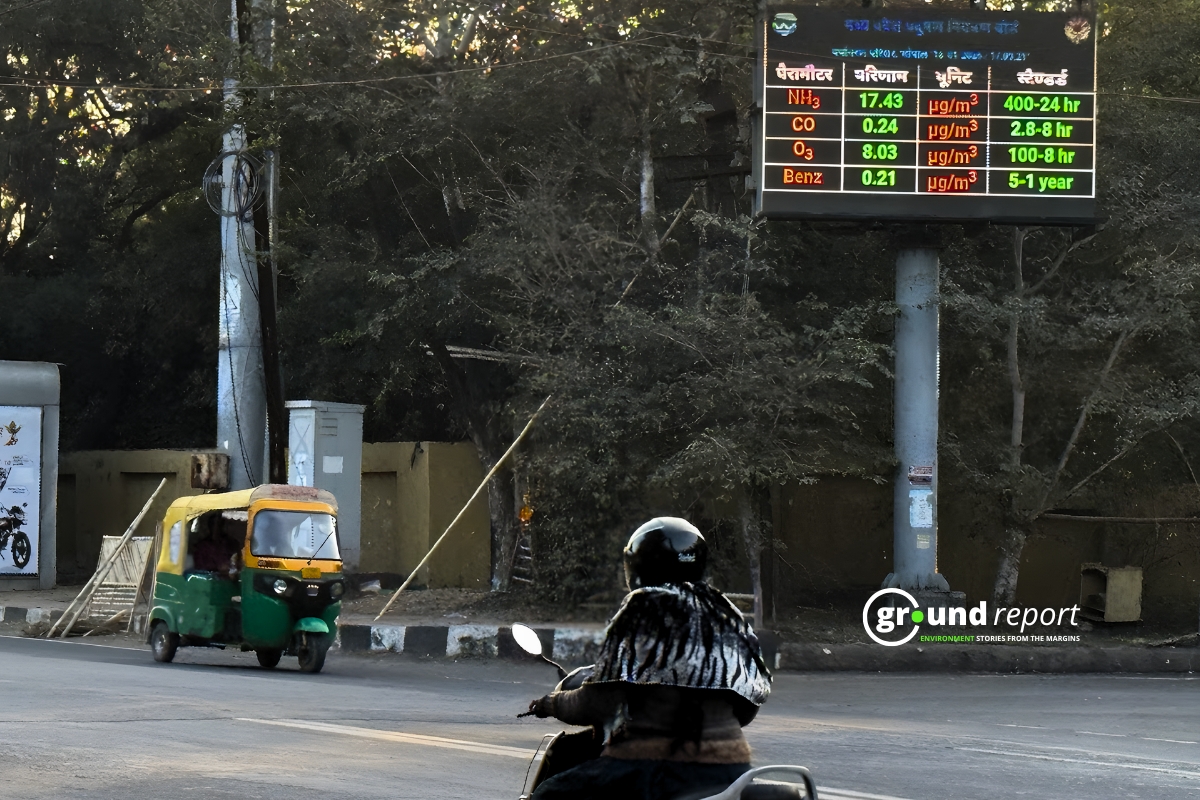
Air quality standards currently track PM2.5 and PM10, which are fine particles from dust, smoke, and fuel. But microplastics now account for up to five percent of these particulate pollutants in Indian cities, the study found.
“Microplastics are not yet included in air quality standards like PM2.5 and PM10, but their persistence and toxicity mean they should be,” Biswas said. “We urge policymakers to officially recognise inhalable microplastics as a new air pollutant.”
Martin Wagner, an ecotoxicologist at the Norwegian University of Science and Technology, called the research significant. “It is an important finding that microplastics are a significant part of air pollution,” Wagner said. “It is great seeing more studies on microplastics in the atmosphere, in particular from large cities with a lot of air pollution.”
Where the Plastic Comes From
The research team sampled air at human breathing height in five densely populated markets in each city. They used a Cascade Impactor instrument that mimics human inhalation, capturing particles at different sizes.
Kolkata showed the highest concentrations at 14.23 micrograms per cubic meter, followed closely by Delhi at 14.18 micrograms per cubic meter. Chennai measured 4 micrograms per cubic meter, and Mumbai recorded 2.65 micrograms per cubic meter.
Coastal cities showed lower levels likely due to stronger wind currents and smaller crowds compared to Delhi and Kolkata, researchers noted.
The scientists identified 11 types of plastic polymers in the air samples. The most common was polyethylene terephthalate, known as PET or polyester. This material comes mainly from synthetic clothing.
Other major sources included polyethylene from packaging, synthetic butadiene rubber from vehicle tires, and Nylon 66 from various products. “Most of these plastics come from synthetic clothing, packaging, vehicle tyres and footwear,” Biswas said.
Airborne microplastic concentrations increased by 14 to 71 percent during winter compared to summer. The rise links to winter clothing made from synthetic materials, poor waste management, and denser air near Earth’s surface during cold months due to temperature inversion.
Within a single day, the highest levels appeared in the evening when markets filled with crowds.
How Deep the Problem Goes
The study revealed a disturbing additional threat. These plastic particles act as carriers for other dangerous substances.
Samples collected from densely populated areas identified 28 “respirable emerging contaminants” transported by airborne microplastics. Five of these substances are classified as carcinogens. Nine act as endocrine disruptors. Seven damage the nervous system. Fifteen irritate skin, eyes, and respiratory passages.
“This cocktail of associated contaminants, including phthalates and heavy metals such as lead are linked to cancer, endocrine, cardiovascular, respiratory, neurological and reproductive diseases,” said Dr. Mahesh Ravikumar Jansari from the Department of Pulmonary Medicine at AIIMS Kalyani in West Bengal.
The plastic particles also harbor microbial communities. These include pathogens and bacteria carrying antibiotic-resistant genes.
“Once inside the lungs, some of the ultra-fine particles less than one micron can enter the blood stream and reach anywhere, even heart and brain,” Dr. Jansari explained. “While particles between 10 and 2.5 microns can cause irritation, the finer particles between 2.5 and 1 micron can reach inside lungs till alveoli and cause inflammation.”
Why This Matters for Public Health
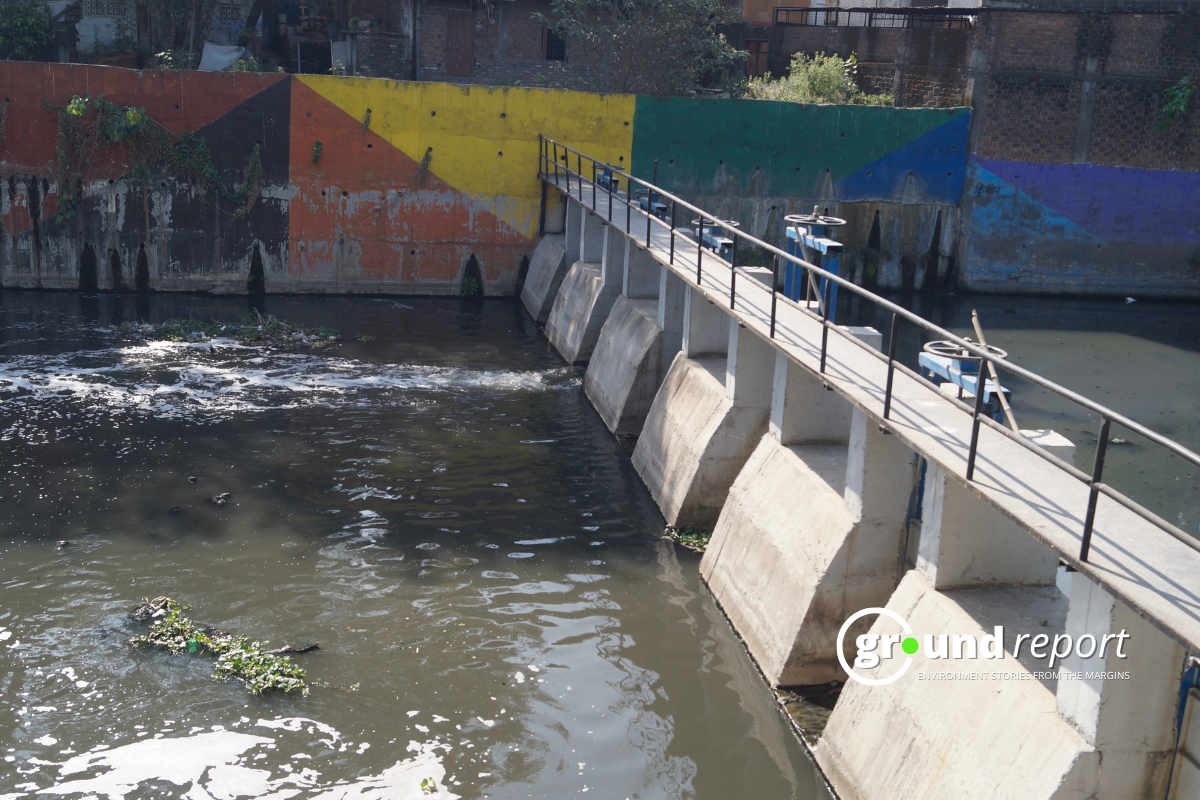
The microplastics problem extends beyond direct inhalation. Drains passing through markets contain water from washing synthetic clothes, which releases microplastics. These drains also carry microbes from fecal matter likely containing antibiotics people consume.
“This microbial growth latches on these microplastics because of their rough surface,” Biswas said. “Any disturbance in the atmosphere causes them to rise into the air and enter the human lungs while breathing and also be exhaled back in the same environment.”
Dr. Jansari warned about potential disease transmission. “Imagine a COVID-like situation where such pathogens can re-enter the environment via coughing or sputum, creating a feedback loop of human-to-air-to-human transmission in an already overburdened health system.”
Antibiotic-resistant genes on the microplastic samples raise additional concerns. “Microbes carried by inhalable microplastics possess enhanced pathogenicity and resistance against broad-spectrum drugs like tetracycline and are more likely to be multidrug-resistant,” the study states.
Rajeshwari Sinha, who leads the antimicrobial resistance programme at the Centre for Science and Environment in Delhi, found this aspect particularly troubling. “AMR is already something to be worried about,” Sinha said. “And as this study indicates, when we are inhaling microplastics, it is even more concerning as it adds to another pathway to the spread of antibiotic-resistant pathogens.”
What Can Be Done
Dr. Jansari advised wearing natural fibers and avoiding unnecessary synthetic fast fashion. He recommended not burning household or market plastic waste to reduce local generation of airborne microplastics.
“At community and policy level, we also need better market design and ventilation, and tighter control of traffic and tyre wear around dense commercial hubs besides stronger plastic waste management,” he said.
Richard C. Thompson from the University of Plymouth, a microplastic expert, emphasized the need for global action. “There is good evidence that microplastics from a range of sources are in the air we breathe,” Thompson said. “Confirming the presence of pathogens coating airborne microplastics is a logical extension of this, but evidence confirming their presence is of key importance.”
The study comes as international negotiations continue on a global plastic treaty. Wagner noted that some countries worry about economic impacts from plastic regulations.
“Such rules would actually promote a safer and more sustainable production and use of plastics, with massive benefits for health and the economy,” Wagner said.
Unlike dust, microplastics do not easily settle or wash away. Their light and aerodynamic shapes keep them floating for long periods. They can travel through the air to rivers and oceans, eventually returning through seafood and salt.
The research provides the first quantitative data on inhalable microplastics using advanced Pyrolysis Gas Chromatography-Mass Spectrometry. This technique can detect particles far smaller than previous methods allowed.
With over 80 million people living in the four megacities studied, the findings affect a massive population already dealing with some of the world’s worst air pollution.
Support us to keep independent environmental journalism alive in India.
Keep Reading
Small Wild Cats in Big Trouble: India’s First National Report Released
After Tragedy, Families Face Delays in Tiger Attack Compensation
Stay connected with Ground Report for underreported environmental stories.