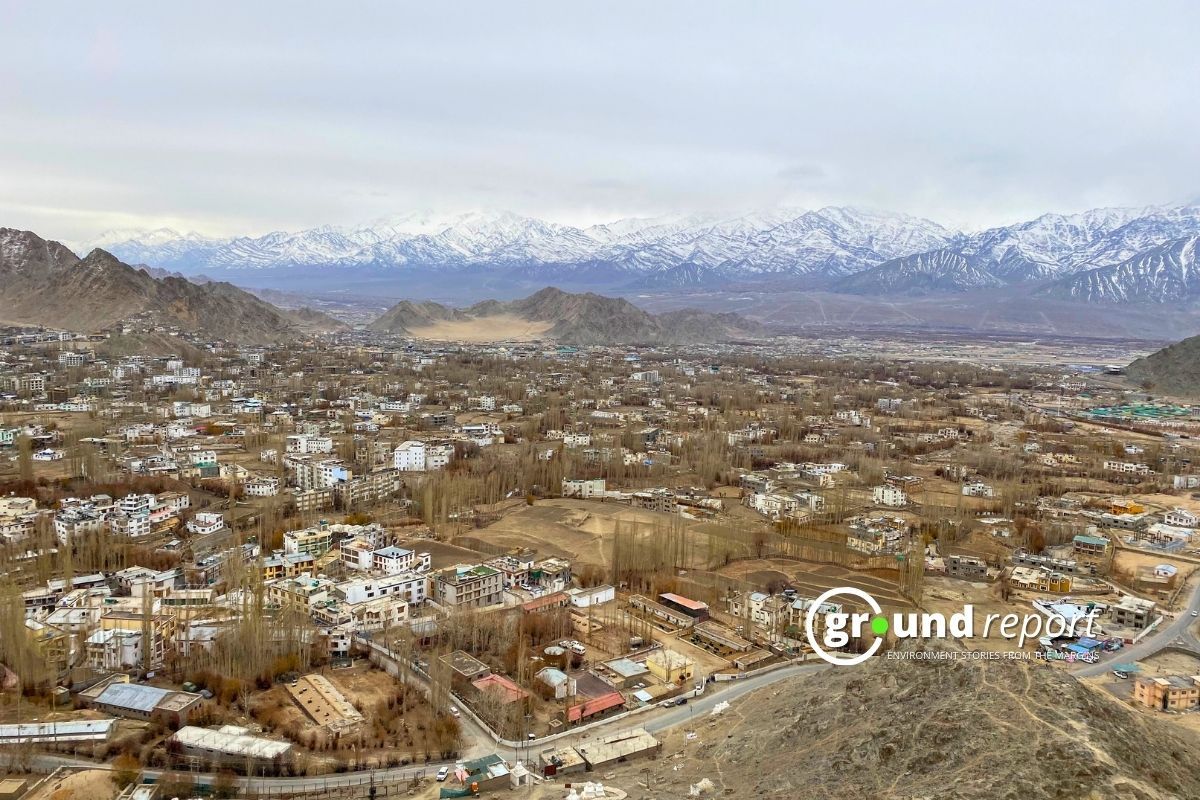
A high-level government panel has cleared 12 defence projects in Ladakh to boost India’s preparedness along the Line of Actual Control (LAC) with China.
The Standing Committee of the National Board for Wildlife (SC-NBWL), led by Union Environment Minister Bhupender Yadav, approved the plans after the Defence Ministry said they were vital for “operational preparedness” amid “increasing assertiveness of the People’s Liberation Army (PLA).”
Projects Across Fragile Ladakh Zone
The projects include a training node at Tara, an artillery battery in Leh, two formation ammunition storage facilities (FASF), a brigade headquarters at Chushul, and Indo-Tibetan Border Police (ITBP) outposts at Qazi Langar near Depsang.
These will be built within the Changthang Cold Desert Sanctuary and Karakoram Wildlife Sanctuary.
The committee also cleared an Army camp in Leh and a 158-meter permanent Pinjoli bridge on the Balipara-Charduar-Tawang Road inside Arunachal Pradesh’s Eaglenest Wildlife Sanctuary.
The bridge will support movement of troops and supplies in a sensitive border area.
The Defence Ministry said the training node at Tara is needed because most troops operate above 15,000 feet. The site will provide indoor and outdoor facilities for realistic high-altitude training near the Chushul sub-sector.
The approvals follow a series of defence upgrades after the 2020 Galwan Valley clash, which killed 20 Indian soldiers.
Since then, several strategic projects, including an aviation base, missile facilities, and key roads, have been cleared to boost troop mobility and readiness.
Caution Over Wildlife Impact
For two FASF sites, 24.2 hectares in Changthang Sanctuary and 47.1 hectares in Karakoram Sanctuary will be used. These areas host rare wildlife such as snow leopards, Tibetan antelope, and wild yak.
The Environment Ministry urged “utmost caution” to reduce ecological harm in the fragile cold desert.
Another key approval allows the Army to use 40 hectares in Changthang Sanctuary for a brigade headquarters at Chushul.
The ministry said it was necessary for better command and control since units under the 142 Infantry Brigade are deployed close to the LAC.
The new clearances show India’s steady focus on strengthening its defences along the LAC.
Support us to keep independent environmental journalism alive in India.
Keep Reading
Elephants Are Back in MP After a Century, But Can They Stay?
Solar Energy – A Paradigm Shift in Wildlife Conservation
Stay connected with Ground Report for underreported environmental stories.