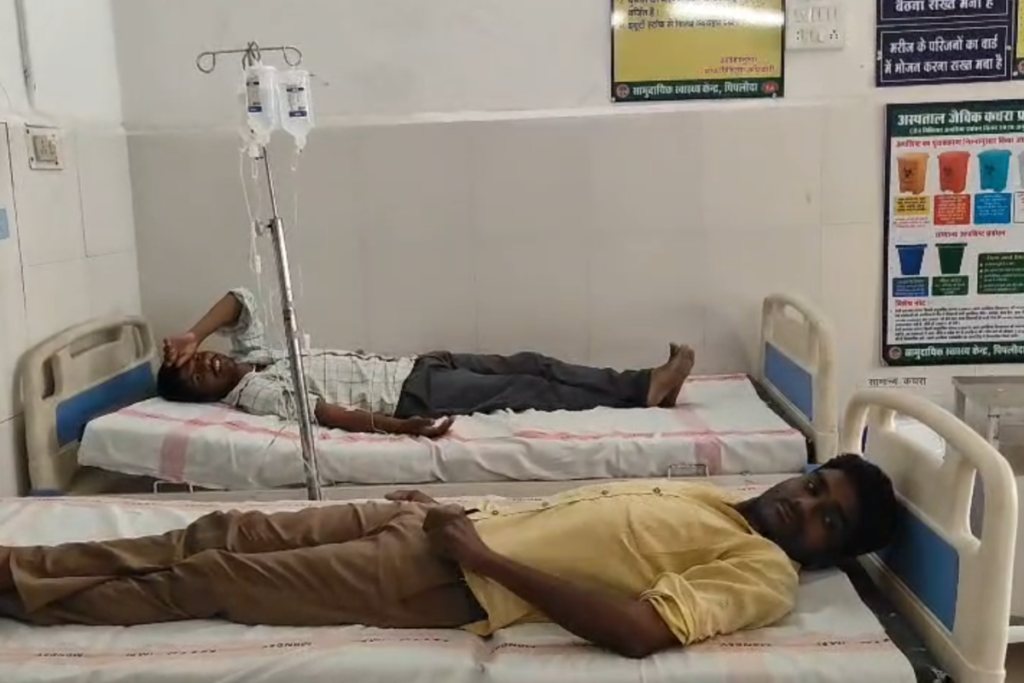
On July 15, Gopal Singh’s eight-year-old son began vomiting and was diagnosed with diarrhea. When home remedies failed to help, Gopal, who lives in Azampur Dodia village in Ratlam district, took him to a nearby clinic that afternoon. The boy received an injection and medicines before returning home.
By evening, two of Gopal’s nieces had also fallen ill. The next day, his wife developed the same symptoms. One after another, five of the family’s ten members started vomiting and suffering from diarrhea. What had first seemed like an isolated illness soon appeared to be something much larger.
According to Dainik Bhaskar, around 80 villagers fell ill on July 17 after drinking contaminated water. The Hindu reported that 21 people were admitted to hospital by July 18. Doctors later discharged all of them.
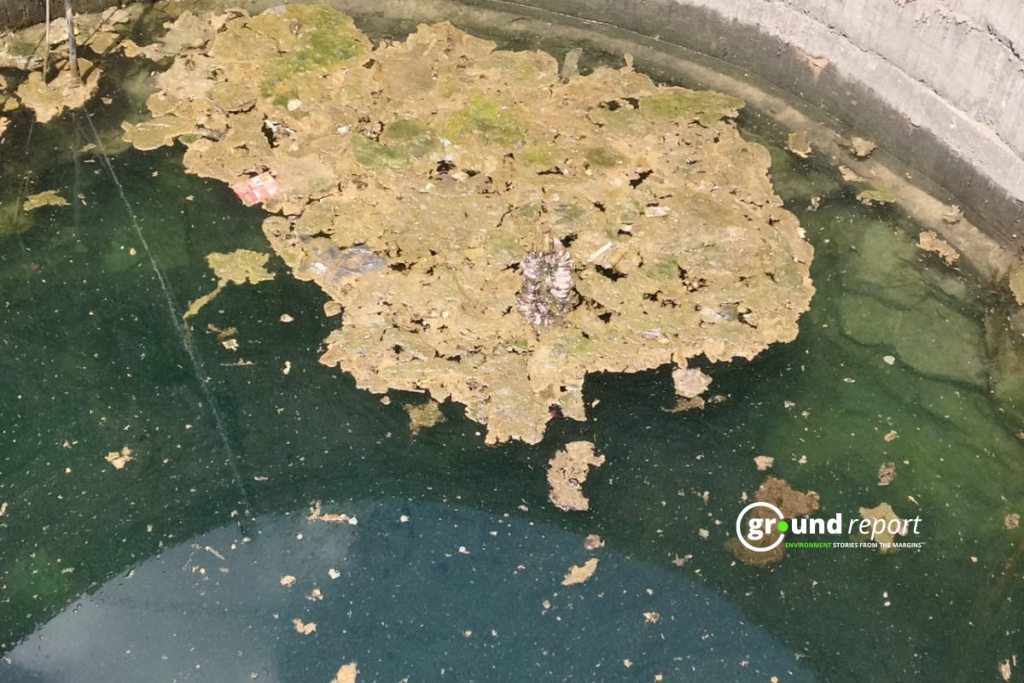
Villagers said Azampur Dodia depends on a single well for drinking water. They blamed the outbreak on years of neglect, and said that no one had cleaned the well. The village head denied any negligence.
After the incident, the panchayat began supplying water through tankers, while the district administration arranged an alternative drinking water supply. But villagers said only proper restoration of the well and the village pond would provide a lasting solution.
‘The well was never cleaned’
Gopal Singh, Nahar Singh and Pyar Singh are members of the village security committee. When people across the village started falling sick, they decided to investigate.
“We spoke to the affected families and found they had all drunk water from the well,” Gopal said.
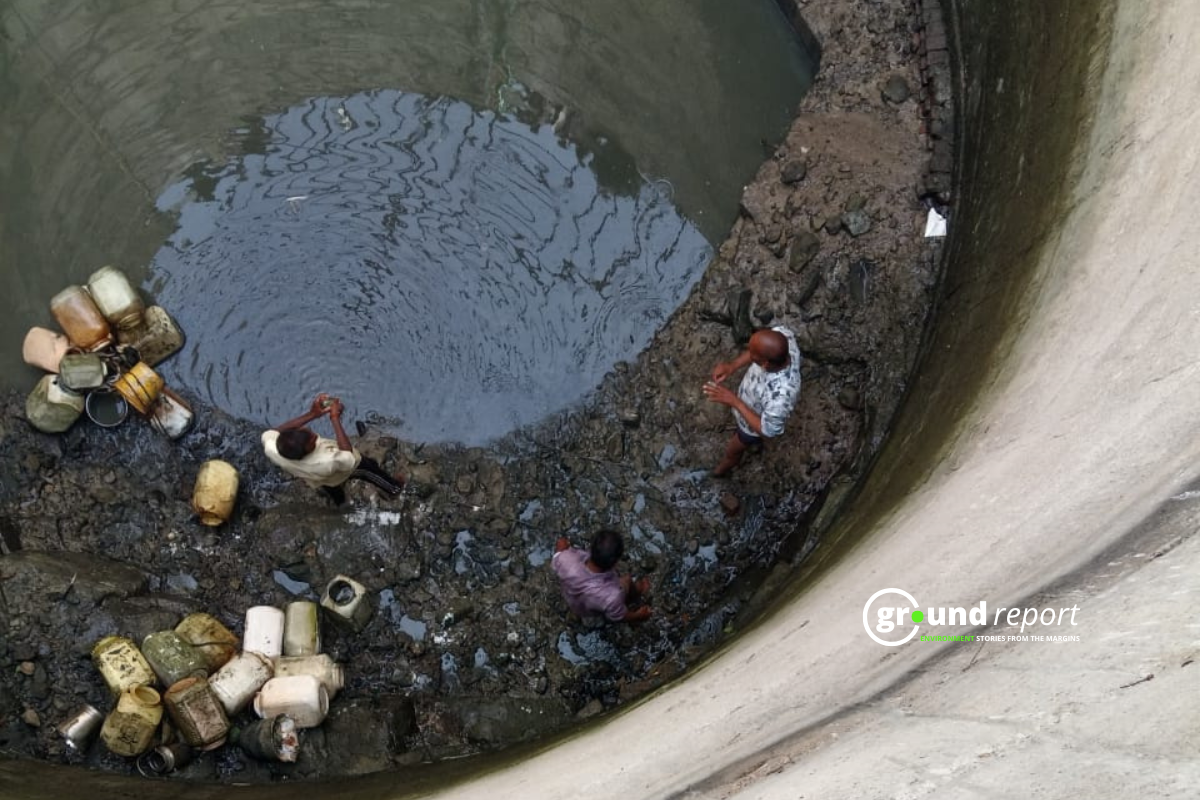
The three men emptied the well and climbed inside.
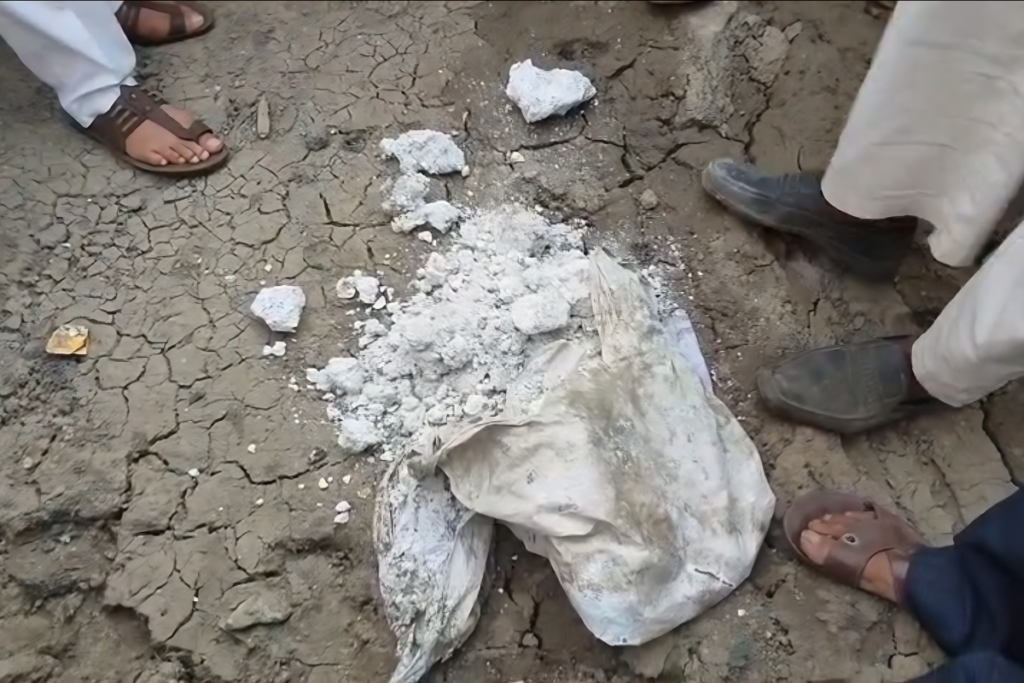
“There was a terrible smell,” Gopal recalled. While removing the sludge, they found bags filled with lime. “One bag weighed about a kilogram, and another was even heavier,” Pyar Singh said.
Gopal, 34, said he had never seen the well cleaned in his lifetime.
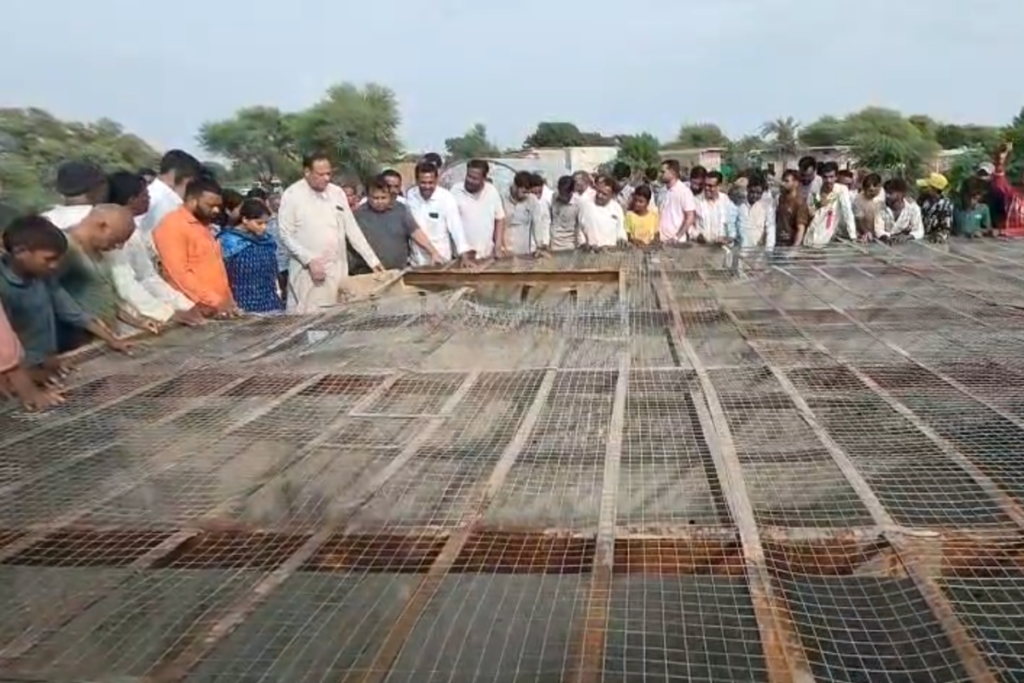
After the incident, local MLA Dr. Rajendra Pandey and Additional Collector Brijendra Rawat visited the village and ordered officials to test the well water.
A video with Ground Report shows villagers displaying the lime bags recovered from the well to the MLA, who appears to reprimand officials over their alleged negligence.
Dr. Pandey also directed officials to ensure an uninterrupted supply of clean drinking water through a tube well in Piplauda, about 10 kilometres away.
Fear of salty water
Nahar Singh, like many, said that years of neglect had contaminated the well.
The village households have tap connections under the Jal Jeevan Mission. But residents said that the supplied water is salty, so they use it only for washing and livestock.
The well, about 1.5 kilometres from the village, remains the only source of drinking water. A nearby pond once supplemented it, but a broken embankment has left it dry.
Azampur Dodia falls under Ayana Gram Panchayat. Sarpanch Samrat Mal said the Public Health Engineering (PHE) department tested the well about six weeks before the outbreak and declared the water safe.
“The officials gave us a report saying the water was fit for drinking,” he said.
Despite repeated requests, he did not share the report and later stopped responding to calls.
When asked why the well had never been cleaned, he said villagers feared it would turn the water salty. S.R. Jangde, Executive Engineer with Ratlam’s PHE department, acknowledged that groundwater in parts of Piplauda is saline, forcing many villages to rely on wells for drinking water.
PHE Executive Engineer S.R. Jangde rejected this, and said there is no scientific basis for the belief. Salinity depends on the groundwater aquifer and local geology, not on whether a well is cleaned.
Hydrogeologists say that cleaning a well removes accumulated silt and contaminants but does not alter the chemistry of the groundwater feeding it. Whether groundwater is fresh or saline depends largely on the local geology and the aquifer supplying the well.
Villager Govind said residents rely on tanker water.
Samrat Mal said a fresh water quality test found the well water fit for drinking. However, when asked to share the report, he said he would send it later. A week later, the reporter had still not received it. Since the initial conversation, Mal has not responded to the reporter’s calls or messages.
The village pond served as another water source until about five years ago, when its embankment collapsed.
Gopal Singh said villagers repeatedly asked the sarpanch and MLA to repair it, but no work was carried out.
Mal said the panchayat had submitted a proposal to the MLA and expected the pond to be restored soon.
What is the situation now?
Kiran Wadia, Ratlam’s Chief Medical and Health Officer, said no villager became critically ill.
Twenty patients received treatment at the medical camp set up at Civil Hospital in Piplauda on July 18. So far, 23 people have been treated there, and all have been discharged.
Jangde said officials are laying a pipeline from a neighbouring village to provide a permanent drinking water supply.
“The well water did not meet quality standards. We will supply drinking water through the pipeline instead. We have advised villagers not to use the well water,” he said.
The immediate health crisis has passed. But residents say the village still needs more reliable freshwater sources.
“If the pond’s embankment is repaired, we can once again depend on surface water,” Gopal said.
Support Us To Sustain Independent Environmental Journalism In India.
More Ground Reports
He Was Married as a Child, Now Manish Dangi Helps Stop It for Others
Despite The Ban, How Gutkha Became MP’s Most Common Household Habit