
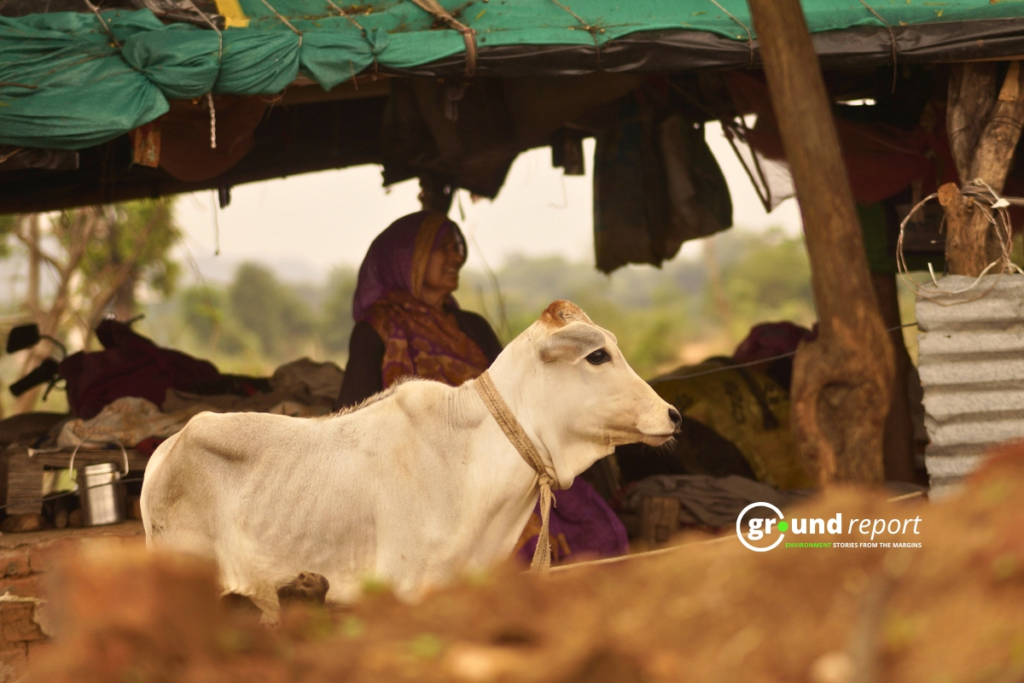
In Sandani Village of Madhya Pradesh’s Chhatarpur District, several families spent another monsoon living under tarpaulins. Nearly a decade after their land was acquired, they were still waiting for compensation. Preparations were underway to install solar panels in the village, about 350 km from Bhopal.
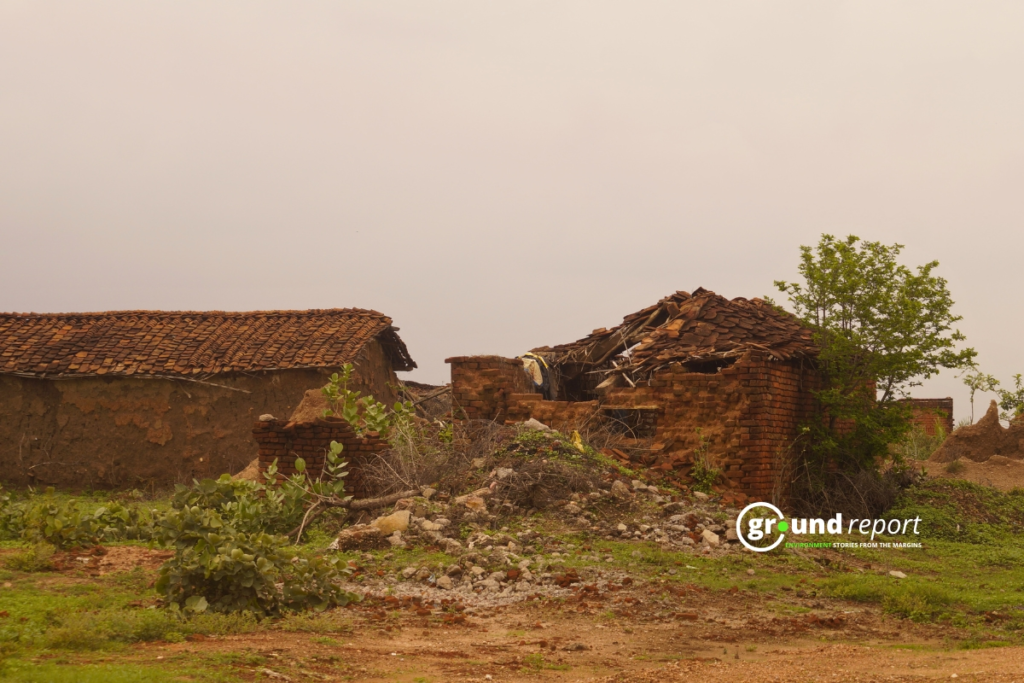
A pile of broken bricks marked the spot where Premlal Kushwaha’s house once stood. About two years ago, during the peak of summer, police cleared his house. Kushwaha’s mother still remembered that day.
“They (the police) told us to go and sit somewhere else,” she said. “Where were we supposed to go? Sit there and die in this heat?”
Since then, her family has been living under a tarpaulin while waiting for compensation.
Many affected families from this area had also joined the long-running protests against the Ken-Betwa river-linking project. But their own dispute—compensation delayed after the project shifted from a thermal power plant to a solar project—never received the same attention amid the larger movement.
Many families with Kushwahas in Sandani and Barethi villages of Rajnagar tehsil said they have waited more than a decade for full compensation. Their land was originally acquired for the proposed Barethi Thermal Power Project. That project was later scrapped. Now, NTPC’s renewable energy arm is developing a 630-megawatt solar park on much of the same land. Villagers said the project has changed, but their compensation dispute has not.
“Demolished our house without notice”
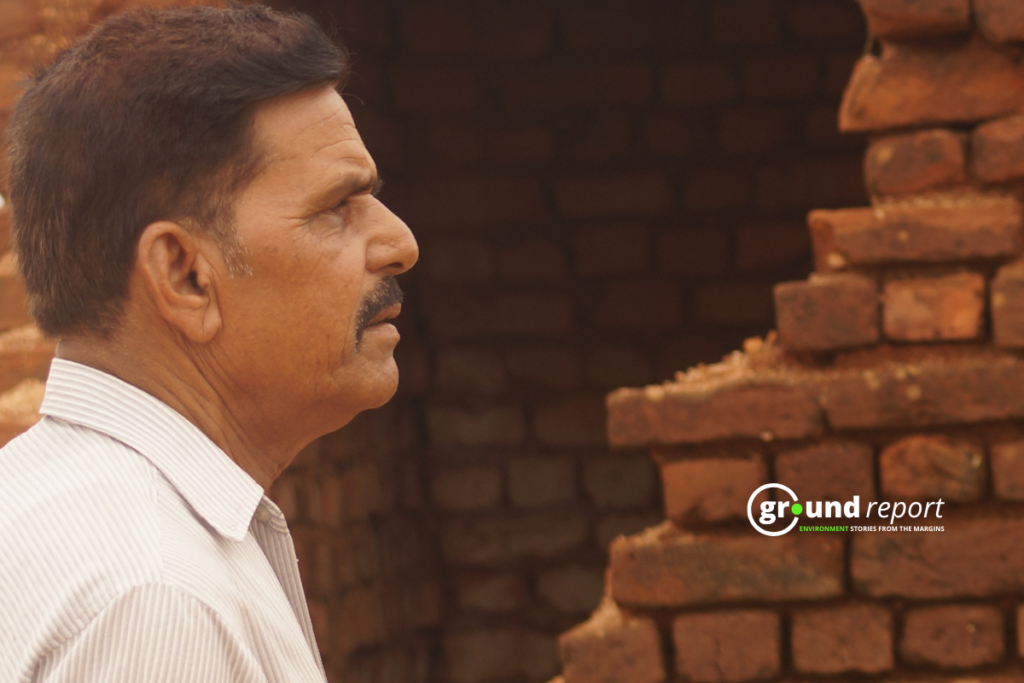
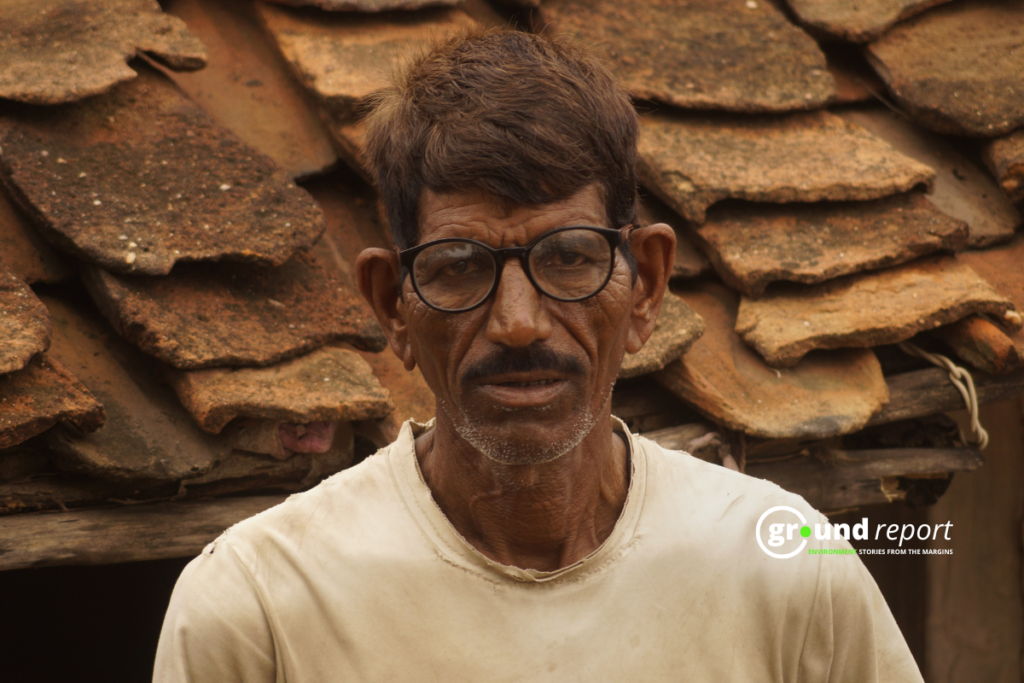
Forty-eight-year-old Premlal Kushwaha’s family of six lost land that had belonged to them for generations. He said that around 2010, the then collector and other officials held a village meeting, where they told residents the government needed the land for a major project that would bring development, schools, and jobs.
Kushwaha said he received about ₹7 lakh per acre for unirrigated land and around ₹9.75 lakh per acre for irrigated land. He believes he should have received much more under the compensation rules that came into force in 2012–13.
Ground Report reviewed an award dated 4 December 2012 (Case No. 82/2010–11) for Sandani village. The document shows that compensation was calculated using the notified guideline rates for 2011–12.
According to the award, irrigated land was valued at ₹7.04 lakh per hectare (about ₹2.85 lakh per acre), while unirrigated land was valued at ₹3.52 lakh per hectare (about ₹1.42 lakh per acre). The award also included a 30 percent solatium—compensation for emotional distress, grief, or mental suffering—and an additional 12 percent amount for the period between the notification and the award.
Ground Report also reviewed a separate compensation notice issued to Kamli, wife of Premlal Kachhi, a resident of Sandani village, for Khasra No. 99/1-kha (2.416 hectares). The notice approved ₹59,28,727.80 towards compensation for land, structures, and rehabilitation benefits.
Kushwaha, however, alleged that compensation for land under Khasra No. 98 remains unpaid. He also said he never received compensation for a well on the property.
Prem Narayan Tiwari, 55, said officials demolished his house about six weeks ago at around 11 p.m., while he and his family were sleeping elsewhere.
“If they had to demolish it, they should have called us and done it in front of us,” Tiwari said.
He alleged that although his land had irrigation through a well, revenue records classified it as unirrigated. According to Tiwari, a government inspection team later corrected the error through a panchnama, but he never received the revised compensation. His case has remained pending before the Chhatarpur Collector since around 2015.
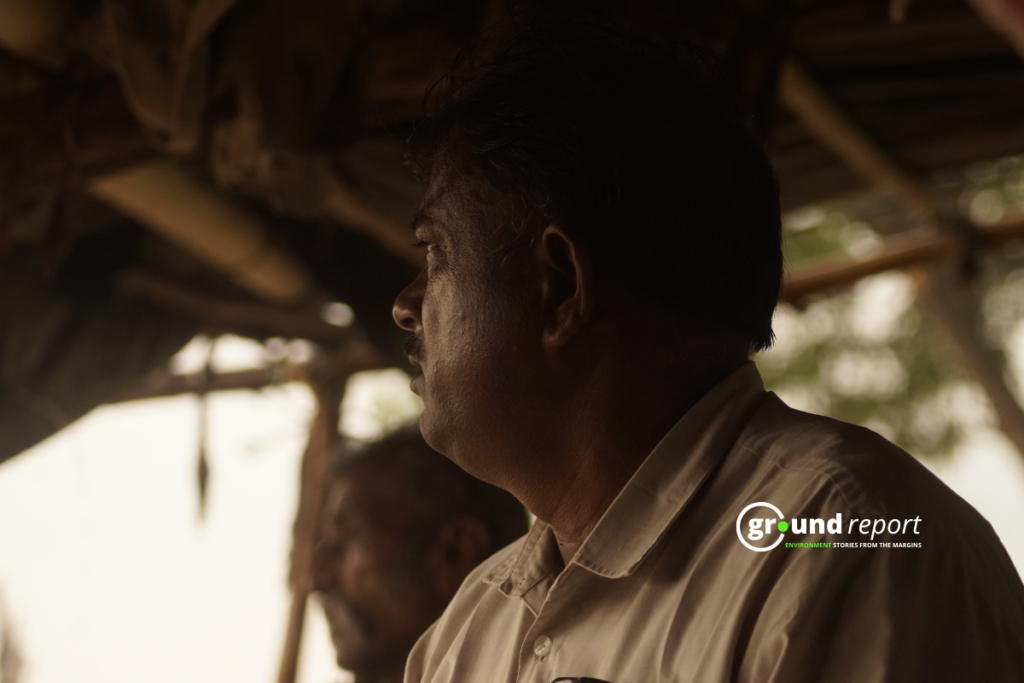
“Hearing dates keep coming, but no decision is ever made,” he said. “The compensation fixed back then is still what they tell us we’ll get today.”
He said land prices in the area had increased nearly tenfold over the past decade.
Responding to allegations of inadequate compensation and houses being demolished without notice, Chhatarpur Collector Parth Jaiswal said, “No house was demolished in Barethi village. Only agricultural land was acquired there.”
He added, “Compensation has been paid here since 2016. This is a ten-year-old issue. If anyone has a complaint, we will act on it.”
A project that changed course
Then Union Minister of State for Power Jyotiraditya Scindia laid the foundation stone for the Barethi Super Thermal Power Project on 3 March 2014. The proposed NTPC plant was to generate 2,640 megawatts of electricity from four 660-MW units.
According to a Business Standard report, the project was expected to cost between ₹17,000 crore and ₹18,000 crore. It was also linked to a proposed coal mine and was scheduled to become operational during the 13th Five-Year Plan (2017–22).
Tender documents on NTPC’s procurement portal show that the company continued to issue turnkey construction tenders for the thermal power plant until December 2014.
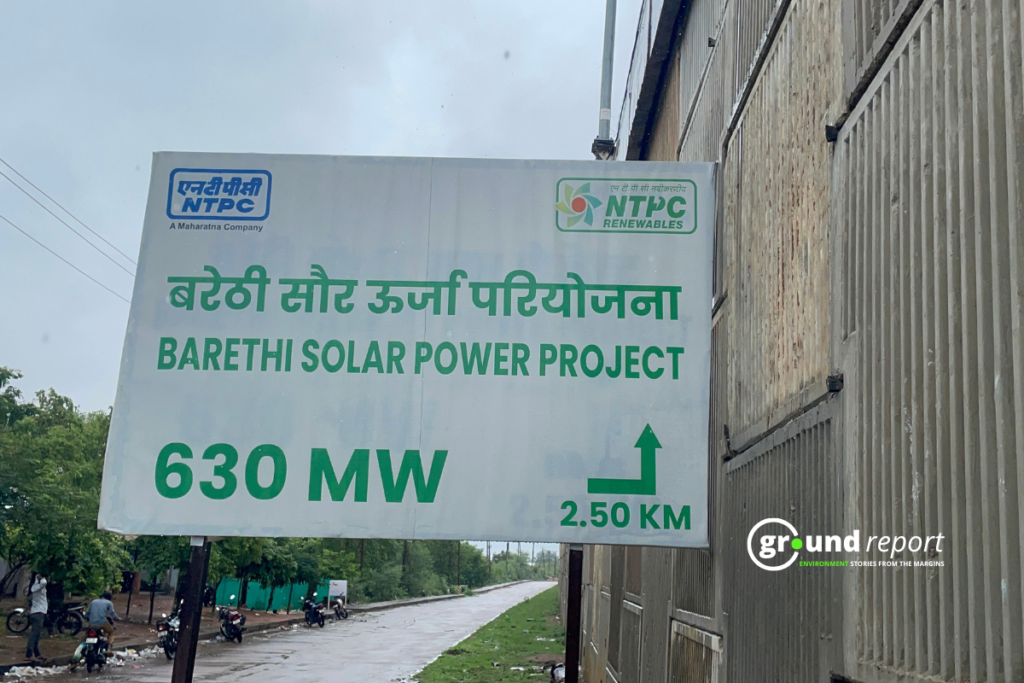
But by September 2015, the project had begun to lose momentum. Business Standard quoted then Madhya Pradesh Energy Minister Rajendra Shukla as saying the state was shifting its focus away from coal-based power projects because Barethi had not secured a coal linkage.
The Global Energy Monitor’s power plant tracker now lists the project as cancelled. It said the Central Expert Appraisal Committee deferred environmental clearance for the project in July 2016.
A new project arrives in Barethi
Nearly eight years later, on 10 March 2024, Union Power Minister R.K. Singh and Union Minister for Social Justice and Empowerment Virendra Kumar laid the foundation stone for a new project at the same site.
The new project was the 630-megawatt Barethi Solar Energy Project, being developed by NTPC’s subsidiary, NTPC Renewable Energy Limited (NTPC REL), at an estimated cost of about ₹3,200 crore. Tender documents on NTPC’s procurement portal show that the engineering, procurement, and construction (EPC) tender for the project was issued in November 2023.
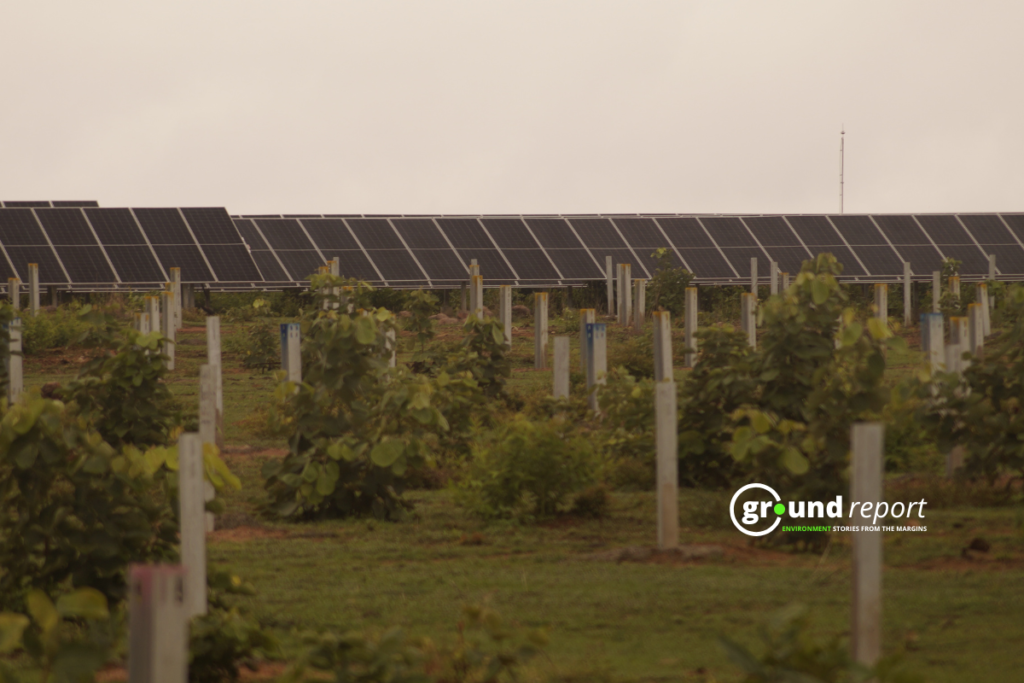
For villagers, however, the transition from a thermal power plant to a solar project created fresh uncertainty.
“We gave our land for NTPC’s thermal plant, and our agreement was with NTPC,” Kushwaha said. “Now this solar company says it has nothing to do with us.”
Social activist Amit Bhatnagar disputed that position.
“NTPC cannot walk away from the commitments it made to affected families a decade ago simply by citing a change in its corporate structure,” he said.
Asked whether the shift from the thermal project to the solar project had complicated pending compensation claims, Chhatarpur Collector Parth Jaiswal said, “No, nothing like that has happened.”
What the company’s own policy says
NTPC’s Rehabilitation and Resettlement (R&R) Policy, first adopted in 2005 and revised in June 2010 to align with the Centre’s 2007 National Rehabilitation and Resettlement Policy, sets out the categories of project-affected families and the benefits to which they are entitled.
These include cash compensation, a land-for-land option in specified cases, rehabilitation grants, temporary housing assistance, and priority employment for one member of each affected family, subject to qualifications and the availability of vacancies.
The policy also states that “employment opportunities at NTPC are quite limited” because the company’s projects are capital- and technology-intensive. It adds that unskilled jobs are filled in accordance with the government’s reservation policy.
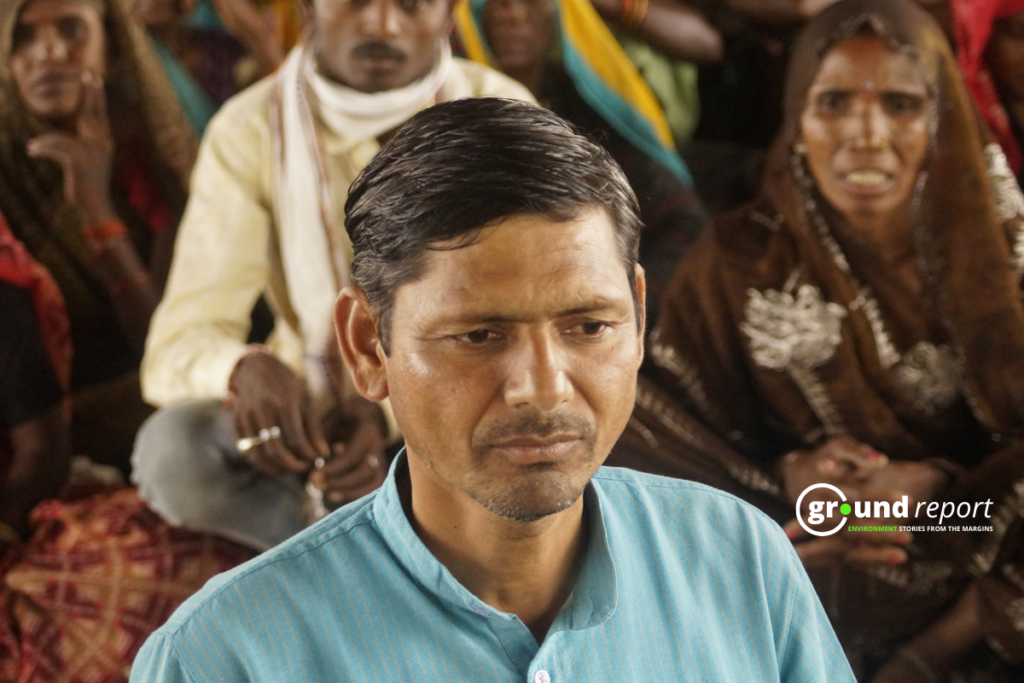
Kanhaiya Ahirwar claimed that the company had promised around 4,000 jobs for people from the two villages. However, Ground Report found no such commitment in NTPC’s written R&R policy.
The policy also distinguishes between land compensation and rehabilitation benefits—a distinction that many villagers in Barethi said they did not fully understand.
Under Clause 2.19(i), only fixed payments under the R&R package, such as annuities, rehabilitation grants, and other allowances, are indexed for inflation from the 2010 base year.
Compensation for acquired land, however, is determined separately under the Land Acquisition Act, 1894, which governed acquisitions made before 2013. It is calculated using the government guideline rate in force on the date the Section 4 notification was issued, not the prevailing market value at a later date.
To determine which guideline rate applied in Barethi, Ground Report reviewed the relevant collector’s award for Sandani Village. The document confirmed that compensation had been calculated using the 2011–12 guideline rates.
Social activist Amit Bhatnagar argued that affected families were also entitled to statutory interest under Section 34 of the Land Acquisition Act, 1894—9 percent for the first year and 15 percent for every subsequent year until payment.
The policy also provides for a formal grievance redressal mechanism. It establishes a Village Development Advisory Committee at the project level, while appeals may be made to NTPC’s zonal executive director, whose decision is treated as final under the policy.
None of the villagers interviewed by Ground Report, however, said this mechanism had helped resolve their cases.
Instead, they demanded that all pending compensation—including payments for homes they said were demolished without formal notice—be reassessed and paid at current rates. Only then, they said, should construction resume on the remaining land.
Support Us To Sustain Independent Environmental Journalism In India.
More Ground Reports
He Was Married as a Child, Now Manish Dangi Helps Stop It for Others
Despite The Ban, How Gutkha Became MP’s Most Common Household Habit