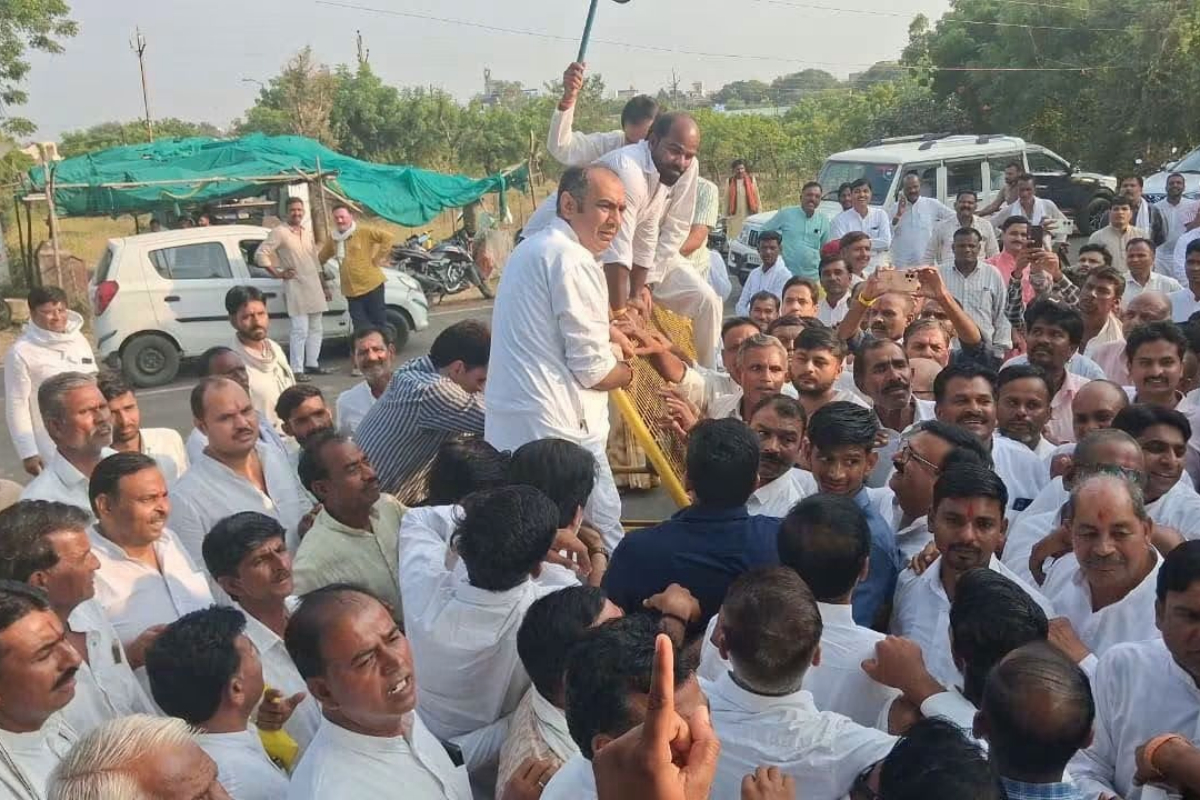
Four organisations working for victims of the Bhopal gas tragedy — the Bhopal Gas Peedit Mahila Purush Sangharsh Morcha, Gas Peedit Mahila Stationery Karmachari Sangh, Bhopal Gas Peedit Nirashrit Pensionbhogi Sangharsh Morcha, and Bhopal Group for Information and Action — alleged in a press release dated July 31, 2026, that the municipal corporation is supplying contaminated water to colonies around the defunct Union Carbide factory.
During a press conference, the organisations referred to Indore’s Bhagirathpura, where drinking water became contaminated because of a leaking sewage pipeline in December 2025 and January 2026. As a result, 110 people were hospitalised with complaints including diarrhoea and vomiting, while 17 people died in the incident.
Rachna Dhingra of the Bhopal Group for Information and Action alleged that despite repeated complaints, the municipal corporation had taken no action.
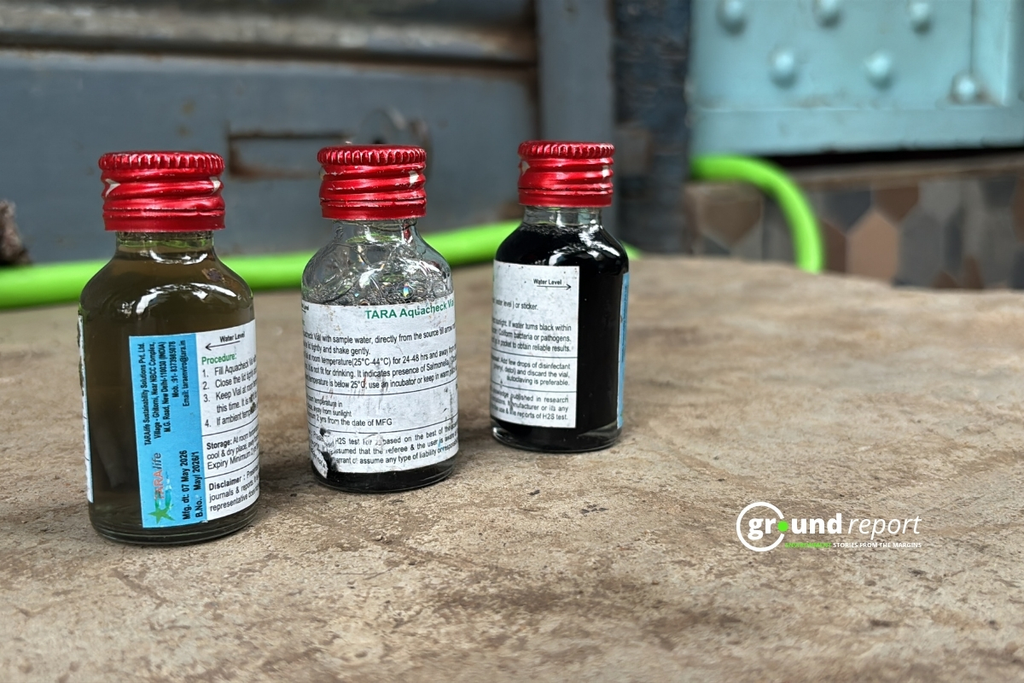
68% of samples found contaminated
The organisations subsequently decided to test the water themselves. Between July 2 and 22, 2026, they collected 63 water samples from 30 neighbourhoods.
The samples were tested using H₂S vial tests supplied by Tara AquaCheck. Of the 63 samples, 43 — around 68% — tested positive for sewage contamination, indicating the presence of faecal coliform bacteria.
According to Bureau of Indian Standards specifications (IS 10500:2012), drinking water should contain zero faecal coliforms and E. coli, meaning their presence is not acceptable.
Around 90% of the samples from areas supplied by Upper Lake and 25% of those supplied by Kolar Dam were found to be contaminated. Notably, samples from areas connected to the Narmada pipeline were found to be safe.
Why is the area particularly vulnerable?
A 2009 study by the Centre for Science and Environment found that groundwater around the Union Carbide factory had become heavily contaminated from toxic waste dumped by the factory. Later reports by the Indian Institute of Toxicology Research (IITR) also found levels of heavy metals such as lead, nitrate and nickel far above prescribed limits.
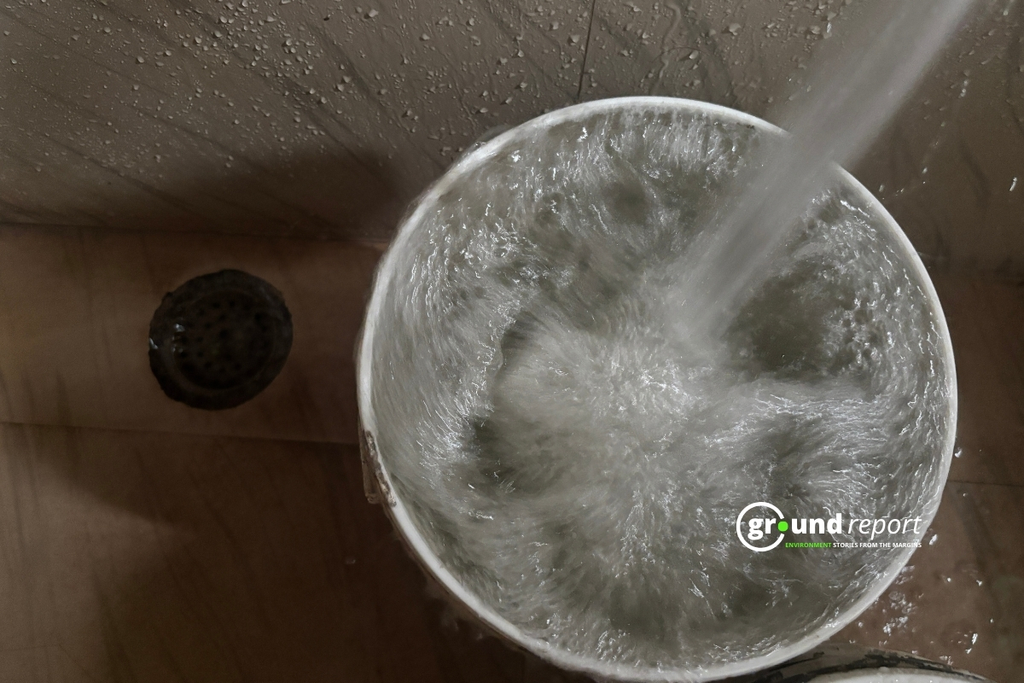
As a result, residents of these areas cannot depend on groundwater and are completely reliant on piped water. If the piped water is also contaminated, they have no other reliable source of clean drinking water.
Residents describe their experience
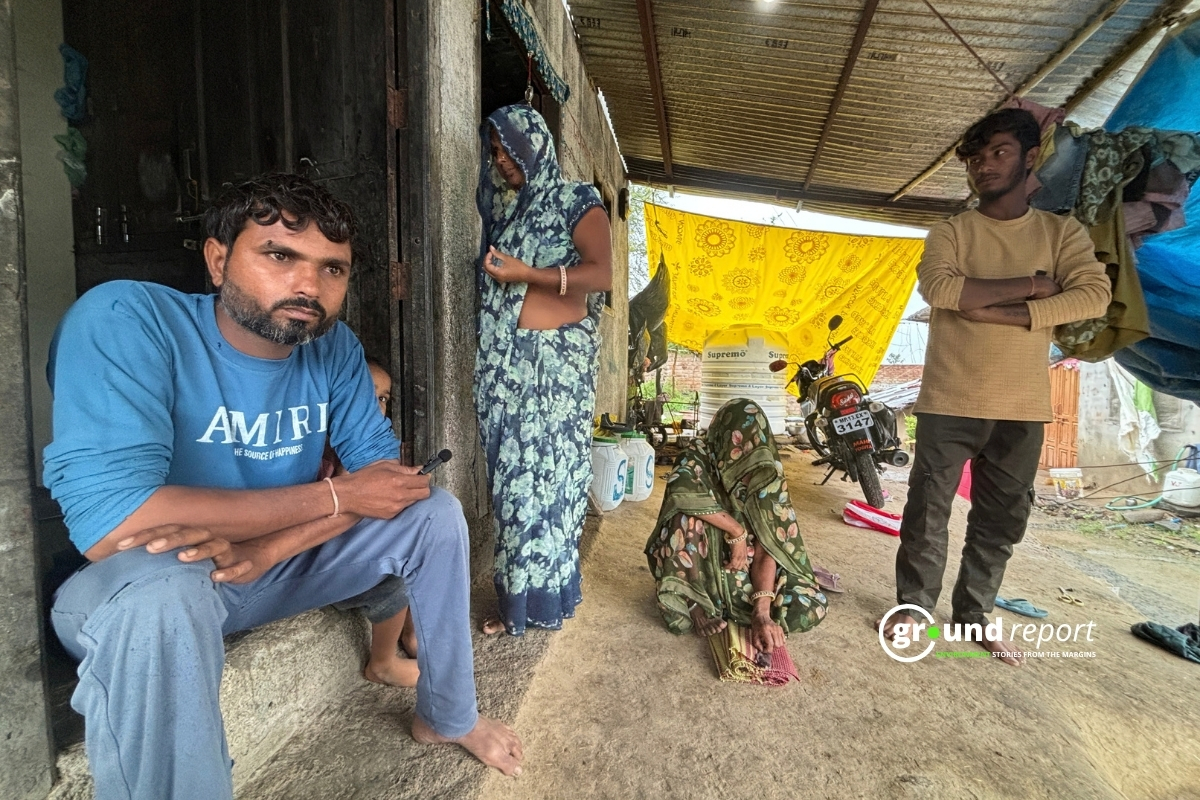
Ram Babu Saha, a resident of Shiv Nagar in Bhopal, said, “Initially, the water is completely black, so you cannot even fill it. It also smells. Even an animal would not drink it.”
Shakuntala Jaiswal, another resident of Shiv Nagar, said most families manage with a 15-litre container that costs Rs 20. The same water is used not only for drinking but also for cooking and washing vegetables.
Several residents, including Nisha Khan from Nawab Colony and Mushtaq from Bluemoon Colony, have complained of loose motions and stomach pain in recent days. The organisations say entire families have been affected by diarrhoea and vomiting, while cases of typhoid have also increased at private clinics.
Children face the greatest risk because the same water is used for cooking food and even boiling milk.
Why is this area so sensitive?
In 2004, the Supreme Court directed the Madhya Pradesh government to immediately provide clean drinking water to people living around the factory after groundwater was found to be contaminated with toxic chemicals.
In November 2012 and January 2013, the court again directed authorities to provide piped water to affected areas and ensure that sewage and drinking-water pipelines were kept separate. A monitoring committee was also constituted to oversee the process.
In 2018, after complaints of faecal contamination in piped water, the court directed the Bhopal Municipal Corporation to lay sewage pipelines in these areas and ensure proper drainage.
Dhingra said that even where pipelines have been laid, they often run close to drains and have not been properly maintained, allowing sewage to enter drinking-water pipelines. She said that residents have repeatedly received assurances that tenders have been issued and work would begin soon, but little has changed.
Nisha Khan said residents are being charged Rs 2,500 for a new water connection and Rs 242 per month, even though the water being supplied remains contaminated.
Meanwhile, according to the District Environment Plan, Rs 500 crore had been spent on improving the sewage network by 2024. Despite this, around 55% of Bhopal is still not connected to the sewage network.
What does the municipal corporation say?
Udit Garg, Superintending Engineer in the Bhopal Municipal Corporation’s Water Works Department, told Dainik Bhaskar that around 27,000 water samples had been collected this year and none had tested positive for faecal coliforms.
According to him, the allegations are baseless.
Ground Report also contacted Bhopal Municipal Commissioner Sanskriti Jain and Additional Commissioner Tanmay Vashishtha Sharma for their response, but they did not answer the calls.
The four organisations have asked the Supreme Court’s monitoring committee to immediately visit the area, conduct an independent investigation and strictly enforce its earlier orders concerning sewage and drainage.
They have also demanded action against officials who have failed to comply with the Supreme Court’s orders, saying this is necessary to prevent a situation like the one in Bhagirathpura from happening.
Support Us To Sustain Independent Environmental Journalism In India.
More Ground Reports
He Was Married as a Child, Now Manish Dangi Helps Stop It for Others
Despite The Ban, How Gutkha Became MP’s Most Common Household Habit