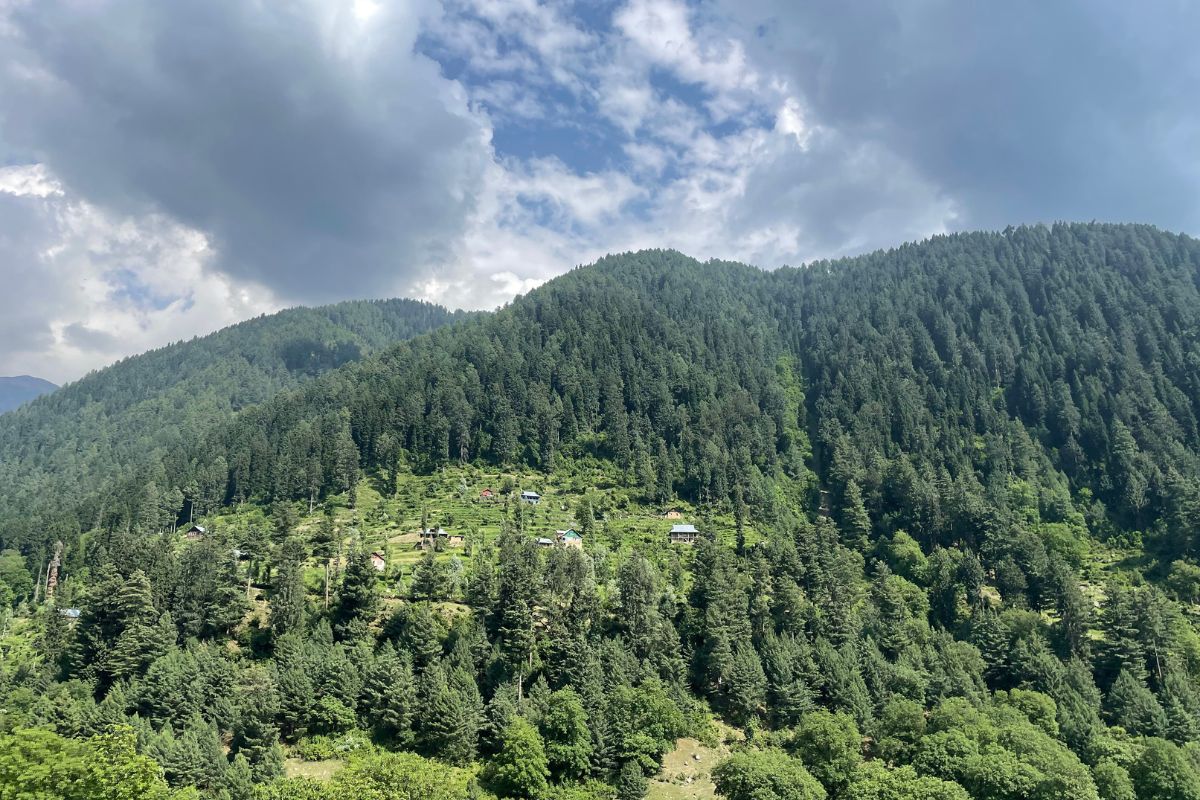
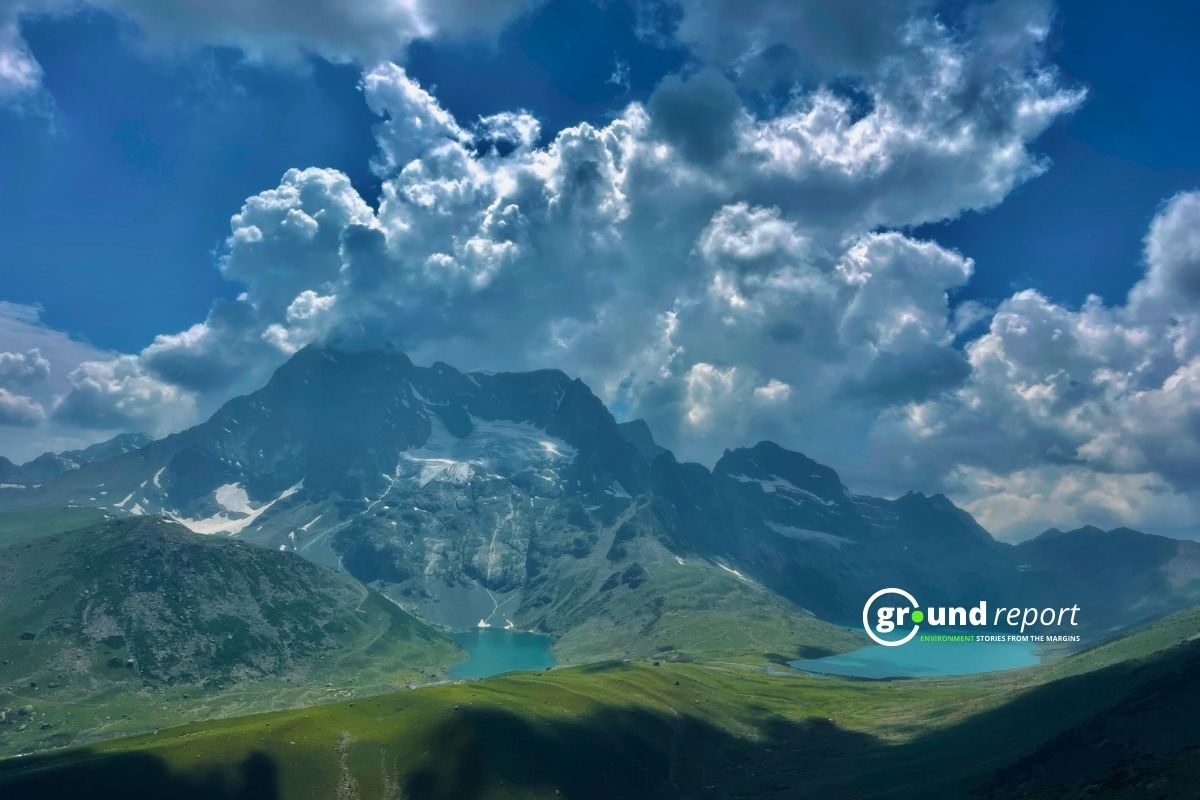
Every year, thousands of people trek to the seven Great Lakes of Kashmir, drawn by their pristine beauty and the towering glaciers that feed them. But beneath the surface of these alpine waters, a dangerous transformation is underway. The lakes are growing larger each year, swelling with meltwater from retreating glaciers. What was once a natural wonder is now becoming a potential disaster waiting to happen.
A new study has identified five glacial lakes in the Kashmir Himalaya that pose a very high risk of sudden, catastrophic flooding. Published in the Journal of Glaciology, the research warns that rising temperatures are creating conditions never before seen in the region. As glaciers melt faster than ever, water is accumulating behind fragile natural dams made of loose rock and debris. Scientists fear these dams could collapse without warning, unleashing walls of water that could wipe out entire communities downstream.
“This region has no recorded history of major glacial lake outburst floods, but the physical conditions are now becoming dangerously favourable,” said Irfan Rashid, an associate professor at the University of Kashmir and the study’s corresponding author.
Why This Is Happening
The threat is being driven by climate change. Researchers used satellite data and fieldwork to track how Kashmir’s glaciers are responding to warmer temperatures. They found that the Kolahoi glacier, the largest in the Jhelum Basin, is retreating rapidly. Other glaciers including Thajiwas, Hoksar, Nehnar, and Shishram are also shrinking.
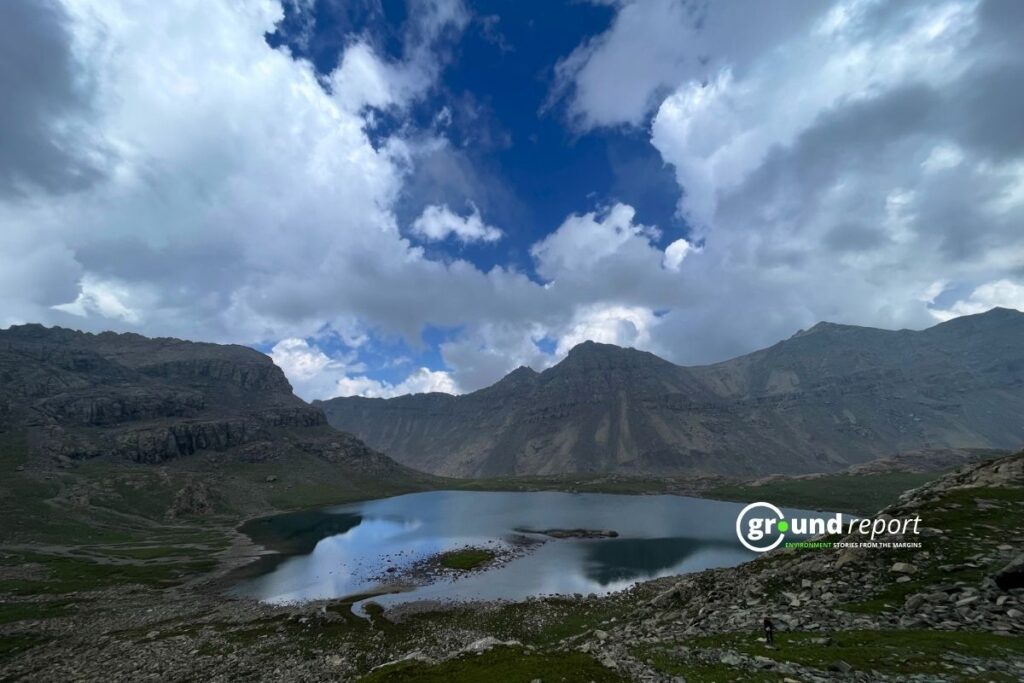
The study identified a troubling pattern. Winter temperatures are rising across the region. Snowfall has decreased significantly in recent years. These changes are causing glaciers to melt faster, creating new lakes or expanding existing ones at an alarming rate.
Between 1992 and 2024, ice-contact proglacial lakes in Kashmir expanded by 26 percent. This makes the region’s glacial retreat among the fastest in the entire Himalayan range.
“Lakes like Bramsar and Chirsar are ticking time bombs. They are glued to retreating glaciers and growing rapidly. We are witnessing an accelerating buildup of water in fragile glacial lakes high above our communities,” Syed Danish Rafiq Kashani, an assistant professor at the University of Kashmir and the study’s lead author told Greater Kashmir.
The research was conducted under a project sponsored by the Ministry of Earth Sciences. It was led by the Department of Geoinformatics at the University of Kashmir.
Where the Danger Lies
The study identified five specific lakes that require immediate attention. Bramsar and Chirsar lakes in Shopian and Kulgam districts threaten more than 400 buildings and five bridges. Bhagsar Lake in Shopian district puts over 1,100 structures and six bridges at risk. The hydrologically linked Nundkol and Gangabal lakes in Ganderbal district endanger more than 1,000 buildings, four bridges, and a hydropower plant.
Naranag village sits at the base of Mount Harmukh in Ganderbal district. It serves as the starting point for treks to the sacred Gangabal Lake. For generations, villagers have watched trekkers pass through on their way to the alpine waters above. Now they are learning those same lakes pose a threat to everything below.
“We have seen the lake growing over the years. Our elders say it was much smaller when they were young,” said Mohammad Yusuf Chopan, a local resident from Naranag who has been leading treks to Gangabal for over two decades. “Now scientists are telling us the water could break free and come down. Where will we go if that happens?”
The lakes sit high in the mountains, held back by moraine walls that were never designed to contain such large volumes of water. The natural dams consist of loose rock, gravel, and debris pushed into place by glaciers over centuries. As the lakes grow, the pressure on these walls increases. Any breach could send millions of cubic meters of water racing down narrow valleys toward villages like Naranag.
The danger extends beyond Kashmir. Similar conditions are developing across Ladakh and Himachal Pradesh. The Central Water Commission has noted that glacial lake expansion is a regional crisis affecting the entire western Himalaya.
“GLOF risk is currently concentrated in the central Himalaya, but it is projected to shift and triple towards the western Himalaya by the end of the century, putting Kashmir directly in the crosshairs of this escalating climate threat,” Kashani said.
How a Flood Could Unfold
The threat is not theoretical. In 2023, the South Lhonak Lake in Sikkim breached its dam, killing over 100 people and destroying critical infrastructure. That disaster demonstrated how quickly a glacial lake outburst flood can overwhelm communities.
Kashmir has been spared such events so far, but conditions are changing. The region sits in seismic Zone V, one of the most earthquake-prone areas in India. A seismic tremor could destabilize a moraine dam. So could heavy rainfall or a sudden surge of meltwater during a heat wave.
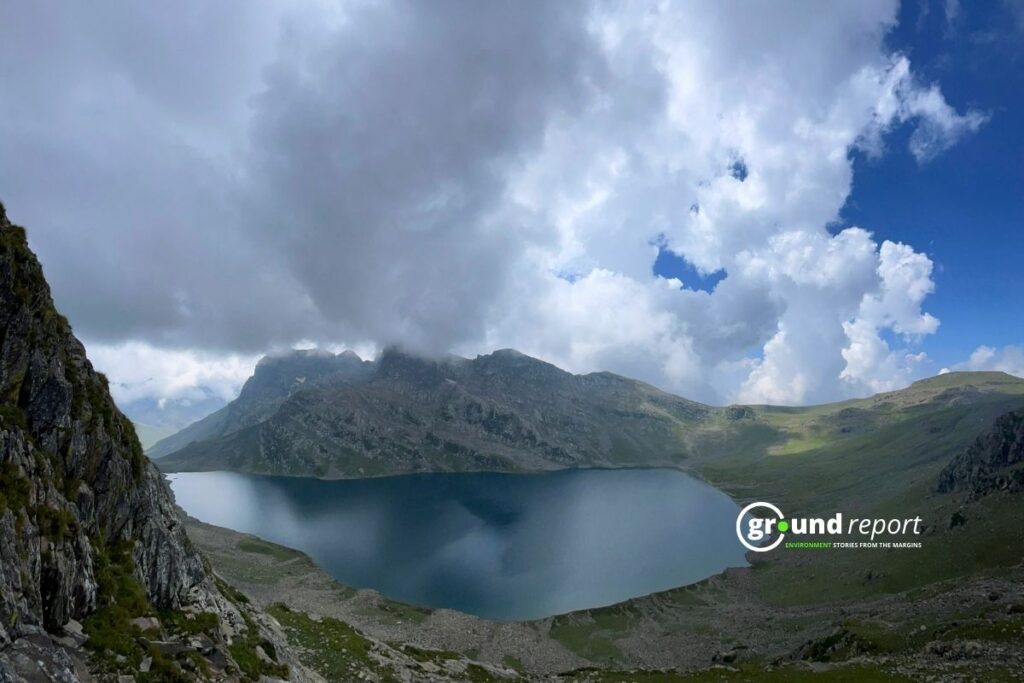
Rashid warned that a breach could trigger cascading disasters. As floodwater races downhill, it picks up boulders, mud, and debris. This transforms the flood into a destructive slurry capable of traveling for miles. Narrow mountain valleys offer little room for escape.
“A single breach could trigger multi-hazard cascades downstream,” Rashid said.
The floods that struck Kishtwar district during the 2025 monsoon killed dozens of people. While those floods were caused by heavy rain rather than glacial lake failure, they demonstrated how vulnerable mountain communities are to sudden surges of water.
Farooq Ahmad Khan, a shopkeeper in Naranag, remembers those floods well. His brother lives in Kishtwar and barely escaped with his family. “If the water comes from Gangabal, we will have even less time to run,” Ahmad said. “The valley is narrow here. There is nowhere to hide.”
Many of the valleys below Kashmir’s glacial lakes are lined with homes, roads, and hydroelectric projects. The hydropower sector provides much of the region’s energy but remains highly exposed to mountain hazards.
Experts recommended that all infrastructure downstream of high-risk lakes should be designed to withstand sudden floods. This is especially critical in the Chenab Valley, where several hydropower projects are already in operation.
What Needs to Happen Now
The research team is calling for urgent action. Scientists say identification of high-risk lakes is only the first step. What is needed now is continuous monitoring, early warning systems, and engineering interventions to stabilize the weakest dams.
“We have set a baseline. Now we need continuous monitoring, strategic action plans, and targeted interventions including real-time sensor networks, community alert systems, and engineering safeguards for high-risk lakes,” Rashid said.
The Jammu and Kashmir government has already taken initial steps. It has constituted a Focused GLOF Monitoring Committee to oversee mitigation efforts. The committee has identified 14 high-risk glacial lakes, three moderate-risk lakes, and seven low-risk lakes. Expeditions have been conducted to lakes including Sheeshnag and Sonsar to gather more data.
Union Home Minister Amit Shah reviewed the situation after floods struck the Jammu region in September 2024. He emphasized the need to strengthen early warning systems and called for better forecasting using data analytics and artificial intelligence. He stressed that the goal should be a “zero-casualty” approach.
The research team is working on a low-cost early warning system specifically designed for Himalayan glacial lakes. They also plan to conduct community-based workshops in vulnerable districts to raise awareness and improve preparedness.
Back in Naranag, villagers say they have heard promises before. Yusuf, the trekking guide, wants to see action that protects his community. “The government should install warning sirens in our village. They should tell us what to do if the lake breaks. We need a plan, not just more studies,” he said.
“This isn’t alarmism; it is evidence-based urgency,” Rashid said. “Kashmir has no recorded history of major GLOFs, but the physical conditions are now aligning dangerously. This study provides the actionable intelligence needed to shift from vague concern to precise prevention.”
The authors argue that climate change is transforming the Himalayan landscape faster than governments can respond. Proactive monitoring is no longer optional but essential for survival in high-altitude regions.
“As glaciers continue to retreat under prevalent warming, Kashmir’s majestic peaks are incubating a hidden hydrological hazard, one that science has now unmasked, and one that decision-makers can no longer afford to ignore,” Rashid said.
Support us to keep independent environmental journalism alive in India.
Keep Reading
Small Wild Cats in Big Trouble: India’s First National Report Released
After Tragedy, Families Face Delays in Tiger Attack Compensation
Stay connected with Ground Report for underreported environmental stories.