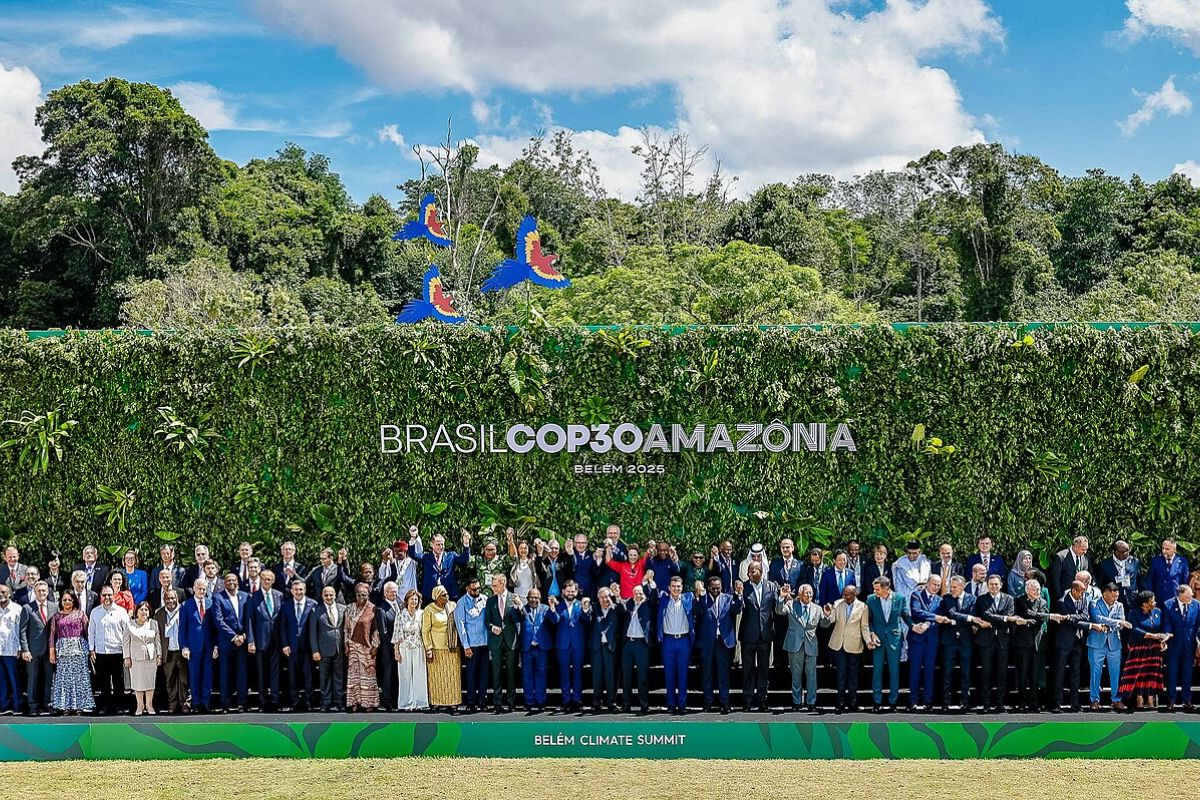
A group of twelve countries used the COP30 summit in Belem to launch a coordinated effort to address climate misinformation. The move came with the signing of the Declaration on Information Integrity on Climate Change, a joint pledge announced by the UNFCCC. It places accurate public information at the center of global climate action for the first time.
The declaration is part of the Global Initiative for Information Integrity on Climate Change, a partnership led by the UN with support from Brazil, UNESCO and other member states. The aim is to protect reliable climate data and rebuild public trust. The countries signing the pledge include Brazil, Canada, Chile, Costa Rica, Finland, France, the Netherlands, Nigeria, Spain, the United Kingdom, the United States and Vanuatu.
The idea behind the agreement is straightforward. Climate goals cannot advance if people are misled about causes, impacts or solutions. UN officials noted that a lack of trustworthy information weakens cooperation and fuels confusion. They also warned that online falsehoods have reached a scale that now affects climate policy across regions.
Rise of false climate claims
Reports from recent years show how misleading content spreads fast across major platforms. Investigations found that posts from well-known climate deniers often went unlabelled, allowing them to reach broad audiences. Some creators used language that appeared scientific to give weight to claims that conflict with established research.
This trend has pushed experts to call for clearer rules. UN statements pointed out that without reliable data, societies struggle to make decisions on energy, adaptation or global agreements. In many cases, the reach of false claims has outpaced efforts to correct them.
What the declaration sets out
The countries that signed the pledge agreed to strengthen cooperation on research, fact-checking and public education. They also committed to working with scientists, journalists, civil society and digital platforms to address misleading content linked to climate impacts.
The declaration highlights the need to support people who report or communicate science. Many face harassment for covering climate impacts or challenging claims spread online. The document places strong emphasis on the right to free expression and access to credible data, stating that these rights must be protected while tackling misinformation.
A turning point at COP30
The pledge is not legally binding, but it marks a turning point in global climate policy. It signals that the quality of information is now seen as a central factor in climate action, alongside finance and emissions reduction. The next test is moving from words to concrete steps.
Officials in Belem stressed that stopping false climate claims will require coordinated action. Governments will need clear monitoring systems. Platforms will need to address the spread of misleading content. Journalists and researchers will need stronger support when reporting on climate impacts.
Brazilian President Luiz Inácio Lula da Silva opened COP30 with a call to “defeat” climate deniers. He warned that groups rejecting scientific evidence put public trust at risk. UN Secretary-General António Guterres also raised the alarm before the summit, saying the world must “fight mis- and disinformation, online harassment and greenwashing.”
New research presented at COP30 pointed to a sharp rise in false content ahead of the summit. A joint study from Climate Action Against Disinformation and the Observatory for Information Integrity found a jump of more than two hundred per cent in misleading posts linked to COP30 topics between July and September. Researchers said these posts often framed the summit as a failure or a crisis.
Civil society groups responded with an open letter urging governments to support stronger action at COP30. Signatories included Paris Agreement architect Christiana Figueres, Laurence Tubiana of the European Climate Foundation, Climate Action Network International and 350.org. The letter described the global information crisis as a direct barrier to climate cooperation.
Commitments inside the declaration
The declaration lays out six core commitments. These include protecting free speech while improving access to accurate climate data, supporting independent reporting on environmental issues, building public capacity to identify false content and urging private companies to support reliable information in their business practices.
The text concludes with a call for shared responsibility. It states that countries must ensure societies have the facts needed to act with speed in the face of the climate crisis. So far, the pledge has been signed by Belgium, Brazil, Canada, Chile, Denmark, Finland, France, Germany, the Netherlands, Spain, Sweden and Uruguay.
Impact on people and public debate
Supporters of the initiative say the stakes reach beyond climate policy. Many communities depend on clear information to plan for rising temperatures, sea-level change or extreme weather. When false claims spread, local efforts can stall. Public trust in science can weaken. Political debate can turn tense.
For people on the frontlines of climate reporting, the pledge offers recognition. Journalists and researchers who track climate impacts often face threats for their work. The new initiative aims to protect them while expanding research in regions with limited resources.
As COP30 moves ahead, the focus turns to how countries will turn the pledge into action. The declaration places truth at the center of climate policy. The question now is how governments and institutions will carry that commitment into daily practice.
Support us to keep independent environmental journalism alive in India.
Keep Reading
Elephants Are Back in MP After a Century, But Can They Stay?
Solar Energy – A Paradigm Shift in Wildlife Conservation
Stay connected with Ground Report for underreported environmental stories.