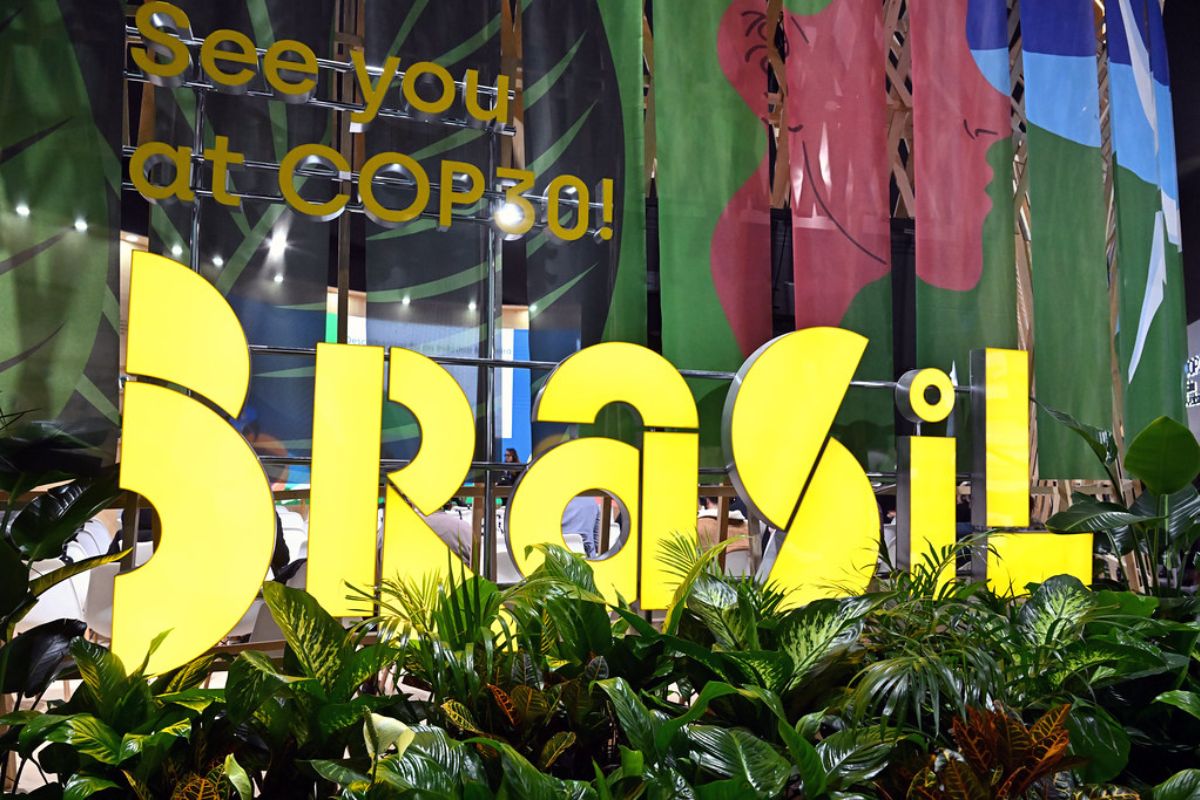
World leaders are meeting in Belém, Brazil, for COP30, the United Nations climate conference. The talks run from 10 to 21 November and are taking place in the heart of the Amazon, one of the planet’s most important carbon sinks. Delegates from nearly 200 countries will negotiate how to curb global warming, fund climate action, and help communities adapt to worsening disasters.
Brazil calls this year’s summit a “Global Mutirão for Sustainability,” using the Portuguese word for collective effort. The host country wants to make COP30 a meeting about cooperation and delivery, not just promises. With global temperatures already breaching 1.5C, the urgency is clear.
But after three decades of climate summits, progress remains uneven. Emissions are still rising, climate finance gaps persist, and key promises remain unfulfilled. Understanding the key terms shaping the talks can help explain what’s at stake in Belém.
Background: how we got here
The UN Framework Convention on Climate Change (UNFCCC) set the goal in 1992: avoid “dangerous” climate change. The Kyoto protocol in 1997 tried binding cuts for rich nations, but the United States never ratified it. In 2015, 195 countries signed the Paris Agreement, which set temperature limits and a system for national pledges. Those pledges, NDCs, are reviewed and strengthened over time through a “global stocktake.”
At COP28 in Dubai, countries agreed, formally, for the first time, to “transition away from fossil fuels.” That wording appears in paragraph 28 of the first global stocktake decision and is central to what negotiators now call the “UAE Consensus.” Expect it to shape debates in Belém.
COP
“COP” means the Conference of the Parties to the UNFCCC. COP30 is the 30th meeting and is taking place in Belém, at the mouth of the Amazon. André Corrêa do Lago, Brazil’s vice minister for climate, energy and environment, is presiding.
Mutirão
Past hosts have used traditional meeting formats to break deadlocks. Durban had “indaba,” Dubai a “majlis,” and Baku a “qurultay.” Brazil’s version is the “mutirão,” a Portuguese term for collective work rooted in Indigenous Tupi-Guarani usage. The presidency frames it as mobilising governments and civil society to act together.
Tropical Forest Forever Facility
Brazil is pushing a forest finance vehicle to pay countries and communities to keep forests standing. The aim is to raise as much as $125bn over time, with an initial public anchor and larger private flows. Pledges announced so far exceed $5.5bn, leaving a long way to go.
Global ethical stocktake
Brazil has commissioned an “ethical stocktake” alongside the technical stocktake under Paris. It asks whether climate policies serve the people with low-income, Indigenous peoples, and other marginalised groups. Regional dialogues fed into a report expected at COP30, focused on climate justice.
Loss and damage
“Loss and damage” covers climate impacts so severe that communities cannot adapt, such as catastrophic floods or storms. Countries agreed at COP28 to operationalise a new fund, initially hosted by the World Bank. Early pledges totalled in the hundreds of millions of dollars, far short of needs, but the fund has since named a first director, opening the door to disbursements.
Innovative finance
Developing countries say they need over a trillion dollars a year for climate action. Proposals on the table include fossil fuel levies, taxes on frequent flyers or shipping, repurposing harmful subsidies, and wealth taxes. Brazil has backed debate on billionaire taxes while pushing blended finance for forests. Expect heated talks on who pays, how much, and through which channels.
Mitigation
Within the UN process, “mitigation” means cutting greenhouse gas emissions. That includes replacing fossil fuels with renewable energy, improving efficiency, and curbing non-CO₂ gases. The COP28 decision also calls for tripling renewables and doubling efficiency by 2030.
Adaptation
The world has already warmed well above pre-industrial levels, and communities must adjust. Adaptation covers heat-resilient infrastructure, flood protection, drought planning, and health systems. A key task in Belém is agreeing on indicators to track progress toward the “global goal on adaptation.”
The UNFCCC, Kyoto and Paris, at a glance
UNFCCC set the framework in 1992. Kyoto tried binding caps for a subset of nations starting in 2005, but limited coverage hampered impact. Paris replaced that top-down model with universal participation and five-year cycles to lift ambition. The first stocktake under Paris concluded at COP28 and now informs national pledges ahead of COP30.
NDCs (nationally determined contributions)
NDCs are each country’s climate plan. They usually run to 2030 and include emissions targets plus policies to deliver them. Many current NDCs still fall short. Countries are expected to submit stronger ones aligned with the stocktake findings and the 1.5°C pathway.
1.5°C
Paris sets a dual goal: keep warming “well below” 2°C and pursue efforts to limit it to 1.5°C. UN Secretary-General António Guterres warned delegates that missing 1.5°C is “a moral failure and deadly negligence.” Scientific agencies report record heat in recent years, raising pressure for deeper cuts.
Net zero
“Net zero” means reducing emissions as far as possible, then balancing any leftovers by removing carbon through sinks such as forests or technologies. Critics warn some actors over-rely on offsets instead of real cuts. The stocktake language ties net-zero timelines to a broad energy transition away from fossil fuels.
IPCC
The Intergovernmental Panel on Climate Change assesses the science and informs negotiations. Its sixth assessment cycle found human-caused warming “unequivocal” and warned that some changes are irreversible. Those findings underpin calls to align NDCs with the 1.5°C pathway.
Methane and other short-lived climate pollutants
Methane traps far more heat than CO₂ over 20 years but lasts for decades rather than centuries. Cutting leaks from fossil fuel systems and emissions from agriculture can deliver near-term cooling benefits. SLCPs also include hydrofluorocarbons and soot, which warm strongly. Rapid action on these pollutants is a focus for many countries in Belém.
Carbon offsetting
Offsets aim to balance emissions by funding reductions or removals elsewhere, from forest protection to clean cooking. Scrutiny has grown over credit quality and permanence. Negotiators continue to work on Paris Agreement rules for carbon markets under Article 6.
UAE Consensus and paragraph 28
The COP28 outcome, known as the UAE Consensus, urges countries to transition away from fossil fuels “in a just, orderly and equitable manner” and to accelerate action this decade. That phrasing, captured in paragraph 28 of the stocktake decision, will shape discussions in Belém on fossil fuels, renewables, and efficiency.
Why this matters to people
Talks in Belém are not only about targets. They affect flood defences in river towns, heat-safe homes in cities, and farm security in drought-prone regions. Finance decisions will determine how quickly communities rebuild after disasters and whether frontline groups share in the benefits of clean energy growth.
“Global emissions are now trending lower than once projected,” said Dr. Alexis Abramson of Columbia Climate School, “but we remain off course from meeting our climate goals.” ABC News
UNEP’s Inger Andersen added: “Proven solutions already exist… From the rapid growth in cheap renewable energy to tackling methane emissions, we know what needs to be done.”
Support us to keep independent environmental journalism alive in India.
Keep Reading
Elephants Are Back in MP After a Century, But Can They Stay?
Solar Energy – A Paradigm Shift in Wildlife Conservation
Stay connected with Ground Report for underreported environmental stories.