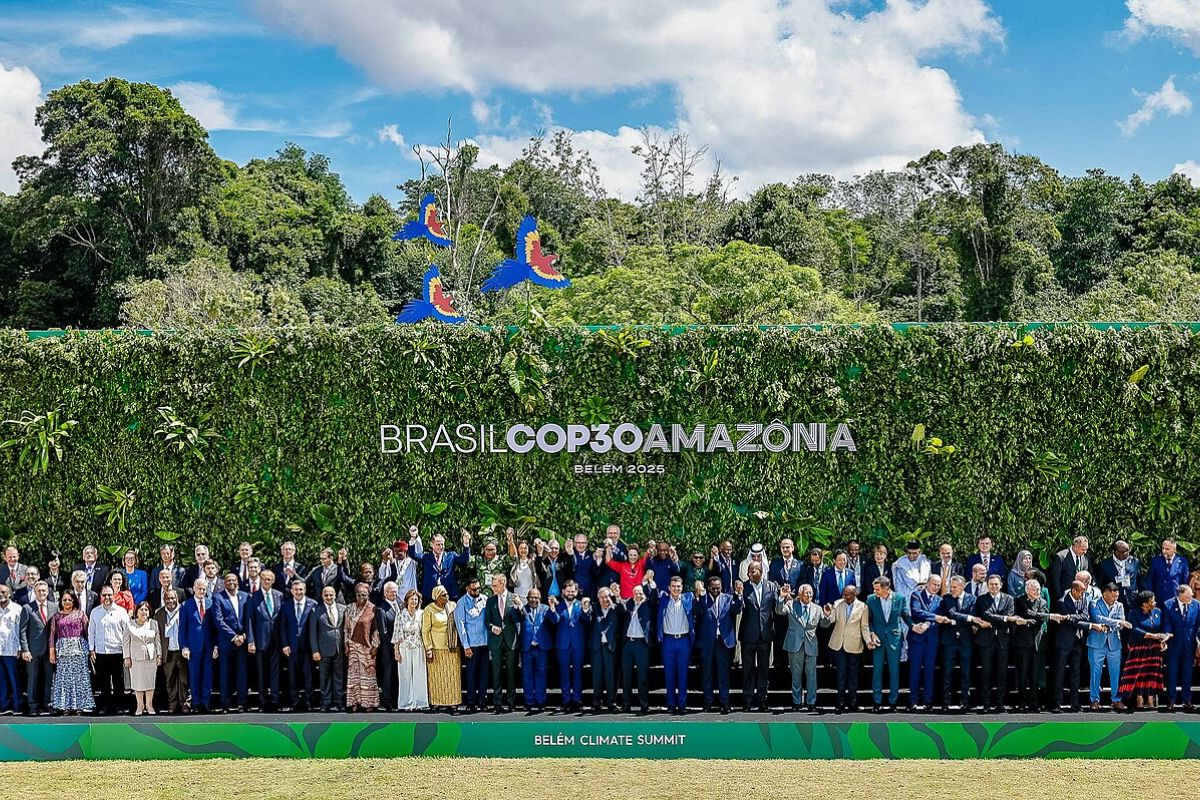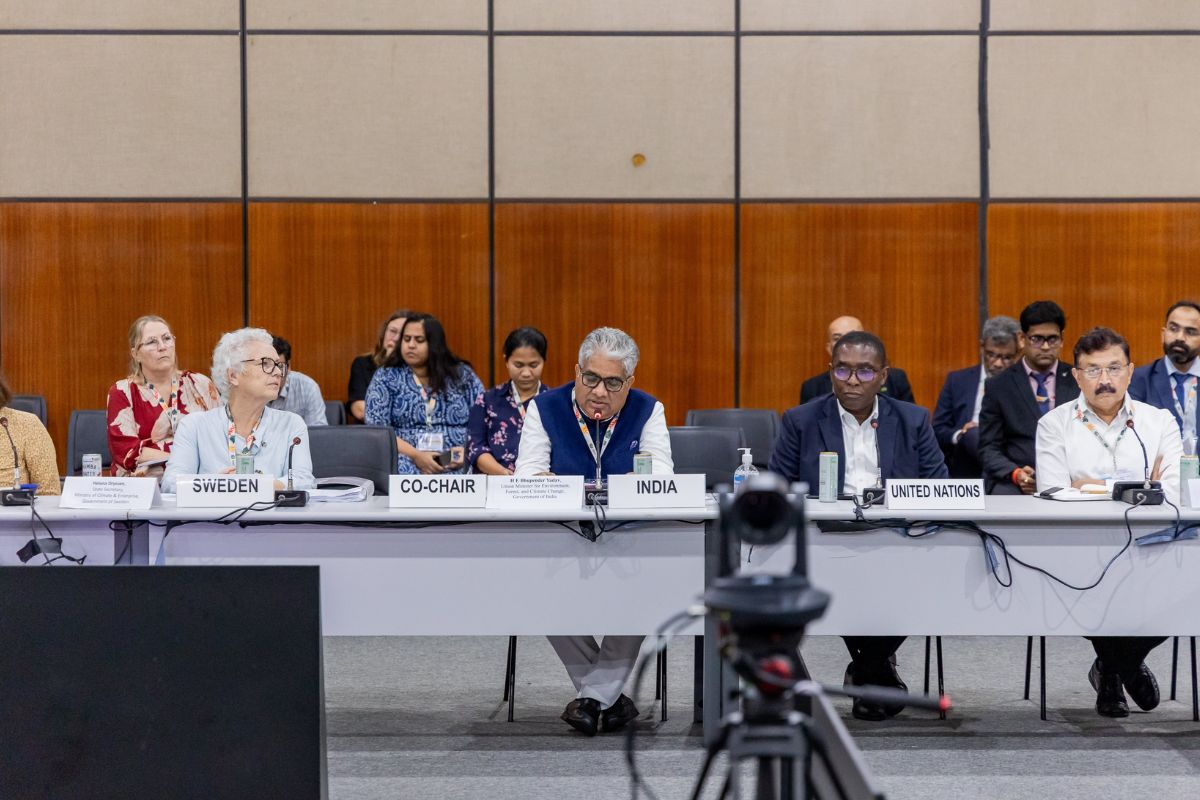
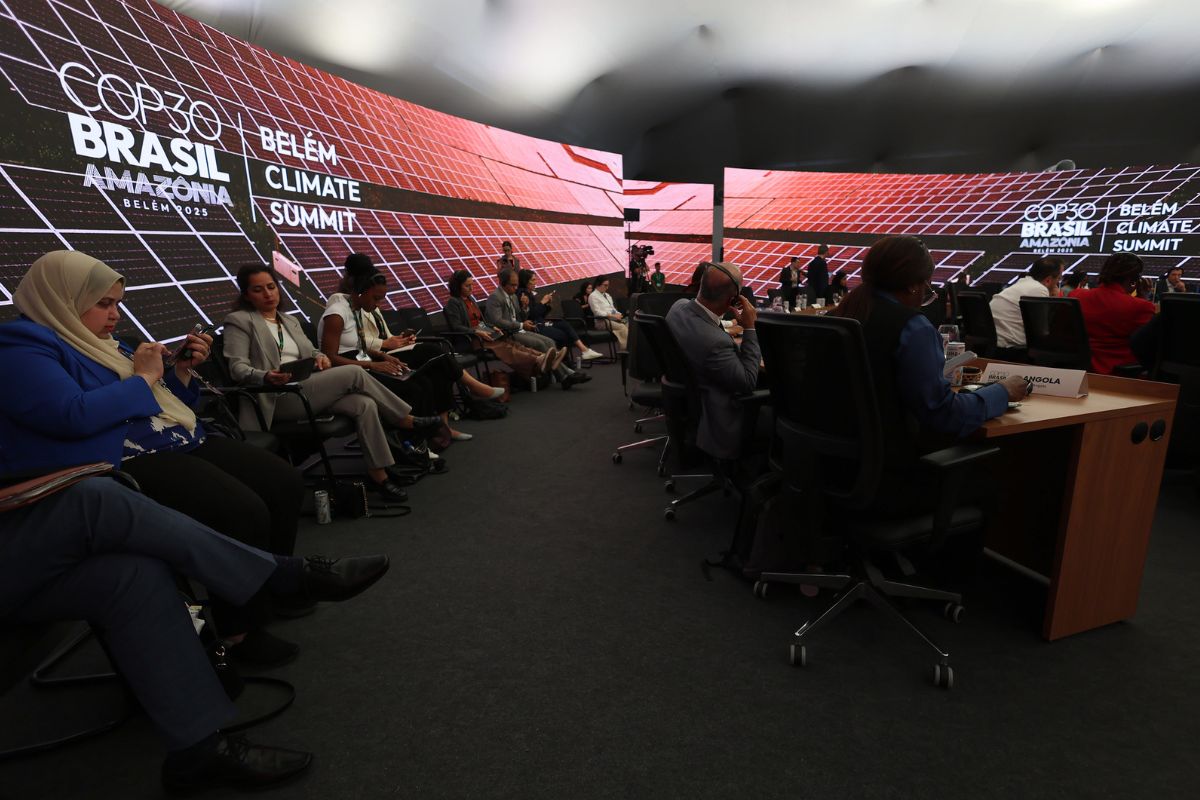
World leaders meeting at the United Nations Climate Change Conference (COP30) in Belém, Brazil, have endorsed the “Call of Belém for the Climate,” a declaration led by Brazil’s President Luiz Inácio Lula da Silva. The statement urges countries to take stronger, faster action against climate change and restore trust in international cooperation.
President Lula said the declaration seeks to revive the spirit of unity that guided the 1992 Earth Summit in Rio de Janeiro. “We cannot repeat the mistakes of the past,” he said. “Climate change is no longer a threat of the future. It is a tragedy of the present.”
The document calls on all nations to strengthen multilateralism, the cooperation between countries, as the only way to address a crisis that affects everyone. It urges governments that have not yet submitted new or updated Nationally Determined Contributions (NDCs) to do so with goals consistent with limiting global temperature rise to 1.5 degrees Celsius.
The Call of Belém identifies major gaps in global climate action. It says countries must close three key gaps: ambition in emission reduction targets, implementation of existing commitments, and financial and technical support for developing nations. “Rich countries have a historical obligation to help others develop sustainably,” the statement reads. It argues that those who benefited from centuries of high emissions should now lead in providing funds and technology to help poorer nations adapt and transition.
To support developing countries, the declaration proposes new mechanisms such as debt swaps that would allow nations to reduce their debt burden in exchange for climate action. It also calls for reforms to the international financial system to make it easier for poorer countries to access funding. The plan includes the “Baku-Belém Roadmap for 1.3T,” which seeks to expand climate finance for developing nations to at least $1.3 trillion annually by 2035.
Adaptation is another focus of the document. It urges countries to submit National Adaptation Plans as soon as possible and to triple global funding for adaptation projects. The text emphasizes the need to protect populations, ecosystems, and economies from climate-related risks such as floods, fires, and droughts.
The Call of Belém also outlines measures to speed up the global transition away from fossil fuels. It supports doubling renewable energy capacity and tripling energy efficiency by 2030, along with achieving net-zero emissions by 2050. It calls for stronger cooperation on managing carbon markets and expanding investment in forest conservation through funds such as the Tropical Forests Forever Fund.
The declaration connects climate action to social justice. It urges governments to align climate policies with efforts to eliminate hunger, poverty, and inequality. It also highlights the role of Indigenous Peoples and local communities in protecting forests and managing natural resources. “There is no way to combat climate change without taking care of people,” the document states.
President Lula said the world stands at “a moment of truth” and called on leaders to reaffirm their commitment to the Paris Agreement and collective climate action. “We must restore mutual trust and the spirit of cooperation that once united us. Only together can we act for the good of humanity,” he said.
Support us to keep independent environmental journalism alive in India.
Keep Reading
Elephants Are Back in MP After a Century, But Can They Stay?
Solar Energy – A Paradigm Shift in Wildlife Conservation
Stay connected with Ground Report for underreported environmental stories.