On cool evenings in the forests of Uttarakhand and Himachal Pradesh, researchers stretched fine mist nets across mountain clearings to catch bats flying low under the canopy. Each capture was documented, measured, and sometimes sampled for DNA. At the same time, in museums across India and Europe, scientists carefully re-examined old bat specimens that had sat in drawers for decades.
Together, these efforts have led to the most detailed reassessment of bat diversity in the Western Himalayas to date. Published in the journal Zootaxa, the study confirms 53 species in the region, including one new to science and several never before recorded in India. The findings show that this part of the Himalayas alone harbors about 40 percent of the country’s total bat diversity.
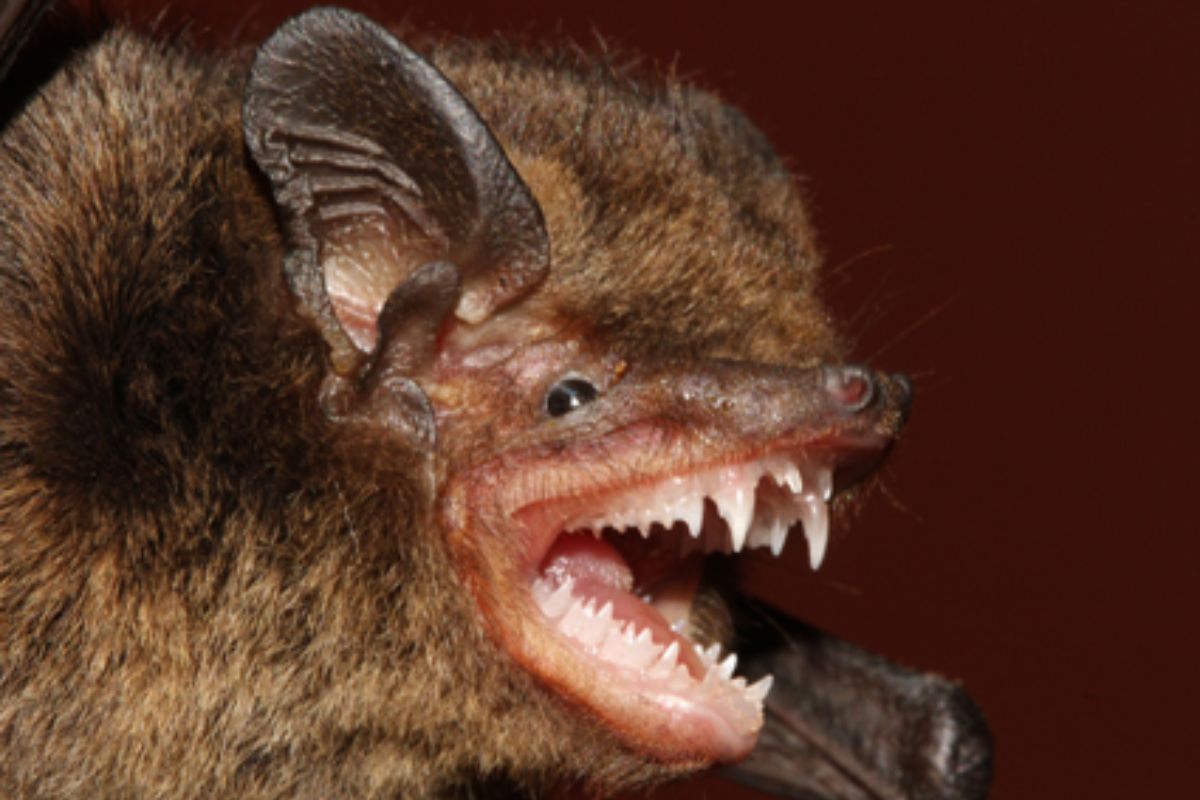
The researchers describe a new species, the Himalayan long-tailed Myotis (Myotis himalaicus), which belongs to the Myotis frater complex. They also report the East Asian free-tailed bat (Tadarida insignis) in India for the first time, revising earlier records that had misidentified it as the European free-tailed bat (Tadarida teniotis).
“This revisionary study brings the confirmed tally of Indian bat species to 135, a number expected to rise as research continues,” said Dhriti Banerjee, director of the Zoological Survey of India (ZSI).
Scientists confirm new Himalayan bat
The research was led by Uttam Saikia of ZSI and Rohit Chakravarty of the Nature Conservation Foundation. Other co-authors included M. A. Laskar from St. Anthony’s College, Shillong, Gabor Csorba from the Hungarian Natural History Museum in Budapest, and Manuel Ruedi from the Natural History Museum of Geneva.
The team carried out field surveys in Uttarakhand between 2016 and 2021. They also re-examined old museum specimens, some dating back decades, to verify species identities.
“The first time I caught this bat was in 2016,” said Rohit Chakravarty, describing his initial encounter with the Himalayan long-tailed Myotis. “Though it did seem different from the other bats I had caught, I didn’t have any suspicions it was a novel species.”
In 2021, he caught another specimen during surveys in Kedarnath Wildlife Sanctuary. “Handling different species of Myotis over the years, I could tell this specimen was heavier and had a distinctive bare patch around the eye,” he said. This second capture provided the evidence needed to confirm it as a new species.
The Himalayan long-tailed Myotis has a tail almost as long as its body, a trait unusual among bats in the region. Detailed study showed a unique set of cranial, dental, and skeletal characteristics. Genetic analysis revealed significant divergence from related species in the Myotis frater complex, which is distributed across East and Central Asia.
“As we investigated the specimen closely, we found a suite of morphological, cranial, dental, and baculum characteristics unique to the species,” said Saikia.
The researchers also found an older specimen collected in 1998 in Pakistan’s Khyber Pakhtunkhwa province by Csorba. It matched the Uttarakhand specimens, confirming that the species ranges across parts of the southern Himalayas.
New Records for India
The study also reported the first confirmed presence in India of the East Asian free-tailed bat (Tadarida insignis). Until now, only the European free-tailed bat (Tadarida teniotis) was recognized in India.
Free-tailed bats are difficult to study because they fly at high altitudes. The team used acoustic lures to capture a specimen in Kedarnath Wildlife Sanctuary, later confirming its identity through genetic analysis.
“It got us thinking. India is right in the middle of where both the European and East Asian species are distributed. Which one do we have here?” said Chakravarty. The study resolved this long-standing uncertainty.
The researchers also confirmed the presence of several other species in India for the first time based on specimens:
- Savi’s pipistrelle (Hypsugo savii)
- Japanese greater horseshoe bat (Rhinolophus nippon)
- Mandelli’s mouse-eared bat (Myotis sicarius)
They distinguished Babu’s pipistrelle (Pipistrellus babu) from the Javan pipistrelle (Pipistrellus javanicus), two small bats that had previously been grouped together.
Importance of Modern Tools
Bat taxonomy is undergoing major changes with the use of modern techniques.
“Traditionally, bat taxonomy and species delineation involved recording various morphological parameters of adult specimens, coupled with measurement of the cranium and dental characteristics,” said Saikia. “With the advent of molecular tools like DNA barcoding and the availability of ancillary data such as echolocation call structure, taxonomists have taken an integrative approach, wherein all the relevant data are combined to make species distinctions more robust.”
The Zootaxa study followed this approach, combining morphology, molecular genetics, and acoustics to establish species identities.
The discovery of the Himalayan long-tailed Myotis highlights the Western Himalayas as an important center of bat diversity.
“Species that appear similar morphologically are often genetically distinct due to isolation in complex terrain,” said Chelmala Srinivasulu, professor of zoology at Osmania University, Hyderabad. “We have only scratched the surface of bat diversity in the Western Himalayas.”
Tarun S., divisional forest officer of Kedarnath Wildlife Sanctuary, called the discovery a major step. “This is the first time the Himalayan long-tailed Myotis has been validated, which is a major discovery. Such findings highlight the need for more intensive sampling in the Himalayan region of India,” he said.
He added that local communities will be involved in monitoring programs. “Villagers are often the first to notice new species in the forest. Their participation is important for long-term conservation,” he said.
Himalayas hold hidden diversity
The Himalayas are considered a biogeographic crossroads, sitting at the intersection of the Oriental and Palearctic realms. This overlap contributes to high biodiversity and the presence of species from both regions.
“The Himalayas as a whole is an undersampled region in terms of bat diversity, and the priority should be extensive surveys for fresh specimen collection and analysis,” said Saikia.
Chakravarty agreed. “Bats remain an undiscovered group in the Himalayas. There is so much more to learn,” he said.
Surveying bats in remote Himalayan landscapes is difficult. Harsh weather, high altitudes, and logistical constraints make fieldwork demanding. Access to advanced laboratories for genetic and acoustic analysis is also limited.
“Capacity building in terms of trained taxonomists, bio-acousticians, and molecular ecologists is still needed in many parts of India,” said Srinivasulu. “In the next decade, India could become a global hotspot for chiropteran systematics and evolutionary ecology, provided adequate institutional and funding support is made available to bat researchers.”
The research was partly supported by the Rufford Foundation, which funded field surveys and training programs. Chakravarty has received two Rufford Small Grants for his bat research in India, focusing on building inventories and training students in bioacoustics.
The discovery of the Himalayan long-tailed Myotis and the new records from the Western Himalayas expand knowledge of India’s bat diversity. Scientists say these findings also underline the importance of continued fieldwork and modern research methods.
“Every new discovery reminds us that there is more out there waiting to be found,” said Saikia.
For now, the Himalayan long-tailed Myotis stands as a symbol of how careful fieldwork, combined with modern genetic tools, can reveal hidden species even in regions that have been studied for decades.
Support us to keep independent environmental journalism alive in India.
Keep Reading
Indira Sagar Canal Mismanagement Hurts Barwani Farmers
From First to Failed: Maheshwar Dam Headed for Auction
Water for power plant, but none for people, story of displaced farmers
MP Forests Face One Health Crisis as Cattle, Wildlife Meet
Stay connected with Ground Report for underreported environmental stories.
Follow us on X, Instagram, and Facebook; share your thoughts at greport2018@gmail.com; subscribe to our weekly newsletter for deep dives from the margins; join our WhatsApp community for real-time updates; and catch our video reports on YouTube.
Your support amplifies voices too often overlooked, thank you for being part of the movement.