A new global study, published on 16th June 2026 in People and Nature, found that countries with the richest biodiversity are among the poorest today. The researchers argued that this is largely the result of how European colonial powers exploited natural resources in their colonies.
The study argued that biodiversity-rich regions became targets for extraction, & economic systems built around that extraction still shape who is poor today.
For instance: between the 1400s and 1900s, colonial powers exported resources as raw materials — British planters forced Bengal farmers in India to grow indigo on a fixed share of their land. In the Democratic Republic of the Congo, colonial forces enforced rubber quotas with mutilation and death for those who fell short.
“Industrialised countries could manufacture and process the natural resources, with the true cost of harvesting paid by enslaved people, not plantation or factory owners,” lead author Conor Waldock said.
Over the last 1,000 years, wealth steadily shifted from Africa and India to Europe and the United States, the researchers wrote. They argue that this followed a chain linking rich biodiversity to colonisation, debt, structural adjustment programs, resource-export economies, and, ultimately, poverty.
Colonisers built systems to extract timber, minerals, and crops and export them elsewhere. Those systems did not dismantle with the end of colonial rule. As a result, many of these resource-rich regions remain poor today.
The 2001 paper by Nobel Prize–winning economists Daron Acemoglu, Simon Johnson, and James Robinson on colonial origins of comparative development found that poverty stayed lower in former colonies where colonists built institutions and higher where they simply extracted resources.
“We still have many of the old colonial practices, policies, and practices,” Ashish Kothari, an Indian environmentalist and co-founder of Kalpavriksh, an Indian non-profit environmental group working on environmental awareness, litigation, research, and community-led conservation, told Ground Report.
“There is still a very centralized way of governing and managing forests and other ecosystems, and protected areas.”
What Colonisation Took From India
The lead author, Conor Waldock, who works at the University of Bern, EAWAG, Wyss Academy for Nature, and Trinity College Dublin, studied 168 countries with his team.
Waldock said the study’s first key finding was that countries with greater biodiversity were more likely to be colonised. He said earlier historical research had largely explained colonisation through geographic or social factors rather than biodiversity.
In India, the British and East India Company exported teak (Tectona grandis) for rot-resistant shipbuilding timber.

“There are examples around forest extraction that would suggest a very similar dynamic, linked with railway building, extraction, and ‘conservation,’” Waldock said. “There may be an internal extractive dynamic where national elites benefit more from forest extraction than locals, or locals are punished for using their own forestry resources.”
And the colonial-era Indian Forest law continued post-independence.
Kothari said that three things have remained constant: decisions about what to protect or USE were still made centrally, not locally; officials still assumed only a trained, centralized bureaucracy could manage forests, sidelining generations of Adivasi and local knowledge; and the state kept treating local people’s presence in forests as something to restrict, not a right to recognize.
“A bit of difference has come recently,” he said, “but not much.”
Of course, the colonial hangover impacts Asia, Africa, and even Latin America. “But in Asia and Africa, top-down approaches have been very heavy since colonial times. There are changes in some countries, but overall that’s what you see,” Kothari said.
India’s Forest States
NITI Aayog’s National Multidimensional Poverty Index shows Madhya Pradesh, Jharkhand, and Bihar among the worst-ranked states. These are states that hold India’s largest forests and tribal populations.
Kothari said, “Where people’s collective rights have been recognised through the Forest Rights Act, the situation has changed.” But that covers only “a small percentage of total forest” in India.
In many other places, he said, people who enter forests to collect produce still have to pay bribes or are harassed. “This is even more the case with national parks and wildlife sanctuaries,” he said.
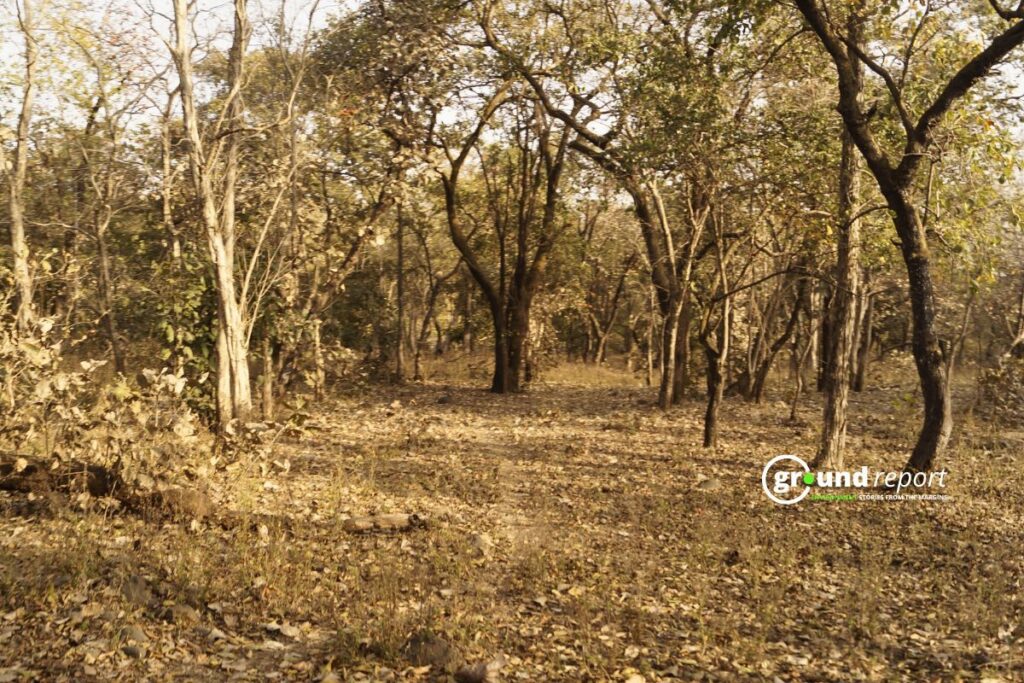
“Of course, communities too can make mistakes and cause damage, but this is where the state needs to work with them for appropriate changes in resource use, not consider them as enemies.”
In Madhya Pradesh’s Kanha Tiger Reserve, Baiga tribal families have fought for land rights for decades after they were relocated from villages inside the reserve’s core area to government resettlement sites outside it, Kothari said.
“The situation here and in many other tiger reserves is still the one that exists in the majority of forest areas,” Kothari said.
The Forest Rights Act, 2006, sought to restore individual and community rights over forests. Since then, amendments have expanded the rights of Indigenous communities and strengthened their claims over forest land.
Conservation, Climate Change and People
Climate change is deepening a biodiversity crisis that has built for decades.
India ranks eighth globally in species richness and is one of the world’s 17 megadiverse countries. Although it occupies only 2.4% of the Earth’s land area, it is home to 7–8% of all recorded species, including over 47,000 plant and 96,000 animal species.
And rising temperatures, erratic rainfall and more frequent extreme weather are compounding habitat loss, pollution and fragmentation. All this threatens ecosystems from the Himalayas and Western Ghats to coral reefs and mangrove forests.
“Forests also continue to be destroyed for industrial projects,” Kothari said. “In the last few years, the kind of mining, industry and expressways that are coming in, including inside protected areas, undermines goals of protection. Wildlife and local communities are given short shrift.”
There is the much-discussed Great Nicobar project, the relentless construction in fragile mountainous ecosystems such as the Char Dham highway and infrastructure projects in Northeast India.
“This is where so-called development is actually ecological destruction,” he said.
Waldock’s study also found a weak link between where countries choose to protect land and levels of biodiversity or poverty.
“One issue I see is the conceptualisation, design and planning of conservation projects by philanthropists, NGOs and governments in Western countries,” Waldock said. “These are often undertaken far from the communities and landscapes they affect.”
In other words, the people designing conservation projects are often far removed from the places and people those projects are meant to serve, and that disconnect can shape the outcomes.
India signed the Kunming-Montreal Global Biodiversity Framework, the 2022 pact that commits nations to protect 30 percent of their land and coastal waters by 2030.
India has protected just over 5 percent so far.
Kothari said India is “playing with definitions about what is ‘protected’, which includes much of its forest cover and some community-conserved areas in its calculation of protected land.
This overstates the country’s progress. He said marine protected areas must also be adequately accounted for. He said the 95 percent approval rate for environmental and wildlife clearances points to the government’s priorities.
“Where’s the ecological sense in that?” he said. “You can’t talk about conservation while sacrificing forests.”
Unsurprisingly, to protect the ecosystems and their biodiversity, we look back to Indigenous communities who are often overlooked during colonisation.
For many Indigenous communities, forests are central to their culture, identity and survival. Indigenous peoples live on about 22% of the world’s land, which overlaps with areas containing much of the planet’s biodiversity.
Their traditional knowledge has helped protect biodiversity for generations, making them key partners in conservation efforts.
“We’ve been saying this for 30 years — the only approach that will work is rights-based,” Kothari said. Not just in India, “globally, community-led or co-governed conservation areas are often more effective than what governments alone manage.”
Support Us To Sustain Independent Environmental Journalism In India.
More Ground Reports
He Was Married as a Child, Now Manish Dangi Helps Stop It for Others
Despite The Ban, How Gutkha Became MP’s Most Common Household Habit