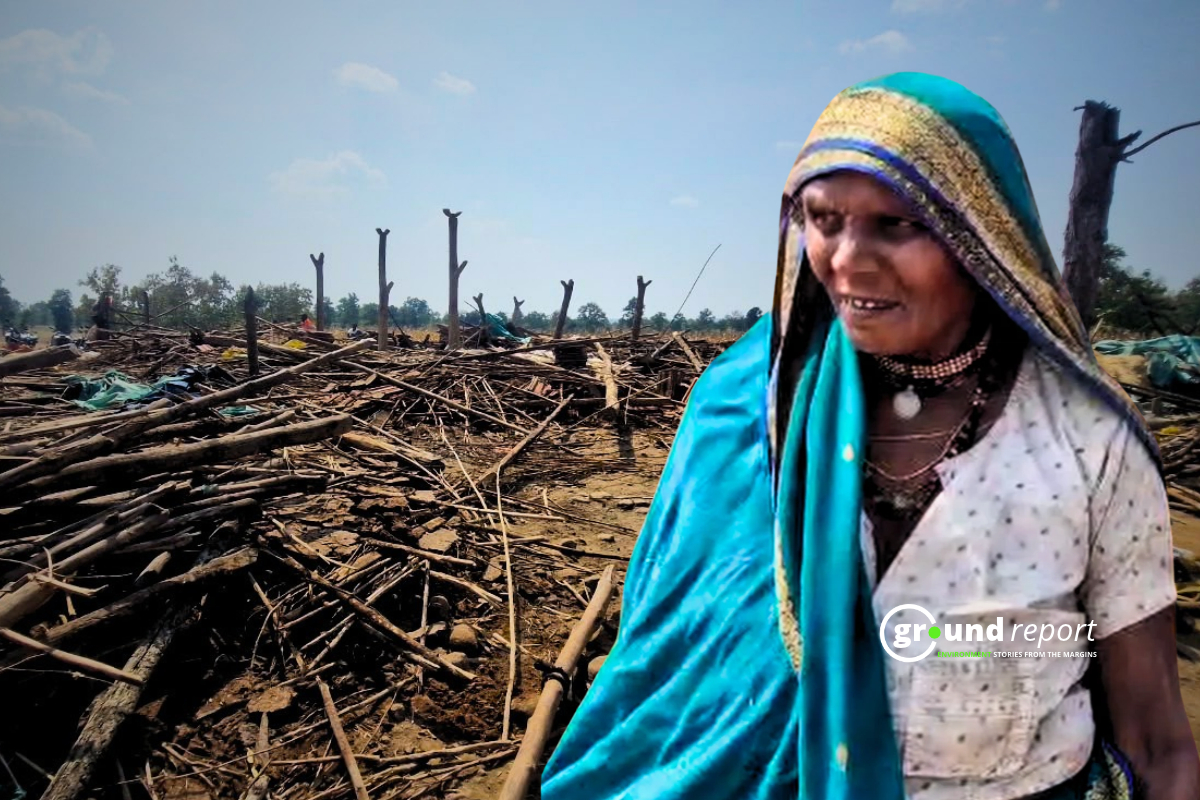

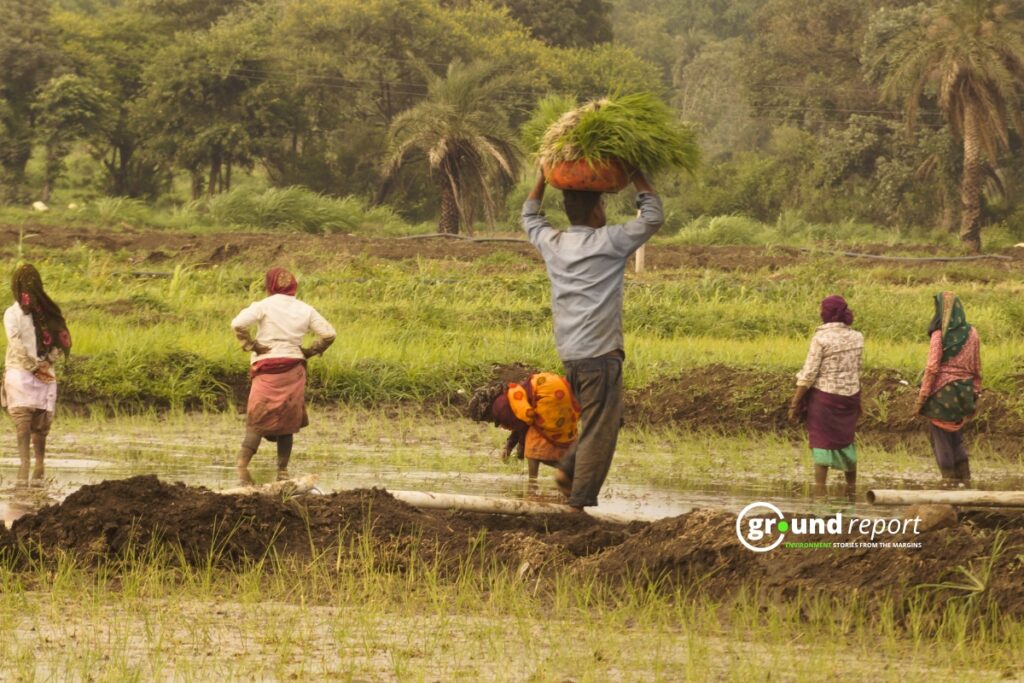
हिंदी में पढ़ें। Grey clouds hung over Mugaliyachap in Bhopal district’s Huzur tehsil. Heat and humidity thickened the air as groups of women bent over, transplanting young rice seedlings into semi-flooded, cracked fields.
For nine straight days, even with overcast clouds, the region had not seen rain.
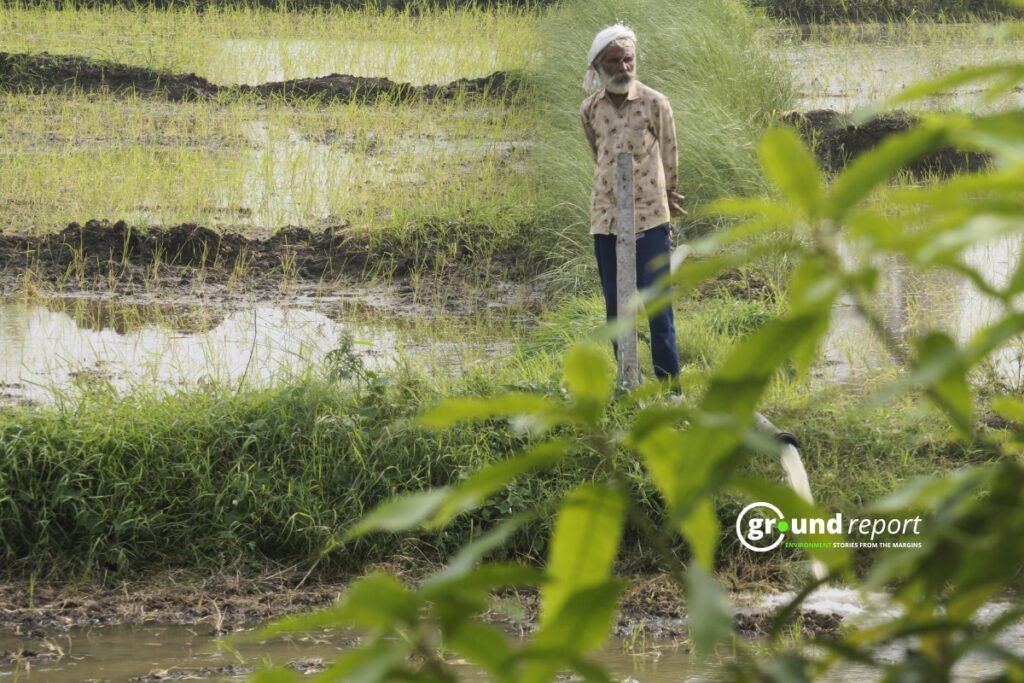
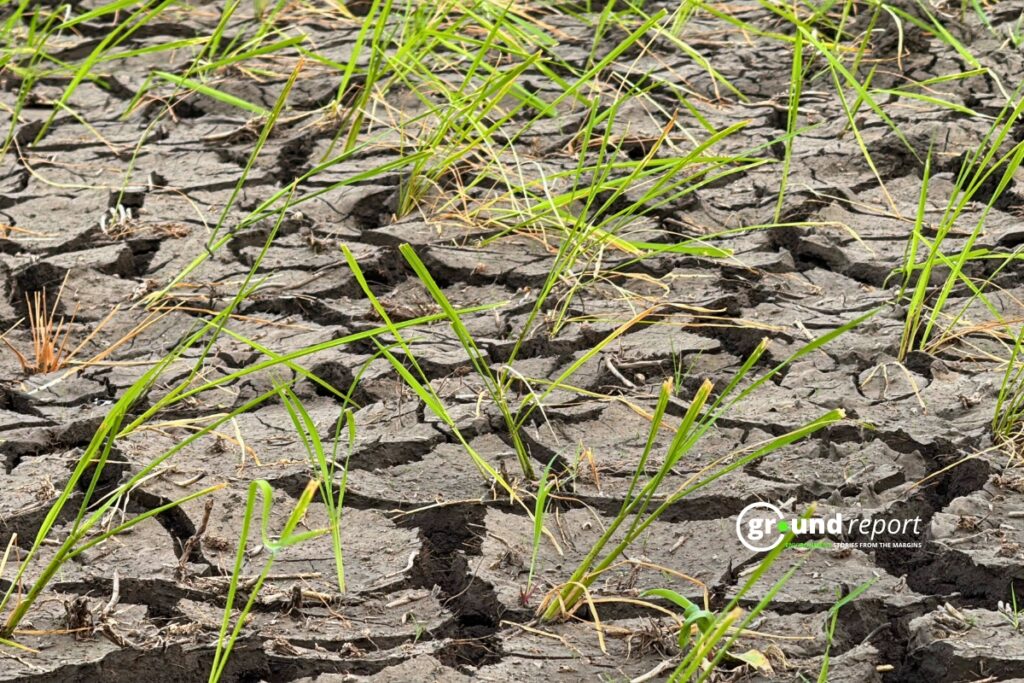
A few kilometres away, in Khajuri Sadak, Kailash Vishwakarma looked out over his own paddy field, cut by the deep cracks. His land sat close to the river. So, growing paddy is his only option. He hired labourers to transplant the young rice plants of the Pusa Basmati variety a week earlier, which have now turned dry and brittle.
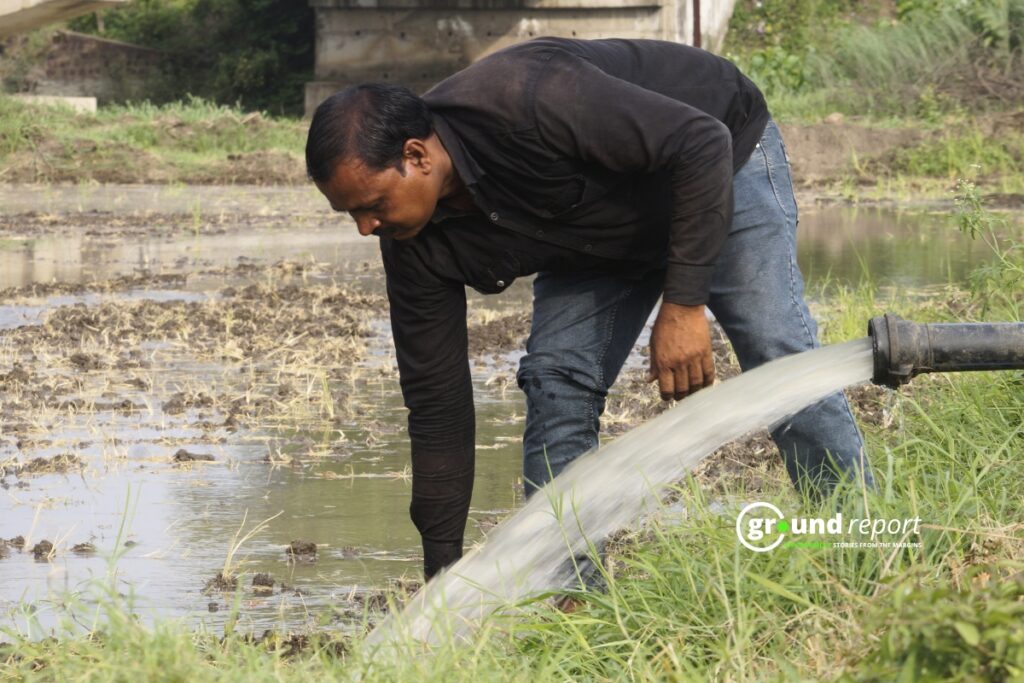
He flooded his fields with water pumped from motor pumps. But the ponds soon ran dry again, as the hot, humid soil quickly absorbed the water.
“If the rain does not come within six or seven days, the crop will fail,” Vishwakarma said.
According to the India Meteorological Department, Madhya Pradesh received 16% below-normal rainfall between 1 June and 19 July 2026. The state was classified as having “normal” rainfall overall; the monsoon was uneven: 20 of its 55 districts recorded deficient or large deficient rainfall, compared with 32 districts in the normal category and just three in the excess or large excess categories.
Some transplanting had happened in early June, when a little rain fell. But after that, the rain stopped.
This is important as soybean, paddy, and maize form the backbone of Madhya Pradesh’s kharif season. All three have suffered this year, farmers said, because the monsoon arrived late and then delivered less rain than expected.
Motor Pump and Cost of Waiting
In Mugaliyachhap, Rahul Patidar had transplanted rice on six acres. Compared to last year, when transplanting finished on schedule, he was now 15 to 20 days behind.
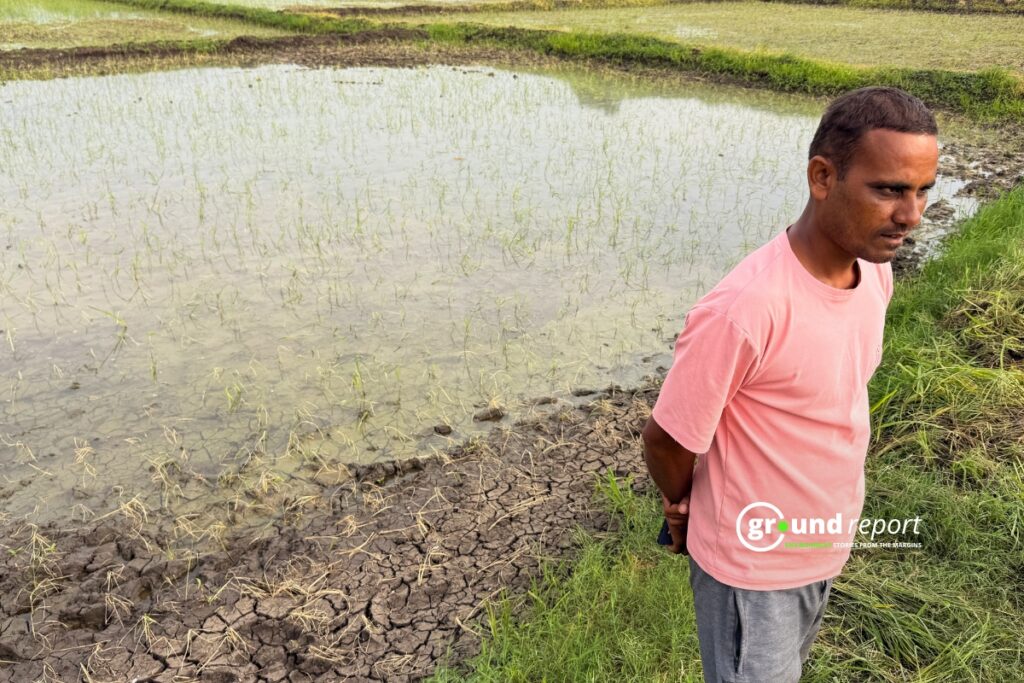
With no rain, he turned to his borewell, running a pipeline into the field to refill the ponds by motor. But the math did not work in his favour. He got eight to nine hours of electricity a day, from 8 a.m. to 5 p.m. In that time, one motor could barely fill a single pond. Three motors running together managed only one to one and a half acres a day.
Patidar estimated he had only 20 days left in the window for successful transplanting. If he misses that, any new planting would push the rice’s flowering stage into September and October, when temperatures no longer suit the crop. The result, he said, would be crop failure either way.
Rice grows best in standing water, with fields flooded to a few inches through most of the transplanting and growth stages. And the clay-loam soil is never meant to dry out completely once the crop is in.
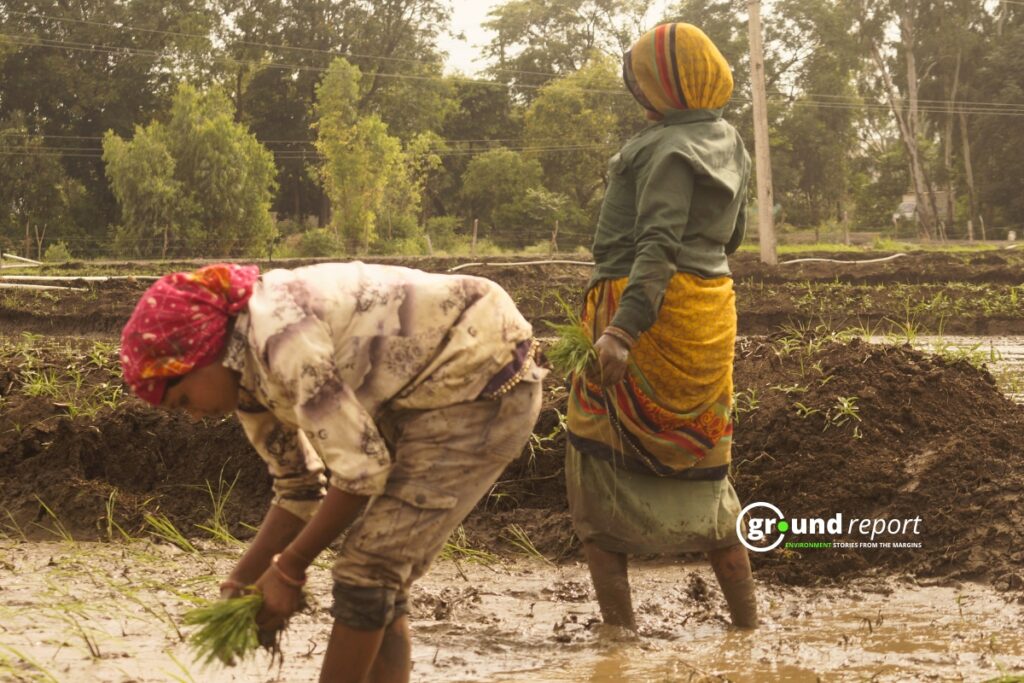
The monsoon’s normal onset date for the region is June 15, with withdrawal around September 15. And sowing after that window pushes flowering into the cooler, drier weeks of autumn, when the crop no longer thrives.
Depending on the variety, rice needed 110 to 140 days from sowing to harvest.
And, considering the delay, the government has advised farmers to use short-duration crop varieties which can deliver higher yields and require less water.
The plan calls for expanding the reach of information through Agro-Met advisories, SMS and WhatsApp alerts, call centres, radio and television broadcasts, and social media. The aim is to provide every farmer with timely, science-based guidance so they can make informed decisions on sowing, crop selection, and the use of agricultural inputs.
Patidar, without dismissing the advice, said that we need at least a month to prepare the nursery. The advisory came to them too late to ensure this change in their crops.
And, access to such seed varieties was a concern with soybean cultivation too.
Labour and Livelihood
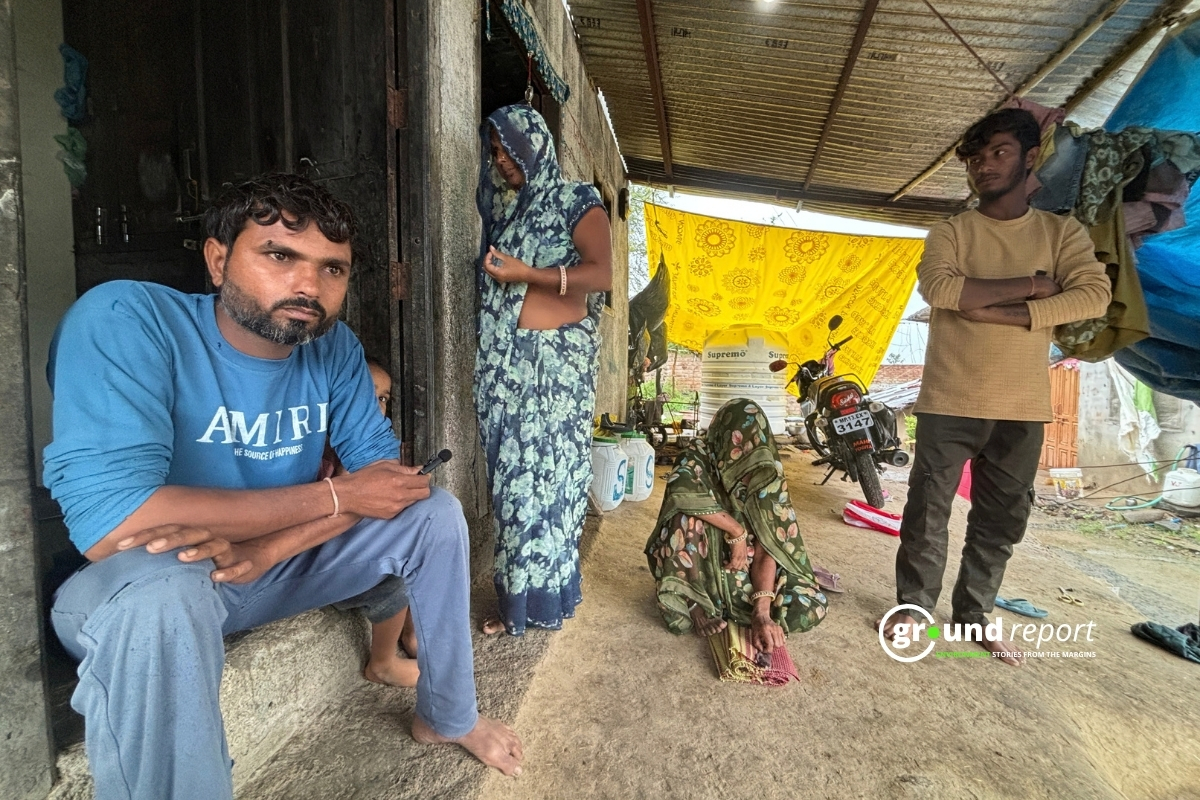
Two months of Rina’s life, an agricultural labourer, are occupied with transplanting these seeds. She wakes up early in the morning to travel from Bhopal’s Kolar area to Mugaliyachap with other women.
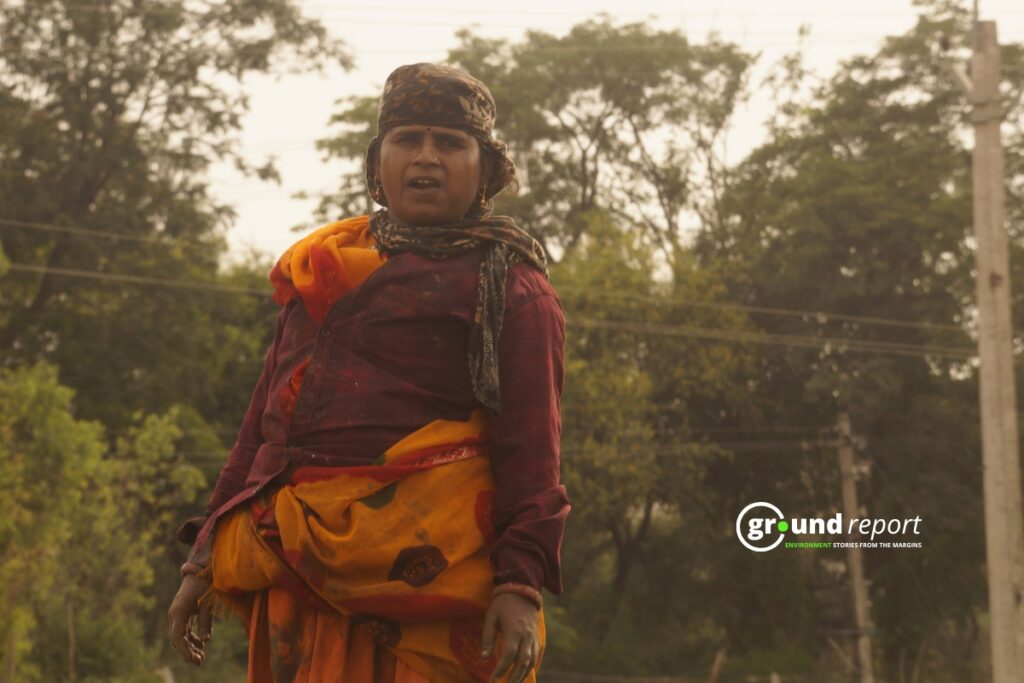
She said that this delayed monsoon has threatened her only source of income during this season. Transplanting and weeding work normally gave her two to two and a half months of steady wages.
She is paid 300 rupees per day for work that occupies more than half of her day.
On the other side, farmers said that the labour costs have climbed. Workers are now charged 400 to 500 rupees a day, when they can be found at all.
Patidar said the cost of transplanting would be between 8,000 and 10,000 rupees an acre. If he transplants again, the total cost would climb to 15,000 rupees an acre. By the time the season ended, he expected total costs to reach 30,000 rupees an acre, including nursery costs.
Farmers who own their own tractors and pumps can absorb some of those extra costs. For others, this delay might mean that they incur some losses.
“When it rains, farmers call for help. When it doesn’t rain, does the work still happen?” she said. Without rain, she said, there was nothing to do but sit at home until the transplanting season came again.
Agriculture Minister’s Plan
Shivraj Singh Chouhan, Union Minister of Agriculture and Farmers Welfare, addressed the media in New Delhi on July 8, 2026, after a high-level review meeting. He said he reviewed the situation every Tuesday.
June had brought 33 per cent less rainfall than normal nationally. By early to mid-July, that deficit had narrowed to 24 per cent, helped by rain over the previous three to four days across several states.
The number of severely rain-deficient districts had fallen from 262 to 178, though Chouhan said the government continued to track those 178 districts closely.
Maharashtra, Madhya Pradesh, Gujarat, Uttar Pradesh, Rajasthan, Karnataka, Bihar, Jharkhand, Telangana, Andhra Pradesh, Punjab, West Bengal, and Odisha accounted for most of them.
Sowing nationally still trailed the previous year by a wide margin. At the same point last year, farmers had sown 442.80 lakh hectares. This year, the figure stood at 350.85 lakh hectares, a shortfall of 91.95 lakh hectares.
The delay had hurt corn, soybean, and cotton in particular. The ministry was now advising farmers in delayed regions to switch to shorter-duration crops such as maize, bajra, and moong instead.
Chouhan pointed to measures the government said it had taken since April.
Under a nationwide “Khet Bachao” campaign run through June, the ministry said it organised more than 1.24 lakh outreach programmes and reached more than 80 lakh farmers with advice on drought-resistant sowing choices.
The government also said it maintained a national seed reserve of nearly 1.75 lakh quintals to guard against shortages and that it had processed 94,417 Kisan Credit Card approvals out of 114,613 applications received by the end of June.
An El Niño monitoring cell and a crop weather watch group, along with state-level control rooms, were tracking the situation daily, he said.
“We will not allow fields to remain vacant,” Chouhan said after the end of June review meeting. “There will be sufficient rainfall for some crops to be cultivated, and our preparations are aligned accordingly”.
Support Us To Sustain Independent Environmental Journalism In India.
More Ground Reports
He Was Married as a Child, Now Manish Dangi Helps Stop It for Others
Despite The Ban, How Gutkha Became MP’s Most Common Household Habit
Stay Connected With Ground Report For Underreported Environmental Stories.
Authors
Support Ground Report to keep independent environmental journalism alive in India
We believe climate change should be the basis of current discourse, and our stories attempt to reflect the same.
Connect With Us
Send your feedback at greport2018@gmail.com
Newsletter
Subscribe our weekly free newsletter on Substack to get tailored content directly to your inbox.
When you pay, you ensure that we are able to produce on-ground underreported environmental stories and keep them free-to-read for those who can’t pay. In exchange, you get exclusive benefits.
Your support amplifies voices too often overlooked, thank you for being part of the movement.