Fortifying tea with folic acid and vitamin B12 could help prevent neural tube defects, birth defects that affect about 300 babies in India every day and develop before many women know they are pregnant.
A government-appointed medical task force published a report in June 2026, which laid out the same.
“I see 300 distinct living rooms across India every single day where a family’s world completely shatters,” Jahanvi Modi, a counseling psychologist and trustee of the Spina Bifida Foundation who worked on the report, told Ground Report.
“I see mothers frozen in fear, wrestling with immediate guilt, and asking, ‘What did I do wrong?’” she said.
Up to three-quarters of women of childbearing age fall short on one or both vitamins. A 2024 study of 775 women in rural Haryana found that 81 percent had low or deficient B12. A survey of 980 women in Andhra Pradesh put the number at 74 percent.
“Indian women are profoundly deficient…due to dietary habits, poor absorption, and a lack of access to nutrient-dense food,” Modi said.
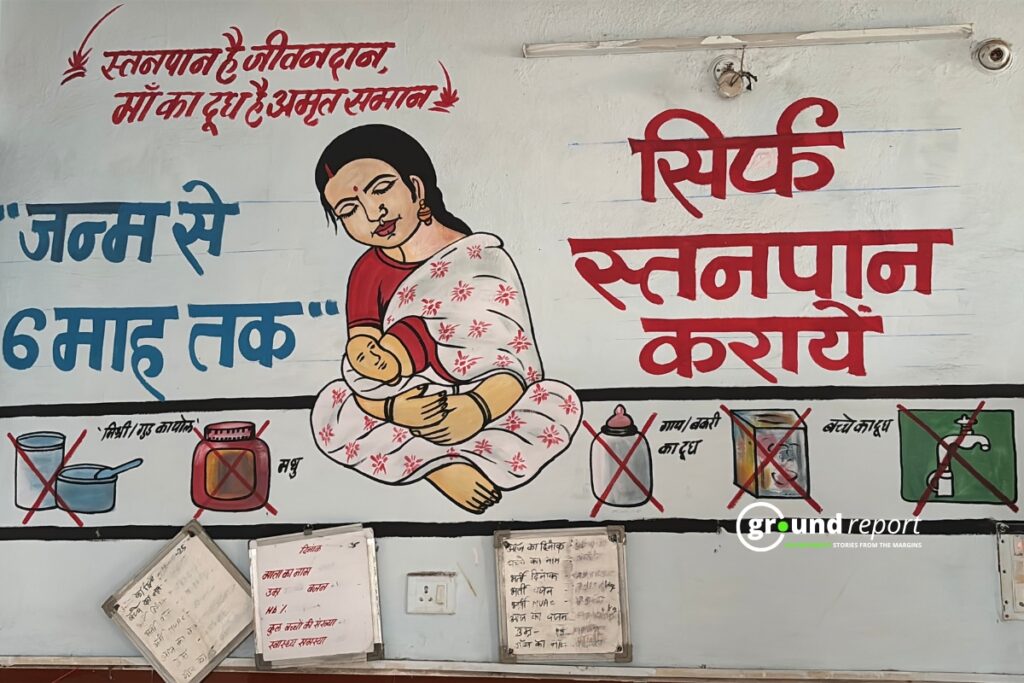
The government provides pregnant women with iron and folic acid (a synthetic form of vitamin B9 to prevent pregnancy complications and deficiency) tablets through Anemia Mukt Bharat, its national anemia program launched in 2018.
But there are no provisions for vitamin B12.
The problem is driven by deficiencies that many Indian women don’t know they have. It explained that neural tube defects develop before most women know they are pregnant or have their first prenatal visit and proposed fortifying tea to deliver these nutrients early.
Scale of the Problem
India records neural tube defects, including spina bifida and anencephaly, at 4.1 to 4.5 cases per 1,000 births, more than 100,000 babies a year. The defects occur when the embryonic spinal cord or brain fails to seal shut in the first 21 to 28 days of pregnancy.
The report documents the spectrum of these defects in Indian newborns, from small, operable encephaloceles to complete anencephaly.
A door-to-door survey in Balrampur, Uttar Pradesh, found nearly double that rate: 8.2 cases per 1,000 live births. The report maps findings against a government health-social-economic index that ranked Balrampur near the bottom nationally—data originally published on a Government of India population portal that has since been taken offline.
Why Deficiency Persists & Effects
The report found that between two-thirds and three-quarters of Indian women do not get enough folate and vitamin B12 from their diet.
Folate is a B vitamin found in leafy green vegetables, lentils, beans, and citrus fruits. Vitamin B12 mainly comes from meat, eggs, fish, and dairy products. 39% of Indian adults call themselves vegetarian, according to 2021 Pew research. The National Family Health Survey (NFHS-5) found nearly 3 in 10 women never eat meat, fish, or eggs at all. That’s where folic acid is used, as folic acid is a man-made version of folate to help during pregnancy.
The neural tube— the earliest structure that becomes a baby’s brain and spinal cord — closes by day 28 of pregnancy, before most women even know they’ve conceived.

“When we give a pregnant woman folic acid at her first prenatal visit, it’s biologically too late to prevent neural tube defects (NTD),” Modi said. “So many pregnancies are unplanned. Expecting young women to plan their nutrition weeks before they even conceive perfectly is a deeply unrealistic burden to place entirely on them.”
India already tries to address folate deficiency. The government provides free iron and folic acid tablets to pregnant women through a National program. But the program still faces gaps. A nationwide government survey found that while 88 percent of women got the tablets, only 44 percent actually took them for the full 100 days.
The report links long-term folate and B12 deficiency to more anemia in women and, over time, to a higher risk of nerve damage and brain shrinkage.
What Works Elsewhere
More than 60 countries, including the United States, Canada, and Australia, have cut their neural tube defect rates by fortifying wheat flour.
In 2024, India mandated fortified rice, with iron, folic acid, and vitamin B12, across the public distribution system, mid-day meals, and other welfare programs, which reached roughly 80 crore people.
These fortified rice kernels contain 75 to 125 micrograms of folic acid per kilogram and 0.75 to 1.25 micrograms of vitamin B12 — far below the levels of other countries.
In 2016, India’s food regulator set a wheat flour standard matching the World Health Organization’s advice — 1,300 micrograms of folic acid per kilogram. But it never became mandatory. In 2018, regulators cut the approved folic acid dose by more than 90 percent, without a trial confirming that the lower number works, the report notes.
Tea As A Solution
“Our task force examined different options and found that tea has the widest reach across India, cutting across geography, income groups, and social backgrounds,” Dr. Ravindra M. Vora, professor of pediatric surgery at Bharati Vidyapeeth Medical College and Hospital in Sangli and an author of the report, told Ground Report.
First, people would consume high-dose fortified tea or take tablets for four months to restore depleted folate and B12 stores. The report found that this would cost about 20 paise extra, with just the raw cost of the vitamins, not the price of the tea or any retail markup.
Second, people would drink tea fortified with a lower daily dose throughout the year to keep vitamin levels topped up despite diets that remain deficient in both nutrients.

“By fortifying tea at the processing stage, we don’t have to wait for a woman to realize she’s pregnant, we don’t have to demand massive behavioral changes, and we don’t have to fix complex grain supply chains first,” Modi said. “It quietly protects adolescent girls and future mothers with every morning cup they share with their families.”
The task force’s blueprint draws directly on India’s Pulse Polio Immunization campaign, pointing to celebrity-fronted public service messaging and films like Polio v/s Polio Victims as a model for reaching every household.
Presenting Evidence
A 2021 pilot study in Sangli, Maharashtra, published in BMJ Nutrition, Prevention & Health, tested teabags fortified with 1 milligram of folate and either 0.1 or 0.5 milligrams of B12 on 43 young women, average age 20.
Women who drank a daily cup for two months showed measurable gains in blood vitamin levels. A follow-up trial in Assam found similar results among women who started deficient.
Vijaya Kancherla, an epidemiologist at Emory University’s Rollins School of Public Health and a co-author of the report, has separately estimated that eliminating preventable neural tube defects in India could save roughly 115,000 births a year.
“India’s neural tube defect burden cannot be addressed by focusing on folic acid alone,” said Prof. Aśok C. Antony, a hematologist at Indiana University School of Medicine and the report’s corresponding author. “If vitamin B12 deficiency remains uncorrected, folate cannot perform its biological role effectively.”
India has a track record of mandating fortification, with salt iodization since 1983 and fortified rice since 2024. Fortified tea has been tested in pilot studies and one regional trial; mandating it nationally would have to be seen.
“Prevention doesn’t just save a child’s spine,” Modi said. “It preserves the psychological and economic stability of the entire family unit.”
Support Us To Sustain Independent Environmental Journalism In India.
More Ground Reports
He Was Married as a Child, Now Manish Dangi Helps Stop It for Others
Despite The Ban, How Gutkha Became MP’s Most Common Household Habit