In the last week of February, Range Officer Varsha Singh of the Mauganj range got a call at 8:30 in the morning. An elephant had entered her range. For Varsha, her staff, and the villagers there, it was the first time a wild elephant had entered their area.
This part of Rewa and Mauganj had never featured on the wildlife management map for elephants. But for the past month, a male elephant named Bharat and his companion have wandered through these forests, and that wandering has become the sign of a bigger crisis.

A new route
Elephants are a fairly recent presence in Madhya Pradesh, and where they roam has kept shifting.
A recent elephant census report from the Wildlife Institute of India traces this history. Mughal-era records show elephants in the state in the 16th and 17th centuries, though they had nearly vanished by the start of the 20th century.
After a long gap, they began moving again through the districts bordering Chhattisgarh — Sidhi, Singrauli and Shahdol — usually staying two to three months before returning.
That pattern changed in 2017, when a group of seven elephants did not return and instead settled in Sidhi’s Sanjay Dubri Tiger Reserve. In 2018, a herd of around 40 reached Umaria’s Bandhavgarh Tiger Reserve; that number has since grown to around 50.
Between 2021 and 2022, 10 to 12 elephants passed through Anuppur and Dindori to reach Kanha Tiger Reserve and Phen Wildlife Sanctuary, though this group returned to Chhattisgarh a few months later. Today, elephants have a permanent presence mainly in Bandhavgarh, while Sanjay Dubri, Sidhi, Anuppur, Shahdol and Dindori see occasional movement. The state’s total elephant count stands at 97.
A century without elephants has left local communities and forest staff with little experience managing them. What complicates the situation is that the area is part of the Vindhya plateau, where hills, ravines, and small villages are tangled together.
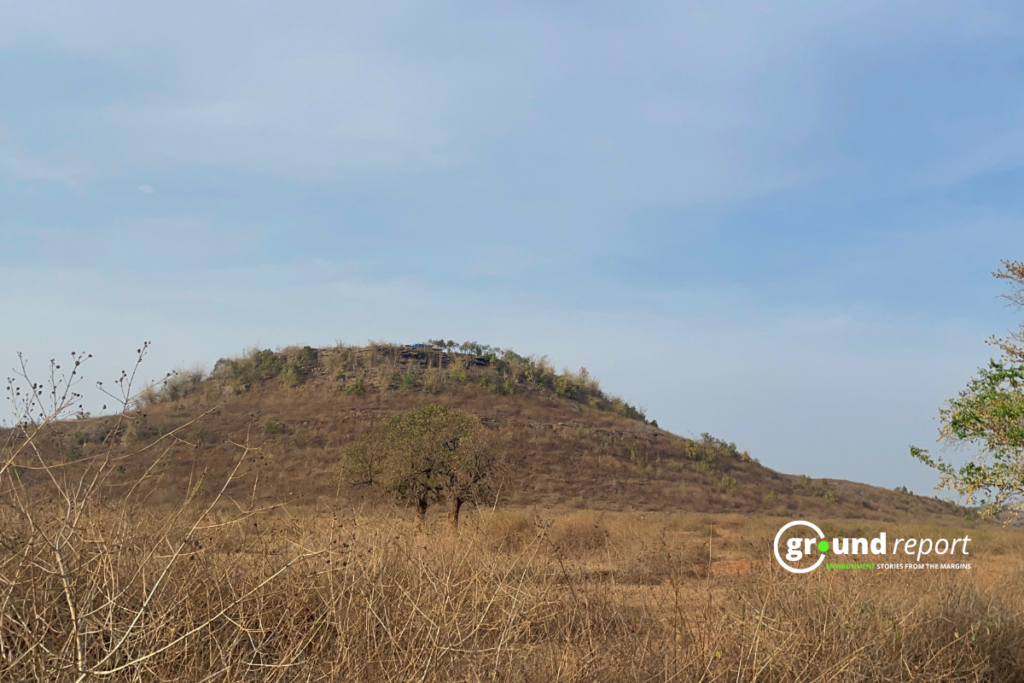
Roads are few, footpaths are many, and forest cover is thin. Government data from the e-Green Watch portal shows that out of Mauganj’s total area of 186,688 hectares, only 14 hectares are protected forest.
“Most of Mauganj has degraded and fragmented forests,” Singh said.
Wildlife activist Ajay Dubey said this scarcity is what puts the elephant at risk. “The forests here don’t seem to have enough food and water,” he said. “That’s why the elephant keeps coming toward human settlements.”
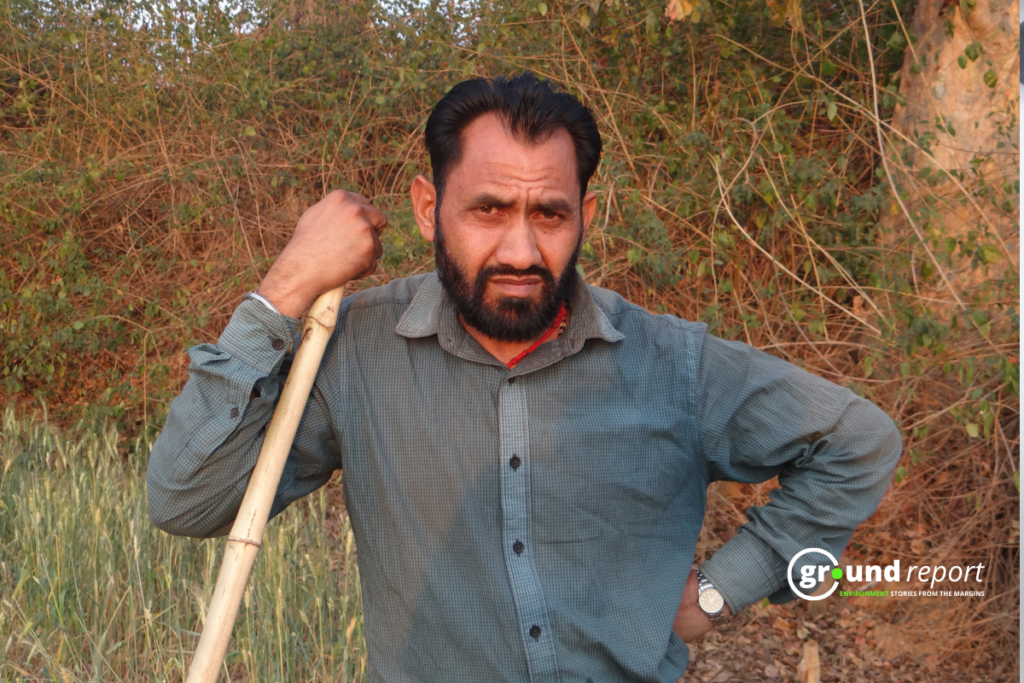
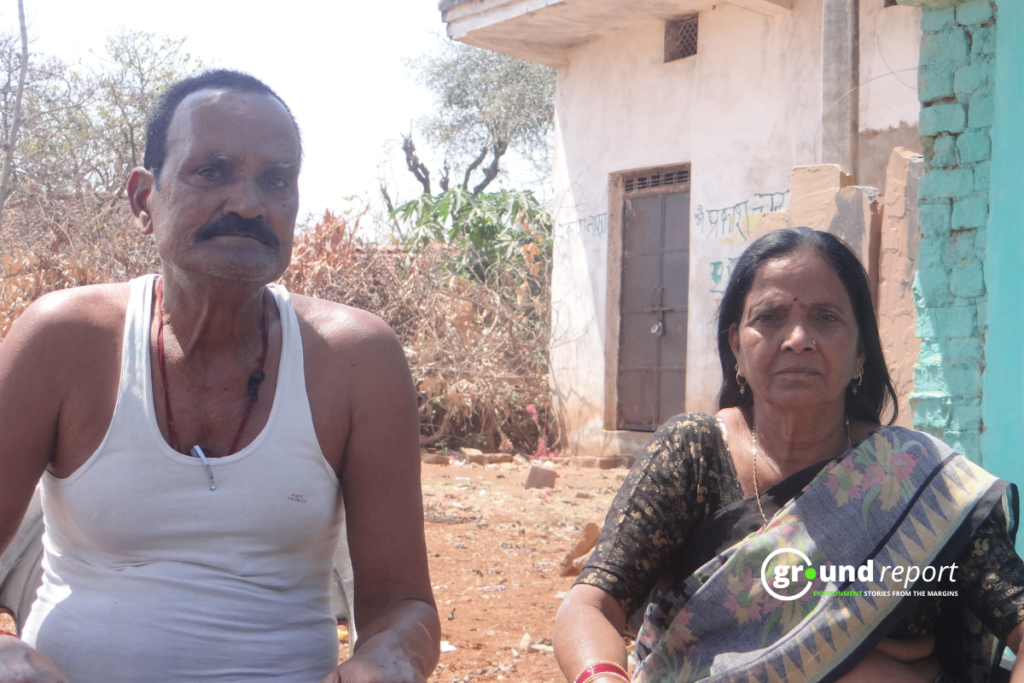
Forest staff who have tracked Bharat for a month said his health is declining, and villagers have noticed a change in his temperament too. In Malakpur, Ram Giri Goswami said the elephant has come to his village three times. “Earlier, it used to pass quietly,” he said. “Now it looks angry.”
A month of wandering
The story that began on 25 February has not ended.
Bharat wears a radio collar, but finding his location is not always easy. “Many times, the elephant is right in front of us, and the tracking device shows no location,” Singh said.
From Malakpur, Bharat moved through Kandi and Behra Dabar into the Churhat range, then to Rewa, then back to Mauganj. Forest staff have tracked him continuously since 16 March until 20 March.
Singh said she had not slept properly in five days. He returned to Rewa on 23 March and was still there on 30 March. Along the way, he has left broken fences, damaged crops, and frightened people. Kandi village shows what that looks like up close.
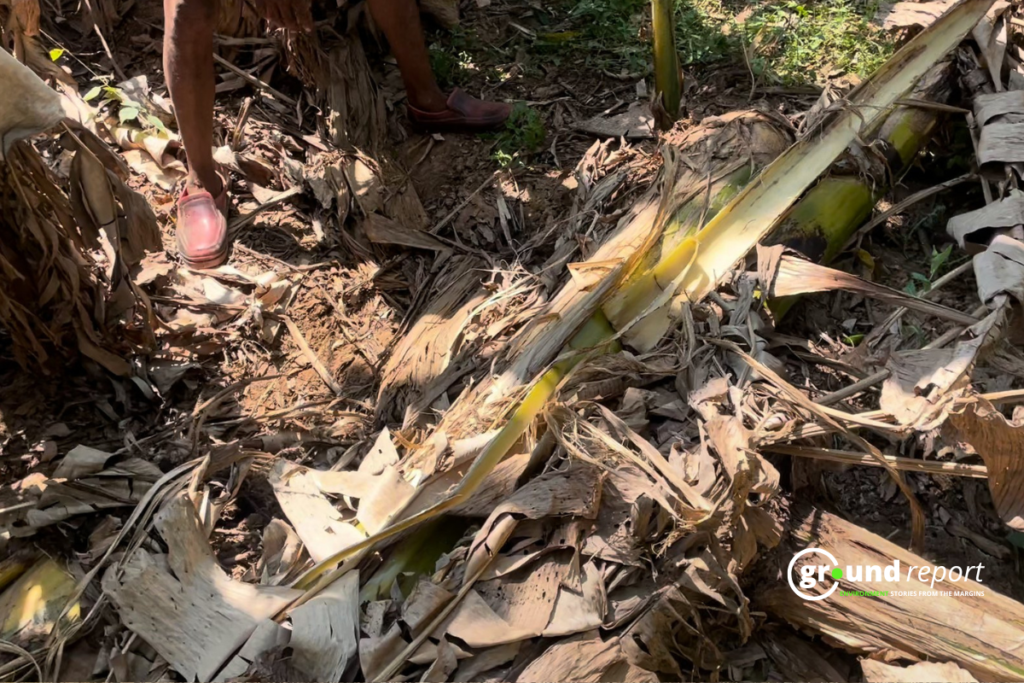
No road reaches Kandi. A footpath climbs up to it, and at the far end of the village lies Ashok Tiwari’s orchard. One night, the elephant passed through, uprooted 50 banana trees, destroyed a sugarcane crop, and broke a corner of his house. Ashok lit a fire near his field that night; his brother Ramshankar shone a torch. Only then did the elephant move on. “We had no other option,” Ashok said.
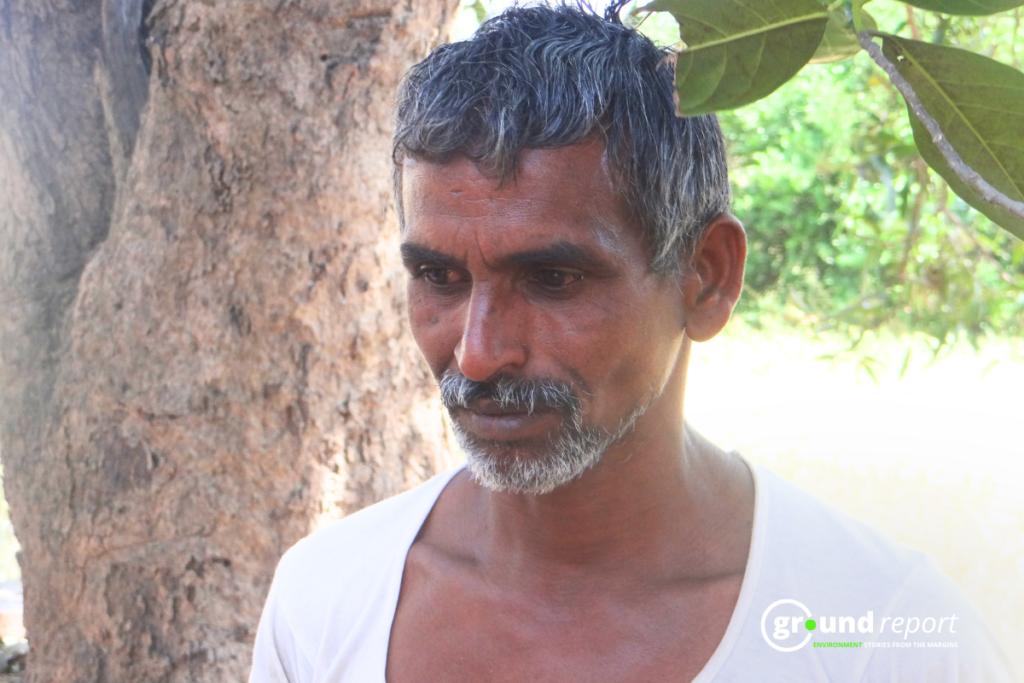
Further away in Kesra village, Shankarshan Pandey has left his home altogether. He now sits below the hillside with his family and livestock, unable even to go out and collect mahua flowers. “There is an atmosphere of fear because of the elephant,” he said.
A conflict waiting to happen
The forest department knows what villagers are doing to protect themselves. “We tell people to stay indoors, not make noise, and avoid anything that could make the animal aggressive,” Singh said. But those same self-protective steps have already led to conflict with forest staff.
On the night of 19 March, Bharat reached Sitapur, a village with a market, a busy road, and dense settlements. He walked right up to the market. A crowd gathered, people lit torches, and when forest staff tried to intervene, they were attacked. Villagers allegedly pulled the uniform and badge off Deputy Ranger Bhaiya Lal Tiwari, and a forest department vehicle was damaged.
Shakuntala Singh Bhadauria, who witnessed the incident, said that when she gave a forest worker shelter in her home, the crowd turned on her husband, Balwan Singh, too, who has a heart condition.
For Varsha Singh, this is the hardest part of the job. She said managing the crowd is far harder than managing the elephant. Pandey sees it differently: “The forest department can’t do anything on its own, and it won’t let us defend ourselves either.”
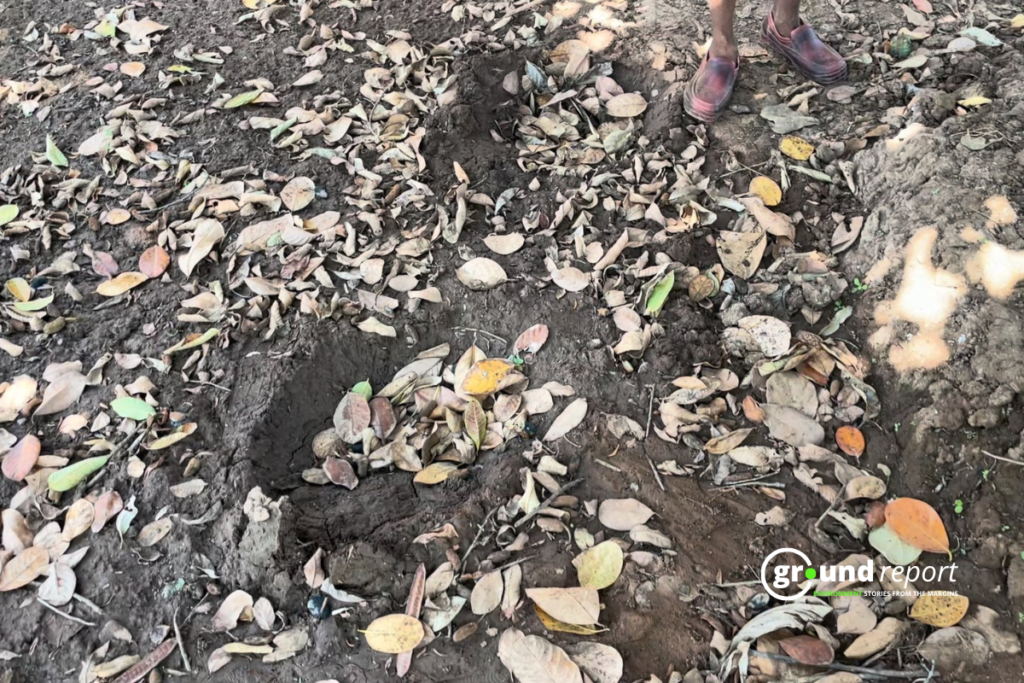
Wildlife activist Ajay Dubey shares that underlying worry, though from another angle. He said firecrackers, fire, and torches only increase the elephant’s aggression and that this cycle needs to stop before it spreads further across Madhya Pradesh.
A current that kills
Raghuvir Saket of Malakpur faces a different problem: the forest department cuts power whenever the elephant moves through the area, sometimes for three days at a stretch. In his hillside village, no electricity also means no water pump. “We should at least get 3-4 hours of power a day so we can fill water for drinking,” he said.
He complained to the electricity department, but the complaint was never registered on the CM Helpline.
The stakes behind that caution are real.
Data presented by the Ministry of Environment in Parliament in December 2024 shows 392 elephants died from electrocution nationwide over the past five years — 76 in 2019-20, 65 in 2020-21, 57 in 2021-22, 100 in 2022-23 and 94 in 2023-24. Neighbouring Chhattisgarh recorded 9 such deaths in 2022-23 and 10 in 2023-24.
The human toll runs the other way.
According to a Mongabay Hindi report, the first death from human-elephant conflict in Madhya Pradesh came in 2018, when two people died; four died in 2020 and six in 2021 – years when elephants stayed mainly around Bandhavgarh and Sanjay Dubri. They have since reached Rewa and Mauganj.
Nationally, data presented in the Lok Sabha by the Union Ministry of Environment, Forest and Climate Change in November 2024 shows elephant attacks killed 2,853 people between 2019-20 and 2023-24 — 628 in 2023-24 alone and 610 the year before. Over the same period, electrocution, trains, poaching, and poisoning killed 528 elephants.
What happens if this isn’t resolved?
Dubey said that if compensation for damage does not arrive quickly, people will turn hostile toward elephants. “Technical management alone is not enough,” he said. “Building trust among citizens matters just as much.”
Singh has assured affected villagers of compensation, but Ashok Tiwari said no survey has even been conducted yet.
After ten elephants died in Bandhavgarh, the state government announced plans to form an elephant task force and train local “elephant friends”. That preparation has not reached the ground in Rewa and Mauganj, and Dubey wants wildlife experts sent from Bhopal into the field immediately.
“If the elephant stays here a few more weeks, it will get shot,” Pandey said. “We have no other option left.”
Varsha Singh maintains that Bharat will make it back safely.
Between those two claims, no solution is visible on the ground yet. An elephant is still wandering unfamiliar forests, forest staff are still trying to keep him safe, and villagers are still afraid of an animal they have never seen before.
Journalist Lovekush Pandey contributed on-the-ground support during this reporting.
Support Us To Sustain Independent Environmental Journalism In India.
More Ground Reports
He Was Married as a Child, Now Manish Dangi Helps Stop It for Others
Despite The Ban, How Gutkha Became MP’s Most Common Household Habit