Deepanshu Meena came to Indore from Rajgarh (Byavra) three years ago. Some of his friends have already packed up and gone back home, not because they wanted to, but because there simply isn’t enough water to stay.
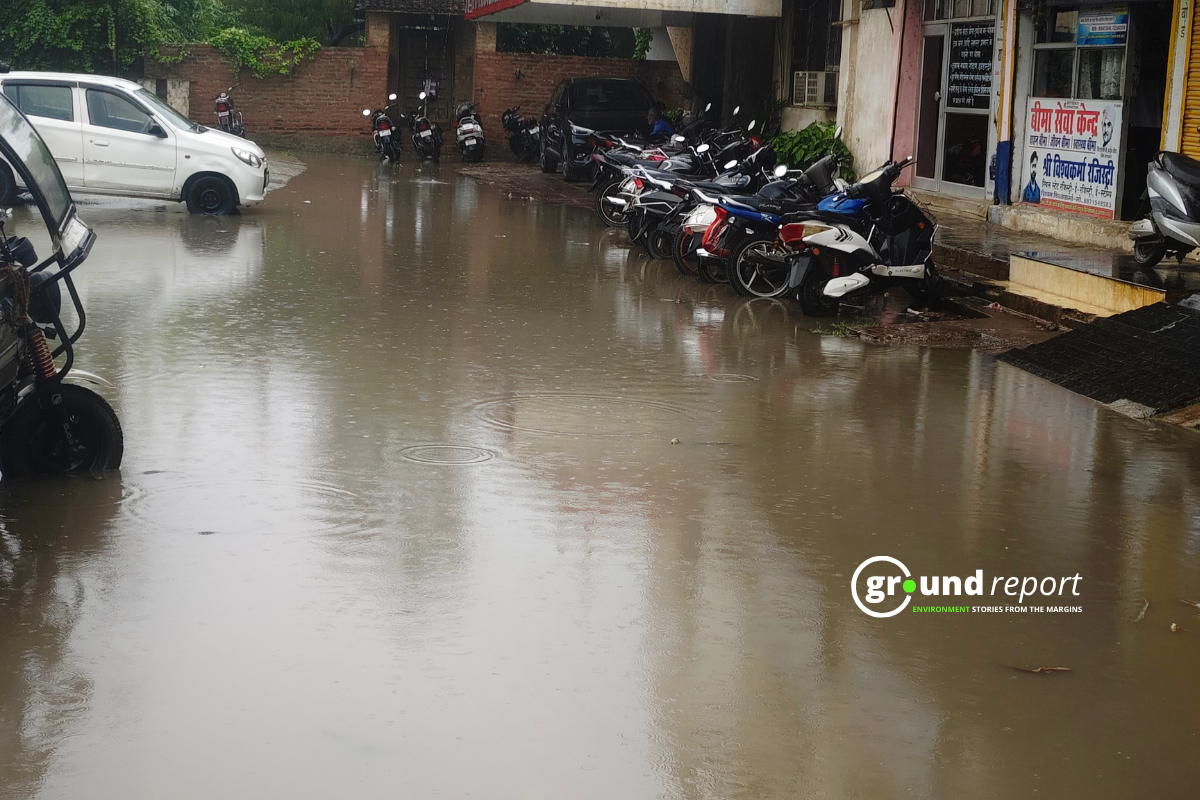
Across the city, households either sit with empty vessels or pool money together to arrange water tankers. In wards that were absorbed into Indore’s city limits just twelve years ago, basic urban amenities roads, electricity, drainage, and water are still a distant promise.
Protests, Blame Games, and Party Lines Crossed
The crisis broke into the open when MLA Mahendra Hardia from Assembly Constituency 05 publicly blamed the Indore Municipal Corporation (IMC) for the water shortage, remarkable, because both he and the city’s Mayor belong to the same party, the BJP.
It didn’t stop there. BJP councillor Lalbahador Verma from Ward 26 sat on a dharna (protest) outside the residence of BJP MLA Ramesh Mendola alongside local residents. Protesters at the Tapeshwari Bagh reservoir damaged a government hydrant, forcing the municipal corporation to file a police complaint. Congress councillor Kunal Solanki from Ward 75 organised a chakka jam (blocked road traffic) on May 24.
Solanki represents an area populated largely by migrant workers from other states and nearby villages. “Only two colonies have a Narmada pipeline connection, and even there, water flows for just 15 minutes a day. The rest of the area runs entirely on tankers,” he says. He estimates that 10% of workers in his ward have already left due to the water shortage. “The corporation has a budget of ₹8,500 crore, yet there’s a shortage of borewells, tankers, and hydrants.”
The Numbers Don’t Add Up
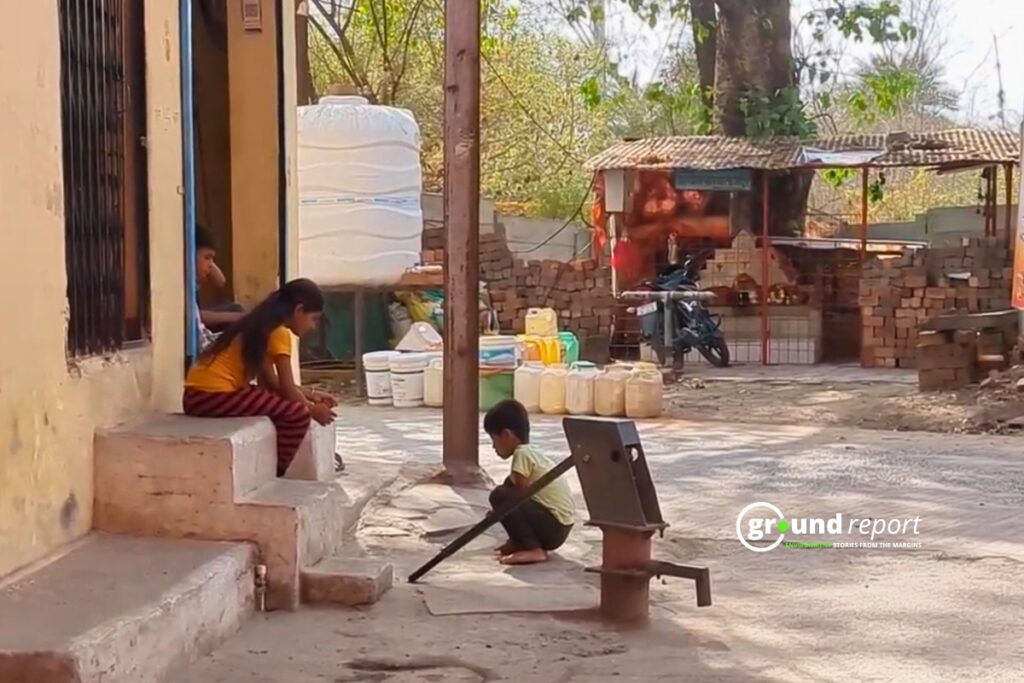
The IMC is currently deploying 616 tankers across Indore’s 85 wards, roughly 7 tankers per ward on paper. But the ground reality is uneven. Some wards make do with just two tankers, while others have ten to twelve. By May 24, the CM helpline had logged 2,437 active water complaints against the IMC.
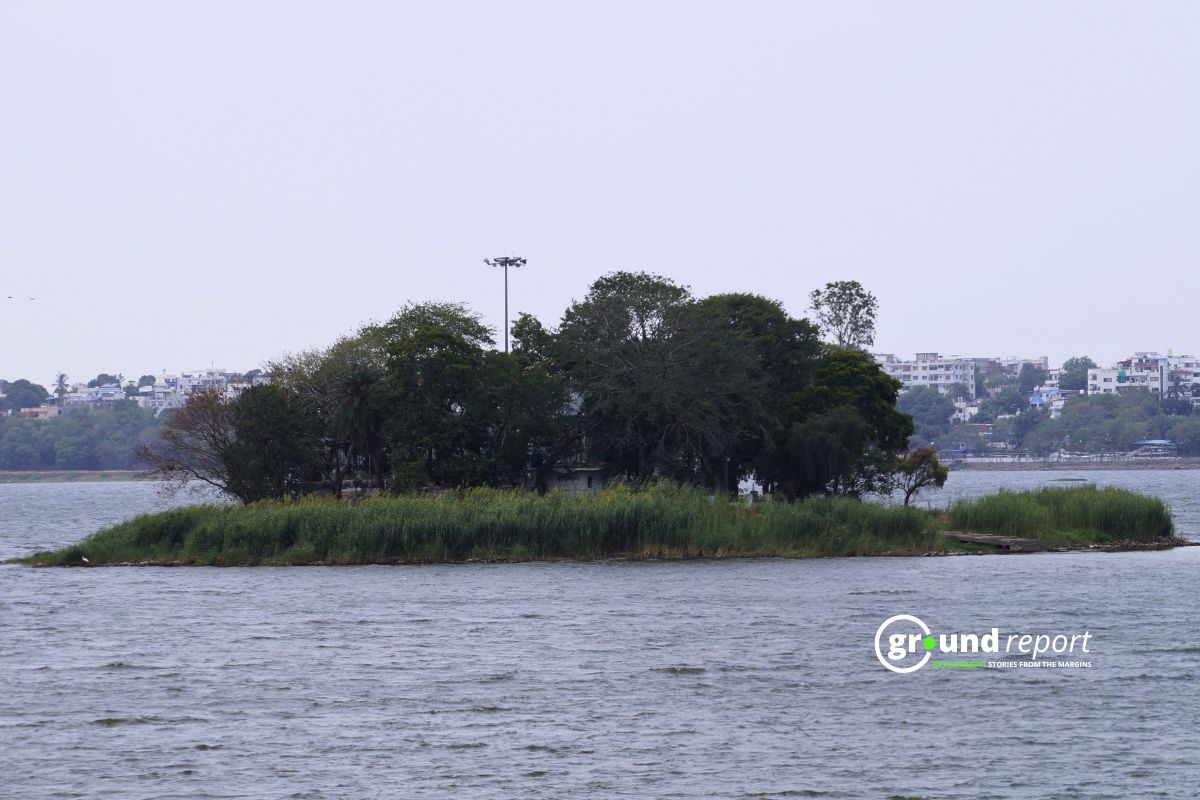
The district, on paper, is not short of water sources. Five rivers flow across 348 km, sixty lakes and ponds spread over 2,767 hectares, and around 1.51 lakh borewells exist across the district. Within the city, there are 4,945 tubewells and 1,004 handpumps.
But borewells are running dry. Ward 51 councillor Malkhan Kataria says his ward of 55,000 people has 115 borings, but water comes out of only three or four. In Ward 74, councillor representative Sunil Hardia reports that over fifty borewells, both private and government, have gone dry. His ward of 30,000-35,000 residents also hosts 30,000 students from outside the city. “Tankers run from morning to night,” he says.
Students Queuing for Water, Landlords Throwing Up Their Hands
Ward 74 includes the Bhawarkuan area, well known as a student hub. Deepanshu Meena, who lives here, says tankers are getting more expensive and landlords have given up finding a solution. His fixed monthly budget of ₹6,000-7,000 has stretched by an extra thousand rupees just because of water costs. Students are being forced to use public toilets.
Fellow student Raviraj puts it bluntly: “There’s one broken water cooler, one RO machine, one tanker shared between two buildings and 50-60 students. What is one tanker going to do? There isn’t enough water to bathe or cook.”
Every evening, after coaching classes shut for the day, long queues form outside, students waiting with bottles, cans, jars, and whatever containers they can carry. Some coaching institutes in the area have started distributing water free of charge.
Pipes Laid, Connections Never Made
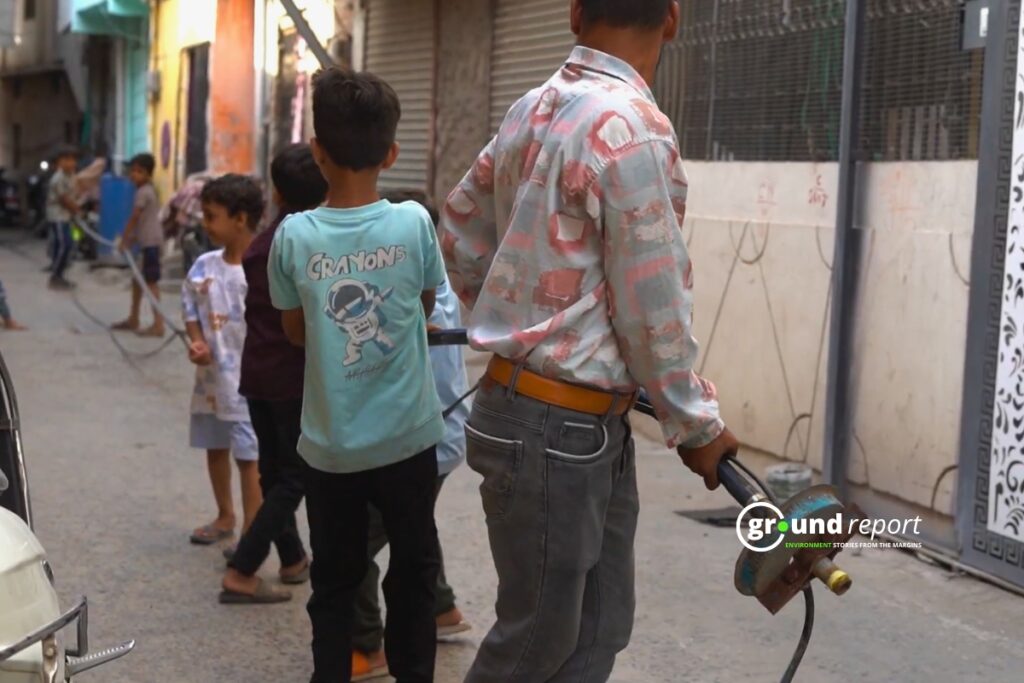
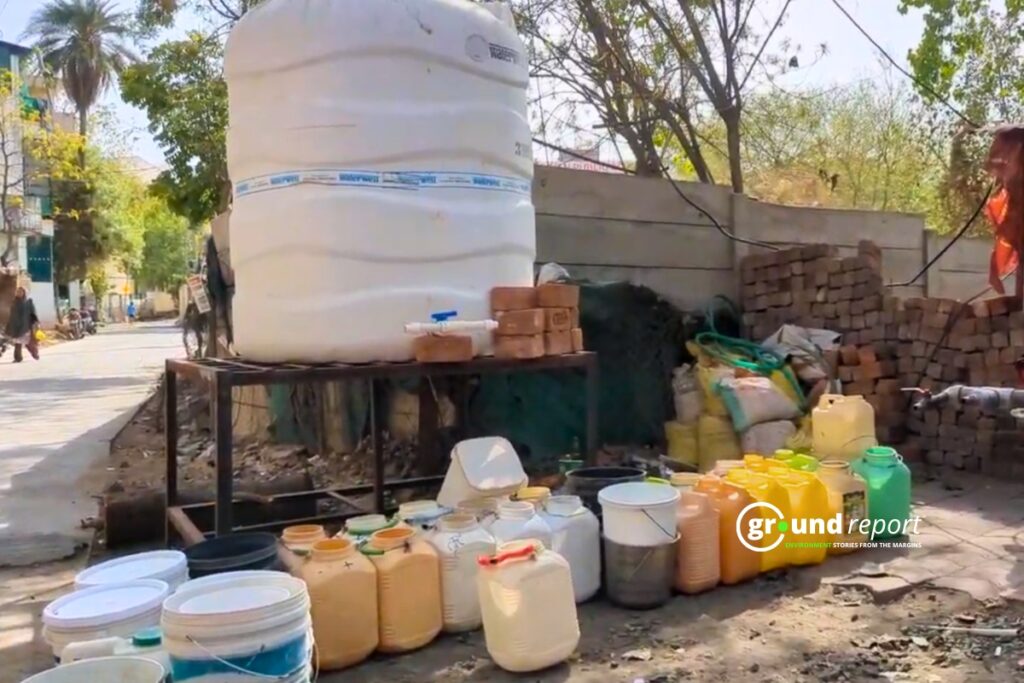
In Ward 64’s Ansari Colony, the only functioning handpump is a long walk away, across a road that sees heavy vehicle traffic all day. Residents pool money every other day to arrange a tanker costing ₹1,000-1,500 and even then, not every household gets enough.
Rahul Gangale, 30, from Ward 64’s Shriram Nagar, says, “We’ve been asking for a Narmada pipeline connection for years. It still hasn’t come.” After long days of labour, people return home and immediately head out again, loading six or seven water cans onto their vehicles to hunt for water.
The Narmada pipeline grievance runs deeper than just unconnected areas. Ward 52 councillor representative Sudama Chaudhary says, “There are several places where the Narmada line work is done, but the municipal corporation hasn’t connected them yet.” Residents of Ward 64 say the pipeline work in their area was completed five years ago, and they’re still waiting for a connection. The city receives 360 MLD of Narmada water every day, yet entire neighbourhoods remain cut off from it.
A Crisis That Was Never Really Unexpected
Water conservation expert Suresh MG says the causes of the crisis are layered. “Malwa is a basaltic region. People drill borewells without conducting geological resistivity surveys first. Water doesn’t come out, money is wasted, and the land is damaged,” he explains.
He points to the city’s expanding concrete cover as another culprit, with almost no permeable surface left, rainwater has nowhere to seep into the ground. Frequent transfers of officials, lack of experience, uncontrolled cutting of green cover, and rampant water wastage compound the problem.
“Rainwater harvesting and water conservation have never genuinely been part of government policy or planning. That is why we are where we are,” he says.
What Indore is going through is not unique. Across India, cities are facing similar reckonings, worsened by abnormal heat this year. But as experts and residents alike are pointing out, no infrastructure project or urban policy can hold unless the environment is placed at its centre — not as an afterthought, but as the starting point.
Support Us To Sustain Independent Environmental Journalism In India.
More Video Reports
India’s 24/7 Water Village ‘Kundibe’ Ran Dry in Just 5 Months
Risking Lives on Boats After Mohanpura Dam Submerges Their Only Road
Stay Connected With Ground Report For Underreported Environmental Stories.
Author
Support Ground Report to keep independent environmental journalism alive in India
We believe climate change should be the basis of current discourse, and our stories attempt to reflect the same.
Connect With Us
Send your feedback at greport2018@gmail.com
Newsletter
Subscribe our weekly free newsletter on Substack to get tailored content directly to your inbox.
When you pay, you ensure that we are able to produce on-ground underreported environmental stories and keep them free-to-read for those who can’t pay. In exchange, you get exclusive benefits.
Your support amplifies voices too often overlooked, thank you for being part of the movement.