On Monday, Rajgarh recorded 45 degrees Celsius. Twenty-two districts crossed 44 degrees. The India Meteorological Department has warned that temperatures may climb another two to three degrees in the coming days
In Bhopal, water levels in the Upper Lake have begun falling. Indore, Ujjain, Ratlam, Dhar, and Dewas are under orange alert for severe heatwave day and night.
Elsewhere in the state, road tar melted in Bhopal’s streets. In Indore, a wedding procession arranged 20 jumbo coolers and a covered tent along the route just to protect guests from the afternoon sun.
This is Madhya Pradesh in May 2026.
And a new study published early this month in the journal Urban Climate says such conditions, once episodic, have become increasingly recurrent.
The researchers at Indian Institutes of Science Education and Research (IISER), Bhopal, and Maulana Azad National Institute of Technology (MANIT) Bhopal, led by Prof. Somil Swarnkar, with PhD researcher Vaishnavi Sahu and Prof. Vikas Poonia, analyzed 65 years of climate data across all 100 cities listed under India’s Smart Cities Mission.
The study found that extreme heat and drought now hit Indian cities together. During the early period from 1958–1980, extreme heat and drought used to strike together once every 10 to 25 months in the early decades. Now, from 2001 to 2023, they return every three to five months.
And, the consequence of this, as the study explains, is that water systems have no recovery window.
“This is not a one-time event,” Swarnkar said. “When dry conditions develop, the water area decreases,” Prof. Swarnkar said. “That increases heat. These two give each other positive feedback loops — one process multiplies the other.”
Days and Deaths
“Temperatures are rising globally, and Madhya Pradesh is no exception,” said Dr. Divya E. Surendran, scientist at the India Meteorological Department’s Bhopal office.
The state experienced 176 days of extreme weather, nearly double the national average of 90 days, according to the Centre for Science and Environment.
Between March and May 2024, Madhya Pradesh recorded the highest number of confirmed heat-related deaths in India, with 56 nationwide, and nearly 25,000 suspected heatstroke cases.
In northern Madhya Pradesh, districts including Bhind, Morena, and Gwalior face rising temperatures year-round. In the east, Sidhi, Shahdol, and Satna now endure less monsoon rain and more heat simultaneously.
“Sidhi district is among the worst affected,” Poonia, co-author of the study and faculty at MANIT Bhopal, told Ground Report. “The combination of heat and low rainfall is strongest here. It affects crops, groundwater, and even drinking water.”
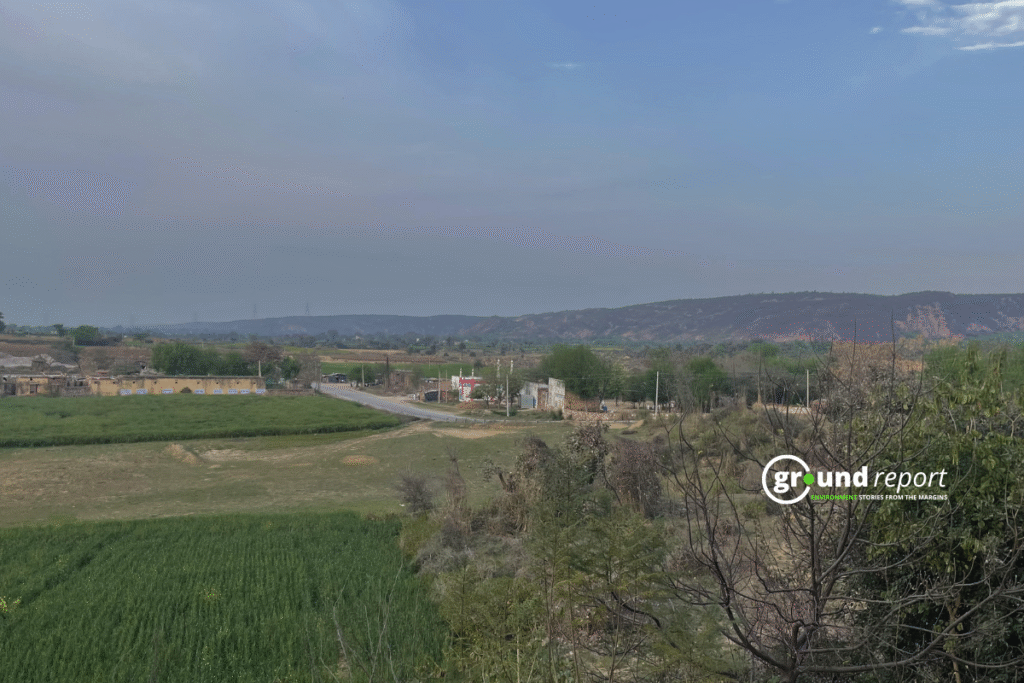
“If heat and drought events keep returning within short gaps, vegetation does not get enough time to recover. Over time, this weakens plant growth, dries soils, reduces crop yields, lowers groundwater recharge, increases tree mortality, and can gradually degrade the entire ecosystem,” Swarnkar said.
Cleanest City Among Most Climate-Stressed
The study places Gwalior and Satna in the Central India zone among the worst compound climate stress scores in the country. And, Indore, India’s cleanest city, also faces tremendous water stress, as one of the most vulnerable cities.
“Indore is part of the Malwa Plateau, a very elevated area with very limited surface water,” Prof. Swarnkar said. “The capacity to recharge groundwater there is low. Rainfall in western Madhya Pradesh is low anyway.”
Ground Report has previously reported on Indore’s water crisis in depth, from the municipal corporation’s ₹ 300 crore green bond to power its water treatment plant, to the revival of Bilawali Lake, to new rules requiring rainwater harvesting in all newly constructed buildings across the city.
“Indore has been called a green city, no doubt,” Prof. Swarnkar said. “But it also needs to act as a climate city.”
Crisis Runs Across the Country
The study’s fifteen most vulnerable cities span the Indo-Gangetic Plain and Central India: Lucknow, Prayagraj, Bareilly, Kanpur, Varanasi, Moradabad, Muzaffarpur, Agra, Saharanpur, Ranchi, Kota, Visakhapatnam, Thiruvananthapuram, Indore, and Warangal.
And, there are measurable human costs of heat. For instance, heat alone costs India 247 billion labour hours in 2024, according to the Lancet Countdown. And, a 2025 report by the Council on Energy, Environment, and Water (CEEW) found that 57 percent of Indian districts, home to over three-quarters of the country’s population, now face high to very high heat risk.
And add to that, India remains a highly water-stressed country, withdrawing nearly 66.49% of its available freshwater resources annually, and Madhya Pradesh ranks among the country’s eight most water-stressed states. The state’s groundwater table has dropped five metres since 1998, with no signs of recovery.
Across Madhya Pradesh, water now arrives by tanker in Indore, Ujjain, Bhopal, and Gwalior. In several municipal areas, supply has fallen to once every three days or less.
What the Science Shows
The researchers built a cumulative vulnerability index. The index is a composite measure that links climate exposure with four socioeconomic indicators: economics, human capital, quality of life, and environmental health.
Human capital is the single most powerful determinant of a city’s ability to absorb climate shocks, essential for a city’s climate resilience. Environmental quality ranked second. The cities with strong schools, clean air, and maintained green cover recover.
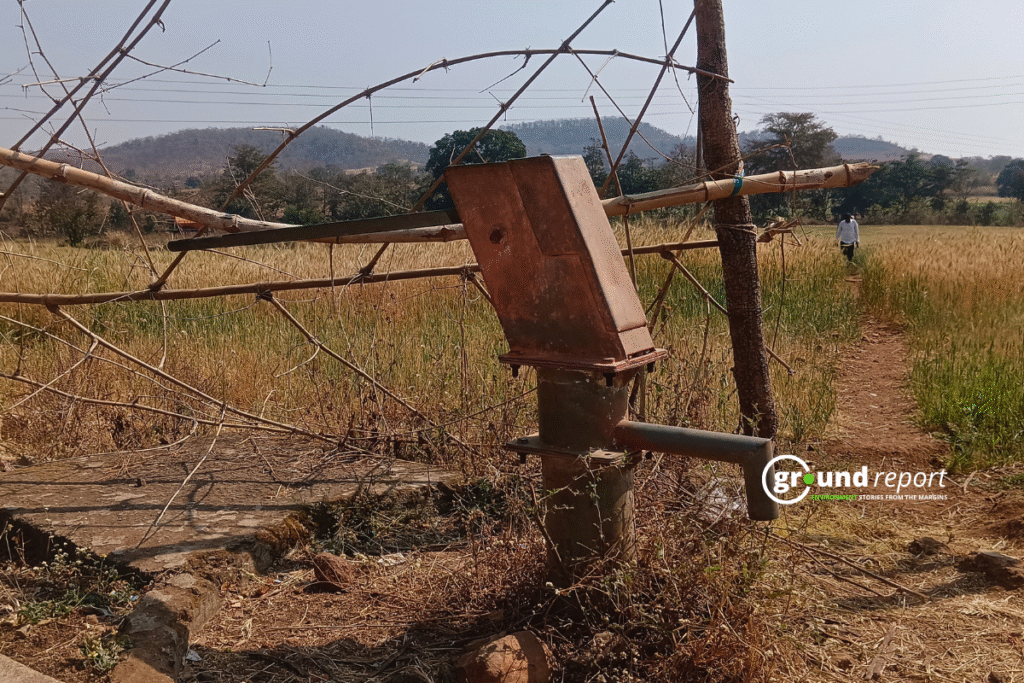
For instance, the study found that cities like Thiruvananthapuram face intense heat, yet their vulnerability scores are far lower than those of their northern counterparts.
“In South India, better socioeconomic conditions, good GDP, better health infrastructure… [this would] mean they have resources to cope,” Swarnkar said. “In Northern India and North Central Madhya Pradesh, socioeconomic development is still underway, and the population is large. Because of that, vulnerability increases many times over.”
What Must Change and What Is Missing
The IISER-MANIT study calls for embedding heat mitigation, water conservation, urban greening, and climate-resilient construction into city master plans. Risk assessment must be integrated into governance at the planning stage, not after the damage occurs.
Heatwaves were declared a state natural disaster only in the summer of 2025. As of March 2025, they were still not listed among the 12 disasters eligible for full funding under India’s state and national disaster response funds, which cover 80 percent of all disaster management spending.
The researchers insist on city-specific strategies. Indore’s water stress is not Gwalior’s heat problem. Satna’s agricultural collapse is not Lucknow’s infrastructure failure. Blanket national policy will not reach any of them.
When asked what three steps the Madhya Pradesh government should take immediately, Swarnkar said: “First, implement a heat wave action plan in every smart city — each city will need its own, because every hydroclimatic zone is different,” he said. “Second, involve scientific institutions. IITs, IISERs, central universities — open this up. Third, use advanced tools: remote sensing, GIS, machine learning and big climate data. We have the technology. We need the will.”
Support Us To Sustain Independent Environmental Journalism In India.
Keep Reading
How Solar Solutions Are Helping Protect Crops from Wild Animals
Pench Tiger Reserve: How a Man Survived a Tiger Attack