Lately, outside the Shiva Bharat Gas Agency on Narmadapuram Road in Bhopal, long queues have become a regular sight. Some people are waiting to collect cylinders, while others have come simply to ask when their booking will be delivered. The government insists that the supply of domestic LPG (Liquefied Petroleum Gas) remains normal and that there is no reason to panic. On the other hand, small business owners and hostel operators tell a different story.
Recent international tensions have created uncertainty around gas supplies. Rising tensions between Iran and the United States have affected shipments passing through the Strait of Hormuz, a key route for global energy supplies. In response, the Indian government issued the “Natural Gas Supply Regulation Order 2026” on March 9, which prioritises the distribution of gas. Under the order, domestic LPG, CNG (Compressed Natural Gas), and piped gas for households have been given the highest priority, while refilling of commercial LPG cylinders—used by hotels, eateries, and catering businesses—has been temporarily halted.
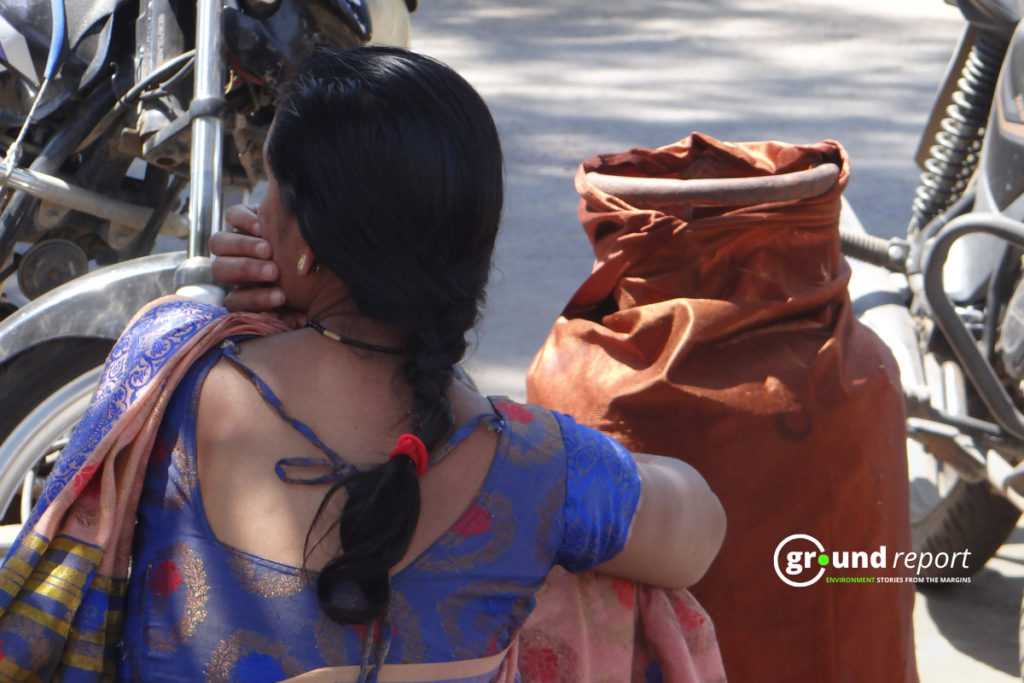
The decision has had immediate consequences in Bhopal, Madhya Pradesh. While many residents are lining up for domestic cylinders, the halt in commercial LPG refills has disrupted the livelihoods of street vendors who rely on gas to cook food. Hostel kitchens that feed hundreds of students are also beginning to feel the strain.
Street Vendors Hit Hard
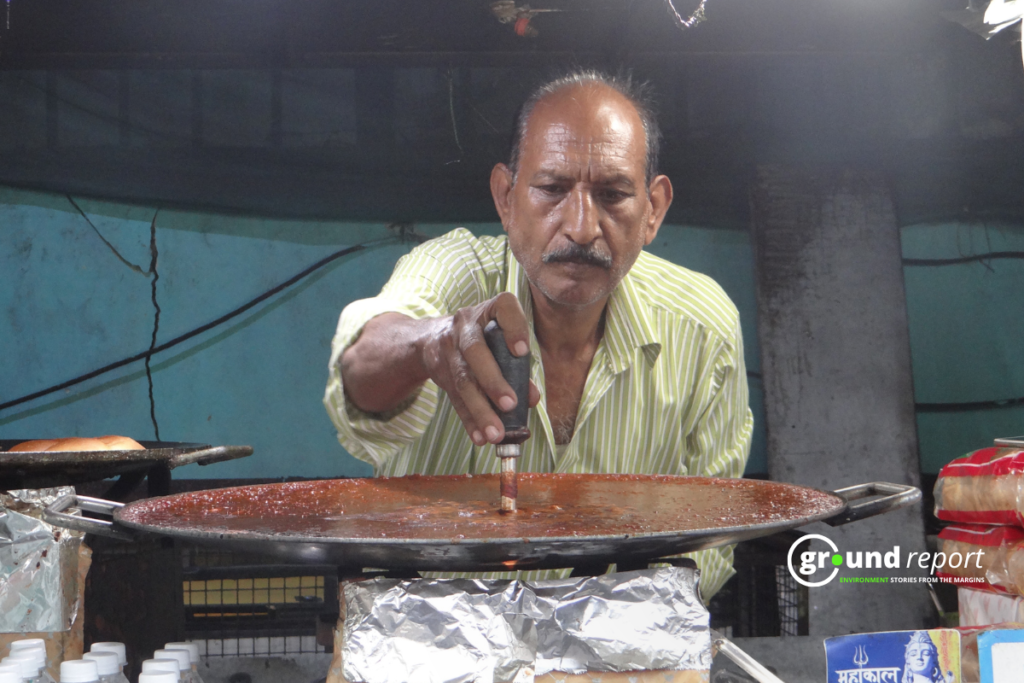
Mukesh, who runs an idli–dosa cart in Bagsewaniya, says he has not been able to get a cylinder for the past fifteen days. After his gas ran out, he had to change his entire menu. “Earlier I would make around ₹3,000 a day,” he said. “Now it’s difficult to earn even ₹400. I stopped making dosa. I’m selling only idlis. Customers keep asking if dosa is available—but what can I say when there’s no gas?”
At Mukesh’s cart, everything—from dosa batter to sambhar—needs to be cooked on a gas stove. One cylinder typically lasts about fifteen days. “Food businesses simply cannot run without gas,” he said. “You can sell lemonade or sugarcane juice without gas, but here everything has to be cooked hot.”
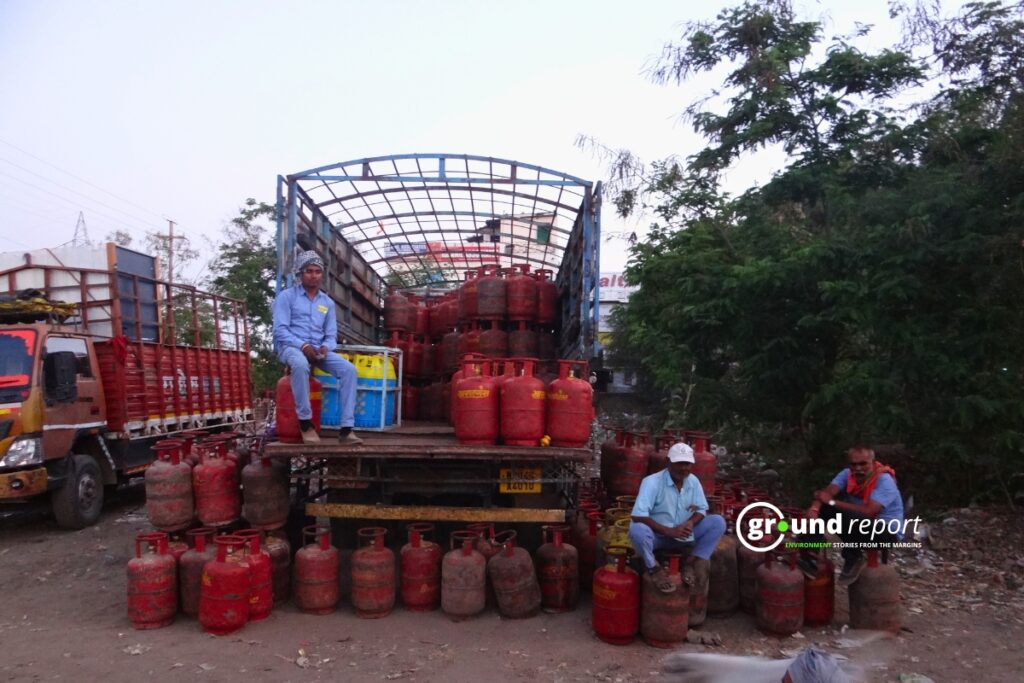
Brijkishore Sahu, who runs a dal–baati (Lentil Curry with Baked Wheat Balls) cart, is facing a similar situation. A few days ago, he had taken a cylinder home for household use. But after the cylinder used at his food cart ran out, he has been making repeated trips to the gas agency. Sahu says that earlier he could get commercial cylinders through unofficial channels, but now, according to him, cylinders are not available even on the black market.
“For the last two days, my stall has been closed,” he said. “Our work is cooking and selling food. What else can we do?”
Hostel Kitchens May Cut Down Menus
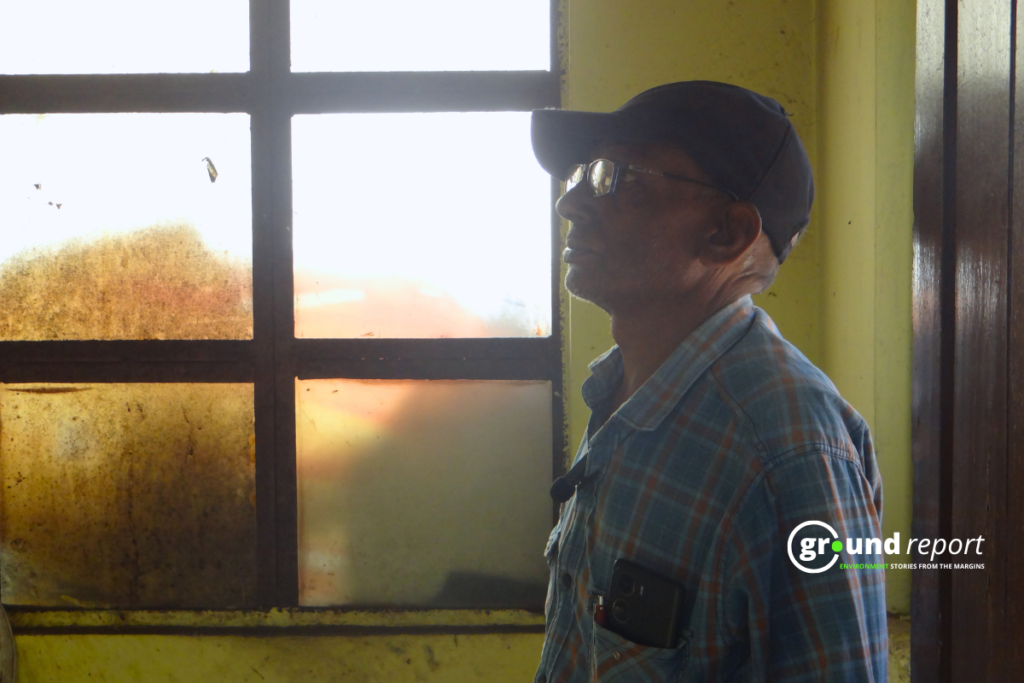
Bhopal’s Maharana Pratap (MP) Nagar area is known for coaching institutes and private hostels where students from different cities stay. Most hostels run their own mess kitchens.
Netaram Singh Dhakad, who runs a private boys’ hostel, says any disruption in gas supply will affect the meals served to students. His hostel kitchen usually uses three to four commercial cylinders every month. When news reports first began discussing a possible gas shortage, he still had two half-filled cylinders. Those are now nearly finished.
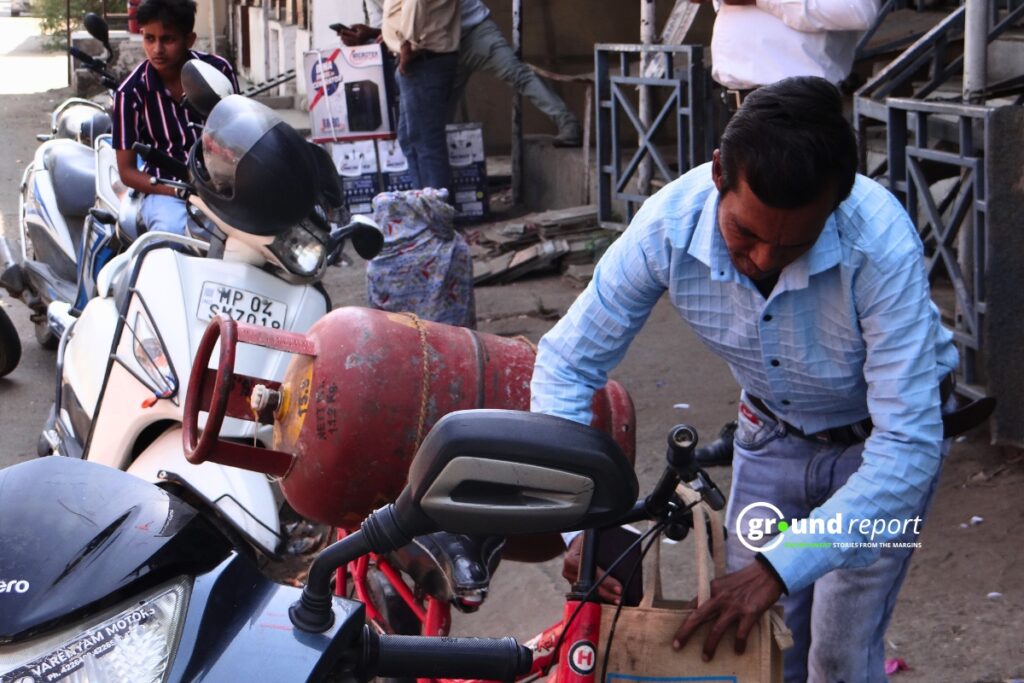
His hostel had around 45 students, but the number has now dropped to about 30. He says, “When the gas problem began, a few students went back home. I told them that if gas isn’t available, it will be difficult to cook. Their exams are going on, and they keep asking what will happen now.”
“The government kept saying everything was normal and there would be no shortage,” he said. “So we didn’t make any advance arrangements.”
He says that if the situation continues, he may be forced to cut down the hostel menu. “At present, we serve dal, rice, vegetables, roti, pickle, salad, and raita. If the crisis continues, we may have to remove some of these items. We might even reduce three meals a day to two.”
In contrast, Sangeeta Pandey, day warden at the Shri Palace Gem Girls Hostel in MP Nagar Zone-1, says they prepared in advance. Their hostel, which has a capacity of 50 students, uses about six cylinders every month. Pandey says they ordered cylinders in advance after assessing the situation.
“We told our kitchen staff to reduce dishes that consume more gas,” she said. “For evening snacks, we’re trying to include items that require less cooking.”
Dhakad is considering switching to a diesel furnace as an alternative, though he is skeptical about using induction stoves. “You can’t make rotis on induction,” he said.
For Mukesh, changing equipment is also not easy. Four years ago, he spent about ₹18,000 to build his cart. He later bought a dosa stove for ₹4,000 and another stove for heating sambhar for ₹1,000. Installing the setup costs another ₹1,000, bringing the total investment to about ₹25,000. If he switches to a diesel furnace, he says it would cost another ₹15,000 to ₹20,000—an expense he cannot afford.
Queues Outside Gas Agencies
Sanjay, who runs the Shiva Bharat Gas Agency, says domestic LPG supplies from the company remain normal. He says, “People think that cylinders may not be available later, so they come directly to the agency to collect them. In many cases, the delivery truck had already left for their homes… Sometimes we even call them to say that the truck is standing outside their house, but they still insist on picking it up from the agency.”
However, he confirmed that the supply of commercial cylinders has been halted for now. “As soon as the company resumes sending commercial cylinders, distribution will start again,” he said.
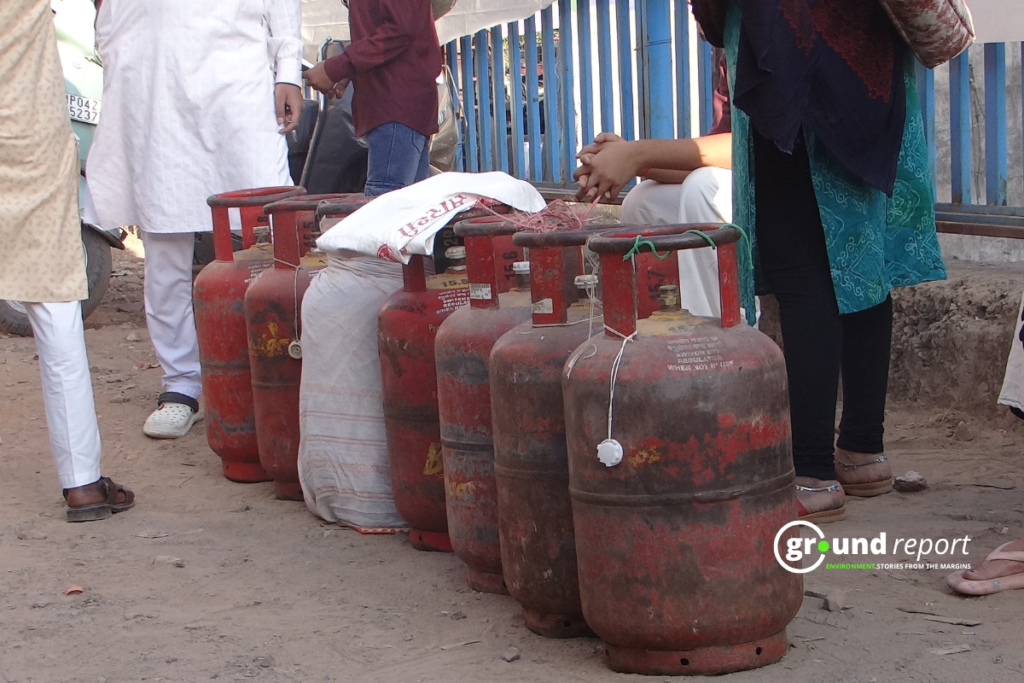
The Ministry of Petroleum and Natural Gas has said domestic LPG availability will not be affected. To tighten distribution and prevent hoarding, digital booking and delivery systems are being enforced more strictly. Consumers must book cylinders using their registered mobile numbers and provide an OTP at the time of delivery.
Bhopal Collector Kaushlendra Vikram Singh said in the order posted on social media that the [digital] system will help curb hoarding and black marketing. On March 13, authorities conducted enforcement raids at 11 locations across the state, seizing 228 cylinders and registering three cases.
At the beginning of March, the price of a 14.2-kg domestic LPG cylinder in Bhopal rose to about ₹918, while a 19-kg commercial cylinder reached around ₹1,910. For small business owners, however, the main concern is not price but availability.
The state’s Food, Civil Supplies, and Consumer Protection Department has said there is adequate LPG stock across Madhya Pradesh. According to officials, the state’s 11 bottling plants and distributor warehouses currently have sufficient cylinders.
The Bhopal district administration has also said there is no reason to panic over domestic LPG supplies, adding that companies continue to deliver cylinders regularly as per online bookings.
Meanwhile, vendors like Mukesh are trying to cope with whatever options they have left. On Friday, he managed to get a domestic cylinder—but legally, he cannot use it for his food cart. “I’m not asking the government for much,” he said. “Just make the gas supply normal again.”
News Agency ANI reported on Saturday, Sujata Sharma, Joint Secretary (Marketing & Oil Refinery), Ministry of Petroleum & Natural Gas said, “there was considerable discussion regarding commercial cylinder, and after that it was decided that some LPG should also be supplied to commercial consumers.” According to a report in The Economic Times, the move aims to stabilize supply conditions.
However, when Mukesh contacted the local gas agency on Sunday, officials told him they had not yet received any such instructions. They said commercial cylinders would be distributed once the supply resumes.
Support Us To Sustain Independent Environmental Journalism In India.
More Video Reports
Meet the Rajgarh Farmer Who Switched from Soybeans to Strawberries and Built a Profitable Model
How Aeroponics Is Reshaping Potato Seed Production in Madhya Pradesh
Stay Connected With Ground Report For Underreported Environmental Stories.
Authors
Support Ground Report to keep independent environmental journalism alive in India
We believe climate change should be the basis of current discourse, and our stories attempt to reflect the same.
Connect With Us
Send your feedback at greport2018@gmail.com
Newsletter
Subscribe our weekly free newsletter on Substack to get tailored content directly to your inbox.
When you pay, you ensure that we are able to produce on-ground underreported environmental stories and keep them free-to-read for those who can’t pay. In exchange, you get exclusive benefits.
Your support amplifies voices too often overlooked, thank you for being part of the movement.