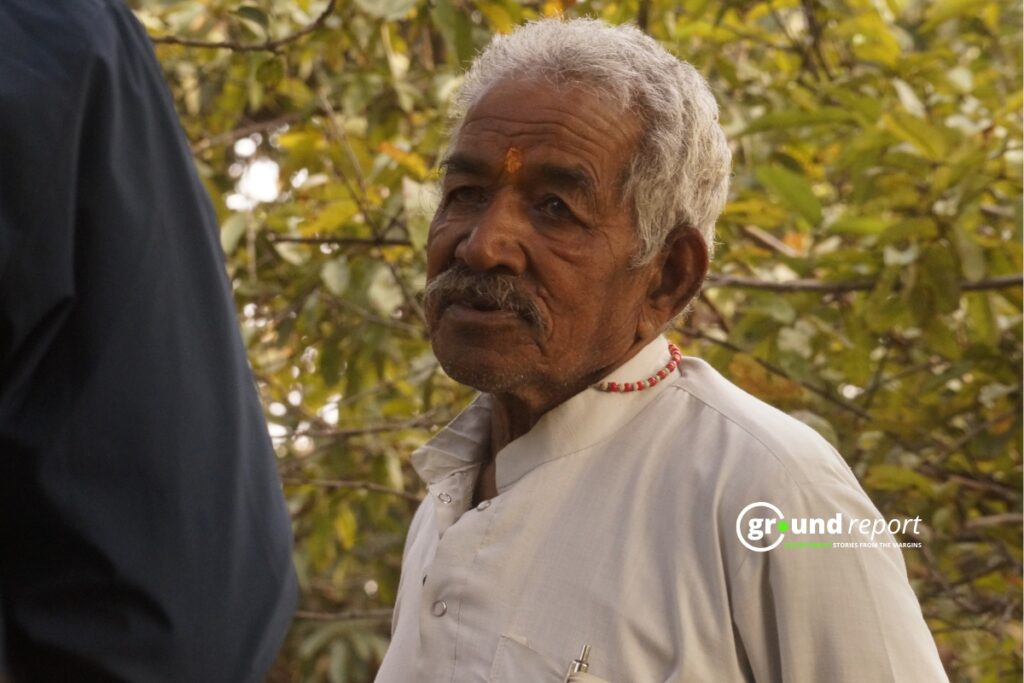
In 1975, when Mahesh Shrivastav’s family bought a parcel of land in the water-scarce region of Sehore in Madhya Pradesh, it resembled a patch of scrub forest more than a farm, he recalled. There were wild trees, uneven ground, and little sign of cultivation. The family grew “Sarbati” wheat, a variety suited to low irrigation; one good rainfall and a single watering were often enough. “There wasn’t much profit in it,” he recalled.
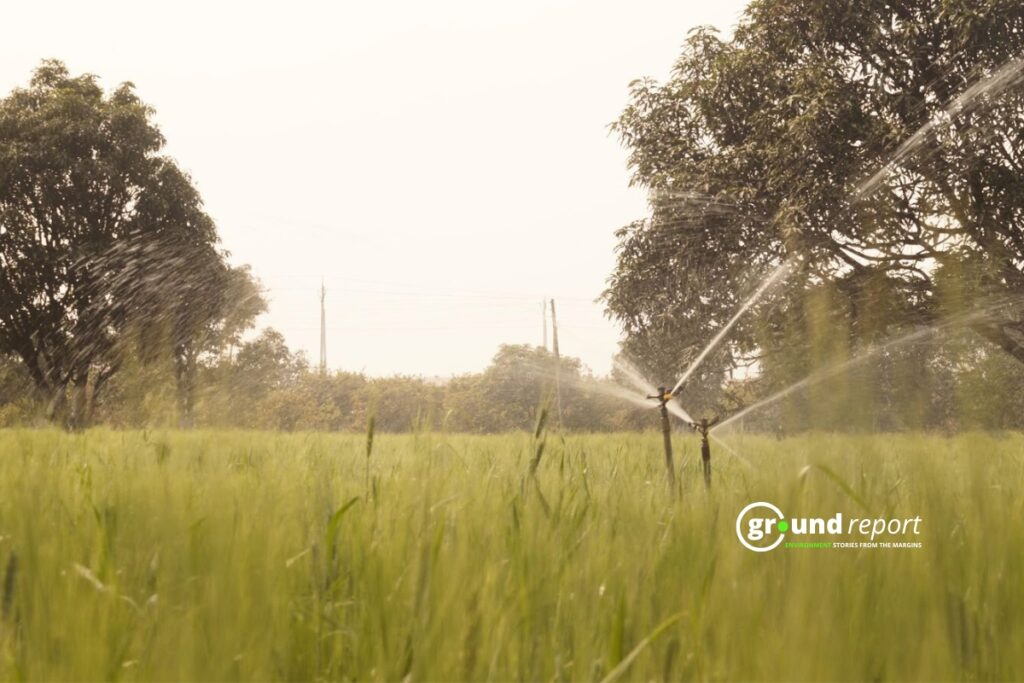
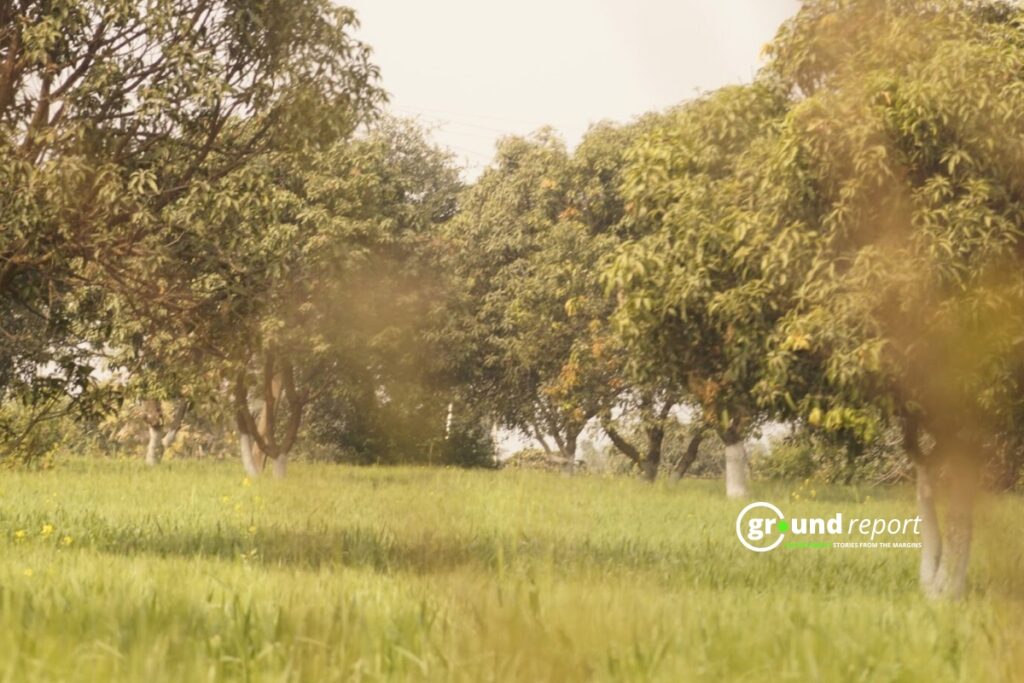
He soon realized that to improve his returns, Shrivastav needed to adopt “intercropping,” i.e., cultivating food crops alongside fruit trees on the same land. He reached out to the Sehore horticulture department and planted 300 guava trees and 300 mango trees. Drip irrigation, subsidized under state horticulture schemes, allowed him to sustain the saplings despite limited water.
Today, that same land is a layered mosaic of mango, guava, wheat, livestock, and organic inputs, an example of agroforestry quietly taking root in central India.
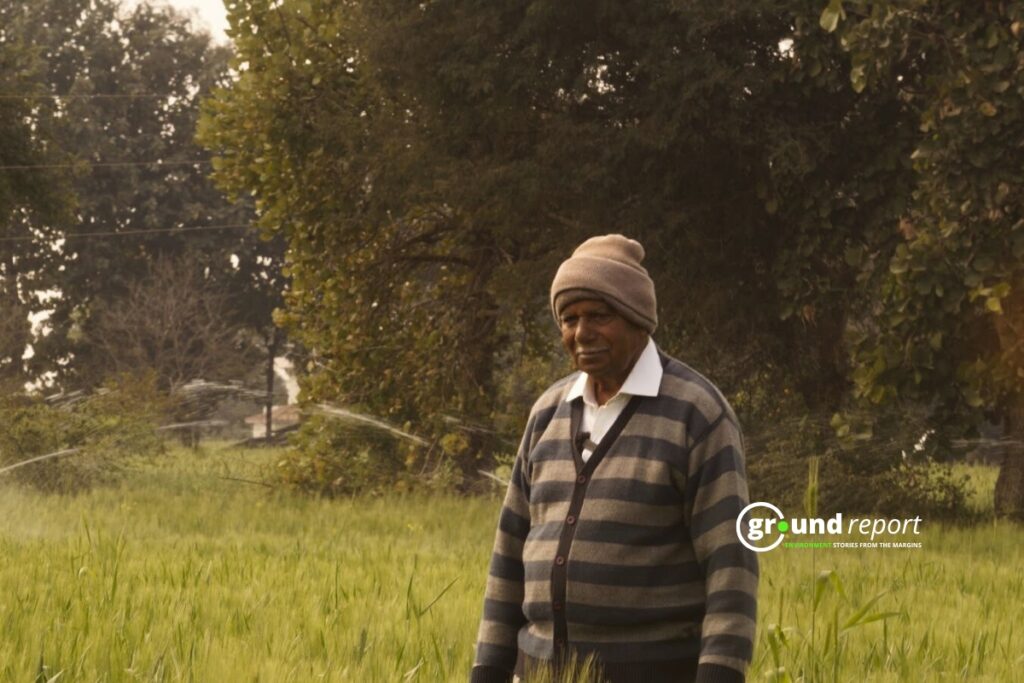
Nearly 60 kilometers away, in Sanchi, Mehraban Rajput tells a similar story. He also planted 100 mango saplings in the 1980s, with advice from Sanchi horticulture officials, and ensured that all of them survived. And they did, he recalled with great pride: the horticulture department praised him and gave him 100 more saplings. These 200 saplings were the start of his agroforestry endeavors. Later, he experimented with ginger, garlic, and onions.
Between these two farmers lies a larger question: can agroforestry emerge as a serious alternative to conventional monoculture farming in Madhya Pradesh, especially in a world increasingly shaped by climate change?
Agroforestry Has Regional Importance
Agroforestry, in simple terms, is the “cultivation” of trees with crops and sometimes livestock on the same land.
At the Indian Institute of Forest Management (IIFM) in Bhopal, Bhimappa Kittur studies agroforestry systems and rural livelihoods. He describes trees as critical “ecosystem services” providers, in addition to providing added income for farmers. From supporting biodiversity and providing habitat for birds and insects to sequestering carbon and recycling nutrients from deeper soil layers, trees play a vital ecological role in both rural and urban landscapes.
“Trees accumulate biomass and carbon that can remain stored for 200 years unless burned or decayed,” he explained.
Madhya Pradesh faces increasing climate variability, erratic rainfall, prolonged dry spells, and heatwaves, with almost 72 days of extreme weather events. As mentioned previously, agroforestry is a great adaptation policy against the variability induced by climate change.
There is no single tree species that can be planted everywhere in India, Kittur warned. Agroforestry has regional importance. Each region has its own unique agroforestry model suited to its climate and ecological conditions. Kittur explained various agroforestry models across different parts of India.
“If you go to the Western Ghats — from Gujarat down to Kerala — and also along the Eastern Ghats, the coastal belt and the Konkan belt, you will find a humid climate. The agroforestry models there are different. For example, arecanut, coconut, and jackfruit are commonly grown. This system is often referred to as a home garden system.”
“If you go to the dry regions of Andhra Pradesh, you will find eucalyptus-based agroforestry systems. The site conditions are harsh — high temperatures and low humidity. In such climates, eucalyptus, Melia dubia, and some local species are grown. Red sanders is particularly prominent in the dry regions of Andhra Pradesh — especially in areas like Chittoor, Tirupati, Kurnool, and parts of Ballari in South India.”
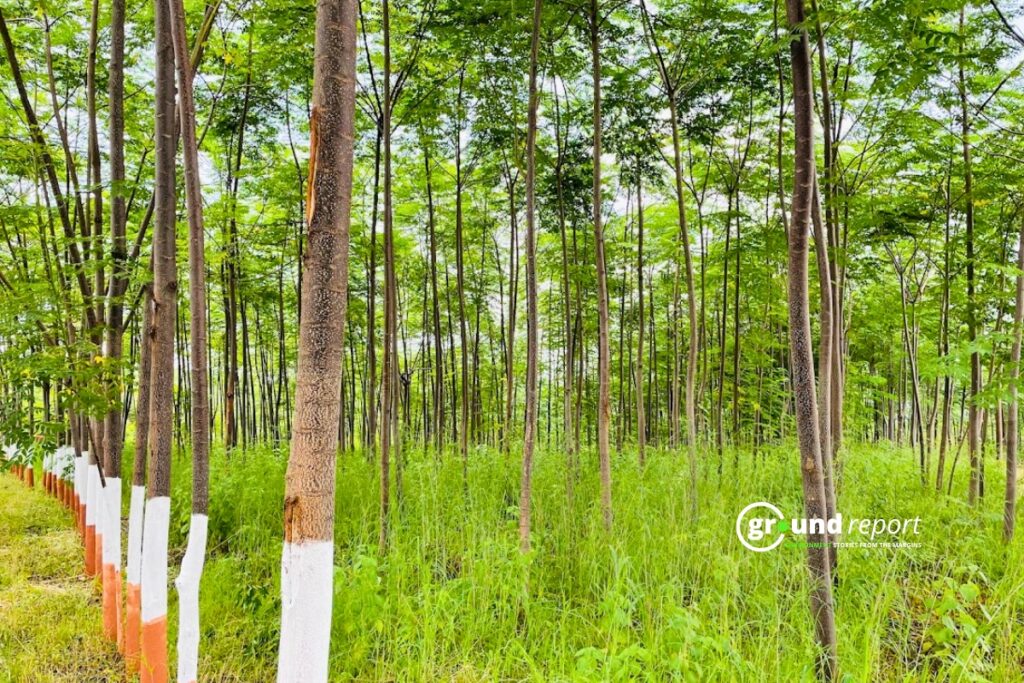
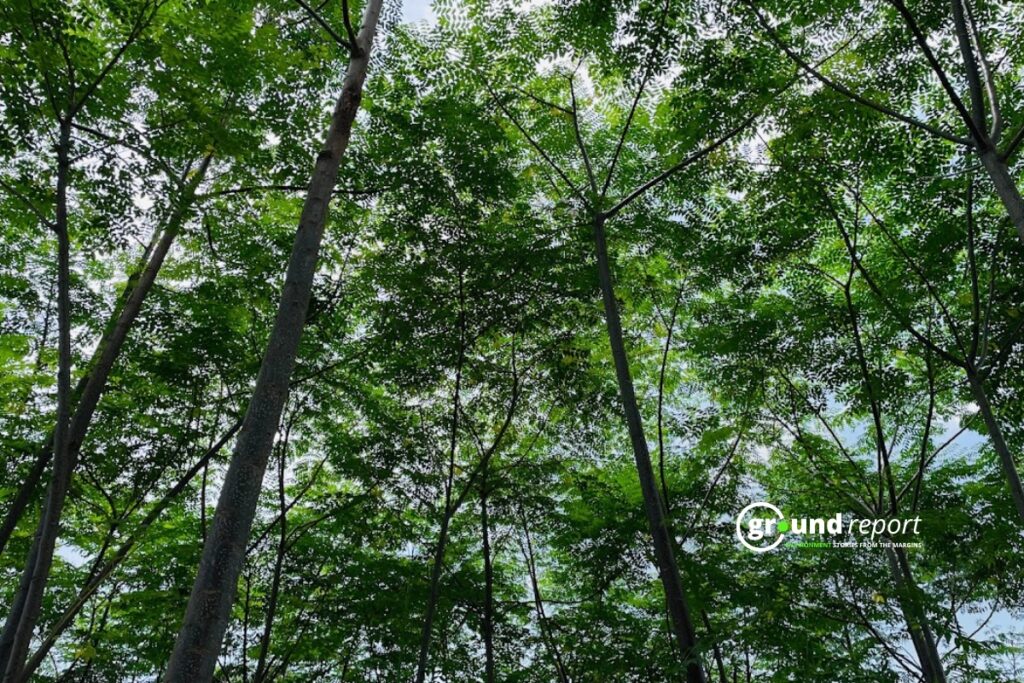
“When you move slightly toward central India, teak becomes prominent. Teak is also found in South India, but it is more dominant in central India. Eucalyptus is also common there. In addition, species such as Arjun, Harra, Behda, and Amla are prominent in central Indian landscapes. Arjun, in particular, is important in agroforestry systems associated with lac cultivation.”
“If you go to higher altitudes — such as parts of Uttar Pradesh, Haryana, Punjab, and southern Uttarakhand — poplar is very prominent and widely cultivated. Poplar grows well in areas with a high water table and prolonged winter chilling.”
“At still higher altitudes, such as in Himachal, apple cultivation becomes common, along with other local species.”
There are also knowledge gaps. Farmers experimenting with high-value species like sandalwood sometimes underestimate site suitability. Before planting any tree, a proper background check must be done. “Otherwise, if it fails, five or even ten years of your hard work are wasted,” Kittur said.
“Sometimes farmers plant sandalwood in places like Uttarakhand or Punjab. The tree may grow, but there is no guarantee it will produce oil. Oil content is genetically controlled,” He further explained. “Just because the tree survives, it doesn’t mean it will give the expected return.”Other organisations like Action for Social Advancement (ASA) are working with farmers in Shahdol, in the east of Madhya Pradesh, to promote agroforestry through Corporate Social Responsibility (CSR) and grant-based work.
Myths and Resistance

These agroforestry experiments came with their resistance, challenges, and myths. Rajput recalled that many neighboring farmers warned him that trees would reduce crop yields, take away nutrients, and occupy extra space. Rajput said, “Farmers these days have become such that they want only money, nothing else.”
Drawing from his experience, Shrivastav explained that chikoo and custard apple trees remain relatively small and can be planted about 10 feet apart without affecting adjoining crops. Fig trees, he said, need around 15 feet of spacing, while mango trees require a much wider gap — nearly 30 feet between each plant — to grow properly without competing for light and nutrients.
And the trees, Rajput says, give back in both tangible and intangible ways, through income, shade, soil health, and ecological balance. “Put in hard work for three years… after that, they yield on their own,” Rajput says.
Rajput added that certain crops, such as onions and ginger, thrive in partial shade, making them suitable for intercropping. He grows wheat under the same trees, too. And, he said, even staple crops yield the same with agroforestry.
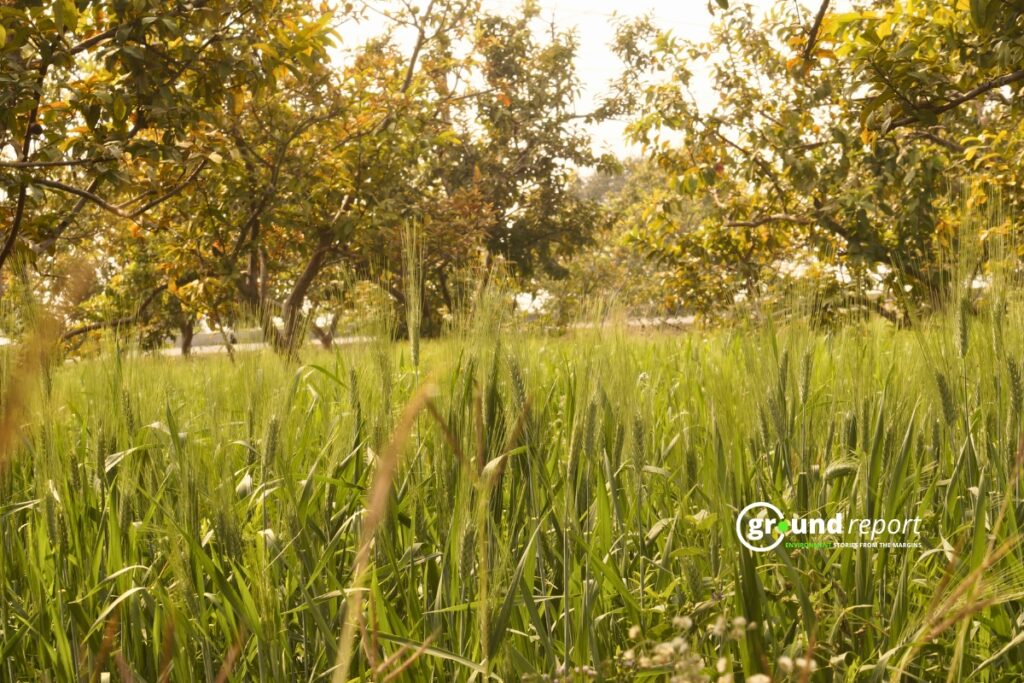
From the beginning, Rajput saw the addition of trees in his fields differently. His cows rest under mango shade. Their dung can become vermicompost. And leaves can decompose into mulch. This perspective is quite similar to Shrivastav’s.
Rajput did a training in the early 2000s, which enabled his switch to organic methods. Shrivastav pushed his government employment experience into agriculture. He stopped using urea and DAP fertilizers. Instead, he used cow dung compost, vermicompost, and decomposed leaf litter.
The livestock component is optional in the agroforestry framework, but Shrivastav advocated for it. He said that a few cows can close nutrient cycles, as their dung will provide the entire compost. He described preparing natural pesticides from cow urine, neem, garlic, and local herbs, fermented mixtures sprayed on tree trunks to prevent pests. This is his direct solution to chemical-intensive farming, with pesticides.
He explained that this would have dual benefits. The input costs will decrease, and soil structure will improve. The initial yield might drop, but long-term benefits will outweigh the loss.
Policies on Paper: What Madhya Pradesh Offers
Madhya Pradesh has aligned itself with India’s National Agroforestry Policy (2014), which aims to increase tree cover on farmland and improve farmer incomes. At the state level, agroforestry promotion largely operates through the Horticulture Department and allied schemes.
Farmers with valid ID cards can access subsidies on drip irrigation systems, financial support for purchasing saplings, maintenance subsidies for plant care, and dairy subsidies, encouraging integration of livestock.
In addition, schemes like the Sub-Mission on Agroforestry (SMAF) under the National Mission for Sustainable Agriculture provide central assistance to states, including Madhya Pradesh, for quality planting material and capacity building. According to data shared in the Rajya Sabha in 2022, Madhya Pradesh had established 51 nurseries, 1,345 hectares of tree cover, with approximately five lakh trees planted.
According to the Madhya Pradesh Economic Survey 2025-26, the target for this scheme was 38 nurseries and tissue culture labs in the financial year 2024-25, against which 23 nurseries and 1 tissue culture lab were established. The target for 2025-26 is 33 nurseries, of which work has been completed on 6 nurseries by November 2025.
Under the state’s Vision 2047, the goal is to expand productive forestry and establish Centers of Excellence (COEs) for high-quality planting material.
However, Raisen Agriculture Deputy Director K.P. Bhagat said the scheme’s complicated process for establishing and verifying nurseries has discouraged many farmers from participating. As a result, he said, the department has not yet met its targets.
In Madhya Pradesh, Kittur noted, tribal communities dominate many regions and often hold small parcels of land. And, the state already has significant forest and tree cover (85,724 sq km) in certain districts. Kittur argues that easy access to firewood from nearby areas reduces farmers’ incentive to grow trees outside forests.
A 2024 report titled “Agroforestry: Missing Trees for the Forest” said that forest land on agricultural land in India is “estimated to be around 28 million hectares, which is a mere 17 per cent of total agricultural land and is far less when compared to the global average of 43 per cent.” According to a paper by the Economic Advisory Council to the Prime Minister (EAC-PM), regulatory hurdles are the main reason agroforestry’s potential remains underutilised.
As per the report, “conservative-led forest policies” have hindered the expansion of trees outside forests. In Madhya Pradesh alone, four different laws regulate how trees can be felled and transported. The report said, “In Madhya Pradesh (MP), four acts determine the rules around felling and transit: the MP Lok Vaniki Act 2001 for private forests, the MP Land Revenue Code 240-241 1959, the MP Adim Jan Jatiyon Ka Sanrakshan(Vrakshon Me Hit) Adhiniyam 1999, and the MP (forest produce) Transit Rule 2000(Ministry of Environment & Forests 2012 and GoMP, 2014).”
The report recommended streamlining regulations to encourage tree plantation outside forests and protected areas.
In June 2025, the Union Ministry of Environment, Forest, and Climate Change issued model rules for all states and union territories. The aim is to establish a streamlined regulatory framework by providing simplified procedures for registering agroforestry land and managing tree felling and transportation. Farmers in India are now required to register on a government portal before planting or felling trees on agricultural land. Farmers must upload geo-tagged photographs and detailed information about each tree online.
The ministry stated that this new system “seeks to bridge the demand-supply gap, support wood-based industries with locally available raw materials, and promote exports.”It is not yet legally mandatory for states to implement these rules. However, the Madhya Pradesh State Agroforestry Policy (notified after the national framework) also eased transit regulations for certain tree species, allowing farmers to cut and transport farm-grown timber without excessive permits. The species that have been exempted include Eucalyptus, Casuarina, Poplar, Subabul, and Prosopis acacia.
The Leap
Shrivastav and Rajput live in different districts of Madhya Pradesh and have never met. Yet their understanding of agriculture, forestry, and the environment appears aligned. At a time when farming increasingly revolved around higher yields and chemical-intensive practices, both chose a different path as early as the 1980s. The shift was driven partly by their own conviction and partly by state-level horticulture support that encouraged tree-based farming.
The state’s policies provide scaffolding with subsidies, eased regulations, and horticultural support. But above all, it required the willingness to take a leap of faith, to believe in a slower, more ecological model of cultivation, and to recognise the long-term value of reducing chemical dependence.
For now, in pockets of Sehore and Sanchi, agroforestry is less a policy slogan and more a lived experiment.
Support Us To Sustain Independent Environmental Journalism In India.
More Video Reports
Ken-Betwa Project Protests Turn Violent as 20 Villages Demand Fair Compensation
Risking Lives on Boats After Mohanpura Dam Submerges Their Only Road
Stay Connected With Ground Report For Underreported Environmental Stories.
Author
Support Ground Report to keep independent environmental journalism alive in India
We believe climate change should be the basis of current discourse, and our stories attempt to reflect the same.
Connect With Us
Send your feedback at greport2018@gmail.com
Newsletter
Subscribe our weekly free newsletter on Substack to get tailored content directly to your inbox.
When you pay, you ensure that we are able to produce on-ground underreported environmental stories and keep them free-to-read for those who can’t pay. In exchange, you get exclusive benefits.
Your support amplifies voices too often overlooked, thank you for being part of the movement.