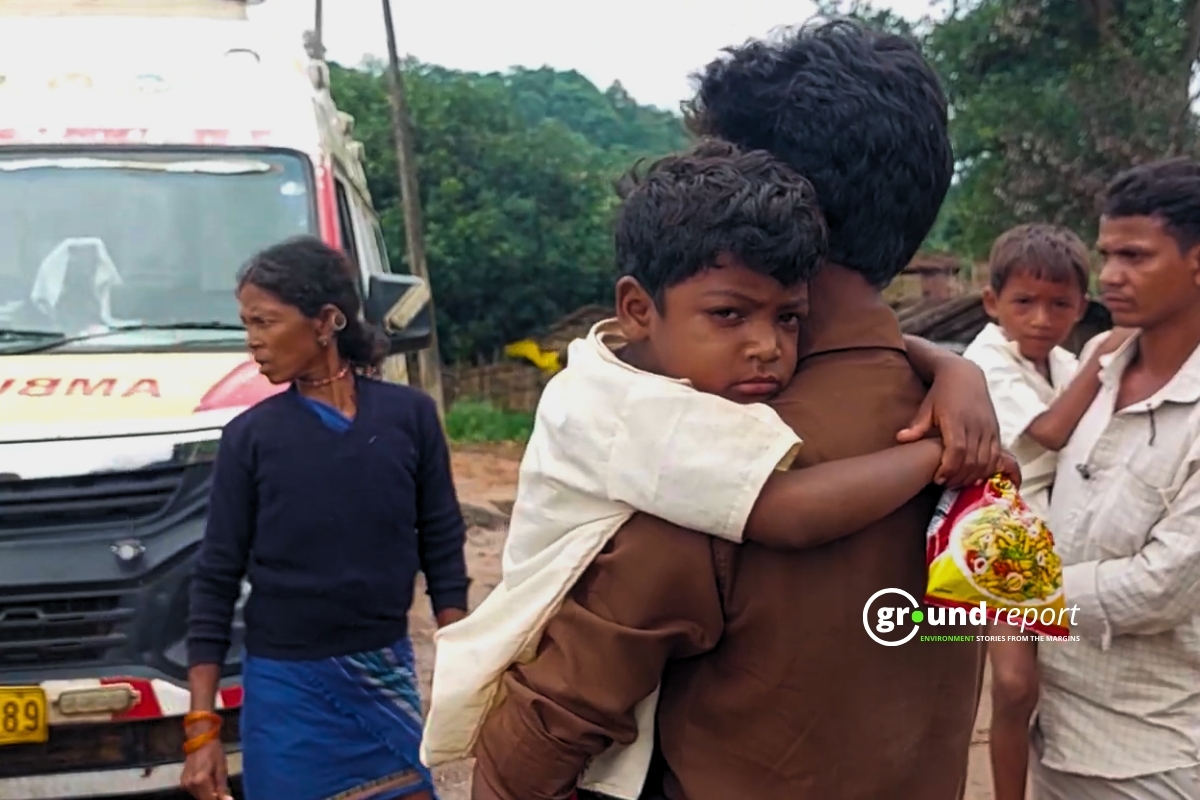
हिंदी में पढ़ें। On the night of 10 February, protests outside the Bijawar tehsil office turned violent. Police used water cannons and carried out a lathi charge on a crowd that included nearly 1,000 women, children, and elderly residents. The gathering had been called to protest the arrest of local social activist Amit Bhatnagar in Bijawar tehsil of Chhatarpur district of Madhya Pradesh.
In a viral video, a man is heard addressing hundreds of people:
“If Amit Bhatnagar is not released at the earliest, we too will show what we are capable of doing in Bijawar.”
Bhatnagar, a social activist, has been a vocal advocate for transparent surveys and fair compensation for villages facing submergence under the Ken-Betwa project. Yet it would be a mistake to see the unrest as merely a demand for Bhatnagar’s release. Villagers say the protests were the culmination of months of resentment over the compensation offered for the Ken–Betwa river linking project, the first of its kind in India. And the arrest of Bhatnagar was a trigger.
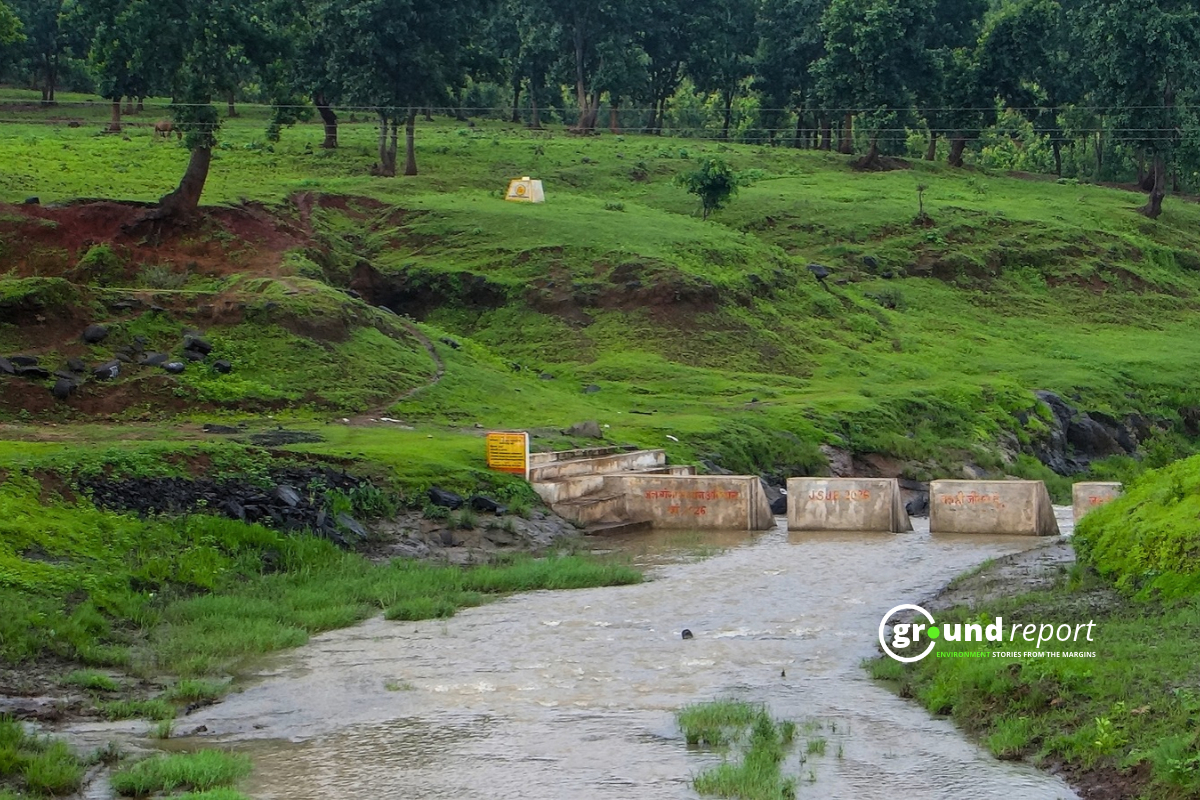
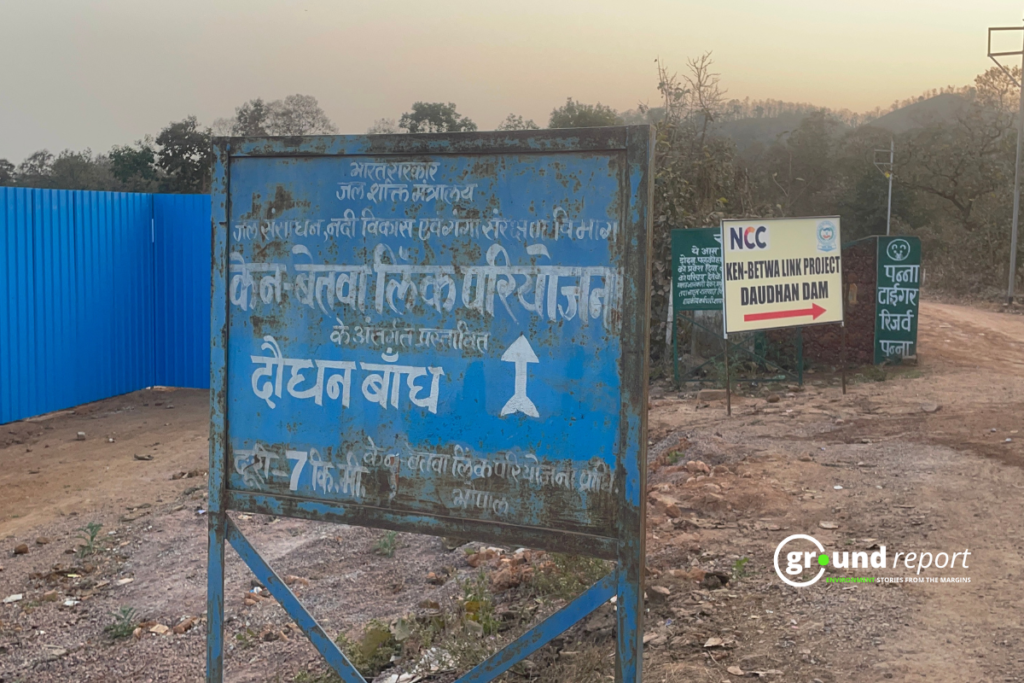
The Daudhan Dam is under construction in the first phase of the Ken-Betwa River Linking Project to supply water surplus from the Ken River to the Betwa River and ensure water in Madhya Pradesh’s water-scarce areas of the Bundelkhand region. Ahead of the dam construction site, inside the Panna Tiger Reserve, lies Daudhan village, and a few kilometres further ahead, within the reserve’s core area, is Palkoha.
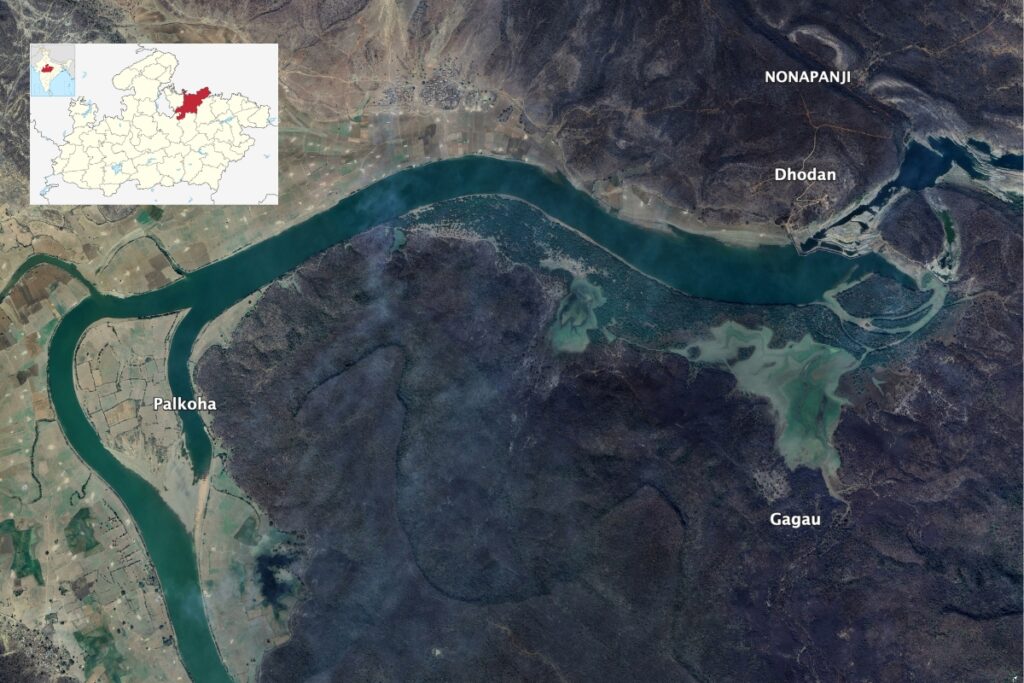
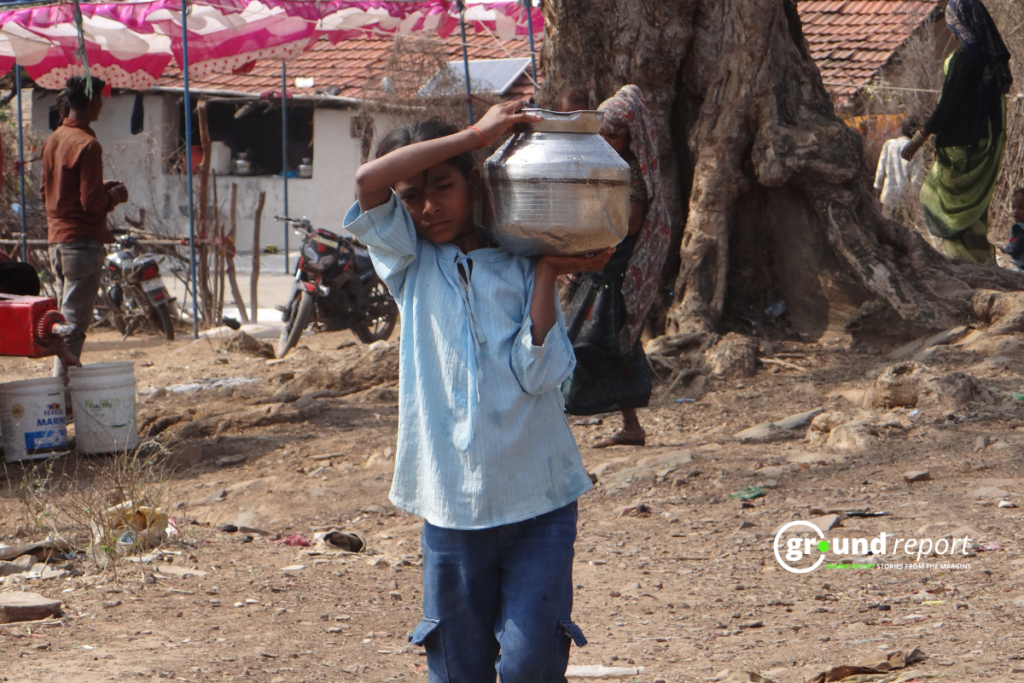
Both villages— Daudhan and Palkoha— resemble ordinary, somewhat isolated rural settlements. Motorcycles with water containers tied to them move along the narrow roads. Names painted during wedding celebrations are still visible on house walls. Tea stalls remain crowded as usual. But in a few years, this entire stretch could be submerged by the Daudhan Dam, and the residents may have to rebuild their lives elsewhere.
This dissatisfaction is palpable in each conversation with the villagers.
Clash at Construction Site and Arrests
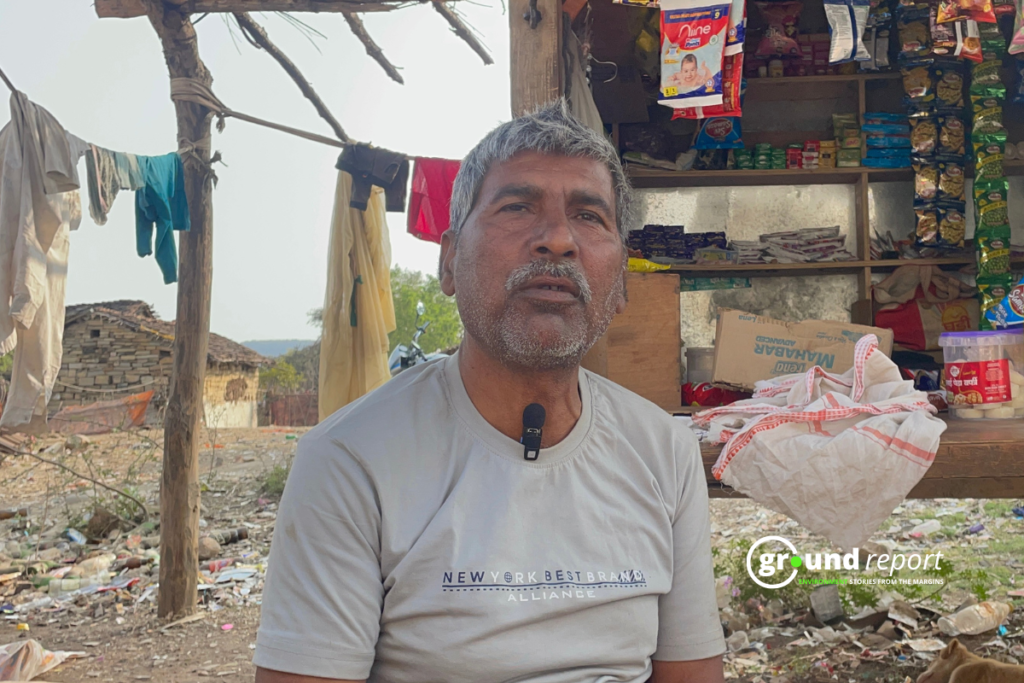
Bhanu Pratap Yadav of Palkoha village in Bijawar tehsil had joined the protests. He says he was beaten by the police, with marks still visible on his body, and spent three days in jail without any FIR.
He owns three acres of land and is reluctantly ready to give up everything, provided he receives adequate compensation and rehabilitation. He says he has received ₹5 lakh per acre, totaling ₹15 lakh as compensation. However, he is dissatisfied. “We have checked the land prices nearby. It is nowhere less than ₹8 to ₹10 lakh per acre,” he says.
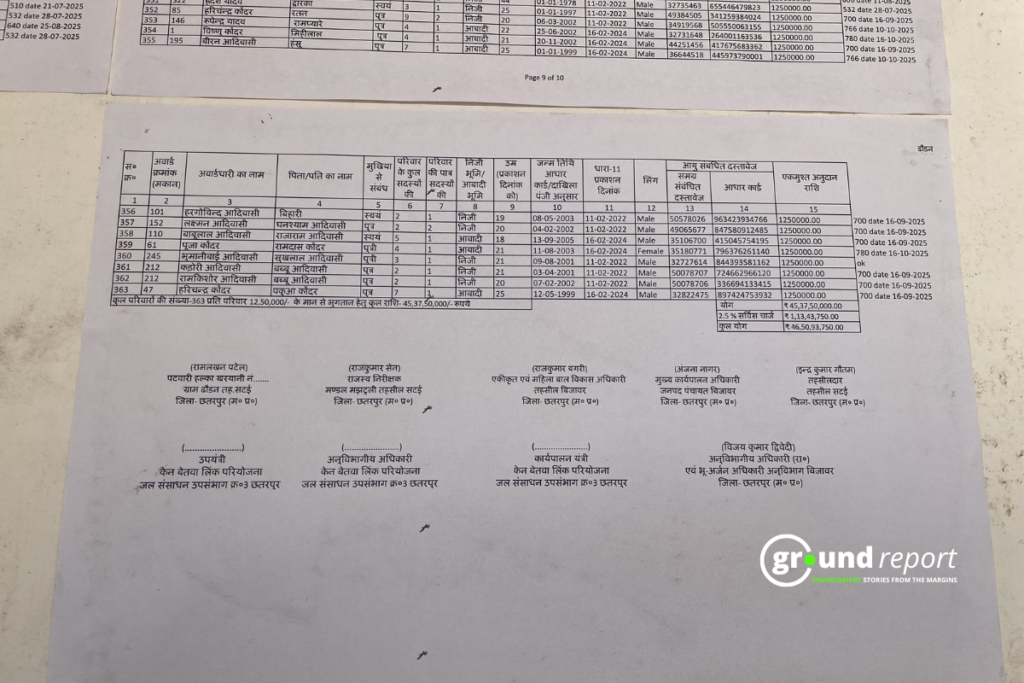
In Daudhan village, a list of 363 affected families and their compensation amounts is pasted on the primary school wall. Each family has been allocated ₹12.5 lakh as a fixed amount. A total of ₹46.5 crore has been distributed among 363 families. However, villagers say this amount is insufficient and demand at least ₹25 lakh per family. Bhanu Pratap, among others, asks for a higher land valuation.
To express their dissatisfaction, women from these villages protested at the construction site–Daudhan— between February 6 and 8. The social activist Amit Bhatnagar was part of the protest.
Bhatnagar has staged several protests, arguing that the project will cause significant ecological damage in Bundelkhand and disrupt the lives and livelihoods of local communities. He says that the river-linking initiative threatens both the region’s forests and its people. Many villagers see him as a leader fighting on their behalf and giving voice to their concerns.
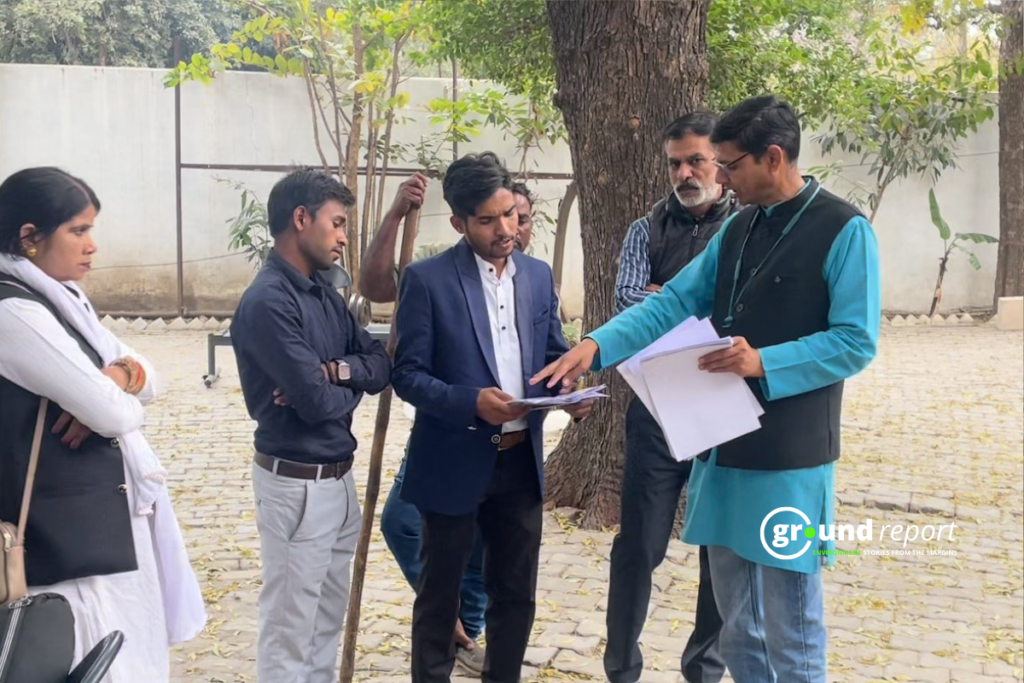
He went to support the villager. He also did facebook live on the issue of compensation and protest.
On February 8, the administration sought one month from the protestors led by Tulasi Adivasi and assured a fresh survey. However, the very next day, on February 9, Bhatnagar was detained under Bharatiya Nyaya Sanhita’s Section 191, for unlawful assembly. His arrest escalated tensions.
The Bijawar SDM Rakesh Shukla told Ground Report that some individuals stopped work at the dam site without prior written notice. He added that Amit Bhatnagar and others led the protestors.
On February 10, villagers from both villages protested against Amit’s arrest, surrounding the Bijawar tehsil office and demanding his release. Bhanu and his wife Bhagwati Yadav were also part of the protests.
The situation spiralled out of control, and “unprovoked”, as per the villagers, on February 10. Shanti says that fire brigade vehicles were stationed there and water was sprayed on the protesters. On a cold night, women carrying small children were drenched and left shivering.
“They [police] beat us,” Bhanu alleges. “They chased and beat us. Is this what the government does? Is this justice?” Bhagwati says.
Divya Ahirwar, councillor of Ward No. 9 in Bijawar, who was part of the protest, says the police used force first, after which some women picked up stones lying nearby. According to her, the police response then intensified, and protesters were chased. Some sought shelter in the Ram Janaki temple and a nearby mosque. She also alleges that the police used casteist slurs.
Bhatnagar was released on February 12. Soon, he submitted a memorandum to the District Collector and Superintendent of Police demanding certified copies and a complete list of all FIRs filed against those involved in the protest. In a memorandum, he demands that the review of CCTV footage from the Bijawar tehsil office and the temple premises be conducted to establish the sequence of events.
Compensation, Family Unit, and Survey
Amit Bhatnagar alleges that the provisions of the Right to Fair Compensation and Transparency in Land Acquisition, Rehabilitation and Resettlement Act, 2013, are not being properly followed.
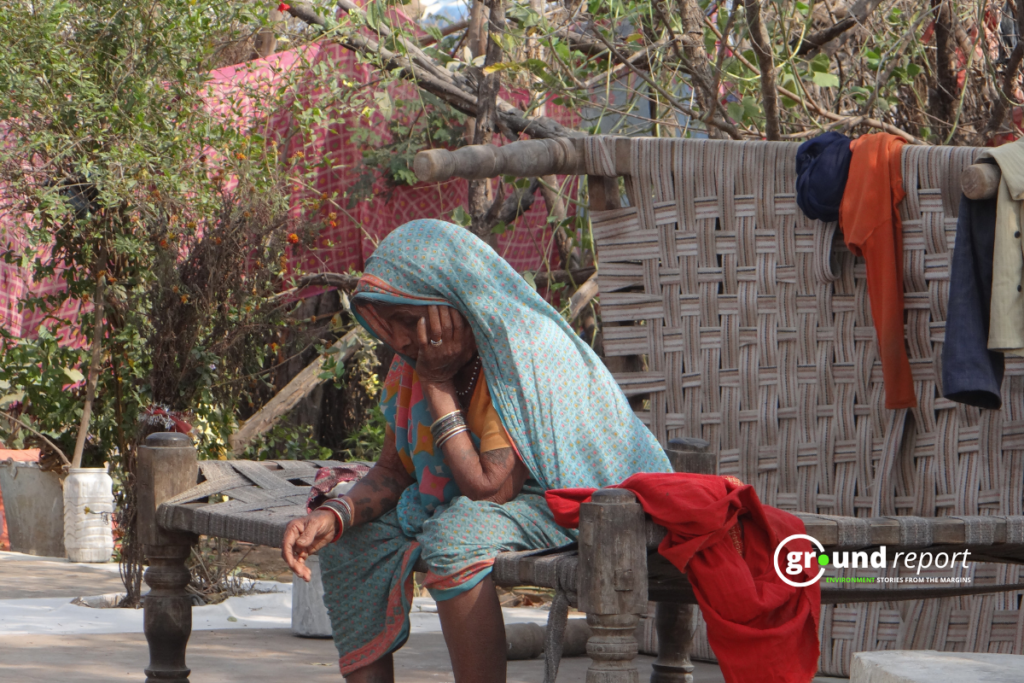
Image: Chandra Pratap Tiwari/Ground Report
Bihari Adivasi from Daudhan questions the survey process. “They measured the length, height, and width of our house but did not measure our courtyard or fenced areas,” he says.
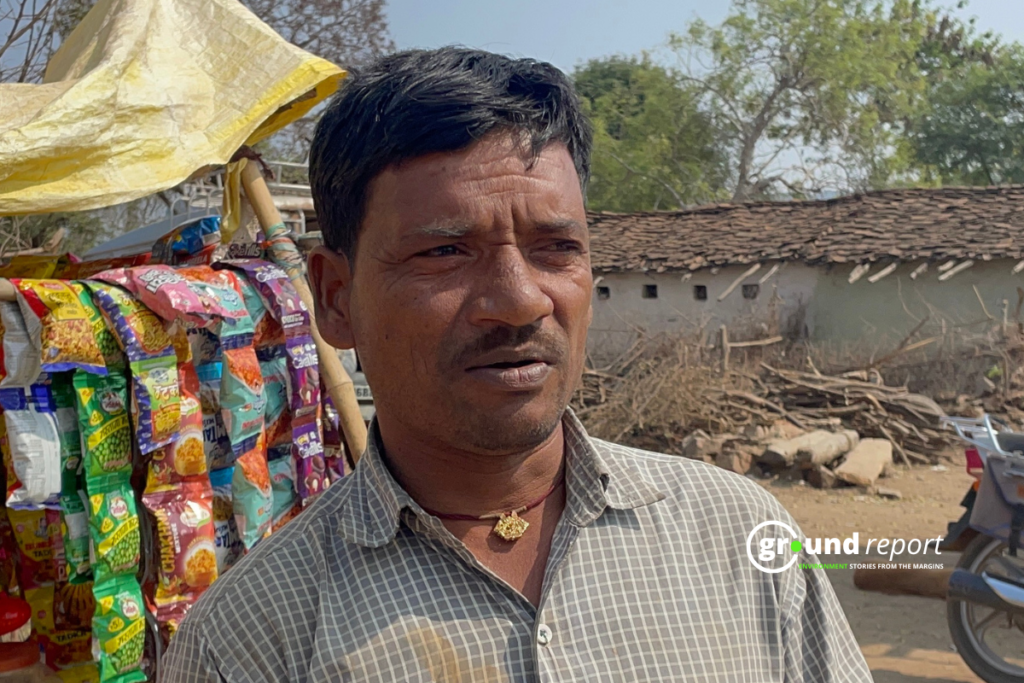
Section 3(m) of the Act defines “family” as a person, their spouse, minor children, and dependent minor siblings. The law also states that every adult person can be treated as a separate family unit. However, husband and wife are generally considered one joint family unit, so there is no separate compensation provision for the wife.
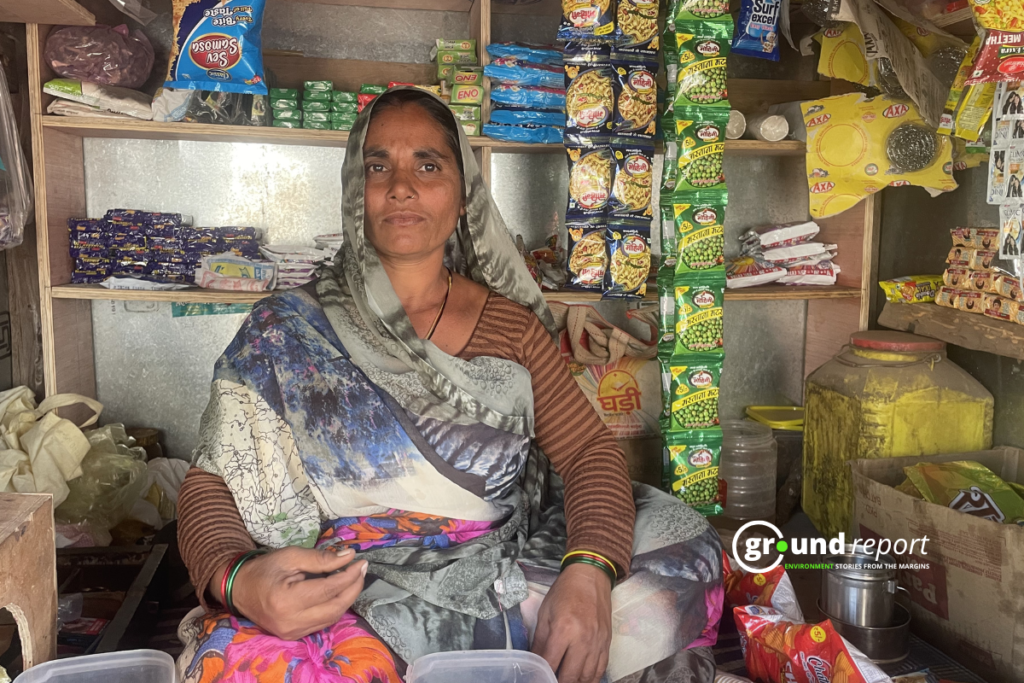
Shanti Kondar of Daudhan village demands separate compensation for wives. “If the husband irresponsibly spends the entire amount on alcohol,” she asks, “what will happen to our children’s future?”
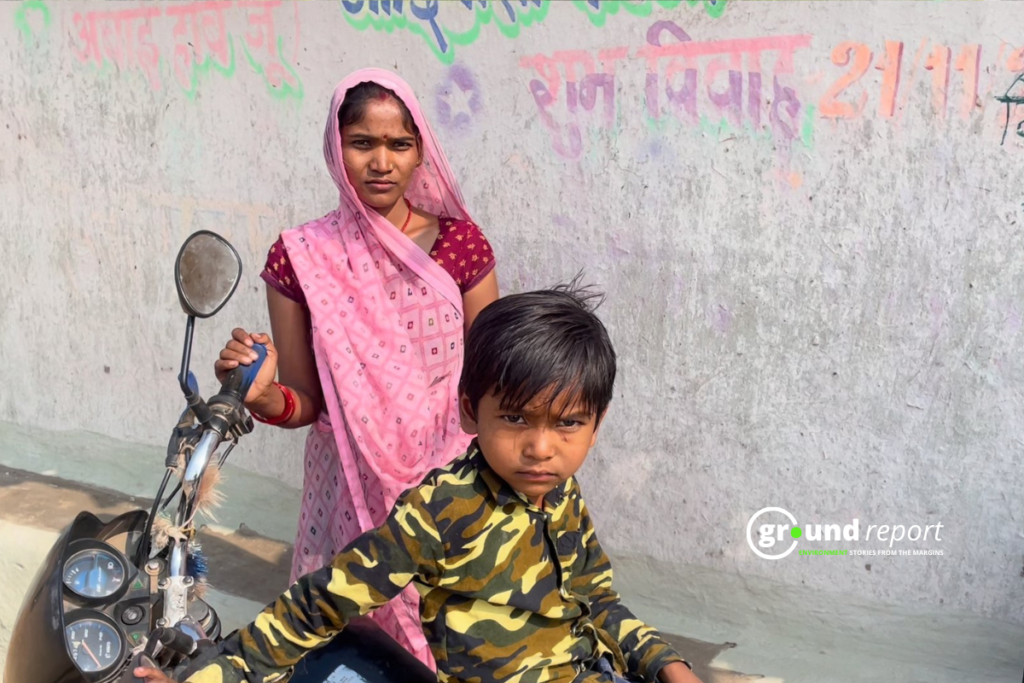
Villagers also allege that adult daughters have been excluded, even though the law recognizes adult individuals as separate families. For example, Pooja Ahirwar (19), the sister of Vinod Ahirwar from Palkoha, was not included because she was working outside the village during the survey.
Bhagwati says their daughter is 25 years old. According to her, the village secretary said girls are not eligible for compensation. She questions, “Why shouldn’t girls receive compensation? A daughter is equal to a son.” Villagers say that if one adult member received compensation, another adult in the same household was left out.
Important to note that the Act does not fix any specific amount per acre. Instead, it lays down a method that sets a minimum basis, not a maximum limit.
First, under Section 26, the market value of the land is determined by taking whichever is highest among the circle rate, the average of the top 50 percent sale prices of similar land in the area over the past three years, or a consented amount in case of private projects.
In rural areas, this value can be multiplied by up to two. The value of crops, trees, houses, boundaries, and other structures on the land is then added. After that, 100 percent solatium–monetary compensation– is added, and 12 percent annual interest is calculated from the date of notification until the date of the award.
Under Section 31(1), the Second Schedule provides rehabilitation benefits per affected family, not per acre. Every displaced family is entitled to a house, a subsistence allowance of 3,000 rupees per month for one year, 50,000 rupees as transportation cost, and 50,000 rupees as a resettlement allowance.
In addition, each family is entitled to either a job, a one-time payment of 5 lakh rupees, or an annuity of at least 2,000 rupees per month for 20 years. Importantly, the Act uses the term “each affected family,” and since Section 3(m) treats every adult as a separate family, these benefits apply accordingly.
Under the land acquisition law, a notification must be issued before acquisition, followed by a detailed survey of affected families, including land, houses, livelihood losses, public utilities, and community resources.
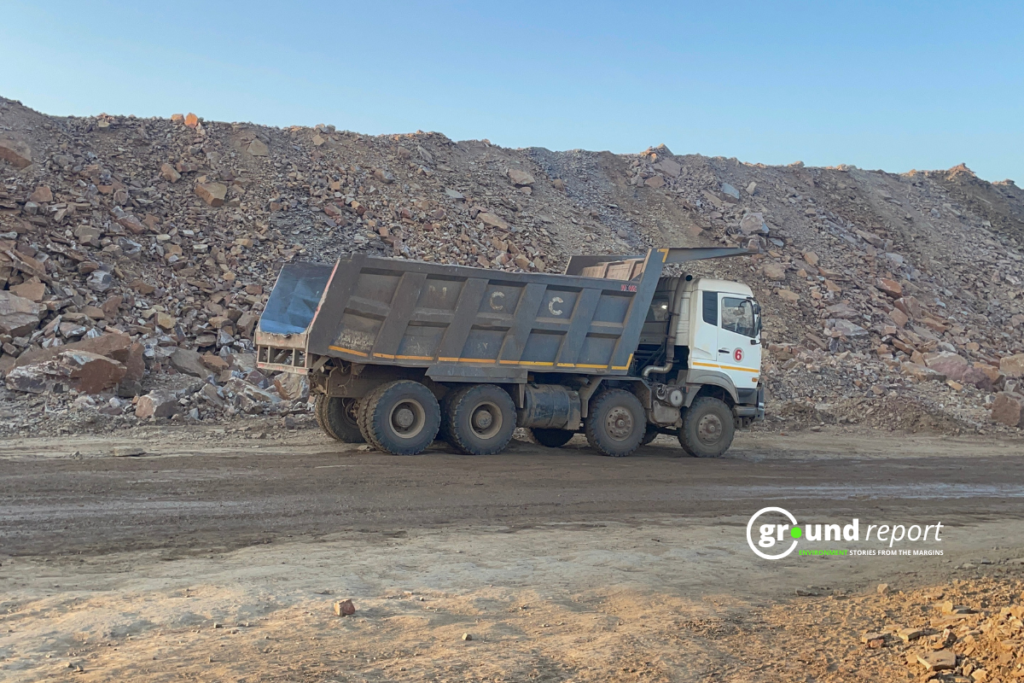
The law clearly distinguishes between tribal and non-tribal villages regarding Gram Sabha consent. In Scheduled Areas and tribal villages, prior consent of the Gram Sabha is a mandatory legal requirement under Section 41(3). No land acquisition can proceed without it, even in cases of urgency. In non-Scheduled Areas, consent is not mandatory, but the government must conduct consultation with the Panchayat, carry out a Social Impact Assessment, hold a public hearing, publish the SIA report in the local language, and conduct a full survey and census of affected families. Skipping any of these steps is a violation of the Act.
Tulasi Adivasi from village Daudhan alleges that villagers were never consulted and that a fake Gram Sabha document was submitted. Villagers and activists claim that none of the required procedures were followed. Activist Amit Bhatnagar told Ground Report that if a Gram Sabha meeting had taken place, there should be official records with signatures or thumb impressions of villagers. He says the administration has not shown any such documents.
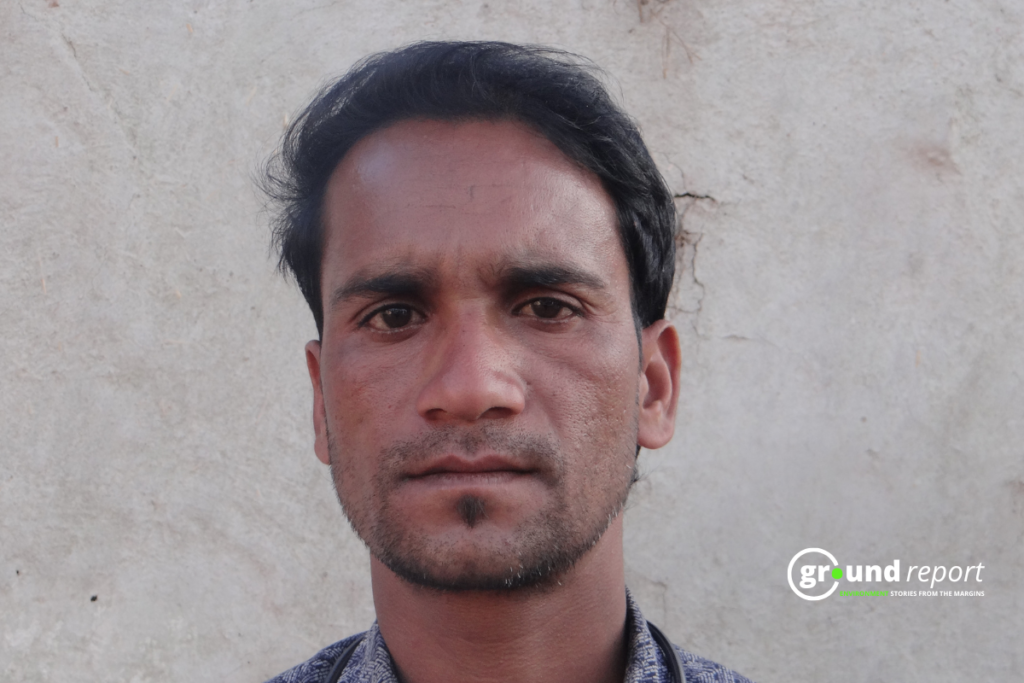
Chhatarpur District Magistrate Parth Jaiswal told Ground Report that Gram Sabha meetings are ongoing in all affected villages. He said detailed information is being shared, and lists of beneficiaries will be displayed at Gram Panchayat offices.
Authorities’ Comment
Chhatarpur District Magistrate Parth Jaiswal said to Ground Report, considering villagers’ demands, separate survey teams have been formed for 13 affected villages, and a fresh survey is underway. He assured that eligible individuals left out due to documentation gaps would be assisted and included.
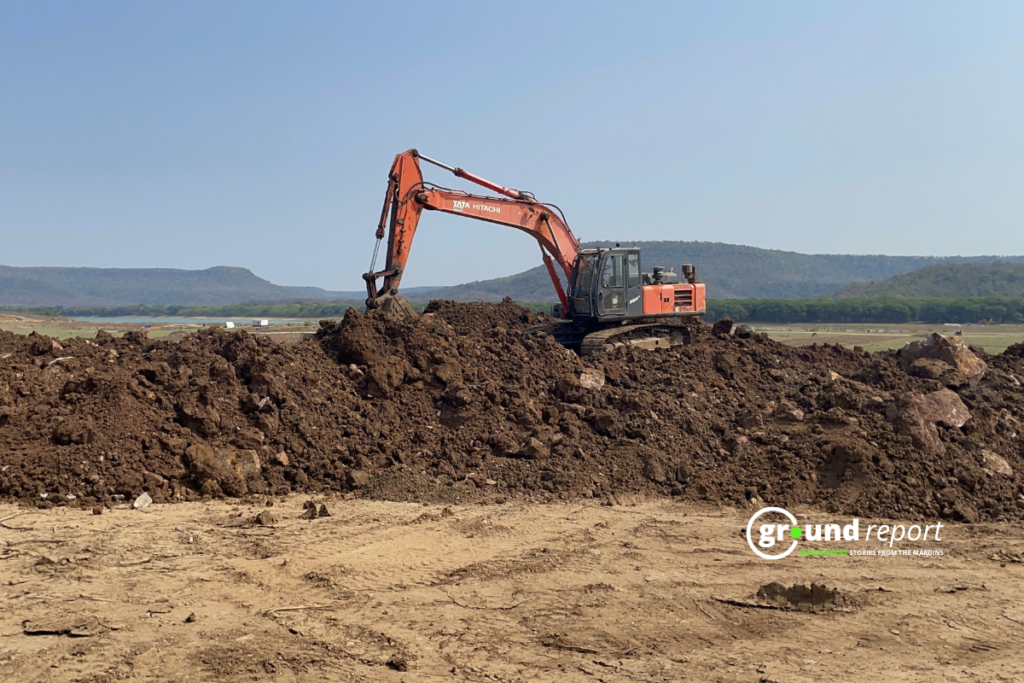
He said the dam construction has resumed and that officials will regularly share project-related information with the affected villages.
“We want to move from protest towards resolution. But if the administration uses force and commits injustice, we will strongly oppose it,” Bhatnagar says.
The protests continue. In our conversations, the villagers repeatedly emphasised their demands for ₹25 lakh per family, separate compensation for every adult, fair land valuation, and separate compensation for women. They also, more importantly, emphasised the power of people in a democracy. Bhagwati frankly says that she will not allow the dam to be built unless their demands are fulfilled, even if it costs her life.
This story is edited by Rajeev Tyagi.
Support Us To Sustain Independent Environmental Journalism In India.
Keep Reading
Rail Projects Halted in Kashmir After Apple Farmers Protest, Uncertainty Remains
After Indore, 22 Fall sick in Mhow Due To Drinking Contaminated Water