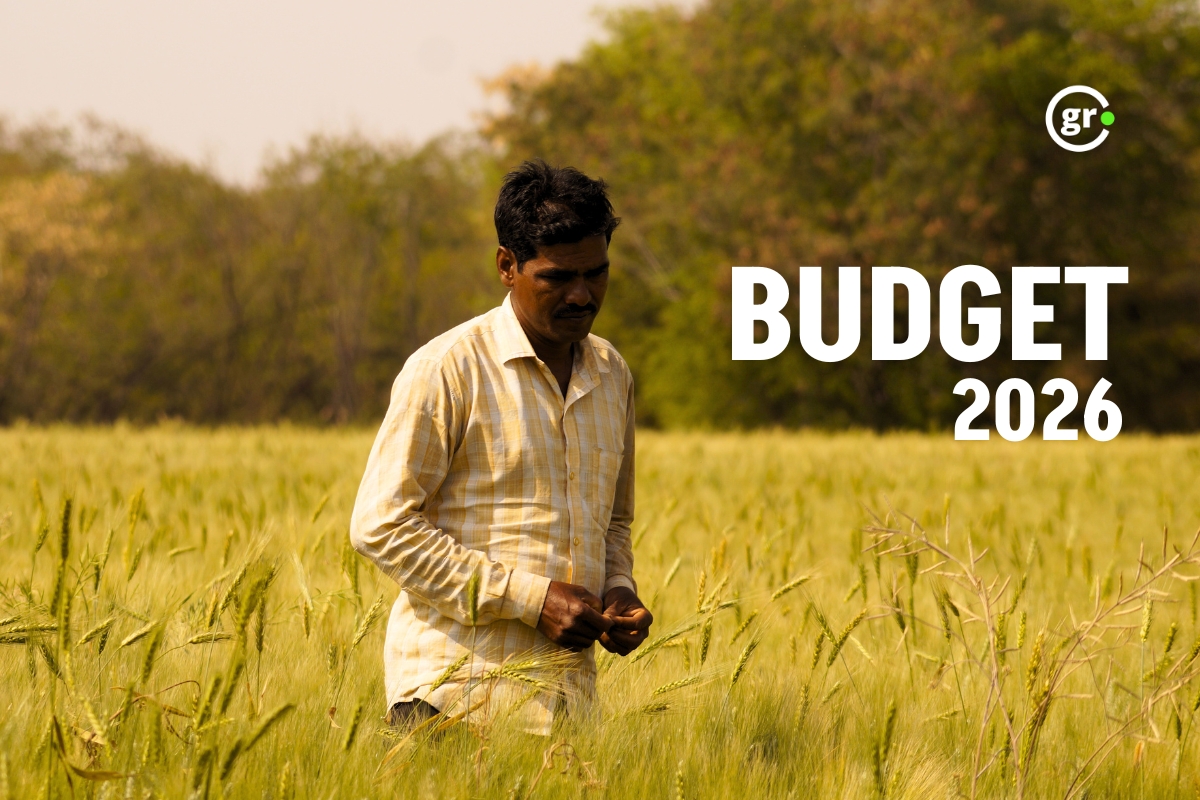
Finance Minister Nirmala Sitharaman presented the government’s budget for the upcoming financial year in Parliament on February 1, 2026. She became the first Finance Minister to present 9 consecutive budgets. She presented the statement of estimated income and expenditure of the Government of India for the year 2026-27.
Sitharaman said that we are moving towards becoming the world’s largest economy. We have decided that the results of growth should reach farmers, tribals, women and youth.
Amidst all the additions and subtractions, let’s find out what announcements have been made for the agriculture sector in this budget?
Key Announcements
Cultivation of coconut, sandalwood, cocoa and cashew will be promoted to increase farmers’ income.
The central government is planning 500 reservoirs and Amrit Sarovars in coastal areas for fisheries.
The Finance Minister said that 30 million people depend on coconut for their livelihood. She announced the Coconut Promotion Scheme.
The Coconut Promotion Scheme will increase production and productivity. This scheme will encourage replacement of low-productivity trees with new varieties in major coconut-growing states.
The general budget proposed a dedicated program for cashew and cocoa to boost export competitiveness. The goal is to make Indian cashew and Indian cocoa premium global brands by 2030.
For sandalwood, the Centre will partner with states to promote focused cultivation and revive old, low-yielding orchards after harvesting.
The government will develop a multilingual AI tool called Bharat Vistar. This will connect the Agri Stack and ICAR portal. A provision of ₹150 crore has been made for this.
The Finance Minister announced a credit-linked subsidy program to expand the livestock sector, modernize it, and strengthen the creation of integrated value chains for dairy, fisheries and livestock.
Emphasis will be on increasing the number of veterinary professionals, and the government will support those promoting veterinary services in the private sector through subsidies.
Budget Allocation for Various Departments
To understand the budget in the context of agriculture and related sectors, we primarily look at the budget allocated under four departments. These four departments include the Department of Agriculture and Farmers’ Welfare, Department of Agricultural Research and Education, and Department of Fisheries, Dairy and Animal Husbandry.
Farmer Welfare and Education
The budget for the Department of Agriculture and Farmers’ Welfare for the upcoming financial year has been set at ₹1,30,561.38 crore. This is more than the budget allocated for the current financial year.
The budget for Krishonnati Yojana operating under this department has been increased from ₹8,000.00 crore to ₹11,200.00 crore. Similarly, under the National Mission for promoting natural farming, a provision of ₹750.00 crore has been made, up from ₹616.01 crore.
However, a minor cut has also been made in the budget for Pradhan Mantri Fasal Bima Yojana. Its budget has been reduced from ₹12,242.27 crore to ₹12,200.00 crore. Meanwhile, the budget for Farmer Producer Organizations has also been cut by ₹84 crore, with only ₹500 crore allocated for the upcoming financial year.
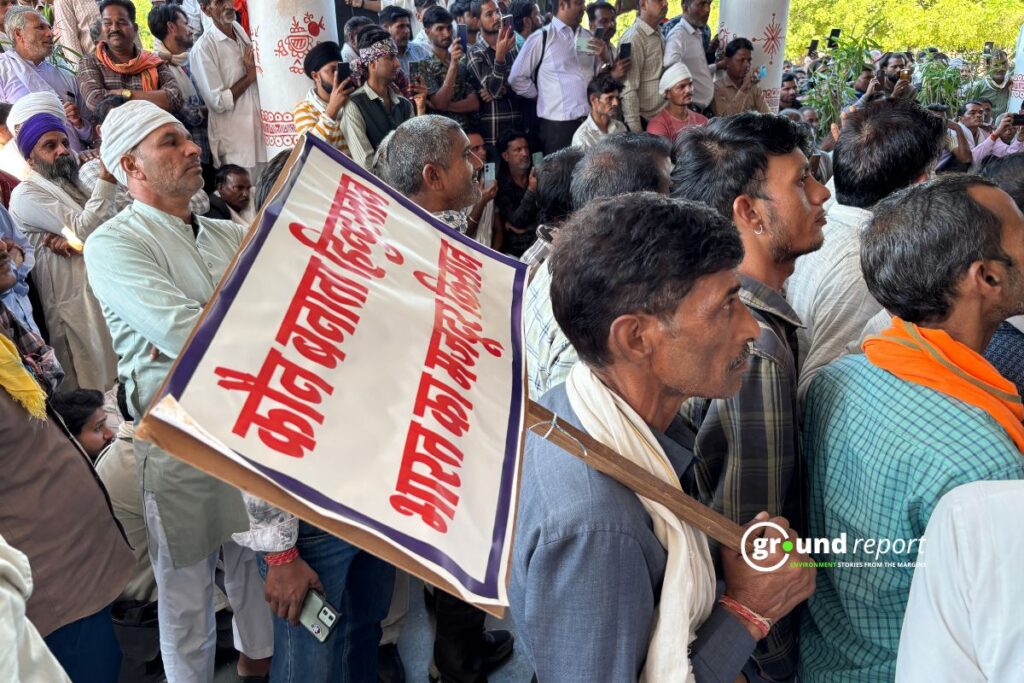
In contrast, the budget of the Department of Agricultural Research and Education has decreased to ₹9,967.40 crore. However, the budgets for Central Agricultural Universities (₹821.27 crore) and Krishi Vigyan Kendras (₹210.00 crore) have been increased. But the budgets for agricultural education (₹514.87 crore) and horticulture science (₹220 crore) have been reduced.
Budget for Animals and Fish
The total budget of the Department of Fisheries has increased from ₹2,703.67 crore in 2025-26 to ₹2,761.80 crore in 2026-27. Under this, the budgets for Pradhan Mantri Matsya Sampada Yojana (₹2,465.00 crore), Fisheries Institutes (₹152.95 crore) and Coastal Aquaculture Authority or CAA (₹7.25 crore) have increased. However, the budget of the National Fisheries Development Board has been reduced to ₹14.55 crore.
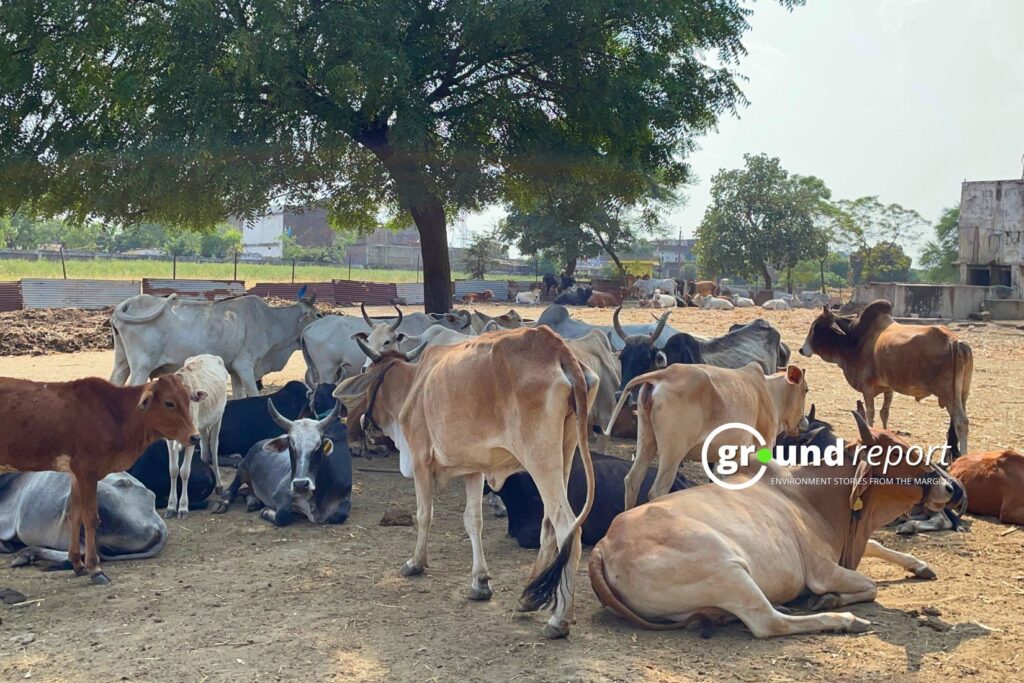
Similarly, the budget of the Department of Animal Husbandry and Dairy has increased to ₹6,153.46 crore. The largest increase has been made under the Rashtriya Gokul Mission. The central allocation for this has been increased from ₹0.01 crore (token) to ₹800.00 crore. Meanwhile, ₹2,010.00 crore has been allocated for livestock health and disease control and ₹1,055.00 crore for dairy development.
However, the budget for animal health institutions has decreased from ₹100.00 crore to ₹74.43 crore. While the allocation for breed improvement institutions has been reduced from ₹50.00 crore to ₹38.00 crore.
It is noteworthy that last year, a Makhana Board was formed and ₹100 crore was allocated for it. This year, there is no separate provision for this board. The same is the case with the mission launched for pulses, where ₹1,000 crore was allocated in 2025-26. This mission also failed to get a separate budget. The Cotton Technology Mission and National Mission on Hybrid Seeds met the same fate.
What Do Experts Say About the Budget?
Gurman Singh Chaduni, National President of Bharatiya Kisan Sangh (Chaduni), expresses disappointment with this budget. He says that this budget has not mentioned anything about increasing farmers’ income, reducing crop costs, and providing water and electricity facilities.
Citing the recent floods in Punjab, he says, “Learning from last year, the government should have come up with some scheme or plan to protect crops from floods and natural disasters.” According to him, if work is done to deepen seasonal rivers in villages and strengthen their banks, crops and villages can be saved from drowning and the groundwater level can also be increased.
He says that to increase crop production, electricity and water facilities will have to be improved, only then will costs decrease and farmers’ income can increase. According to him, increasing agricultural productivity and conserving groundwater should both be done together so that common people do not face water crisis.
Meanwhile, Dharmendra Malik, National Spokesperson of Bharatiya Kisan Union (Apolitical), says, “The debt burden on farmers is increasing. One reason for this is the increasing cost of crops and decreasing prices, and the second reason is the loss due to natural disasters.” He says that the government has not taken any measure to make farmers’ loans cheaper, nor has it said anything about climate resistance. He says that the government still does not have any roadmap to save farmers from climate change, although farmers in Marathwada and Punjab paid a heavy price for this last year.
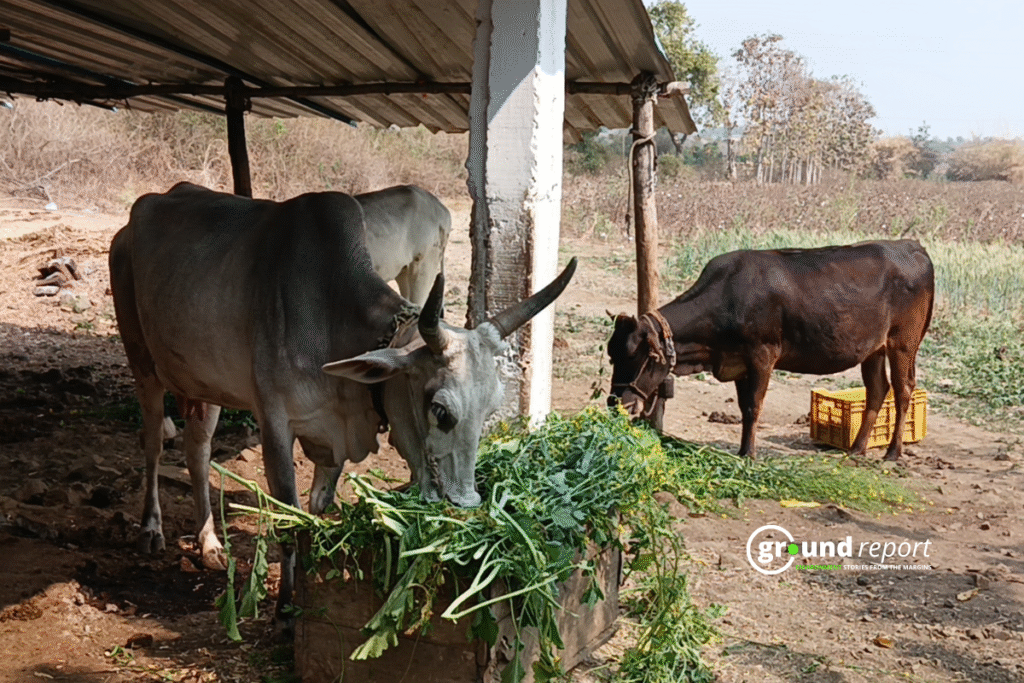
He also does not view the credit-linked subsidy program for the livestock sector with much hope. He says, “Until fodder becomes cheaper in the country, animal husbandry will not be easy. The budget has not mentioned anything about making fodder cheaper.” Malik also talks about regularizing veterinarians working on contract and providing more facilities in government veterinary hospitals.
It is noteworthy that according to the Economic Survey 2025, the share of fodder crops in the total agriculture sector is only 4-5%. This is increasing the shortage of green and dry fodder. Weak crop production, fodder crisis and increasing dependence on animal husbandry – these three together highlight the deep challenges of the agricultural structure.
Less attention has been paid to agricultural development in North India in the budget announcements. Most announcements have been made to promote crops like coconut, sandalwood and cocoa in the South and North-East. Farmers had hoped that the Kisan Samman Nidhi amount would be increased from ₹6,000 to ₹9,000, but no such announcement has been made yet. Also, no new agricultural scheme has been announced for the whole of India.
Subhash Patel, District Minister of Bharatiya Kisan Sangh Khandwa, says, “Neither cashew nor coconut is grown in Madhya Pradesh. The budget has gone to an area far from agriculture and farming.” He says that if there had been an increase in PM Kisan Samman Nidhi, farmers would have benefited directly. According to him, considering Madhya Pradesh’s background, this budget is disappointing.
Support us to keep independent environmental journalism alive in India.
Keep Reading
Environment Budget 2026: 10 Major Announcements You Should Know
Stay connected with Ground Report for underreported environmental stories.
Author
Support Ground Report to keep independent environmental journalism alive in India
We believe climate change should be the basis of current discourse, and our stories attempt to reflect the same.
Connect With Us
Send your feedback at greport2018@gmail.com
Newsletter
Subscribe our weekly free newsletter on Substack to get tailored content directly to your inbox.
When you pay, you ensure that we are able to produce on-ground underreported environmental stories and keep them free-to-read for those who can’t pay. In exchange, you get exclusive benefits.
Your support amplifies voices too often overlooked, thank you for being part of the movement.