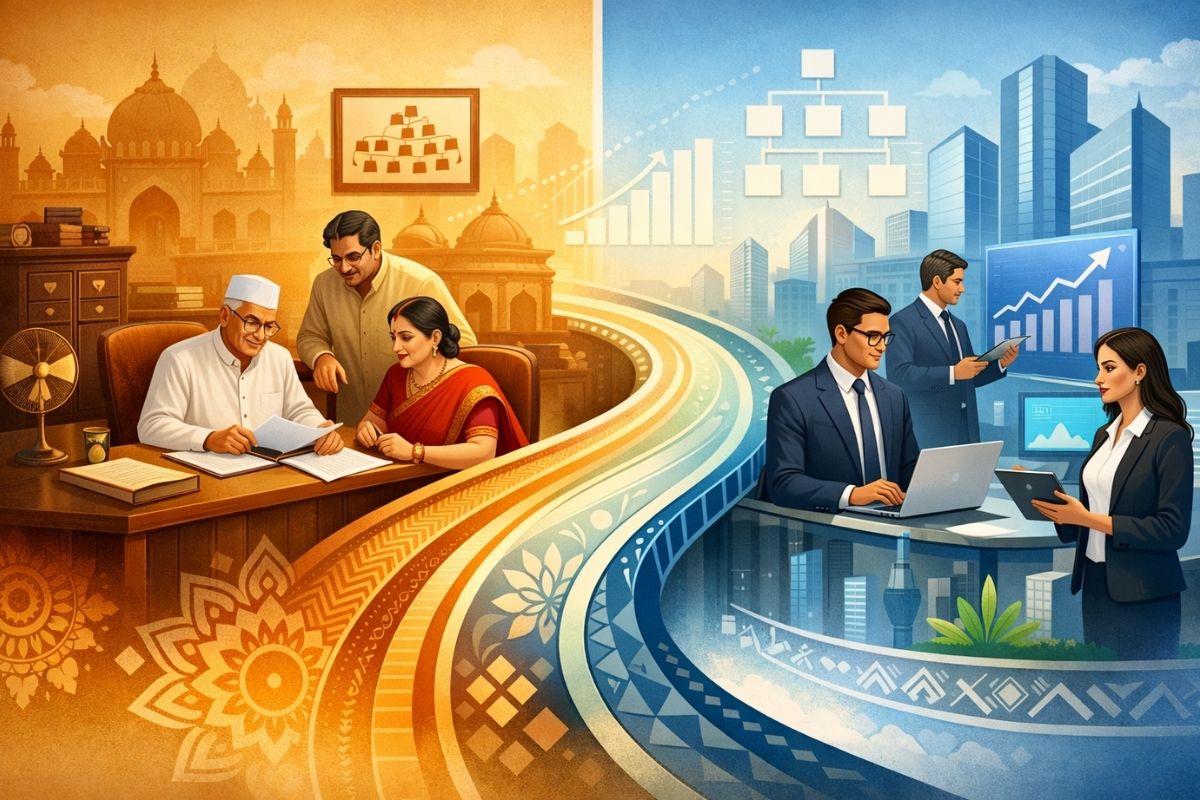
Family businesses have long been the backbone of the Indian economy, contributing significantly to employment, innovation, and wealth creation. However, as markets become more competitive and business environments more complex, traditional family-led operating models often face limitations. To sustain growth across generations, family businesses must transition from informal, founder-driven structures to professionally managed organisations.
Professionalising a family business does not mean diluting family values. Instead, it involves building governance, leadership, and systems that allow the business to scale while preserving its legacy.
Why Professionalisation Is Critical for Family Businesses Today
Family businesses today operate in an environment shaped by digital disruption, global competition, and rising customer expectations. Informal decision-making, overlapping roles, and unclear accountability can slow growth and create internal conflict.
Professionalisation introduces clarity in roles, processes, and performance measurement. It enables family businesses to attract external talent, improve decision-making, and prepare the organisation for long-term sustainability. Most importantly, it helps separate ownership from management while maintaining alignment with family vision and values.
Key Elements Involved in Professionalising a Family Business
Professionalising a family business requires a structured approach that balances governance, leadership development, and operational discipline.
Some of the most important elements include:
- Clear governance structures defining roles, responsibilities, and decision rights
- Merit-based leadership and succession planning to ensure continuity
- Formal processes and performance metrics across functions
- Separation of family and business matters to reduce conflict and improve objectivity
Many next-generation leaders strengthen these capabilities through structured learning pathways such as a certificate in family business management course, which focuses on governance, succession planning, and professional leadership in family-owned enterprises.
The Role of Capability Building and External Expertise
As family businesses grow, leadership requirements expand beyond traditional operational strengths. Modern family enterprises must develop capabilities in strategy, innovation, product development, and market expansion.
Building these capabilities often requires external expertise and structured learning. For instance, exposure to frameworks taught in an advanced product management course can help family business leaders professionalise product strategy, customer-centric decision-making, and innovation processes. Such upskilling supports informed decision-making while reducing dependence on intuition alone.
Conclusion
Professionalising a family business is a strategic imperative for long-term growth and generational continuity. By introducing governance structures, formal processes, and leadership development, family enterprises can scale sustainably without compromising their core values.
With the right balance of tradition and professionalism, family businesses can evolve into resilient, future-ready organisations that thrive across generations.
Disclaimer: This content is sponsored and does not reflect the views or opinions of Ground Report. No journalist is involved in creating sponsored material and it does not imply any endorsement by the editorial team. Ground Report Digital LLP. takes no responsibility for the content that appears in sponsored articles and the consequences thereof, directly, indirectly or in any manner. Viewer discretion is advised.
Support us to keep independent environmental journalism alive in India.
Keep Reading
Small Wild Cats in Big Trouble: India’s First National Report Released
After Tragedy, Families Face Delays in Tiger Attack Compensation
Stay connected with Ground Report for underreported environmental stories.