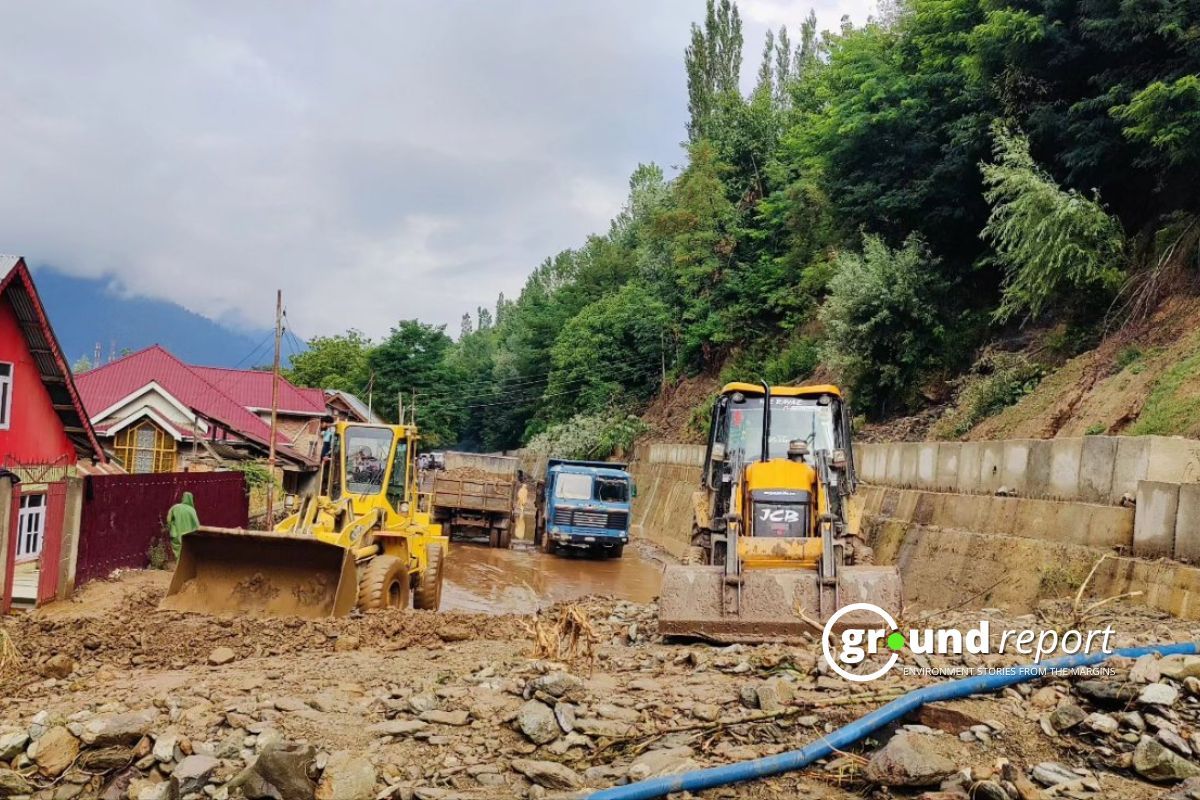
Hydro-meteorological disasters like floods, landslides, and cyclonic storms have devastated India, claiming at least 2,803 lives and affecting over 1.02 million hectares of cropped area in the financial year 2024-25 (as of November 27, 2024), Nityanand Rai, Union Minister of State for Home Affairs, presented these figures in the Lok Sabha.
These provisional estimates highlight the extensive impact of natural calamities on lives, livestock, infrastructure, and agriculture. The data, sourced from state governments and Union Territories, reflect significant losses to property and livestock across several regions.
Human and agricultural toll across states
According to the minister, Karnataka, Uttar Pradesh, Assam, and Himachal Pradesh were the worst-affected states, suffering heavy human casualties and agricultural losses. The impacted cropped area exceeded 10.23 lakh hectares, with Uttar Pradesh accounting for 3.95 lakh hectares. Assam, Karnataka, and West Bengal also reported extensive agricultural losses.
Himachal Pradesh had the highest human casualties, with 358 lives lost due to landslides and floods. Similarly, Kerala and Gujarat also reported high death tolls, emphasizing the severe impact of disasters in these regions.
1. State-wise Impact of Hydro-Meteorological Disasters (2024-25)
| State/UT | Human Lives Lost | Cattle Lost | Houses/Huts Damaged | Cropped Area Affected (lakh ha) |
|---|---|---|---|---|
| Andhra Pradesh | 56 | 93 | 1,310 | 0.05 |
| Arunachal Pradesh | 12 | 175 | 771 | – |
| Assam | 128 | 16,207 | 156,691 | 1.38 |
| Bihar | 64 | – | 191 | – |
| Chhattisgarh | 125 | 289 | 2,154 | – |
| Goa | 4 | 2 | 696 | – |
| Gujarat | 230 | 7,222 | 20,741 | – |
| Haryana | 1 | – | 16 | – |
| Himachal Pradesh | 358 | 7,088 | 1,004 | – |
| Karnataka | 182 | 1,199 | 21,967 | 2.86 |
| Kerala | 322 | – | 7,780 | – |
| Madhya Pradesh | 373 | 1,204 | 8,147 | – |
| Maharashtra | 203 | 551 | 98 | – |
| Manipur | 11 | 233 | 29,639 | 0.01 |
| Meghalaya | 43 | 241 | 4,028 | – |
| Mizoram | 44 | 7 | 440 | 0.21 |
| Nagaland | 27 | 1 | 2,229 | 0.03 |
| Odisha | 30 | 2 | 1,941 | 0.22 |
| Punjab | 23 | 10 | 114 | – |
| Rajasthan | 131 | 492 | 1,863 | – |
| Sikkim | 13 | 4,241 | 1,668 | – |
| Tamil Nadu | 37 | 5,521 | 870 | 0.09 |
| Telangana | 29 | 13,412 | 8,690 | – |
| Tripura | 78 | 15 | 67,487 | – |
| Uttar Pradesh | 88 | 33 | 2,644 | 3.95 |
| Uttarakhand | 80 | 524 | 3,484 | 0.05 |
| West Bengal | 14 | – | – | 1.38 |
| Delhi | 68 | – | 8 | – |
| Jammu & Kashmir | 28 | 73 | 1,069 | – |
| Puducherry | 1 | – | 30 | – |
| Total (India) | 2,803 | 58,835 | 347,770 | 10.23 |
The central government emphasized that disaster management is primarily the responsibility of state governments. Relief operations and immediate response measures are financed through the State Disaster Response Fund (SDRF), while additional assistance is provided from the National Disaster Response Fund (NDRF) for severe disasters.
Funds released so far
As of November 2024, ₹10,728 crore has been released from the SDRF to various states, supplemented by ₹4,043.37 crore from the NDRF. Karnataka received the highest NDRF allocation of ₹3,454.22 crore, followed by Himachal Pradesh, Tamil Nadu, and Sikkim, which received special assistance due to severe calamities.
2. State-Wise Financial Allocations and Releases (2024-25)
Allocations and Releases from SDRF and NDRF
| State/UT | SDRF Allocation (₹ Cr) | Release from SDRF (₹ Cr) | Release from NDRF (₹ Cr) |
|---|---|---|---|
| Andhra Pradesh | 1,380.80 | 1,036.00 | – |
| Arunachal Pradesh | 256.80 | 231.20 | – |
| Assam | 795.20 | 716.00 | – |
| Bihar | 1,748.00 | 1,311.20 | – |
| Chhattisgarh | 533.60 | 400.00 | – |
| Goa | 13.60 | 10.40 | – |
| Gujarat | 1,635.20 | 1,226.40 | – |
| Haryana | 606.40 | 455.20 | – |
| Himachal Pradesh | 420.00 | 378.40 | 66.92 |
| Jharkhand | 701.60 | 526.40 | – |
| Karnataka | 976.00 | 732.00 | 3,454.22 |
| Kerala | 388.00 | 291.20 | – |
| Madhya Pradesh | 2,248.00 | 1,686.40 | – |
| Maharashtra | 3,978.40 | 2,984.00 | – |
| Manipur | 44.00 | 40.00 | – |
| Meghalaya | 67.20 | 60.80 | – |
| Mizoram | 48.00 | 43.20 | – |
| Nagaland | 42.40 | 38.40 | – |
| Odisha | 1,980.80 | 1,485.60 | – |
| Punjab | 611.20 | 458.40 | – |
| Rajasthan | 1,828.80 | 1,372.00 | – |
| Sikkim | 52.00 | 47.20 | 221.12 |
| Tamil Nadu | 1,260.00 | 944.80 | 276.10 |
| Telangana | 555.20 | 416.80 | – |
| Tripura | 70.40 | 63.20 | 25.00 |
| Uttar Pradesh | 2,388.00 | 1,791.20 | – |
| Uttarakhand | 964.00 | 868.00 | – |
| West Bengal | 1,248.00 | 936.00 | – |
| Total (India) | 26,841.60 | 10,728.00 | 4,043.37 |
Under the National Policy on Disaster Management (NPDM), disaster management is primarily the responsibility of state governments. Relief measures are funded through SDRF allocations, with additional NDRF support for severe calamities. The central government supplements state efforts with financial and logistical assistance.
To ensure transparency and effective resource use, the Union government constituted 12 Inter-Ministerial Central Teams (IMCTs) to assess damages in disaster-hit states, including Assam, Andhra Pradesh, Mizoram, and Kerala. These teams conduct on-the-spot evaluations, and their reports inform the central government’s decision on additional financial assistance.
Call for Enhanced Preparedness
The figures highlight the urgent need for stronger disaster preparedness and mitigation strategies, especially in vulnerable regions prone to recurrent calamities. Enhanced early warning systems, resilient infrastructure, and robust climate adaptation strategies are critical to minimizing future losses.
As India faces more frequent extreme weather events, integrating disaster risk reduction into developmental planning will be vital to safeguarding lives and livelihoods.
Support us to keep independent environmental journalism alive in India.
Keep Reading
Watch: Kashmir experiences first snowfall of season after dry spell
Amarnath Yatra: Tackling rising death toll from extreme weather events
Tourists arrival in Kashmir break records, a need to regulate it?
From tourist paradise to waste wasteland: Sindh River Cry for help
Follow Ground Report on X, Instagram and Facebook for environmental and underreported stories from the margins. Give us feedback on our email id greport2018@gmail.com.
Don’t forget to Subscribe to our weekly newsletter, Join our community on WhatsApp, and Follow our YouTube Channel for video stories.