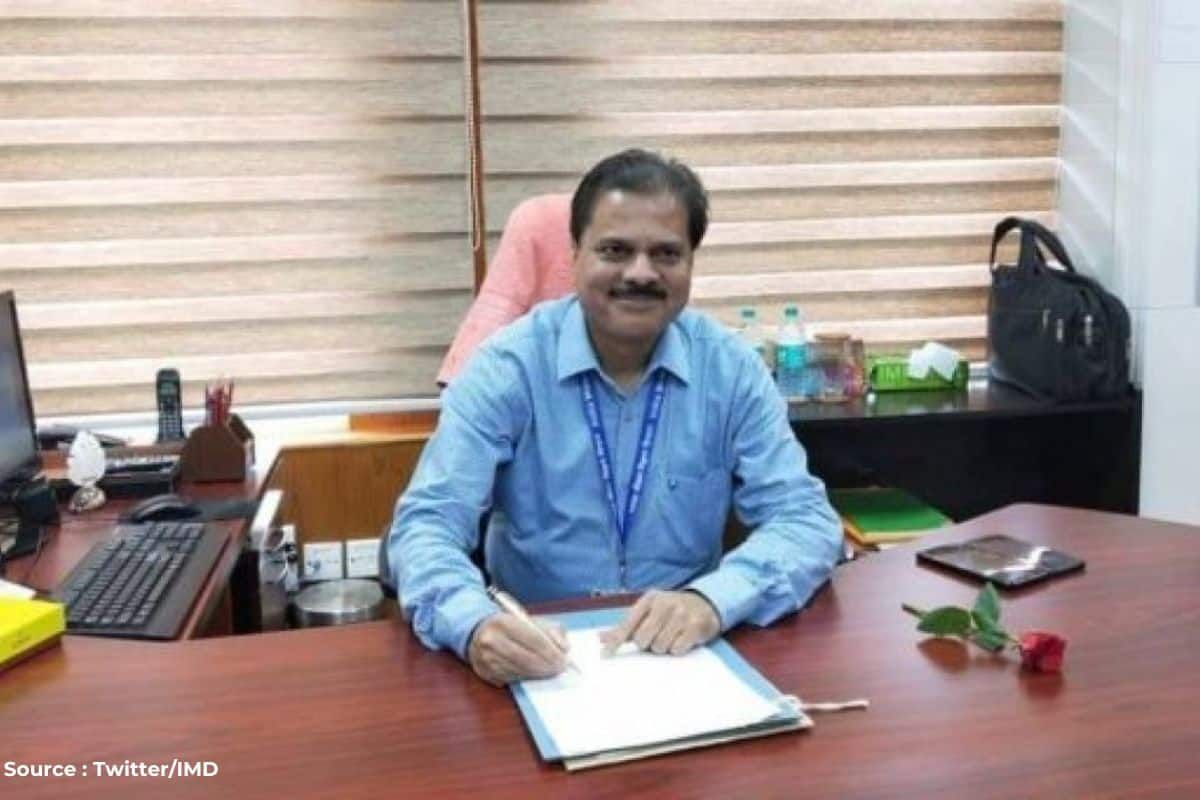
Mrutyunjay Mohapatra, the head of the India Meteorological Department (IMD), has pointed out that climate change is causing more heat waves, stronger cyclones, and other extreme weather events in the country. He highlighted the importance of having early warning systems to help prevent deaths and property damage during these disasters.
In a public lecture on climate change at the Indian Institute of Science Education and Research (IISER) Pune, Mohapatra elucidated, “Given our tropical setting, the mean minimum temperature is not undergoing significant escalation, yet there’s a noticeable rise in maximum temperatures. This points to an increased susceptibility to heat wave conditions.”
Speaking about the situation, Mohapatra explained that even though the average minimum temperature isn’t increasing significantly, the maximum temperature is rising noticeably. This means there’s a greater risk of heat waves. He used the example of cyclones to show that while the overall number of cyclones worldwide has gone down, the number of very strong cyclones has actually increased.
Regarding future projections, Mohapatra expounded, “Projections indicate that a one-degree rise in mean temperature could amplify the likelihood of heat waves by threefold.” He cautioned that even regions not traditionally prone to intense heat are witnessing an increase in heat waves. These extreme weather patterns, he cautioned, imperil global food security, water supply systems, and natural ecosystems.
Citing official forecasts, he shared, “A 2-degree Celsius temperature rise could lead to a 6% reduction in Indian wheat yield in sub-tropical regions and a 17-18% reduction in tropical areas. Similarly, rice yields would decrease by 10-16% with a 2-degree rise and a 4-degree increase would result in a 21-30% reduction.” He emphasized that in such a scenario, it’s the most vulnerable, particularly smallholding farmers, who would bear the brunt.
Keep Reading
- Iberian Wolf Declared Extinct In Andalusia, Spain, What Does This Mean?
- Beating The Heat: How Cool Roofs Are Transforming Ahmedabad
- How Is Rising Temperature Reducing Crop Yield In India?
Follow Ground Report for Climate Change and Under-Reported issues in India. Connect with us on Facebook, Twitter, Koo App, Instagram, Whatsapp and YouTube. Write us on GReport2018@gmail.com