
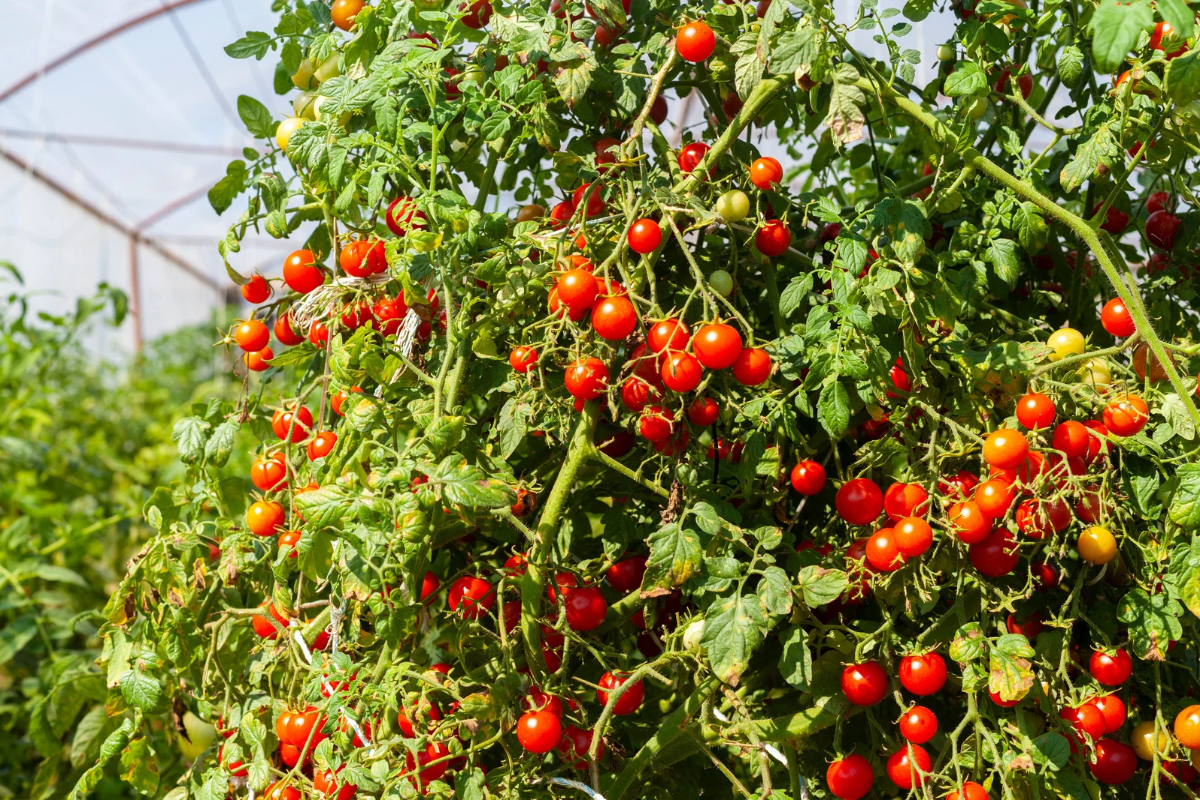
I should say that having grown tomatoes in both my home activities and in larger plots, I can make a definite statement: once tomato plants begin to die in waves, it is hardly the instance of bad luck. Something is always wrong somewhere–it is usually covered up in the earth. I have observed healthy seedlings of various species suddenly losing their leaves, mature plants dying in the middle of the season and complete failure of entire beds, despite being watersprinkled and fertilised. Over a period of time, I came to understand that the true evils are mostly the diseases of soil, and unbalanced soil ecosystems.
Being aware of what is going on below the surface and how you can deal with it in a sustainable manner can make you end up transforming your outcomes entirely.
The Common (But Hidden) Causes
Tomatoes are especially susceptible to habitual pathogens found in the soil like Fusarium, Pythium and Rhizoctonia. The roots are invaded by these fungi which block the uptake of water and nutrient. The symptoms usually make a resemblance; yellowing of leaves, wilting though soaked soil, lack of growth, and subsequent death of the plant.
I used to err in early years of gardening, as many growers do, I administered to evils rather than to the disease. I watered it further, added fertiliser, even changed varieties. It was never long-term as the actual issue was on the soil.
Plant pathologists in the agricultural universities argue that repeated planting of tomatoes in the same soil produces accumulation of pathogens that are detrimental. These pathogens continue season after season without any intervention and thus growing of healthy crops becomes even harder.
Failure to fix most Chemicals
When a disease attacks many growers resort to using chemical fungicides. Although they might provide a short-time solution, they many times fail to correct the problem. Worse they can cause disturbance to the useful microbes in soils which act as natural suppressors of diseases.
As time went on, I was able to understand that soil is more than a growing medium, it is a living ecosystem. Unstable ecosystems are controlled by harmful pathogens when out of balance. Sustainable solutions are aimed to reinstate that balance, and not to attempt to solve the problems simply by using chemicals.
Clinical Approaches to a Culturally Rich Society
I always advocate strong cultural practices before employed in any biological solution. Healthy tomato plants are based on these.
Crop rotation is essential. It is advisable not to have tomatoes or other tomatoes associated crops (such as peppers and egg plants) in the same place each season. This inhibits the development of pathogens.
It is also important that the soil is healthy. Compost and organic matter additions enhance the structure of the soil as well as host desirable microorganisms. When there is good drainage, there are no conditions in which the harmful fungi can survive.
Air and distance are also more important than one should think. Humid conditions that support the development of diseases are caused by overcrowded plants.
These practices are enough to economise disease pressure, however, in most situations, particularly in the case of infected soils, they must be supplemented with the aid of biological support.
Application of Trichoderma harzianum in Control of Diseases
The most useful tool that I have experienced is trichoderma harzianum, a fungal beneficial tool that has found extensive research among soil microbiologists and plant scientists.
Scientists in agricultural universities have continuously pointed out its capability to be a natural antagonist of destructive pathogens. It works in multiple ways:
- Competes with the virulent fungi over space and food.
- Making enzymes that destroy cell walls of the pathogen.
- Promotes growth of roots of plants.
- Disease resistance improves immunity of plants.
Simply put it assists your plants to protect themselves as well as enhance the overall health of the root.
Scientists commonly refer to trichoderma harzianum as an ally to biological control for tomato diseases, particularly where the objective of the system is to limit the use of chemicals.
HarzShield fungicide: an effective biological agent
To those growers who wish to use this science in their field, the HarzShield trichoderma fungicide presents a viable means of placing trichoderma harzianum into the ground.
In my experience and with the help of the agronomists, the most important attribute of the HarzShield is that it was capable of establishing itself in the root zone. The beneficial fungus would then colonise the rhizosphere once applied and is in a position to protect the plant against harmful pathogens.
It does not tend to inhibit disease, as is the case with traditional fungicides. It forms a microbial protective zone on the roots.
The difference could be noticed when I in the first place used a product such as HarzShield. Plants grew better root networks, were more resistant to stress and grew steadily throughout the season.
Experts in microbiology usually advise usage of such type of biological solution at the stage of planting or young growth when beneficial fungi can be effectively established before other unhealthy paths can become prevalent.
What the Science Says
Survey results concur with observations of various growers in the field with research results provided by the plant pathology laboratories. It has been studied that trichoderma harzianum has the ability to greatly mitigate the occurrence of soil-borne diseases and enhance plant growth and yield.
Even the scientists report the benefits of it are not limited to disease control. It improves nutrient absorption, increases root structure and plant tolerance to adverse environments like drought or temperature changes.
This puts it as a valuable resource, not only to correct correct issues, but also to create a healthy, productive developing system.
Sustainable Growing System of Tomatoes
When your tomato plants continue to die doing so, then it is not a quick fix that is needed but a change of direction.
Personally, success is achieved as a result of a combination of:
Well-established cultural practices, such as rotation and soil improvement.
Sound biology of soils based on organic matter.
HarazShield fungicide based on trichoderma harzianum is a biological agent.
This combined effort produces a system in which plants are better adapted to resist disease instead of having to struggle with infections continually.
A Gardener’s Final Thought
Over time, I have found out that the most healthy tomatoes grow on the soil ecosystems which are also healthy. When you are working with the beneficial microbes and creating a balance in the soil, most of the recurring issues start vanishing.
Rather than posing a question in the fashion of, Why are my plants dying, one would be more efficient in posing the question of, How can I help my soil to support life?
Such a change of mind is what changes struggling-gardens into good ones–and makes your tomato plants not only to survive, but to prosper.
Ground Report. No journalist is involved in creating branded material and it does not imply any endorsement by the editorial team. Ground Report Digital LLP. takes no responsibility for the content that appears in branded articles and the consequences thereof, directly, indirectly or in any manner. Viewer discretion is advised.
Support us to keep independent environmental journalism alive in India.
Stay connected with Ground Report for underreported environmental stories.